

This post may contain affiliate links. Please read our disclosure policy.
Planning your first trip to Japan? This 10-day itinerary covers the highlights of Tokyo, Kyoto, and Osaka. It’s perfect for families, first-time travelers, or anyone wanting to experience Japan’s vibrant cities and timeless temples.
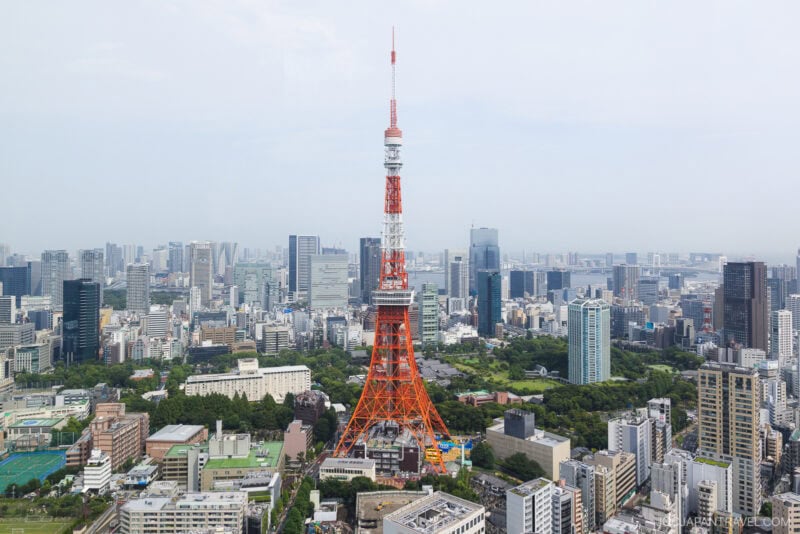
The number one question we get from JOC readers planning their first trip to Japan is this: “I’m going to Japan for two weeks—can you help me plan?” After answering hundreds of emails over the years, we thought it was finally time to write the guide we always wish we could send.
Based on our many visits, here’s our recommended 10-day itinerary for experiencing the best of Tokyo, Kyoto, and Osaka—perfect for first-time traveler
Day 1 – Arrive in Tokyo and Get Oriented
After a long flight, the best way to start your trip is by easing into Tokyo life. Instead of jumping right into sightseeing, use this day to settle in, pick up essentials, and get familiar with your surroundings. If you’re arriving at Haneda or Narita, head to your hotel by train, bus, or taxi.
Try to book a place near a major train station like Tokyo, Shibuya, or Shinjuku to make getting around easier. Our favorite place to stay is near Shimbashi Station (新橋駅). The reason is it’s because it’s close to Tokyo Station and Ginza, and a short ride from both Shibuya and Ueno.
Things to do on arrival day:
- Exchange currency or withdraw yen from a 7-Bank ATM at the airport or convenience store.
- Get a Suica or Pasmo card (or download the Suica app on iPhone) for local trains, subways, vending machines, and convenience stores. Start with 5,000 yen and you can alwasy reload.
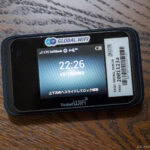
- Set up mobile data with a prepaid SIM, eSIM, or pocket Wi-Fi if you don’t have international roaming.
- Stop by a convenience store and stock up on drinks, onigiri, and snacks—helpful if jet lag keeps you up at odd hours.
- Later in the day, go for a walk near your hotel to get a feel for the neighborhood. Look for a local restaurant that catches your eye and enjoy your first meal in Japan. Maybe try some ramen, yakitori, or a casual izakaya dinner with cold beer and highballs.
This first day is all about adjusting to the time difference, getting comfortable with the train system, and preparing for the fun ahead.
Day 2 – Asakusa, Tokyo Skytree, and Ueno
If you wake up early (thanks to jet lag), consider starting the morning at Toyosu Market. The public area opens around 5:00 AM, and it’s one of the best places to try a fresh sushi breakfast and view the tuna auction.
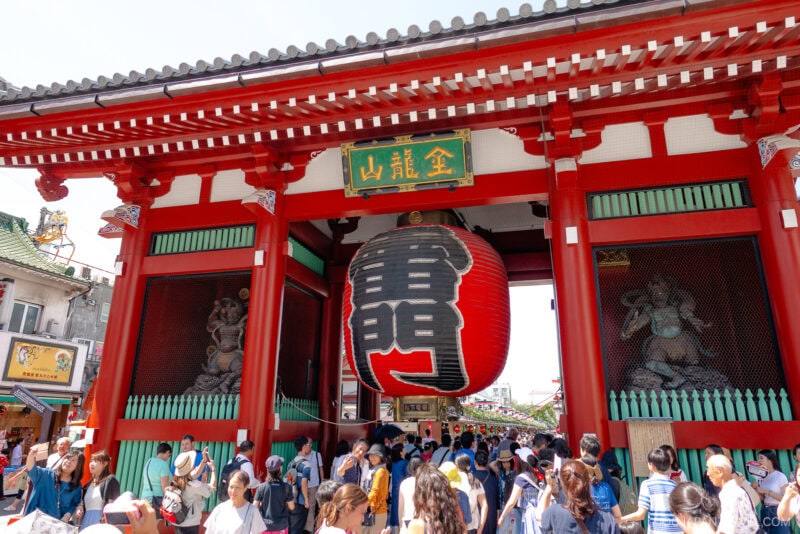
- Otherwise, begin the day in Asakusa, one of Tokyo’s most iconic districts. Walk through Nakamise Shopping Street, where you’ll find traditional snacks, souvenirs, and views of Sensoji Temple (浅草寺)—Tokyo’s oldest and most visited temple. Don’t miss the incense rituals and omikuji fortune slips.
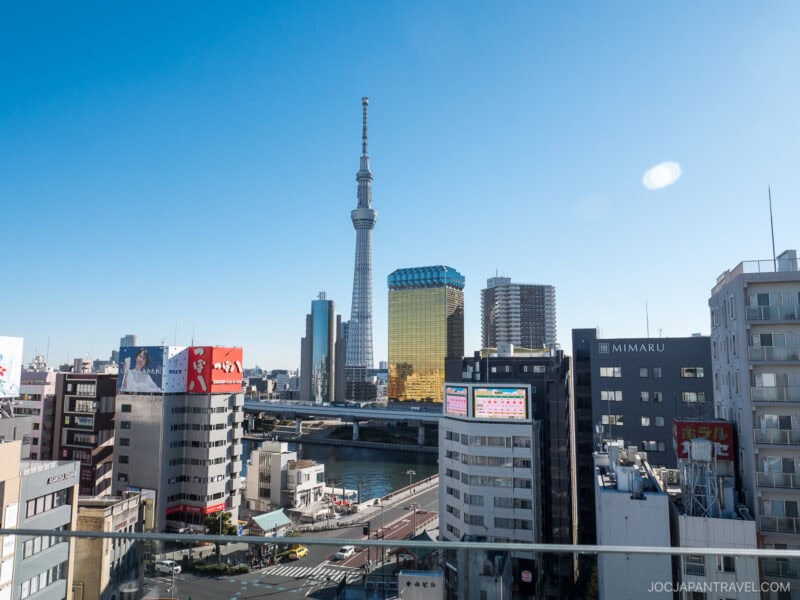
- Next, head to Tokyo Skytree—you can walk there in about 20 minutes or take a short train ride. Even if you skip the observation deck, there’s plenty to do at Tokyo Solamachi, the shopping and dining complex at the base. There’s also an aquarium and planetarium that are great for kids.
- In the afternoon, take the train to Ueno, a cultural hub filled with museums, a zoo, and open park space. If you’re visiting during cherry blossom season, Ueno Park is especially beautiful. You can also explore Ameyoko Market, a lively market street with street food stalls and casual dining.
End the day with dinner in the Ueno or Akihabara area. Ramen shops, izakaya, and department store food halls are all great options.
Day 3 – Meiji Jingu, Harajuku, Omotesando, and Shibuya
Today is all about exploring the youthful, trendy side of Tokyo—mixed with one of its most spiritual landmarks.
- Start the morning at Meiji Jingu (明治神宮), one of Tokyo’s most important Shinto shrines. It’s tucked inside a peaceful forest near Harajuku Station and offers a quiet, refreshing start to the day. You’ll walk through towering torii gates and gravel paths lined with tall trees. It’s free to enter, and early mornings are the most serene.
- Afterward, walk over to Harajuku’s Takeshita Street, a colorful hub for crepes, cute fashion, and quirky shops. It can get crowded, but it’s a fun spot for kids and teens. If the street gets overwhelming, take a short walk to Omotesando, a tree-lined avenue with more open space, modern architecture, and upscale shops. The contrast between the two areas is part of what makes this neighborhood so interesting. For lunch, you’ll find plenty of options in Omotesando or nearby Cat Street, including casual udon shops and stylish cafes with set menus.
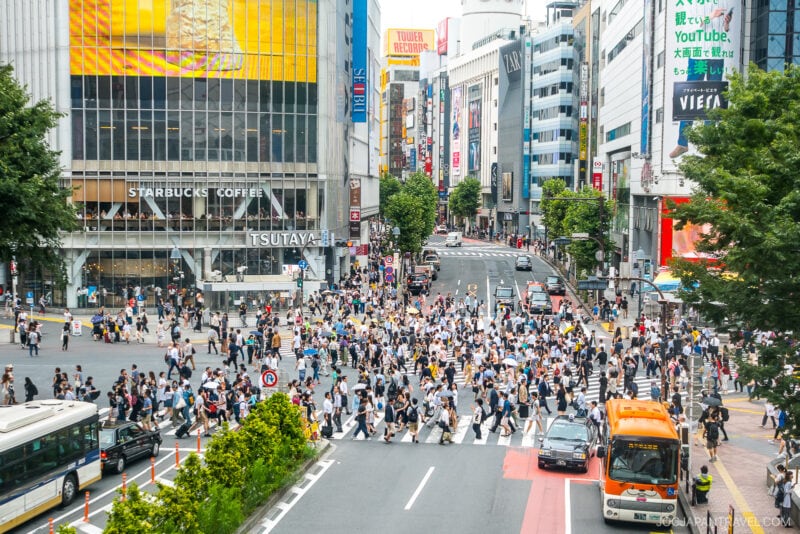
- In the afternoon, hop on a short train ride or walk to Shibuya. Head to the Shibuya Scramble Crossing and Hachiko and watch the organized chaos from one of the upper-floor cafes or viewing areas. Take time to explore Shibuya Center-gai, a pedestrian zone packed with shops, music stores, and game centers.
- In the evening, browse the shops at Shibuya Hikarie, Tokyu Hands, or Shibuya 109. For dinner, choose from izakaya chains, sushi bars, or one of the many ramen shops tucked into side streets.
- End the day with night views from Shibuya Sky, the rooftop observation deck above the new Shibuya Scramble Square building. The 360-degree open-air views are stunning, especially at sunset or after dark.
Day 4 – TeamLab, Roppongi, and Odaiba (or Tokyo Disney Option)
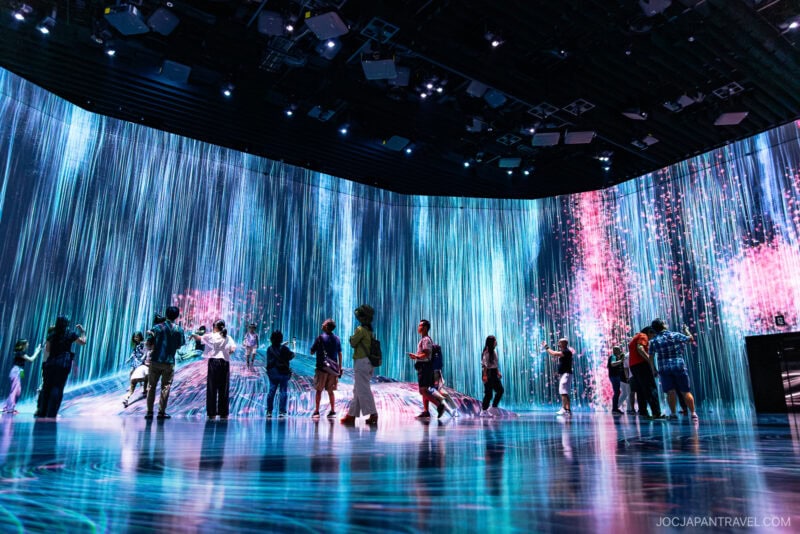
Today’s plan blends cutting-edge art, modern Tokyo culture, and bayside exploration. Or if you’re traveling with kids or Disney fans, this is also a great day to swap in Tokyo Disneyland or DisneySea instead.
- Start the morning at teamLab Borderless in Azabudai Hills (relocated from Odaiba). This interactive digital art museum is unlike anything else. Rooms glow with color, light moves with you, and kids love the immersive spaces. Make sure to book timed-entry tickets in advance, and we recommend the earliest slot.
- Afterward, head to Roppongi Hills or Tokyo Midtown for lunch. You’ll find plenty of stylish restaurants, Japanese and international cafes, and department store food halls. If you’re up for more art, check out the Mori Art Museum and the Tokyo City View observation deck—they’re right above the shopping center.
- In the late afternoon, head over to Odaiba, a waterfront district with wide open walkways, futuristic architecture, and family-friendly attractions. Browse the shops at Aqua City Odaiba, DiverCity, and DECKS Tokyo Beach (home to indoor entertainment like LEGOLAND Discovery Center and Madame Tussauds).
- Wrap up the day with a sunset dinner overlooking Tokyo Bay, where you can enjoy views of Rainbow Bridge lighting up after dark.
Optional Disney Day: If you’re choosing Tokyo Disney for this day, get there early and plan to spend the whole day. Tokyo DisneySea is especially unique and geared toward older kids and adults, while Disneyland is more classic and family-focused.
Day 5 – Travel to Kyoto and Explore the West Side
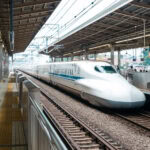
Take a morning Shinkansen (bullet train) to Kyoto Station. It takes about 2 hours and 15 minutes from Tokyo Station on the fastest Nozomi train. When booking your hotel, consider staying near Karasuma Oike Station in central Kyoto.
- Once you’ve dropped off your bags, head toward Kyoto’s western side. Start with Kinkaku-ji (金閣寺), the Golden Pavilion. The shimmering gold-leaf temple reflected in its garden pond is a must-see. From there, it’s a short ride to Ryoan-ji (龍安寺), known for its Zen rock garden. Take your time walking the peaceful grounds and enjoying the slow pace of Kyoto.
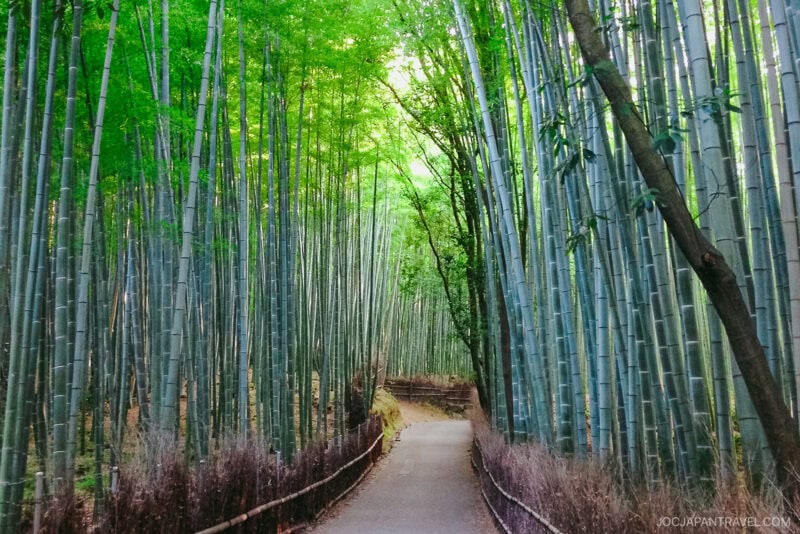
- End the afternoon in Arashiyama, a scenic district with plenty to explore. Walk through the Arashiyama Bamboo Forest, visit Tenryu-ji Temple (天龍寺), or relax by the Katsura River near Togetsukyo Bridge.
If you’re up for something special, this is a great night to stay at a ryokan with dinner included. Many in Arashiyama offer traditional multi-course kaiseki meals and Japanese-style rooms with futons and tatami floors.
Day 6 – Kyoto’s East Side: Temples and Gion
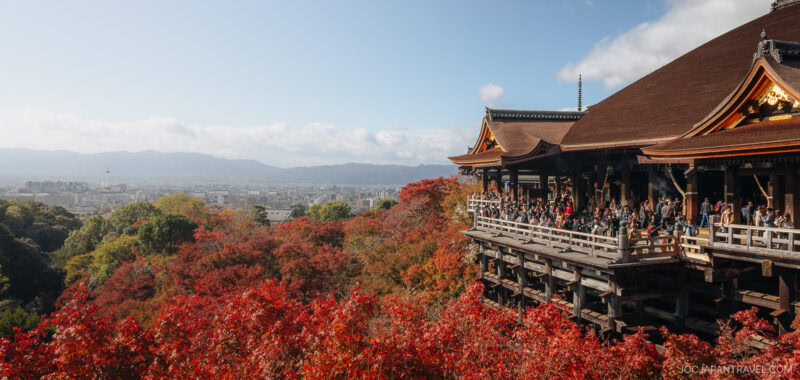
Spend today exploring the east side of Kyoto, home to some of Japan’s most iconic temples.
- Start the morning at Ginkaku-ji (銀閣寺), the Silver Pavilion, and follow the scenic Philosopher’s Path south toward Nanzen-ji (南禅寺). The peaceful canal walk and temple grounds are especially lovely during cherry blossom or fall foliage season.
- Continue to Kiyomizu-dera (清水寺), perched above Kyoto with sweeping city views. Don’t miss the sloped streets of Sannenzaka and Ninenzaka on the way down. They are lined with traditional teahouses, craft shops, and sweet treats.
- In the late afternoon, make your way to Fushimi Inari Taisha (伏見稲荷大社), famous for its thousands of red torii gates. You can hike partway up the mountain path or go as far as time allows.
- End the evening with dinner in Pontocho Alley, a narrow lantern-lit street along the Kamo River. You’ll find everything from casual izakaya to upscale kaiseki.
Day 7 – Arrive in Osaka and Explore the Southern Districts
Take a morning train to Osaka. It is about 40 minutes from Kyoto by limited express (use Shinkansen if you have JR Pass). Once you arrive, drop your bags at your hotel (Namba or Umeda are convenient areas to stay) and head to southern Osaka for a day of street food, shopping, and fun.
- Start with lunch near Shinsekai (新世界) and Tsutenkaku Tower, an old-school district with local charm. You’ll find plenty of food stalls serving kushikatsu (deep-fried skewers), takoyaki, and more.
- Nearby is Harukas 300, the observation deck at Abeno Harukas, the tallest building in Japan. It’s less crowded than Tokyo’s observatories and offers panoramic views over Osaka.
- In the afternoon, walk or take the train up to the Amerikamura area for youth fashion and culture, or explore the popular Shinsaibashi-suji Shopping Street for clothes, beauty products, and souvenirs.
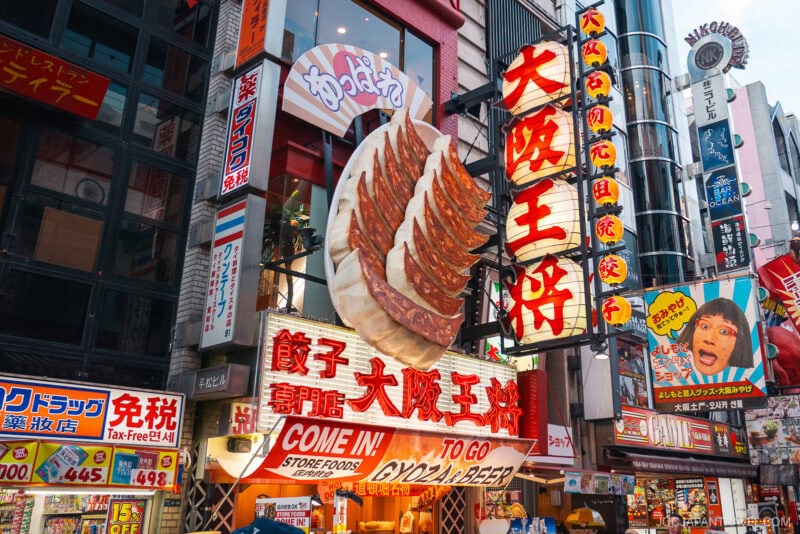
- Finish the day at Dotonbori, Osaka’s neon-lit food street. This is the place to try okonomiyaki, gyoza, and all the savory foods Osaka is known for. Look for the famous Glico running man sign, or hop on a canal cruise to see the area lit up from the water.
Day 8 – Osaka Castle, Umeda, and the Harbor Area
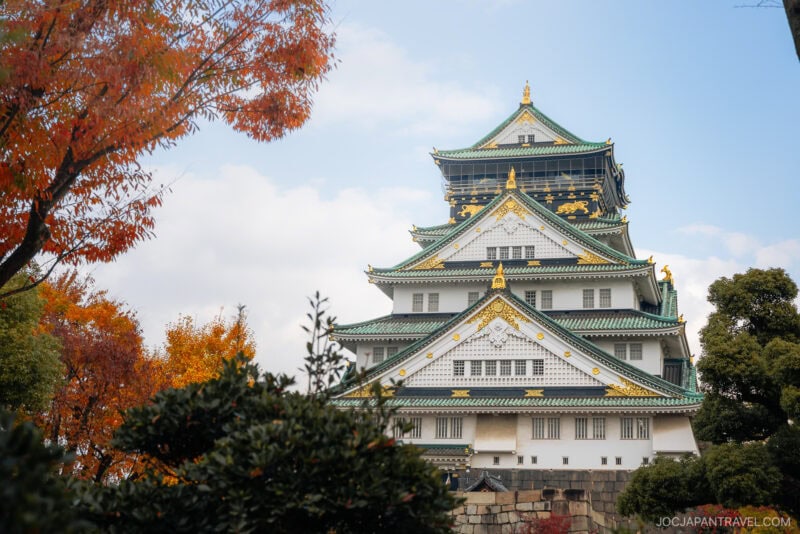
- Start your day at Osaka Castle (大阪城), a symbol of the city’s history. The park surrounding the castle is a pleasant walk, and the museum inside offers great views from the top floor.
- Next, head to the Umeda area in northern Osaka for shopping and sky-high views. Browse Grand Front Osaka or Hankyu Department Store, then ride the escalators up to the Umeda Sky Building’s open-air observation deck.
- In the afternoon, take the subway to Osaka’s harbor area near Tempozan. Ride the Tempozan Ferris Wheel for more city and bay views, and stop by Kaiyukan Aquarium, one of the best in Japan if you are traveling with kids.
Optional alternatives for the day: Spend the whole day at Universal Studios Japan, which is nearby. Take a day trip to Kobe, just 30 minutes away by train, for harbor scenery and one of the most famous Chinatowns in Japan.
Day 9 – Return to Tokyo + Last-Day Exploring
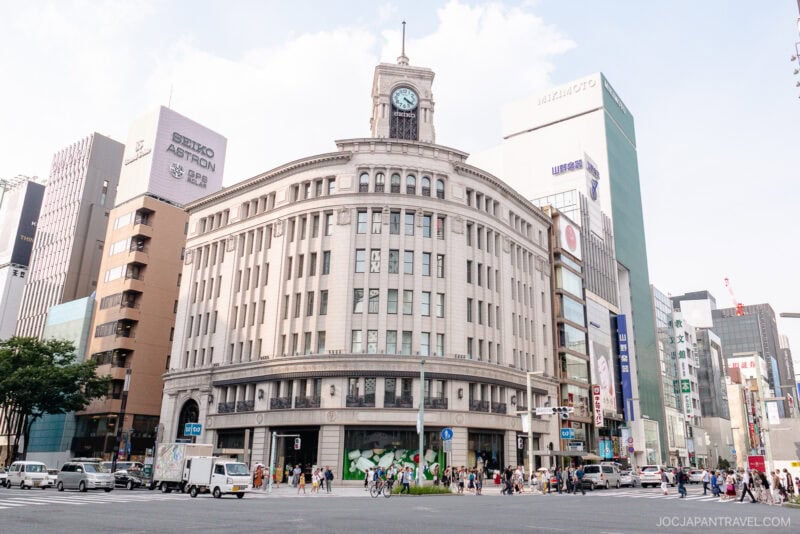
Take the Shinkansen back to Tokyo in the morning and check in to a hotel near Tokyo Station or Shinjuku for easy access to shopping and the airport the next day.
This is a great day to shop for souvenirs and gifts—it’s easier to buy everything now rather than carry it throughout your trip. Department stores like Isetan, Mitsukoshi, and Daimaru have full floors of edible souvenirs, cosmetics, and crafts.
For character items, check out Tokyo Character Street inside Tokyo Station. With extra time, you might visit:
- Shinjuku Gyoen National Garden for a final nature walk.
- Ghibli Museum in Mitaka (advance reservation required)
- TeamLab Planets in Toyosu (if you skipped Teamlab Borderless)
- Nezu Museum or Tokyo National Museum for art and history
Wrap up with a relaxing dinner near your hotel and get ready for departure the next day.
Day 10 – Departure from Tokyo
Depending on your flight time, you may have a little time in the morning for a final walk or breakfast. Consider visiting a depachika (department store food hall) to grab snacks for the plane. Haneda and Narita both have great airport shopping and food before security, so leave a bit early if you want to explore.
Guides for your First Trip to Japan
- Japan Rail Pass Guide – Make sure you are maximizing savings and travel efficiency with this comprehensive guide to using the Japan Rail Pass for long-distance travel.
- Japan Travel Cultural Etiquette Guide – Prepare for a deeper immersion into Japanese life by learning essential cultural norms and tips before your journey begins.
- How to Enjoy Onsen in Japan – Learn the essential rules, customs, and benefits of visiting a traditional Japanese hot spring to help you relax on your trip.
- Tokyo Best Foods to Eat – Browse this guide to find the top local dishes and dining experiences available across the city, from famous ramen to unique regional specialties.
greetings,
currently, I am planning a trip with my teenage boy. He’ll be 16 in October. The 10-day itneriers is exactly what we are looking for. pretty much following your recommendations. we’ll be traveling November 16-November 26.. we have selected to arrive at Narita international airport. please recommend hotels included breakfast in Tokyo. any other suggests is welcome. thank you, Khemma
Hi there. Been a loyal follower of your food blog for many many years and finally getting around to visiting Japan. Wondering if you could send specific recommendations for hotels for this trip ( we are using your first trip guide Tokyo/Kyoto/osaka) . We are travelling with our 2 college age kids ( opposite genders) and would be willing to rent two rooms but don’t want to blow our budget on accommodations alone ( not with all the delicious food to try lol!)
Thanks in advance !
Hi Christine,
In Tokyo, especially in the city center, it’s quite hard to find hotel rooms that fit four people. One exception we know of is Tokyu Excel Hotel Shibuya, which offers rooms with four beds (https://www.tokyuhotels.co.jp/en/shibuya-e/room/51979/index.html).
The good news is that Tokyo has hotels across a wide range of price points, and they are generally much more affordable than comparable hotels in the U.S. For our readers, we often recommend Dai-ichi Hotel in Shimbashi because the rooms are noticeably larger than most Tokyo hotels and the location is excellent.
For Kyoto, MIMARU SUITES Kyoto Central is very centrally located and offers spacious family rooms.
For Osaka, we like Hotel Hankyu International for its larger room sizes and convenient location in Umeda. You will probably have to get 2 rooms. MIMARU also have hotels in Osaka that offer family rooms.
No matter which city you’re in, the most important thing is choosing a hotel near a convenient train station. It will save you a lot of time and make getting around much easier.
Happy to answer any other questions you may have.
Such a solid guide! Suica really was one of the best tools to have ready, I set it up on my phone before I left and found myself reloading it constantly for vending machines, late night konbeni walks and local buses. Thanks JOC!
Hi Smitty,
Thank you so much for your feedback! Let us know if you have any questions visiting Japan!
Planning a trip to Japan seemed overwhelming but JOC Japan Travel will definitely help with the planning…arigato!
Hi Glenn,
If we can help with planning, don’t hesitate to reach out!
This is exactly what I need to get my sushi-lovin’ soul to Japan! You guys are the best and I am plotting my trip NOW!
Hi Heidi! Let us know if we can help you plan. You know how to reach us!