This post may contain affiliate links. Please read our disclosure policy.
The Tokyo National Museum in Ueno Park is a treasure trove of Japanese culture. Exploring its halls will take you on a journey through centuries of art, history, and tradition.
Why Visit the Tokyo National Museum
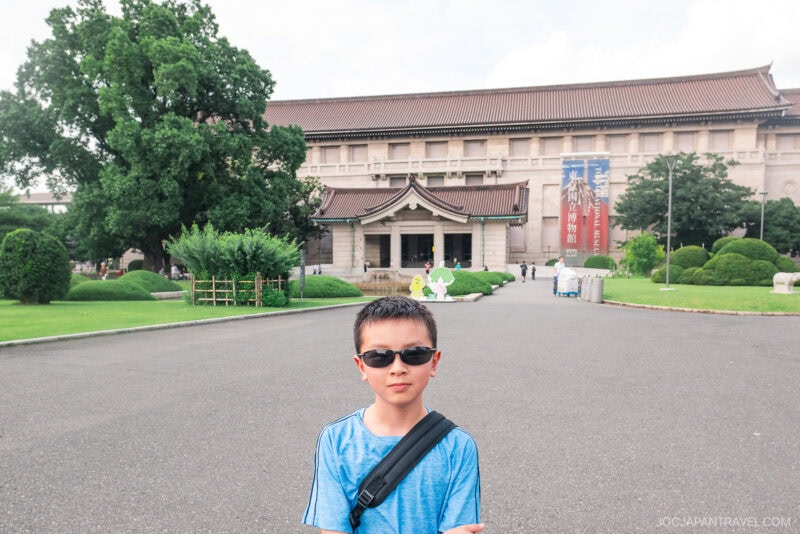
The Tokyo National Museum is Japan’s oldest and largest museum, founded in 1872. It houses the most extensive collection of National Treasures and Important Cultural Properties in the country, with over 120,000 items. Out of Japan’s four national museums (Kyoto, Nara, and Dazaifu are the others), Tokyo’s is the most comprehensive.
We explored the museum as a family and spent most of our time in the Honkan (Japanese Gallery). After the visit, the kids left with a deeper appreciation for Japanese history, which they don’t learn in school, from samurai armor to delicate Edo-period kimono.
What to Expect Inside the Museum
The museum consists of several wings, each with a distinct focus:
- Honkan (本館) – Japanese Gallery
- Toyokan (東洋館) – Asian Gallery
- Hyokeikan (表慶館) – Western-style architecture from 1909
- Gallery of Horyuji Treasures – Rare Buddhist artifacts
- Heiseikan – Special exhibitions and archaeology
- Kuroda Memorial Hall – Works by painter Kuroda Seiki
If you’re visiting for the first time, Honkan is the best starting point.
Honkan – The Japanese Gallery

Honkan spans two floors and traces 16,000 years of Japanese art.
Second Floor – Chronological Art
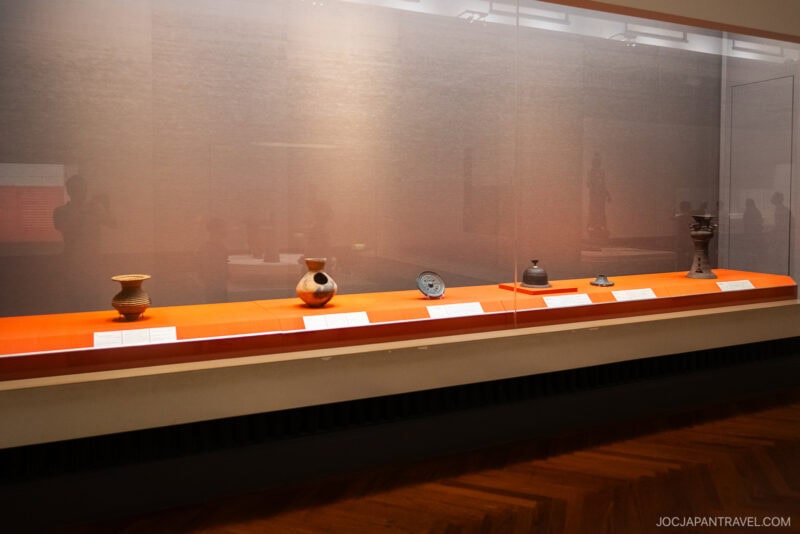
The upper level takes you from the Jomon period (14,000 BC) to the Edo period (~1860). We followed the timeline through Yayoi and Kofun artifacts, Heian Buddhist statues, Kamakura samurai armor, and Edo folding screens. The layout makes it easy to see how styles and beliefs evolved over time.
First Floor – Thematic Collections
The lower level highlights themes such as:
- Sculpture and metalwork
- Lacquerware and ceramics
- Swords and samurai armor
- Ainu and Ryukyu art
- Calligraphy, textiles, and religious tools
Our kids especially enjoyed looking at the sword guards (tsuba) and colorful ceramics, while we admired the detailed bronze Buddhas.
Planning Your Visit
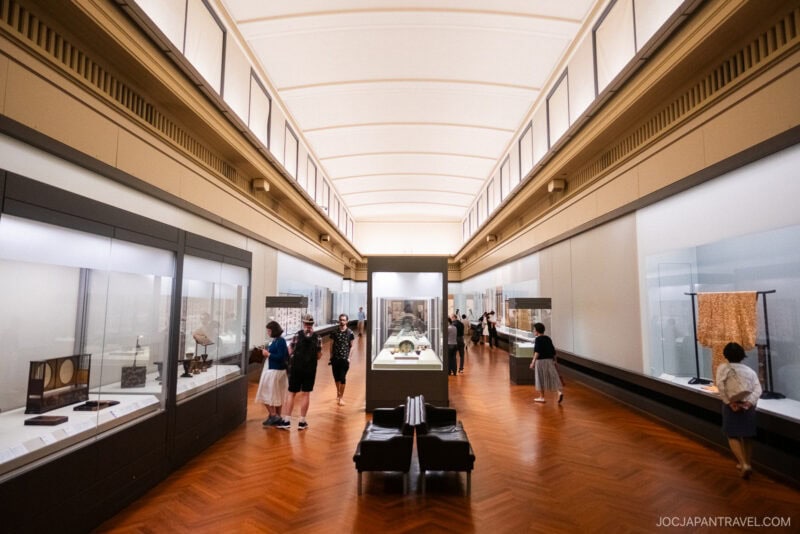
For an in-depth visit and to explore all buildings, plan for at least 3 to 4 hours.
If you’re short on time, the museum offers a 30-minute “Highlights of Japanese Art” self-guided tour. It’s a great way to focus on masterpieces across eras.
How to Get to the Tokyo National Museum
The Tokyo National Museum is inside Ueno Park and an easy walk from several stations.
By Train
- JR Ueno Station (Park Exit) – 5 minute walk
- Tokyo Metro Ueno Station (Ginza Line or Hibiya Line) – 10 minute walk
- Keisei Ueno Station – 10 minute walk
Pro Tip: Arrive at opening time to enjoy quieter galleries and plan extra time if you want to visit more than one building.
Is the Tokyo National Museum Worth Visiting?

The Tokyo National Museum is one of the best places to understand Japan’s cultural identity through its art and artifacts. Even if you only visit one building, you’ll come away with a deeper connection to Japan’s past and present. Its convenient location in Ueno Park also makes it easy to combine with nearby attractions.
More to Explore Nearby
The Tokyo National Museum is the centerpiece of the vast cultural Ueno Park, seamlessly blending history with nearby science museums, bustling markets, and peaceful outdoor spaces, all within easy walking distance.
- Tokyo National Museum of Nature and Science – Explore this complementary museum also located in the park, featuring comprehensive exhibits on dinosaurs, science, and natural history.
- Ueno Zoo – Visit Japan’s oldest zoological garden, located on the park grounds, famously known for its pandas and diverse animal exhibits.
- Ueno Park – Take a leisurely stroll through the expansive parkland, famous for its cherry blossoms and as a major recreational and cultural haven in Tokyo.
- Ameyoko Market – Head just outside the park gates to this energetic street market for bargain shopping and diverse food stalls, providing a lively contrast to the museum’s tranquility.