

This post may contain affiliate links. Please read our disclosure policy.
Osaka, dubbed “Japan’s Kitchen,” may be known for its irresistible street food, but this time, put down the chopsticks and head to explore the city’s most popular autumnal spots.
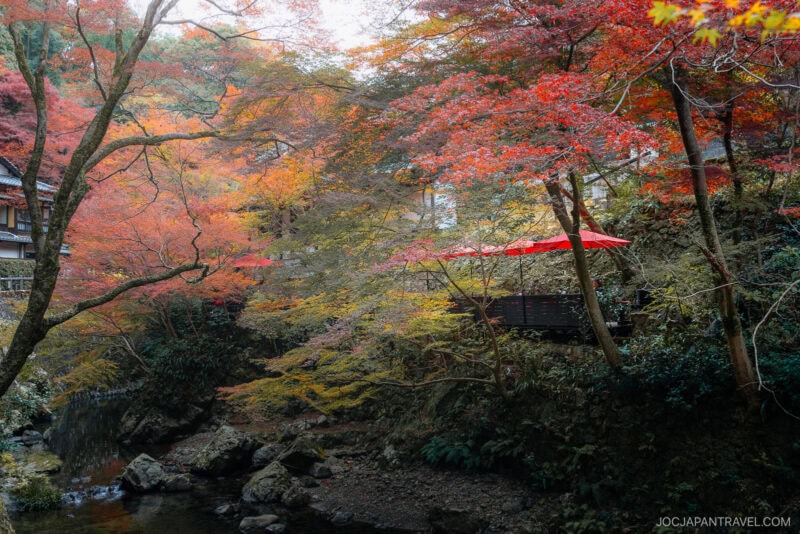
After soaking in Kyoto’s magical autumn colors, I headed south to Osaka to see what the port city had to offer during the season.
This time, we set aside the temptation of Osaka’s famous takoyaki and okonomiyaki to focus on its autumnal beauty—temples, castles, ravines, and waterfalls all aglow in fall hues.
Let’s explore Osaka and discover its stunning fall colors!
How to Get to Osaka from Kyoto
The next day, I took the Special Rapid Tokaido-Sanyo Line from Kyoto Station to Osaka Station, which takes about 30 minutes and 580 yen one-way.
If you’re flying, Kansai Airport is the closest. From Kansai Station, take the Kansaikuko Line Kanku-Rapid toward Kyobashi to Osaka Station. The ride takes roughly 1 hour 20 minutes and costs 1,210 yen one-way.
When to Visit Osaka in Autumn
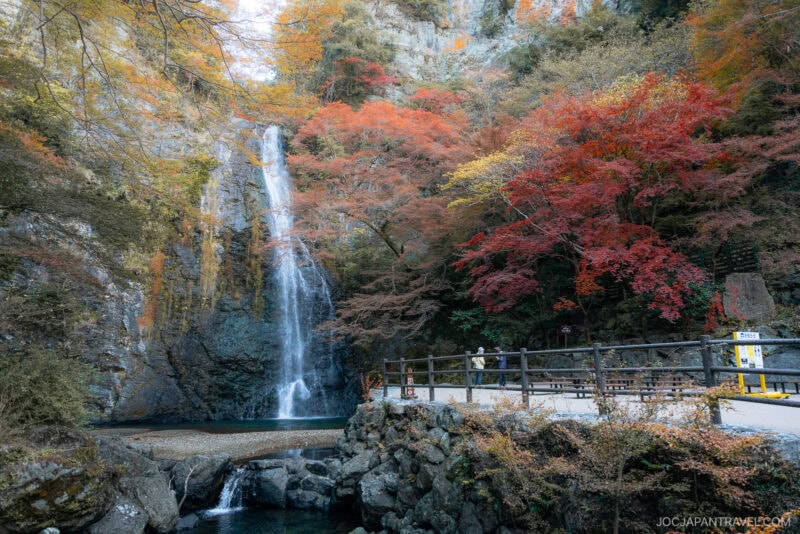
Autumn colors in Osaka generally peak from mid-November to early December. I visited on November 27–28, 2023, and the foliage was at its best. Timing can vary by location, so I recommend checking autumn forecasts before planning your trip.
Minoh Park
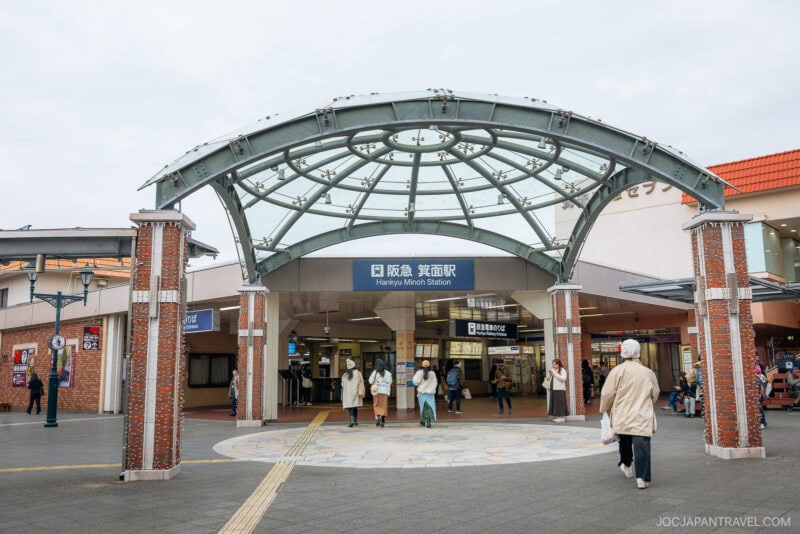
Minoh Park (箕面公園) is a forested valley in northern Osaka and a top spot for autumn foliage in Kansai. From Hankyu Osaka-Umeda Station, take the express on the Takarazuka Line to Ishibashi Handai-mae Station, then transfer to the Hankyu Minoo Line to Minoo Station. The trip takes about 30 minutes and costs 280 yen one way.
Next to the station, an info center offers English leaflets about the park, trail, and local eateries. From there, a 2.8 km (1.7 mi) walk along Minoo River leads to the park, with signs guiding the way.
Along the path, vendors sell local treats. I couldn’t resist momiji (maple leaf) tempura. They are crispy, sweet, and the perfect snack for an autumn stroll.
Walking Through Minoh Park

The first half of the trail passes shops, cafes, and ryokans with a gentle incline. A highlight is Ryuan-ji Temple (瀧安寺), part of the Shugen-do mountain-worship sect.
The second half gets steeper, winding deeper into nature, and ends at Minoo Waterfall (箕面大滝), Osaka’s only “100 Great Waterfalls” site at 33 meters high.
I visited early, so it was peaceful, though afternoons can get crowded. While the waterfall is stunning, I especially loved the walk itself, and, of course, the momiji tempura along the way.
Katsuo-ji Temple
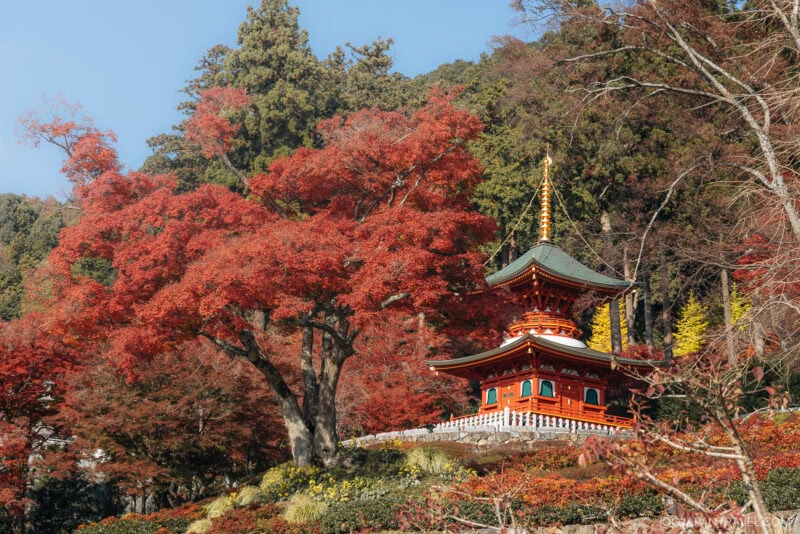
Located further into the mountains from Minoo Waterfall, Katsuo-ji Temple (勝尾寺) is a bit tricky to reach. You can take a 20-minute taxi from Minoo Station or ride the Minoo Takimichi sightseeing bus, which goes directly to the temple (schedule available on their Japanese website).
History of Katsuo-ji
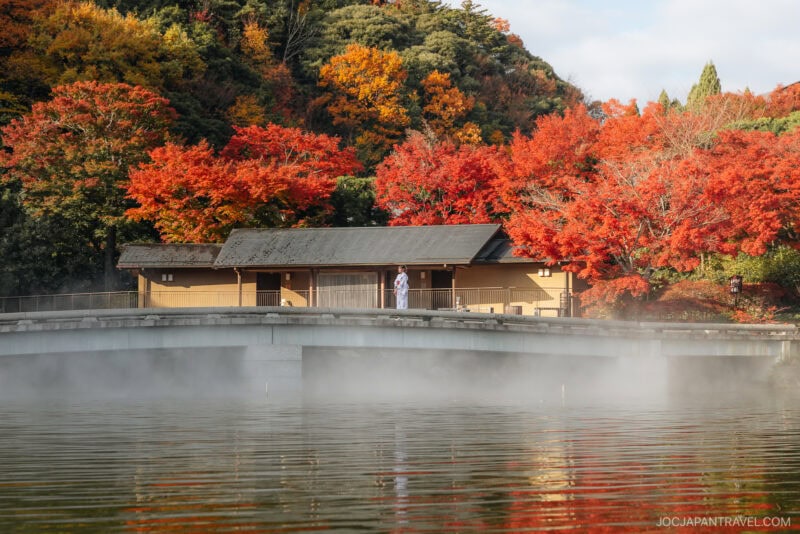
Originally called Miroku-ji, Katsuo-ji Temple began as a small hut in 765. Emperor Seiwa (850–881) later visited while gravely ill and, after recovering thanks to the monk’s prayers, renamed it Katsuo-ji, meaning “the temple that triumphs over the emperor.” Today, visitors come to pray for luck in work, studies, and business.
Entrance is 400 yen, and the temple grounds offer a stunning panoramic view right from the start.
Daruma Dolls at Katsuo-ji
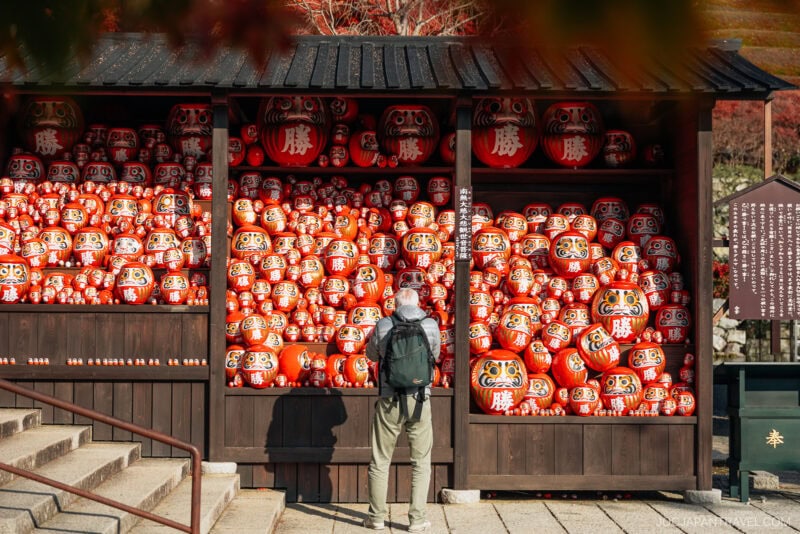
Miniature Daruma dolls, modeled after the founder of Zen Buddhism, are scattered throughout Katsuo-ji. Known as kachi-Daruma, or winning Daruma, they symbolize perseverance and luck.
I visited during peak autumn, and the grounds were a fiery sea of red maple leaves. A collection of Daruma dolls lines the path to the main hall and a small shop where you can pick up your own.
From the hall, you can overlook the entire temple grounds. After exploring the shrines, statues, and countless Daruma, follow the winding path to the exit. The souvenir shop also offers Daruma-themed sweets, clothes, and mementos.
Katsuo-ji’s temple grounds were among the most impressive I’ve seen in Japan.
Hoshida Park Suspension Bridge

Also known as Hoshi no Buranko (星のブランコ), this suspension bridge is situated in Hoshida Park (ほしだ園地) in the northern part of the Ikoma Mountains, between the borders of Osaka and Nara. It makes a fun day trip from the city.
From Osaka, you can take the Katano Line to Kisaichi Station and walk 30 minutes, or drive to the entrance marked by a red torii gate, which I chose. My path led through a steep trail lined with autumn leaves, rest stops, and benches for lunch.
After a 20-minute hike, you reach Hoshi no Buranko Tenbodai, a small observatory over the bridge. Just five minutes further brings you to the bridge itself, surrounded by mountains ablaze in vibrant fall colors.
Though a bit far from the city, visiting Hoshi no Buranko is well worth it for its stunning autumn scenery.
Osaka Castle Park
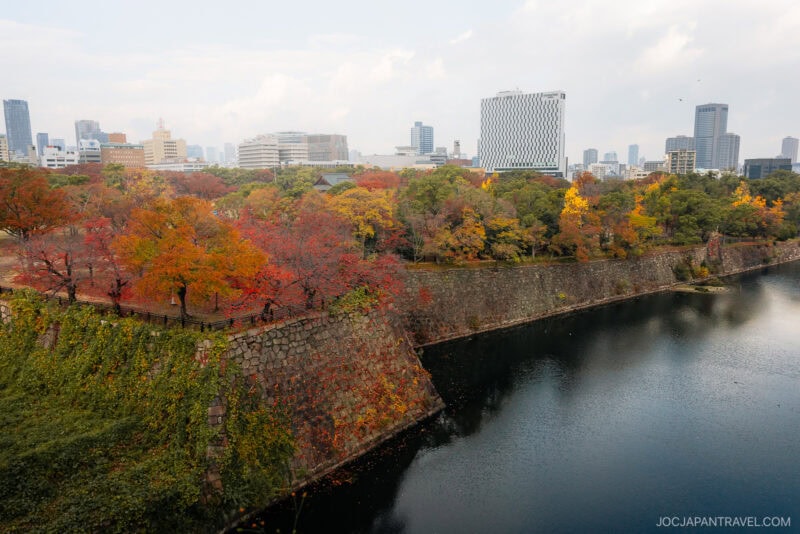
No trip to Osaka is complete without visiting one of Japan’s most iconic castles. I made a quick stop to see it in autumn for the first time, and the ginkgo trees surrounding Osaka Castle (大坂城) made the scenery even more spectacular.
Another great spot for autumn colors is Expo ’70 Commemorative Park. I didn’t have time to visit, but you can check out our full guide here.
Daisen Park Japanese Garden

Daisen Park (大仙公園) spans 35 hectares, perfect for leisurely strolls. On weekends, locals walk their dogs, picnic, or enjoy the scenery. In spring, cherry blossoms draw crowds, while in autumn, the Japanese garden on the western side offers a serene escape.
Established in 1989 for Sakai City’s centennial, the garden features bridges, ponds, and a traditional pavilion inspired by China. Entrance is 200 yen, with optional green tea and sweets sets (500–600 yen). I had to skip the wagashi this time, but it’s a must-try!
Best Places to Enjoy Autumn Leaves in Kyoto
Whether in Kyoto or Osaka, Japan’s autumn is truly magical. I hope you get the chance to experience the vibrant colors and crisp air for yourself.
- Autumn in Kyoto Guide
- The Best Things to Do in Arashiyama Autumn
- Day Trip To Uji Japan: A Cultural Experience
Drop a comment below and let us know which city or autumn spot you’d love to see next!

Hi Nami, I’m so glad you’ve branched out into Japan travel! Am headed to Osaka-Kyoto in mid November and Minoo park is on my must see list. My question: how does one eat a grilled fish on a stick I saw that those are sold there! Also you wrote somewhere about contacting you if going to Koyasan.
Hi Ann,
You can read all about Koyasan here: https://www.jocjapantravel.com/kansai-wakayama-koyasan/. Our travel writer Andy spent a night at a temple there and shared his experience in detail.
As for eating grilled ayu, it’s fairly straightforward. Avoid the fins and tail since they’re salted to keep them from burning. We usually eat the tender flesh from the sides, and most of the fish is edible. We just skip the head.