This post may contain affiliate links. Please read our disclosure policy.
Join us to explore Kyoto’s spectacular autumn foliage in Arashiyama, discovering hidden gems and cruising along the Hozugawa River.
Arashiyama is one of Kyoto’s most popular districts, known for its towering bamboo forest, scenic mountains, and a variety of shops, cafes, and restaurants. While many visitors come to wander through the Arashiyama Bamboo Forest, I want to highlight other attractions and activities that make this area so special.
In this post, I’ll introduce five spots where you can enjoy the autumn leaves, including a relaxing mountain cruise and some delicious Kyoto sweets.
Autumn in Kyoto Series
This is a four-part series on experiencing autumn in Kyoto, where you’ll find my best tips on enjoying the fall foliage in the region.
- Autumn in Kyoto Guide
- The Best Things to Do in Arashiyama in Autumn
- Day Trip To Uji Japan
- Bonus: Osaka Autumn Travel Guide
Getting to Arashiyama
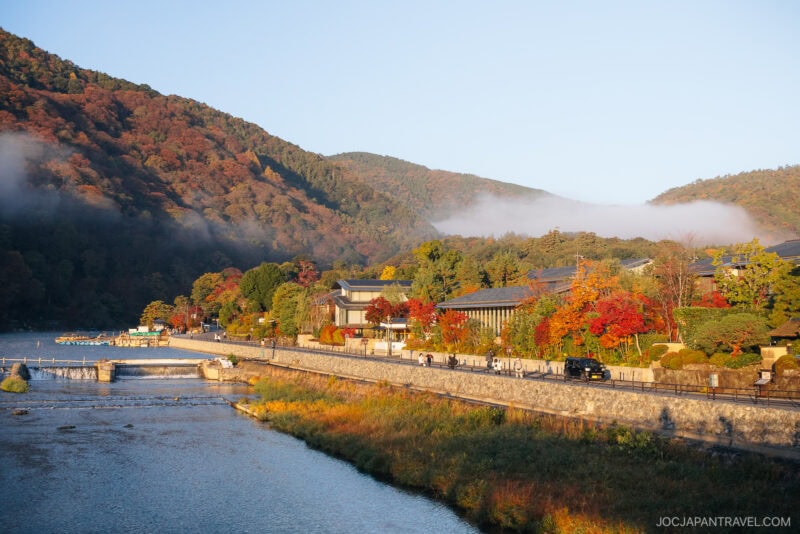
Arashiyama is easy to reach, just a 17-minute ride on the JR San-in line from Kyoto Station to Saga-Arashiyama Station. The area offers a wide range of activities, from the Iwatayama Monkey Park and various temples and shrines to cozy cafes and restaurants.
If you visit, I recommend starting early to avoid the crowds, especially if you want to explore the bamboo forest.
In the morning light, the surrounding mountains and Togetsukyo Bridge glow with a warm orange hue. To the west, the Katsura River winds into the mountains, while the Hozu River flows east toward the city.
Bread, Espresso and Arashiyama Garden “ESPRESSO &”
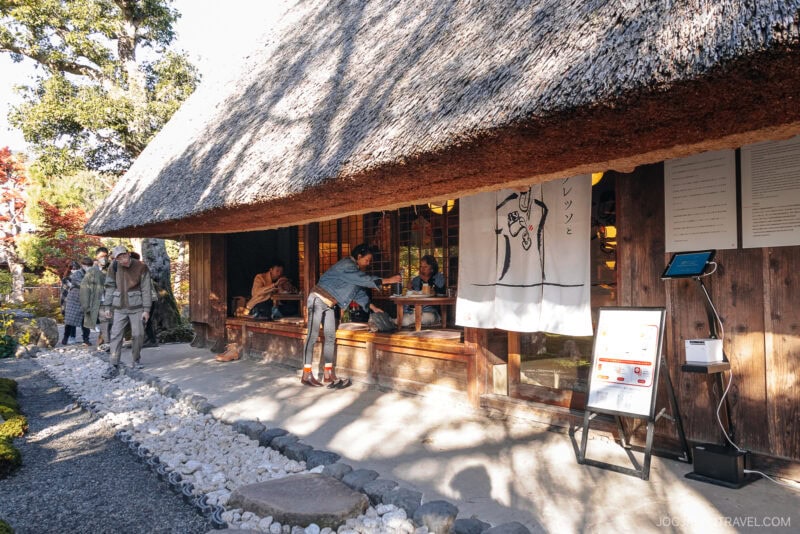
After an early morning of exploring, breakfast is essential. One of the few places that opens early is Bread, Espresso and Arashiyama Garden.
Tucked into the narrow streets, this cafe offers freshly baked bread, sandwiches, and a variety of meals.
I opted for the “An Butter Toast Set.” An, or red bean paste, with butter is a popular combination and one of my favorites. The toast came on an extra-thick slice of shokupan (Japanese milk bread) that was crisp outside and fluffy inside. It was heavenly when paired with a cup of coffee.
Though part of a small chain, this location is one of the most beautiful, surrounded by a peaceful Japanese garden.
Somekobo Yumeyusai

Somekobo Yumeyusai sits along the Katsura River that runs through Arashiyama. The facility is part museum and part workshop, which offers a unique Yumekorozome dyeing experience. The colors shift depending on the light, earning acclaim both in Japan and abroad.
For 2,000 yen, you can tour the building and enjoy some of the most picturesque scenery in Arashiyama. While the space is heavily geared toward photographers, it is still worth a visit.
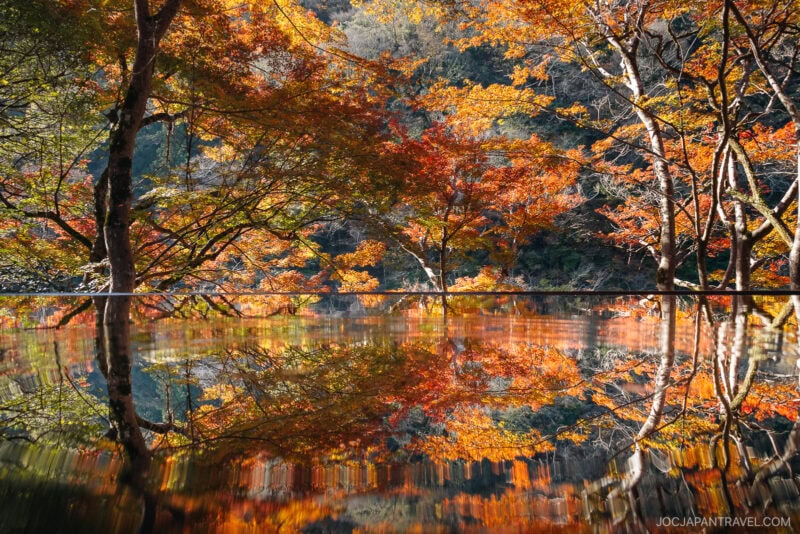
The first room features a mirror-like table reflecting the autumn leaves through an open terrace. The terrace overlooks the Katsura River, complete with a table and pipettes to create your own scenic artwork.
I highly recommend making an advance reservation online, especially during autumn, as walk-ins are rarely admitted. Somekobo Yumeyusai is open year-round, and December and January bring a special snowy ambiance.
Hoguzawa River Cruise
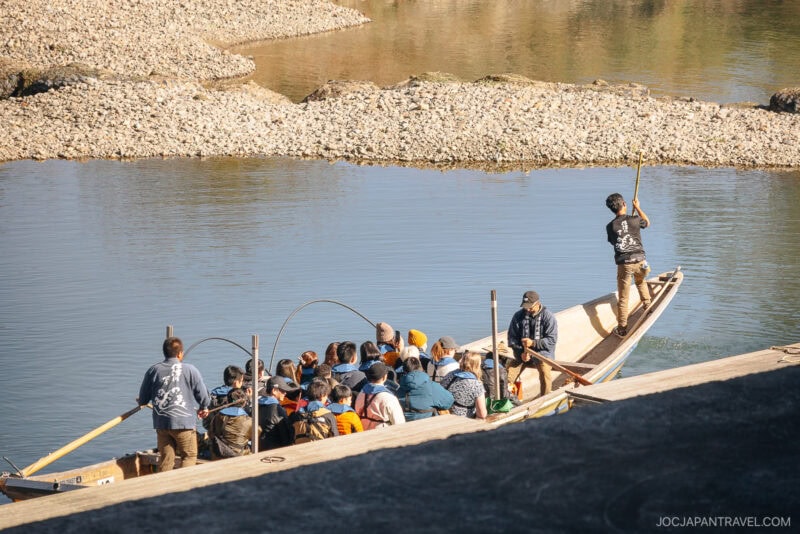
A unique way to enjoy the autumn leaves is aboard the Hoguzawa River Cruise. The trip starts in the mountains near Kameoka Station and descends into Arashiyama, surrounded by autumn-colored peaks.
I recommend booking through their website. You can choose your preferred time, with the one-hour cruise costing 4,500 yen for adults and 3,000 yen for children.
If the water level is low, the cruise can take up to one and a half hours, so plan accordingly.
Cruise Tips
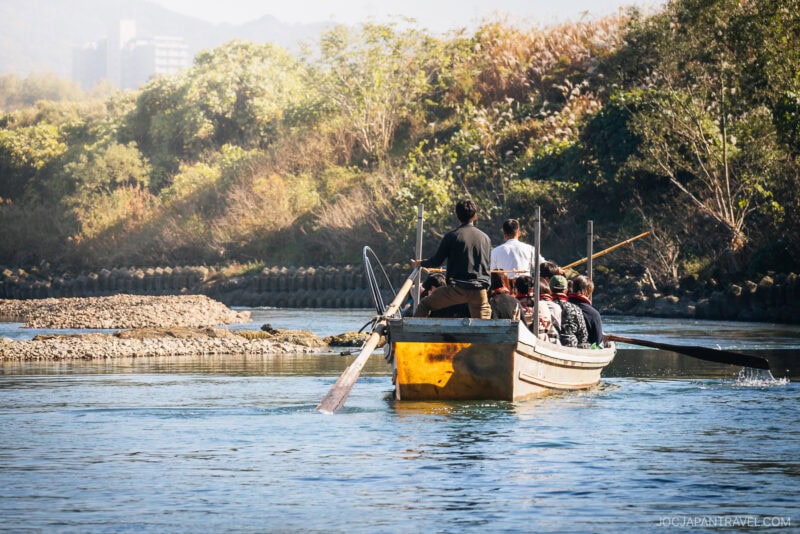
- The cruise is one-way from Kameoka to Arashiyama. Large luggage can be stored at Saga-Arashiyama Station.
- From Saga-Arashiyama Station, take the JR San-in Line to Kameoka Station (200 yen one way). It’s a ten-minute walk to the boarding point.
- Boats hold about 20 people and are operated by three staff members.
River Tour
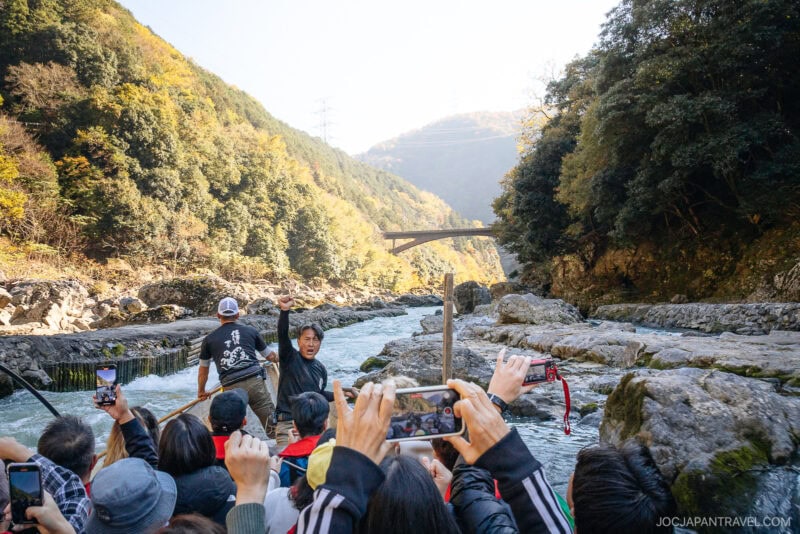
During the cruise, staff share information about the area’s history and highlight notable spots. You’ll encounter gentle rapids, wildlife, and even a tree shaped like Totoro from Studio Ghibli.
If you’re fortunate, you might also catch the Sagano Romantic Train passing by! Near the end, a boat sells local snacks like mitarashi dango and grilled squid.
Even if the trees haven’t reached peak color, the cruise offers a one-of-a-kind experience. I highly recommend adding it to your Kyoto itinerary.
Tenryu-ji Temple

Tenryu-ji is the most famous temple in Arashiyama and a UNESCO World Heritage Site. Established in 1339 by shogun Ashikaga Takauji, the original structures were destroyed in fires and wars, leaving the garden as the main surviving attraction.
The garden, designed by Muso Soseki, features a pond framed by mountains and vibrant autumn leaves. A 500-yen fee grants access to the garden, with an additional 300 yen for the main hall. Inside the Hattō (Dharma Hall), you can view the famous Cloud-Dragon Painting for 500 yen.
Jojakko-ji Temple
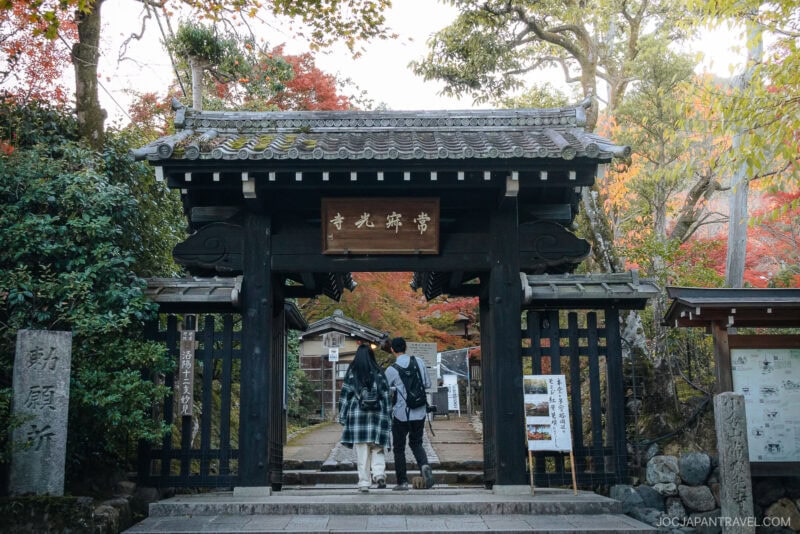
Jojakko-ji Temple is about a 15-minute walk from JR-Saga Arashiyama Station. Despite its proximity to the bustling center, it feels like a peaceful retreat. Founded by monk Nisshin (1561–1617), the temple has a 400-yen entrance fee.
The thatched Niomon Gate leads to the main hall and gardens, which include a moss garden, a small bamboo forest, and a 12-meter pagoda designated an Important Cultural Property. The main hall displays Myoken, the Bodhisattva of the North Star.
Nison-in Temple
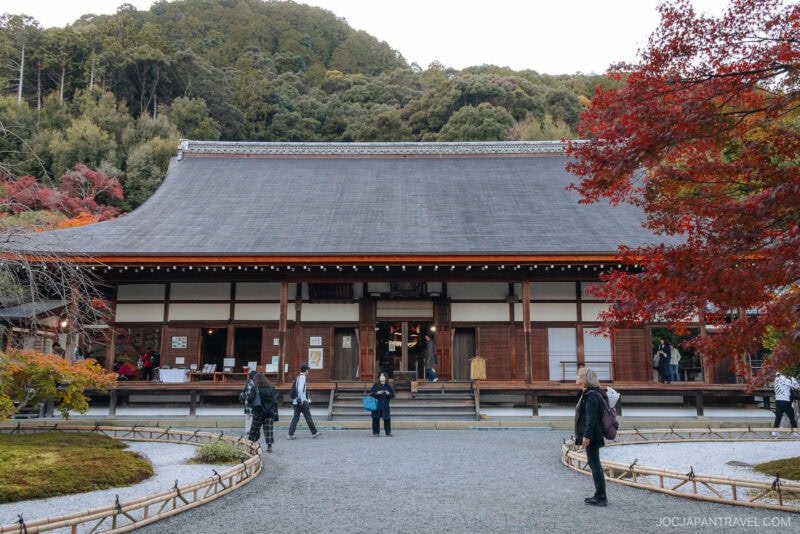
A few minutes north is Nison-in Temple, founded in the 9th century and marked by a wooden gate built in 1613. Maple-lined paths lead to the temple, with a 500-yen entrance fee.
Nison-in means “two revered images,” referring to the twin Heian Period Buddhist statues: Shaka Nyorai, guiding souls to the afterlife, and Amitabha Tathagata, welcoming them into Buddhist heaven. The grounds also feature Benten-do, a mausoleum, and a small tea room.
Despite their proximity to the bamboo forest, Jojakko-ji and Nison-in offer calm and remarkable views of Arashiyama’s nature.
eX cafe Kyoto Arashiyama
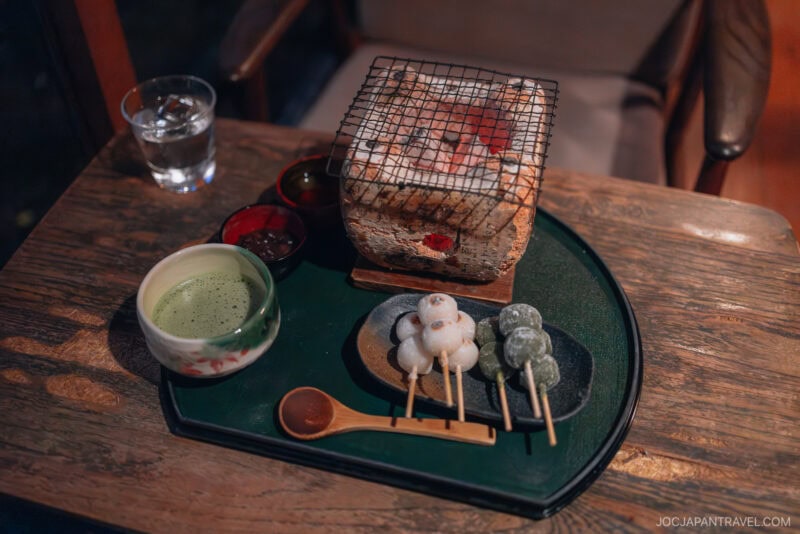
Along Arashiyama’s main street, many restaurants and cafes draw long lines. I discovered a quieter spot at eX cafe Kyoto Arashiyama, famous for its sweets.
Their signature dango set includes three sticks of regular dango and three of matcha dango, served with red bean paste and mitarashi sauce for dipping. A subtly sweet bowl of matcha rounds out the experience.
It was the perfect way to end a day of exploring in the spacious, relaxed cafe.
Beyond the Bamboo Forest
I hope this guide inspires you to explore Arashiyama’s side streets, smaller temples, and hidden cafes, beyond the well-known bamboo forest.
Next, I’ll take you to Uji, famous for matcha and home to one of the most beautiful temples I’ve ever visited.
More to Explore Nearby
Arashiyama is the highlight of Kyoto’s western hills, especially during autumn. Its temples and scenic beauty set the stage for exploring more of the Kansai region’s stunning fall foliage and iconic historical sites.
- Tofuku-ji Temple – Visit this massive Zen temple in southeastern Kyoto, renowned for its spectacular gorge that fills with vibrant red and yellow maple leaves in the fall.
- Fushimi Inari Taisha – Explore the thousands of iconic vermilion torii gates that snake up the mountain and lead to the head shrine of the god Inari.
- Eikan-do Temple – Famous for its atmospheric night illuminations during the autumn season, this temple offers some of the most beautiful evening fall views in the entire city.
- Nara Park – Take a day trip south to this vast public park, home to hundreds of friendly wild deer that roam freely among the ancient temples and cultural landmarks.