This post may contain affiliate links. Please read our disclosure policy.
Set against the Higashiyama mountains, Nanzen-ji Temple combines grand architecture, serene gardens, and a striking red-brick aqueduct that makes it one of Kyoto’s most memorable temples.
A Temple Framed by Nature
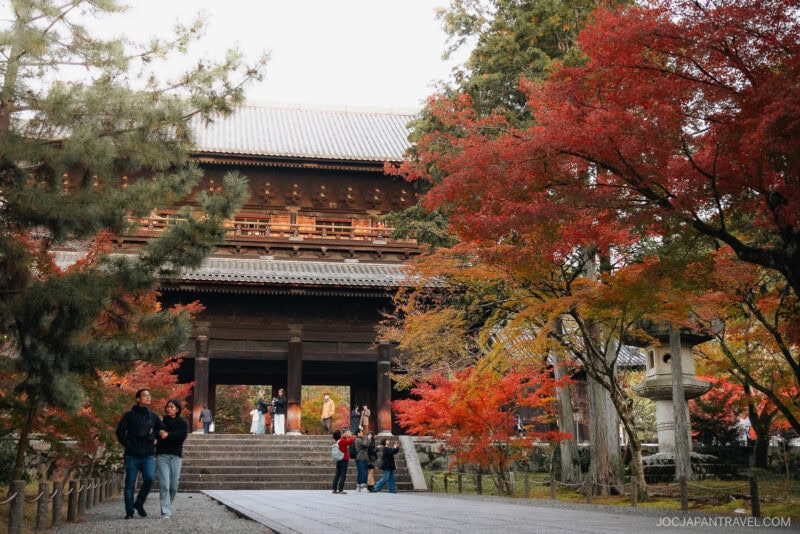
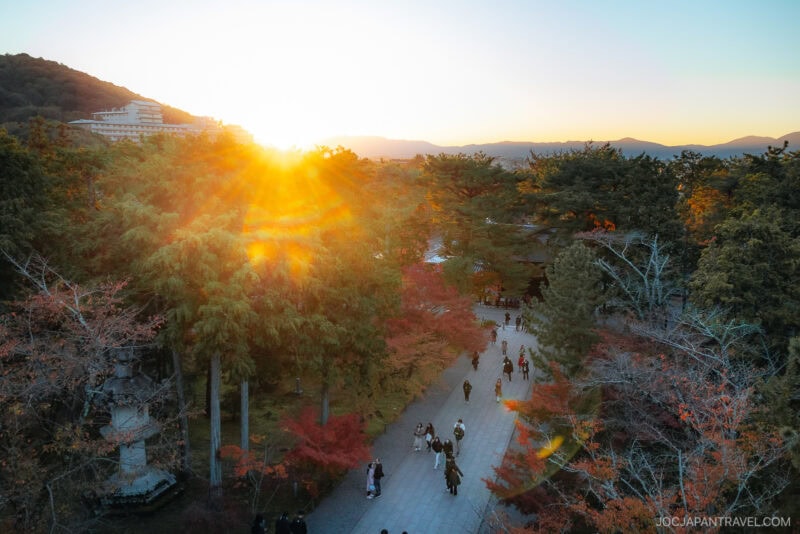
Just when we thought Kyoto’s temples couldn’t get more impressive, Nanzen-ji reminded us why the city’s spiritual heart never stops surprising us. Nestled at the base of the Higashiyama foothills, this sprawling Zen complex felt both majestic and inviting.
A Glimpse Into Nanzen-ji’s History
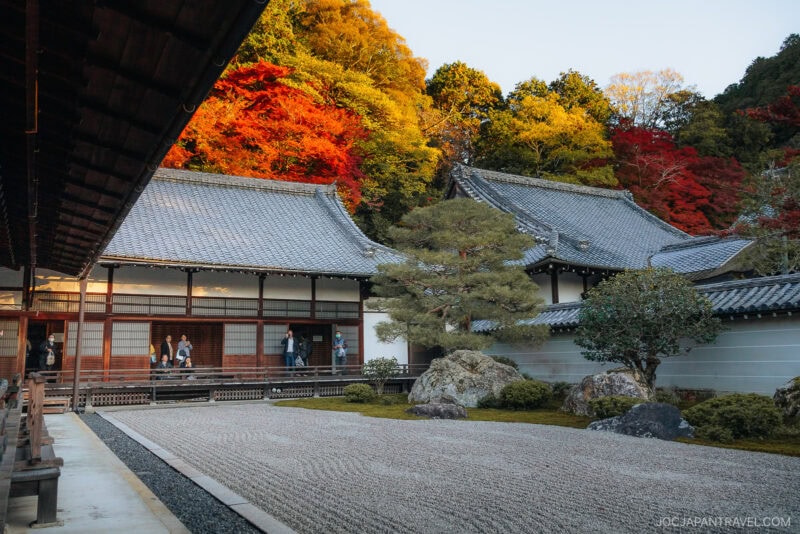
Nanzen-ji’s story began in 1264, when Emperor Kameyama built his retirement villa here. In 1291, he converted the residence into a Zen temple, laying the foundation for what became the head temple of the Nanzen-ji school of Rinzai Zen Buddhism.
Although many structures were lost to fire during the 1500s, the rebuilt halls and gates reflect exquisite craftsmanship. Today, visitors can explore not only the main grounds but also several smaller sub-temples tucked within the complex, each with its own character.
What to See at Nanzen-ji
Sanmon Gate
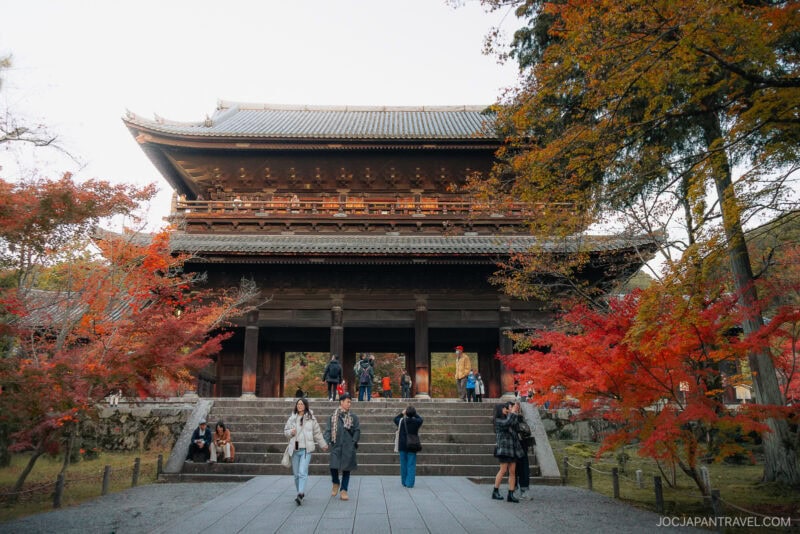
The first thing that caught our eye was the Sanmon gate rising high above the trees. Rebuilt in the 1600s, this two-story wooden structure is one of the tallest temple gates in Kyoto.
Hojo Garden
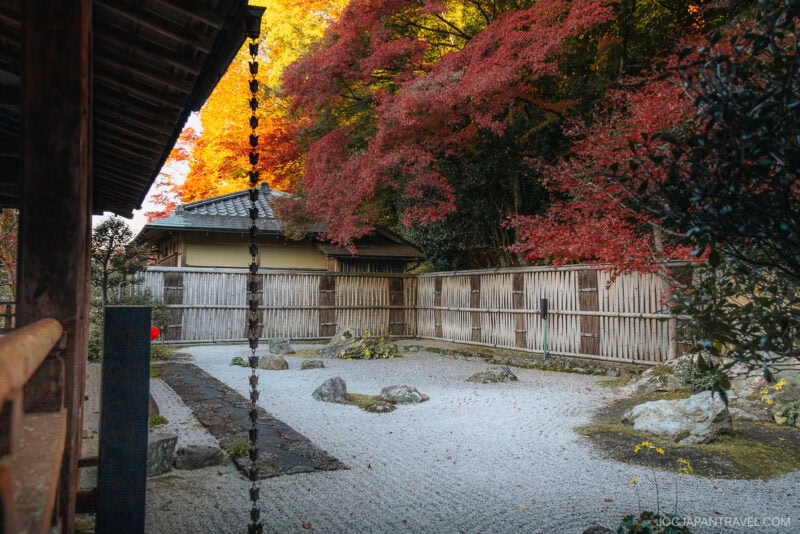
Inside the Hojo, or abbot’s quarters, is a karesansui (dry landscape) garden designed in the Edo period. Its white gravel patterns and carefully placed stones created a scene that drew us into stillness.
Fusuma Paintings
The sliding doors of the Hojo display bold tiger ink paintings by Kano Tan’yu, a master of the Edo period. These artworks felt both fierce and graceful, reminding us of the strength and elegance found in Zen art.
Lake Biwa Aqueduct
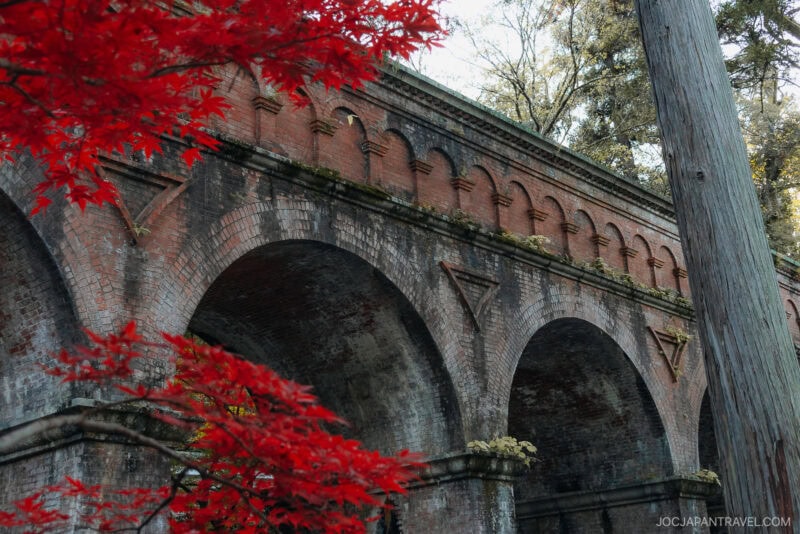
Perhaps the most surprising sight at Nanzen-ji is the red-brick aqueduct running through the grounds. Built in the late 1800s to carry water from Lake Biwa to Kyoto, it looks almost European in design yet somehow fits perfectly among the temples and pines.
Why We Loved Visiting Nanzen-ji
- The mix of history, from 13th-century origins to Meiji-era engineering
- The tranquil setting at the edge of the mountains
- The variety of spaces, from bustling gates to quiet gardens
It’s free to wander the outer grounds, Sanmon gate exterior, and aqueduct. Admission fees apply for the Hojo, inner Sanmon gate, and individual sub-temples.
How to Get to Nanzen-ji Temple
Nanzen-ji is located in northern Higashiyama, close to the southern end of the Philosopher’s Path.
By Subway
Take the Tozai Line to Keage Station. From there, it’s about a 10-minute walk through a quiet neighborhood to the temple entrance.
By Bus
Take Kyoto City Bus #5 to the Nanzenji-Eikando-michi stop. From there, it’s a 5-minute walk to the main gate.
By Taxi
A taxi from Kyoto Station takes 25 to 30 minutes. The typical fare is ¥1,800 to ¥2,500.
From the Philosopher’s Path
If you’re walking south from Ginkaku-ji, the path naturally leads toward Nanzen-ji, making it a perfect next stop.
Pro Tip: Visit in late afternoon when the aqueduct is softly lit, then continue your walk toward nearby Eikando Temple for evening illuminations in autumn.
Is Nanzen-ji Temple Worth Visiting?
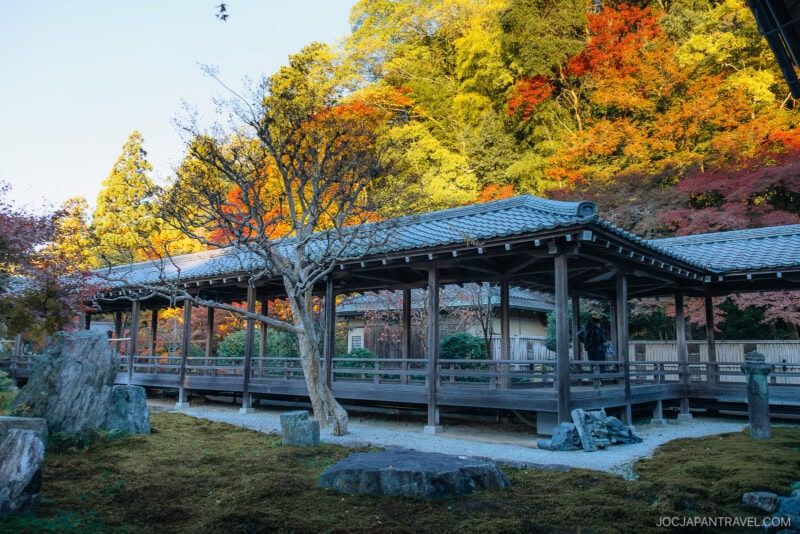
Nanzen-ji is one of those places in Kyoto that has it all, with beautiful gardens, fascinating history, and stunning art. There’s plenty of space to wander at your own pace, and it’s usually less crowded than some of the city’s bigger temples. Whether you’re drawn to grand gates, Zen gardens, or unexpected surprises like the aqueduct, Nanzen-ji is well worth adding to your Kyoto itinerary.
More to Explore Nearby
Nanzen-ji is a profound Zen temple and one of Kyoto’s most important Rinzai school centers. Its location on the eastern edge of the city makes it a convenient starting point for exploring other world-class temples, serene natural areas, and the city’s culinary heart.
- Kinkaku-ji (Golden Pavilion) – Visit this UNESCO World Heritage Site, famous for its brilliant gold leaf facade reflecting beautifully over a tranquil pond.
- Arashiyama Bamboo Grove – Wander through this famous towering bamboo forest, a natural and serene contrast to the solemn atmosphere of Nanzen-ji.
- Nishiki Market (Kyoto) – Explore Kyoto’s famous “Kitchen,” a bustling covered market filled with specialized food vendors, perfect for sampling local pickles, seafood, and sweets.
- Nara Park – Take a short trip to the ancient capital of Nara, where hundreds of friendly wild deer roam freely among significant historical temples and shrines.