This post may contain affiliate links. Please read our disclosure policy.
Ginkakuji Temple, the Silver Pavilion in Kyoto’s Higashiyama district, blends Zen aesthetics, moss gardens, and historic culture as part of a UNESCO World Heritage Site.
A Zen Retreat in Higashiyama
One area that never fails to captivate me is Higashiyama. Walking along the Philosopher’s Path, you’ll discover a treasure trove of quaint cafes, monuments, and hidden treasures.
The highlight of the area is Ginkakuji (銀閣寺), or the Silver Pavilion, one of Kyoto’s most celebrated Zen temples.
History of Ginkakuji
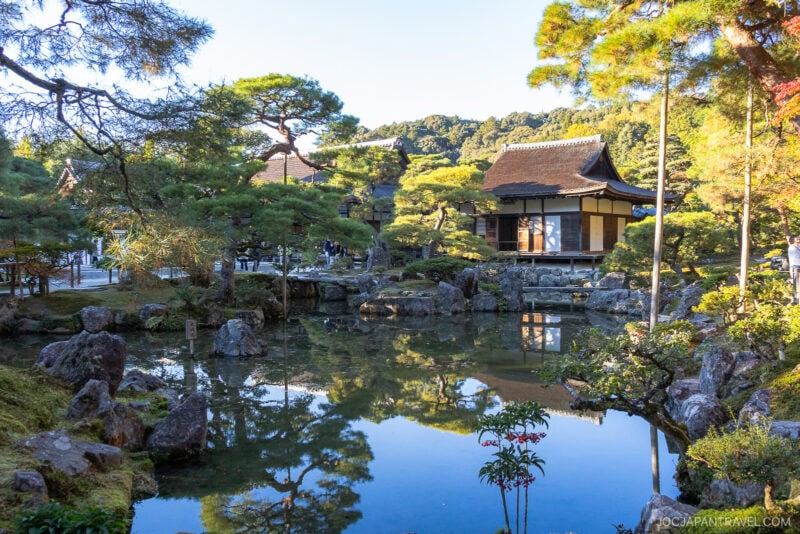
Ginkakuji was originally built in 1482 as a retirement villa for the shogun Ashikaga Yoshimasa. It was inspired by Kinkakuji (the Golden Pavilion), commissioned by his grandfather, Ashikaga Yoshimitsu.
Under Yoshimasa, Ginkakuji became a vibrant center of Higashiyama culture during the Muromachi Period, a golden era of artistic and cultural flourishing in Japan. Tea ceremonies, Noh theater, poetry, landscape design, and flower arrangement all thrived here.
After Yoshimasa passed away in 1490, the villa was converted into a Zen temple according to his wishes and named Jishoji, after his posthumous Buddhist name. In 1994, Ginkakuji was recognized as a UNESCO World Heritage Site. It embodies the Buddhist principle of wabi-sabi, celebrating beauty in imperfection and the passage of time.
What to do at Ginkakuji
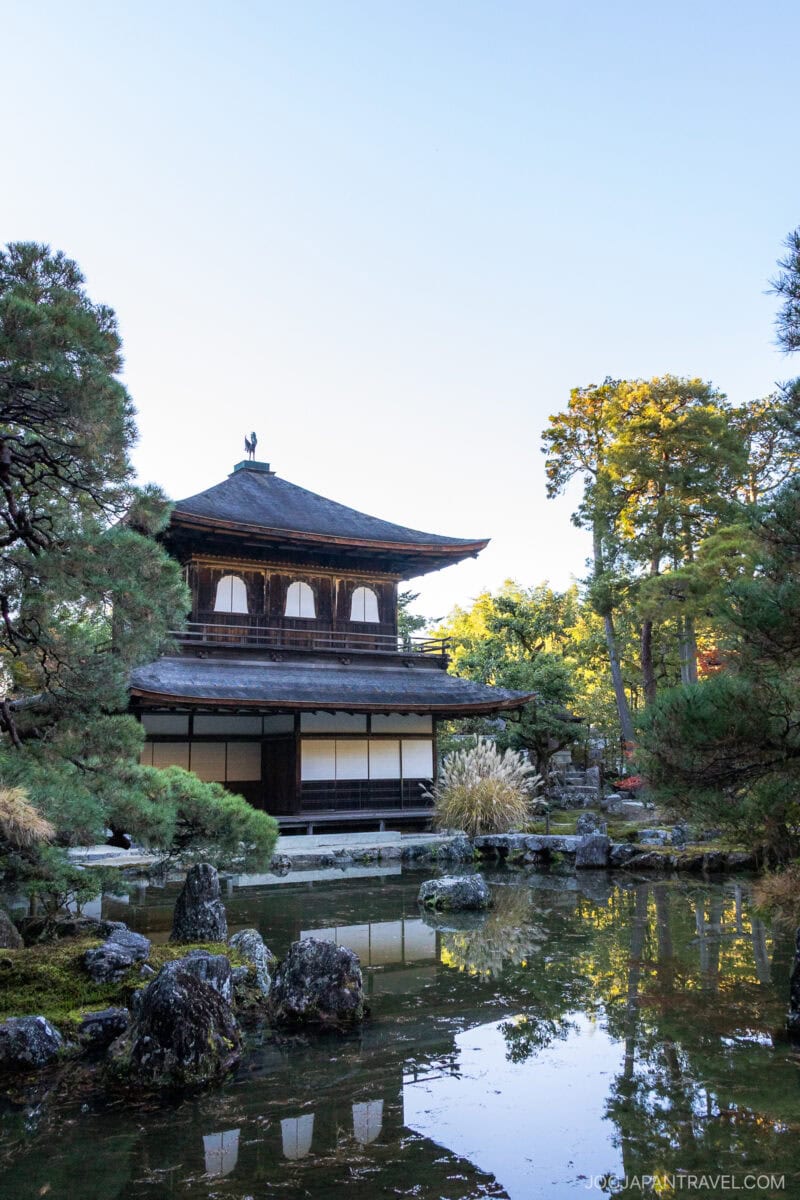
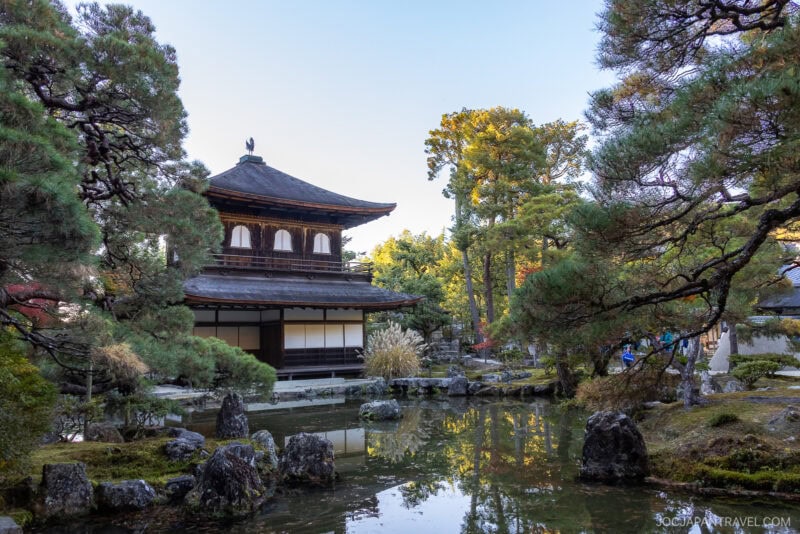
Upon entering Ginkakuji’s grounds, your eyes will be drawn to the two-story Silver Pavilion, or Kannon-den (Kannon Hall). Despite its name, the pavilion is not covered in silver.
Yoshimasa intended to coat it like Kinkakuji with gold leaf, but this plan was never completed. The nickname “Silver Pavilion” emerged during the Edo period (1600–1868), and the structure remains much as Yoshimasa saw it centuries ago.
The Silver Pavilion (Kannon-den)
The first floor, Shinkuden or Hall of the Floating Heart, features shoin-zukuri architecture, a traditional style common in mansions and temples, and beautiful shoji screens.
The second floor, Choondo, or Tower of Roaring Waves, reflects a more austere Zen Buddhist style, with bell-shaped windows and a balcony. While visitors cannot enter the pavilion, it houses a statue of Kannon, the Buddhist goddess of mercy.
The Sea of Silver Sand and Moon Viewing Platform

Following the path, you arrive at the Sea of Silver Sand, one of Ginkakuji’s most iconic features. Gardeners rake the sand into precise patterns that mimic the gentle ripples of the ocean. From the sand rises the two-meter-high Kogetsudai, or Moon Viewing Platform. From above, the pavilion and sand garden together evoke Mount Fuji with the full moon reflected in the sea.
Right next to the garden, the hondo (main hall) showcases beautifully decorated fusuma (sliding doors), though visitors cannot enter.
Next to it stands the Togudo, the only other original building besides the Silver Pavilion. This architectural gem shaped the design of future elite military structures and houses Japan’s oldest surviving tea room, the 4.5-tatami Dojinsai, which went on to inspire tea rooms throughout the country.
The Moss Garden and Scenic Overlook
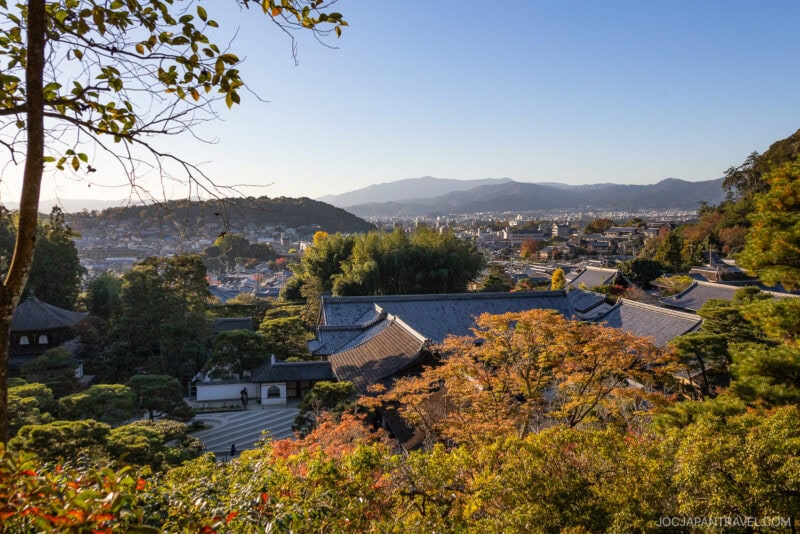
Throughout the temple grounds, moss gardens cover the landscape in rich, velvety green. The classic Japanese design includes a tranquil pond, small islands, and stone bridges. I recommend climbing to the top of the garden for a view that lets you admire the layout, architecture, and gardens all at once.
How to Get to Ginkakuji Temple
By Bus
From Kyoto Station, take Kyoto City Bus 5 or 17 to Ginkakuji-michi. The ride takes about 35–40 minutes. From the stop, walk 5–10 minutes to the temple entrance.
On select operation days, the Limited Express EX100 runs from Kyoto Station to Ginkakuji-mae in about 30 minutes with fewer stops.
By Train + Bus
From Gion-Shijo or Sanjo on the Keihan Line, ride to Demachiyanagi, then take City Bus 7 or 203 to Ginkakuji-michi. Total time is about 25–35 minutes, plus a short walk.
By Taxi
From Kyoto Station, a taxi takes about 25–30 minutes, depending on traffic. Expect around ¥2,000–¥2,500.
Pro Tip: Ginkakuji-michi has multiple platforms. Check the sign for the correct letter bay before boarding your return bus. Arrive early to avoid crowding.
More to Explore Nearby
After strolling through the moss gardens and sand patterns of Ginkaku-ji, there are several nearby spots worth visiting:
- Philosopher’s Path – A peaceful stone walkway lined with cherry trees and smaller temples, perfect for a reflective stroll.
- Kyoto Station (京都駅) – A modern architectural hub with rooftop views, shopping, and dazzling LED light shows at night.
- Kinkaku-ji (金閣寺) – The iconic Golden Pavilion, shimmering above its reflecting pond, located on the opposite side of the city but easy to reach by bus or taxi.
- Arashiyama Bamboo Forest – A scenic area with temples, riverside views, and towering groves of bamboo, ideal for a day trip.