This post may contain affiliate links. Please read our disclosure policy.
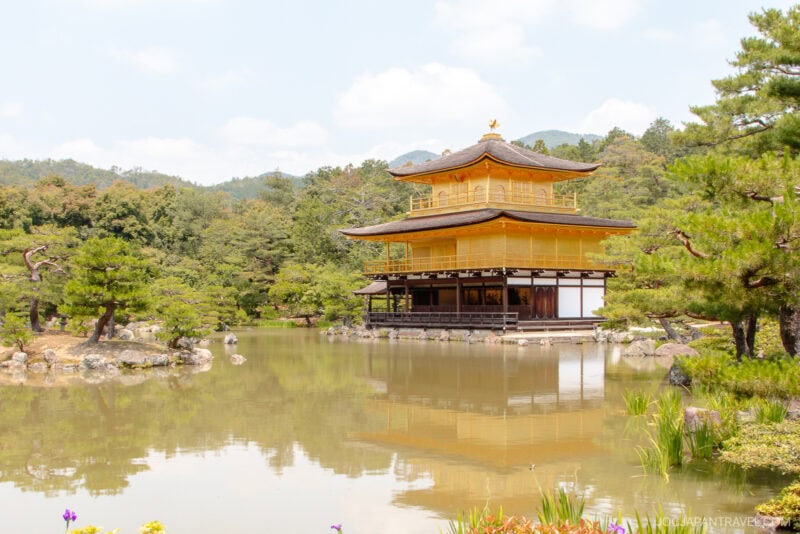
Glistening in the sunlight, Kinkaku-ji in Kyoto is one of Japan’s most iconic sights and a must-visit for any traveler.
Kyoto‘s Shimmering Icon
The first time we saw Kinkaku-ji in person, it simply took our breath away. Covered in brilliant gold leaf and surrounded by tranquil gardens, this Zen Buddhist temple is every bit as magical in real life as it appears in photos. Whether you visit during cherry blossom season, amid the fiery hues of autumn, or after a gentle snowfall, the sight of the temple shimmering above Mirror Pond is something any visitor won’t forget.
Shogun Ashikaga Yoshimitsu commissioned Kinkaku-ji (金閣寺), also known as the Golden Pavilion, in 1397 as his retirement villa. After his death, his heirs converted it into a Zen temple belonging to the Rinzai sect. Although a devastating fire destroyed the original structure, craftsmen rebuilt it in 1955. Today, it remains one of Kyoto’s most iconic and beloved landmarks.
Why Is Kinkaku-ji Covered in Gold?

Zen temples are usually known for their simplicity—so why does this one glitter in gold?
The shogun originally had gold leaf applied to the second and third floors of Kinkaku-ji to showcase his immense wealth and authority. But after the villa became a Zen temple, the golden glow took on deeper meaning. Today, it represents far more than opulence. (And in case you’re wondering—no, visitors aren’t allowed inside the Golden Pavilion.)
Here’s what the gold represents:
- Purification: Gold is believed to ward off evil and purify the soul.
- Enlightenment: In Buddhist tradition, gold symbolizes spiritual awakening and transcendence.
- Reflection: The way the temple gleams over Mirror Pond evokes the harmony between the physical and spiritual worlds.
Fun fact: During a major restoration in the 1980s, the gold leaf was thickened fivefold, giving the pavilion the dazzling brilliance we see today.
The Pavilion’s Unique Architecture

Each of the three floors features a distinct style of Japanese architecture:
First Floor – Shinden-zukuri (Heian Palace Style)
Wooden pillars and white plaster walls reflect the style of aristocratic residences. Inside is a seated Buddha, though it’s not visible to visitors.
Second Floor – Buke-zukuri (Samurai House Style)
Architects modeled this floor after samurai residences from the Kamakura period and partially gilded it with gold leaf. It houses a statue of Kannon, the Goddess of Mercy.
Third Floor – Zen Style
Inspired by Chinese Zen halls, this level is entirely covered in gold leaf and topped with a golden phoenix.
Together, these architectural styles tell the story of Japan’s layered cultural history, blending aristocratic, warrior, and spiritual influences into a single harmonious structure.
Exploring the Zen Gardens at Kinkaku-ji

As stunning as the temple is, the surrounding gardens are just as worth your time. Walking the paths around Mirror Pond (Kyoko-chi) gave us the chance to soak in the peaceful atmosphere and take in the views from every angle.
As stunning as the temple is, the surrounding gardens are just as captivating, and absolutely worth lingering in. Walking the quiet paths around Mirror Pond (Kyōko-chi) gave us a moment to slow down, breathe deeply, and take in the views from every angle.
Garden Highlights
- Mirror Pond: Don’t miss the tiny islands symbolizing paradise. One of them holds a beautifully shaped pine tree said to be over 600 years old—it’s easy to overlook, but worth seeking out.
- Anmintaku Pond: This smaller, shaded pond is said to never dry up and holds sacred stones believed to carry spiritual significance. It felt especially serene when we passed by.
- Sekkatei Teahouse: Tucked away at the back of the garden, this Edo-period teahouse invites you to rest with a bowl of matcha and a traditional sweet (for a small fee). It’s a quiet, lovely spot to pause and take in the garden’s stillness.
📸 Photo Tip: Try to arrive early in the morning before the tour groups roll in. The soft morning light and calm atmosphere make it the perfect time for photos (and for enjoying the space without the crowds).
How to Get to Kinkaku-ji
Train
- From Kyoto Station, take City Bus #101 or #205 directly to Kinkaku-ji-michi Bus Stop.
- From the bus stop, it’s about a 5-minute walk to the entrance.
- Total travel time: 40 minutes.
Bus
- You can also take buses from Gion or Shijo-Kawaramachi. Look for buses heading to Kinkaku-ji or Kitaoji Bus Terminal.
Taxi
- A taxi from Kyoto Station costs around ¥2000–¥2500 and takes about 25–30 minutes depending on traffic.
Travel Tip: Based on feedback from JOC readers, getting around Kyoto by public transportation has become increasingly difficult due to heavy crowds. If you’re short on time, taking a taxi might be a better option. Alternatively, we’ve heard that exploring the city by e-bike is also a great way to get around.
Why You Shouldn’t Miss Kinkaku-ji
If it’s your first time in Kyoto, Kinkaku-ji definitely deserves a spot on your itinerary. There’s nothing quite like seeing the Golden Pavilion in person—shimmering in the sunlight, framed by tranquil Zen gardens. With its peaceful atmosphere and rich history, this iconic landmark is one of those Kyoto experiences that stays with you long after your trip.
More to Explore Nearby
After taking in the golden reflections at Kinkaku-ji, consider visiting these nearby spots to round out your Kyoto day:
- Toei Kyoto Studio Park – A fun Edo-era movie set where you can dress up as a ninja or samurai and enjoy live action shows.
- Kyoto Station (京都駅) – More than just a train hub, it’s a striking modern building with rooftop views, dining, and shopping.
- Arashiyama Bamboo Forest – A tranquil bamboo grove with nearby temples and riverside scenery, great for families and photographers.
- Kyoto Skytree Sushi Toriton – (Optional if you’d like to stretch regionally for variety, though not Kyoto-based.)