This post may contain affiliate links. Please read our disclosure policy.
Step into Ryoan-ji, a quiet temple in northwest Kyoto known for its world-famous rock garden, peaceful pond, and calming Zen atmosphere.

A Temple That Inspires Stillness
Ryoan-ji (竜安寺) is unlike any other temple we’ve visited in Kyoto. While nearby Kinkaku-ji dazzles with its golden shimmer, Ryoan-ji draws you in with quiet mystery and minimalism. This UNESCO World Heritage Site is home to Japan’s most iconic Zen rock garden—a place designed not to impress with grandeur, but to invite deep reflection.
We found ourselves pausing longer than expected here. Even our kids sat still, watching the rocks and lines of gravel as if something unspoken was waiting to be understood.
The Zen Rock Garden That No One Can Explain

Ryoan-ji’s rock garden (枯山水, kare-sansui) is simple at first glance, but unforgettable once you’ve seen it. It’s a flat rectangle of fine white gravel, carefully raked into straight lines. On it sit 15 stones arranged in five small groups—seemingly random, but full of hidden meaning.
Here’s what makes it so fascinating:
- The entire garden spans about 250 square meters (2,700 sq ft)
- From any angle, at least one of the 15 stones is always hidden from view
- No one knows who built it, what it represents, or why it was made this way
Some say the stones represent a tiger crossing water, floating islands, or a Zen riddle meant to push the mind beyond logic. Others believe it embodies wabi-sabi, the Japanese idea of finding beauty in imperfection and the passage of time.
No matter the theory, the garden’s power lies in how it makes you feel. For us, it was a rare moment of stillness.
A Temple With Samurai Roots

Though the garden’s meaning is unclear, Ryoan-ji’s history is well recorded. The grounds were once a noble’s villa during the Heian period. In 1450, the site was turned into a Zen temple by Hosokawa Katsumoto, a powerful warlord and patron of the arts.
The rock garden is believed to have been created around 1499, along with the temple’s Hojo (abbot’s quarters). Over the centuries, Ryoan-ji has survived wars, fires, and reconstruction—yet the garden’s layout remains untouched.
More to See at Ryoan-ji

While the rock garden gets all the attention, the rest of the temple is equally peaceful and worth exploring. We followed the walking paths and found ourselves surrounded by mossy trees, still water, and beautiful seasonal views.
Highlights from the Grounds
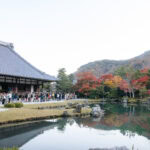
- Kyoyochi Pond (鏡容池): A calm, mirror-like pond originally from the Heian era. In spring and autumn, it reflects the changing colors beautifully.
- Hojo Hall (方丈): The abbot’s residence, with simple wooden interiors and old sliding-door paintings.
- Moss Garden: A soft contrast to the raked gravel—green, lush, and deeply soothing to walk through.
A Moment of Zen

We recommend taking your time at Ryoan-ji. It’s not a place to rush through. Sit on the wooden veranda and let the silence settle in. This is where Zen practice begins—not with words, but with presence.
Tea Break Tip: Near the temple entrance, there’s a tea house offering matcha and sweets. Sipping hot green tea while surrounded by gardens helped us stay in the moment just a little longer.
How to Get to Ryoan-ji
Train
- From Kyoto Station, take the JR Sanin Line to Emmachi Station, then transfer to the Keifuku Kitano Line and get off at Ryoanji Station.
- Walk 5–10 minutes to the temple entrance.
- Total travel time: 35–40 minutes.
Bus
- Take Kyoto City Bus #50 or #59 from Kyoto Station or central Kyoto to Ritsumeikan-Daigaku-mae or Ryoan-ji-mae Bus Stop. Walk 5 minutes.
Taxi
- A taxi from Kyoto Station takes about 25–30 minutes and costs around ¥2,000–¥2,500.
Pro Tip: Visit Kinkaku-ji first, then take a short taxi ride or walk 20 minutes to Ryoan-ji for a perfect two-temple day.
Is Ryoan-ji Worth Visiting?

Yes definitely! Ryoan-ji may not dazzle with gold or size, but it quietly leaves a lasting impression. Its Zen rock garden is one of Japan’s most famous and invites reflection in a way that feels both personal and profound.
Whether you’re a first-time visitor to Kyoto or returning to see it all again, Ryoan-ji offers something special. We left feeling more grounded, as if time had slowed down just enough to notice the beauty around us.
More to Explore Nearby
After reflecting in front of Ryoan-ji’s famous rock garden, explore more of Kyoto’s western side with these nearby destinations:
- Kinkaku-ji (金閣寺) – Just a short walk away, the Golden Pavilion is one of Japan’s most iconic temples, shimmering above its reflecting pond.
- Toei Kyoto Studio Park – A family-friendly theme park where you can dress as a ninja or samurai and walk through Edo-period film sets.
- Kyoto Station (京都駅) – A transportation hub that doubles as a sightseeing spot, thanks to its architecture, rooftop views, and night light shows.
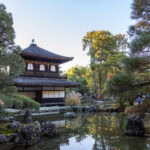
- Ginkaku-ji (銀閣寺) – Also known as the Silver Pavilion, this Zen temple features moss gardens and sweeping hillside views.