This post may contain affiliate links. Please read our disclosure policy.
Higashiyama District is the part of Kyoto that still looks like Kyoto. Stone lanes, wooden fronts, and a pagoda over the rooftops.
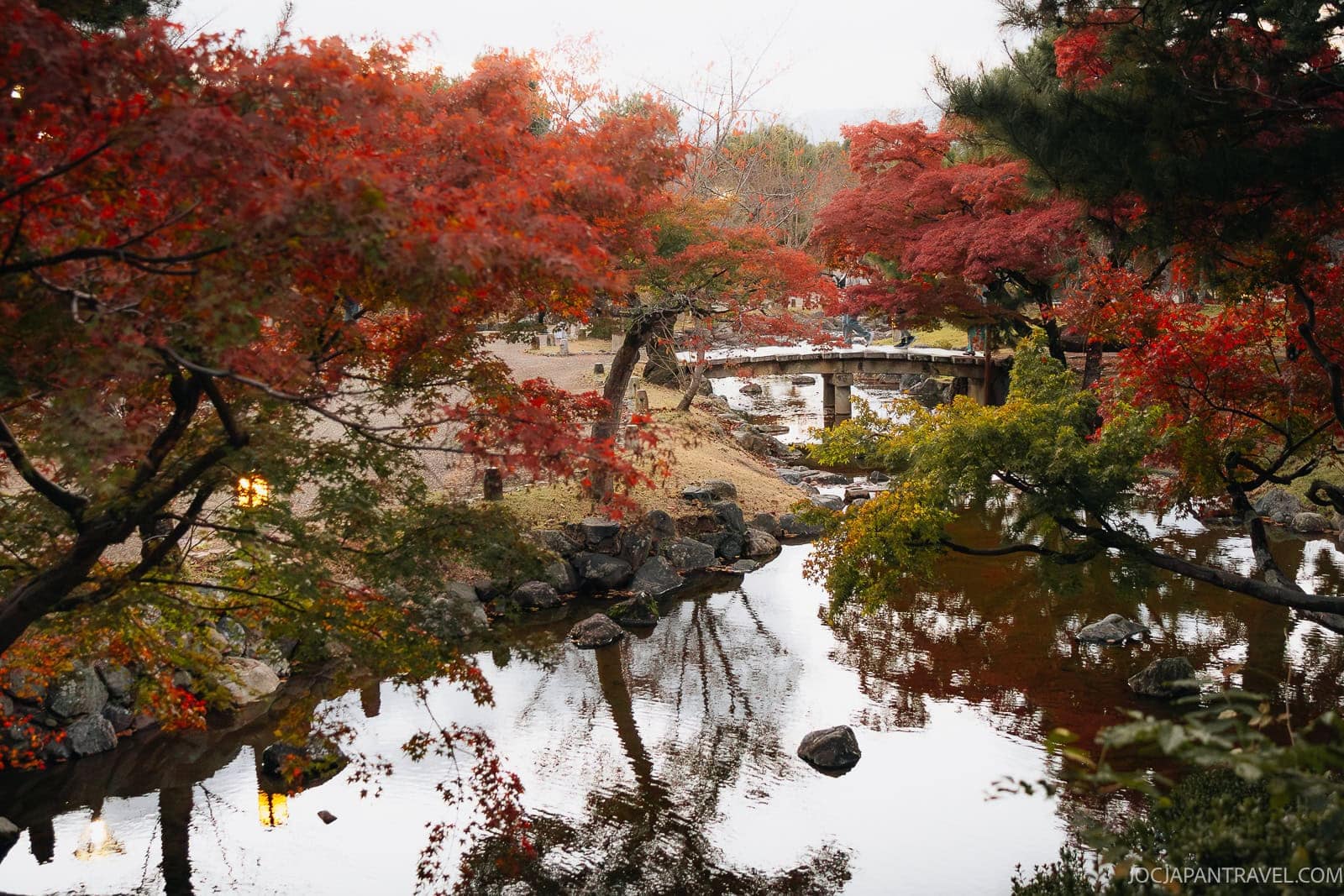
Most of Kyoto is a modern city with old things in it. Higashiyama district is the reverse. The lanes climb the eastern hills in stone, the shopfronts are wood, and a five-story pagoda keeps appearing between the roofs. I walked it in autumn and spent more time queueing than walking. It is still the first place I would send anyone with one day in the city.
Table of Contents
Kiyomizu-dera
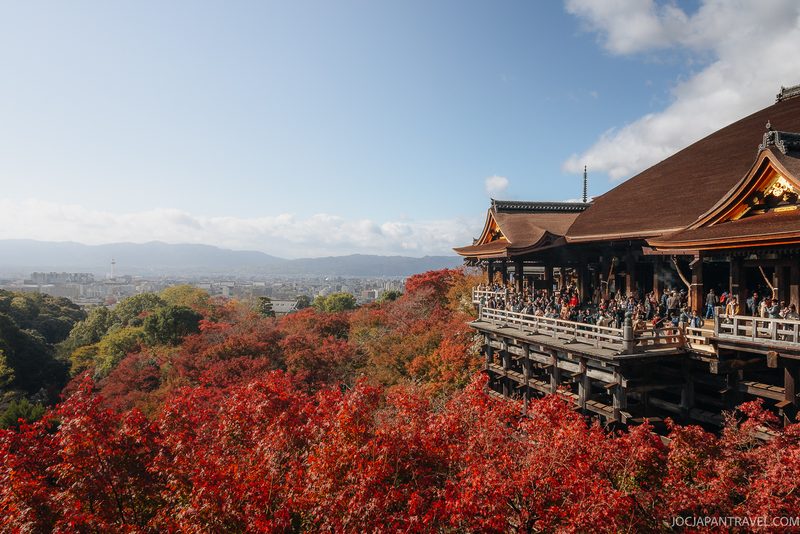
The temple at the top of the hill, and the one everybody is walking toward. Builders raised the first version in 778 and rebuilt it in 1633. It honors Kannon, the goddess of mercy. The wooden stage is the reason to come, held together without nails and hanging out over the slope. The view from it runs across the whole city. Come in cherry blossom season or autumn and you will not be alone on it. Our full guide to Kiyomizu-dera covers the grounds in more detail.
- Hours and fees. 6:00–18:00, extended to 18:30 in July and August. Open year-round. 500 yen
Ninenzaka and Sannenzaka
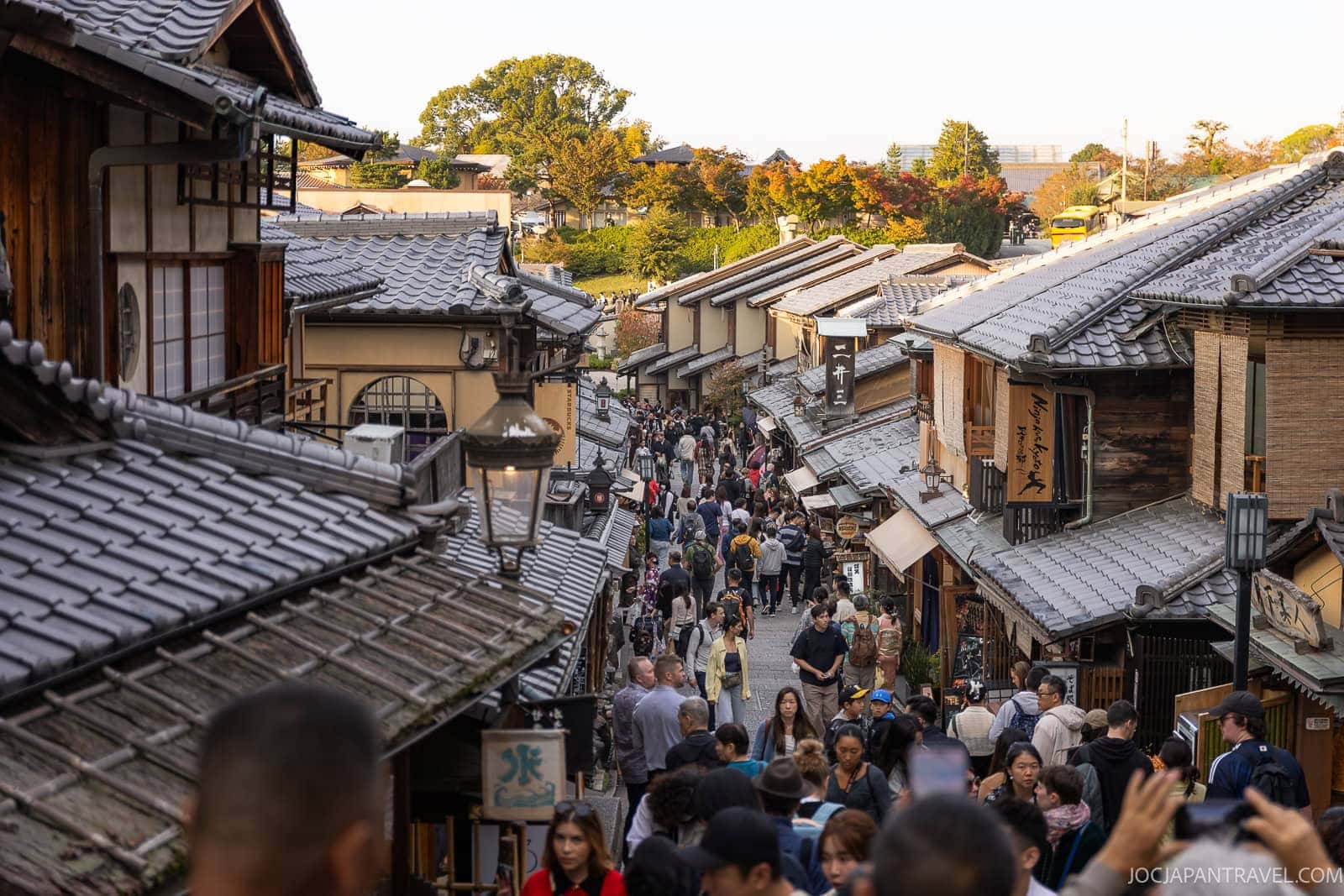
The two stone approaches to Kiyomizu-dera, lined with tea houses and craft shops in old wooden buildings. People have been walking up here for centuries. You will find Kyoto pottery, yatsuhashi, and matcha in every form somebody could think of. This is also where the crowding is worst. When I came in autumn it was close to shoulder to shoulder, and moving uphill took real patience.
- Hours and fees. Open 24 hours, though shop hours vary. Free
Yasaka Pagoda
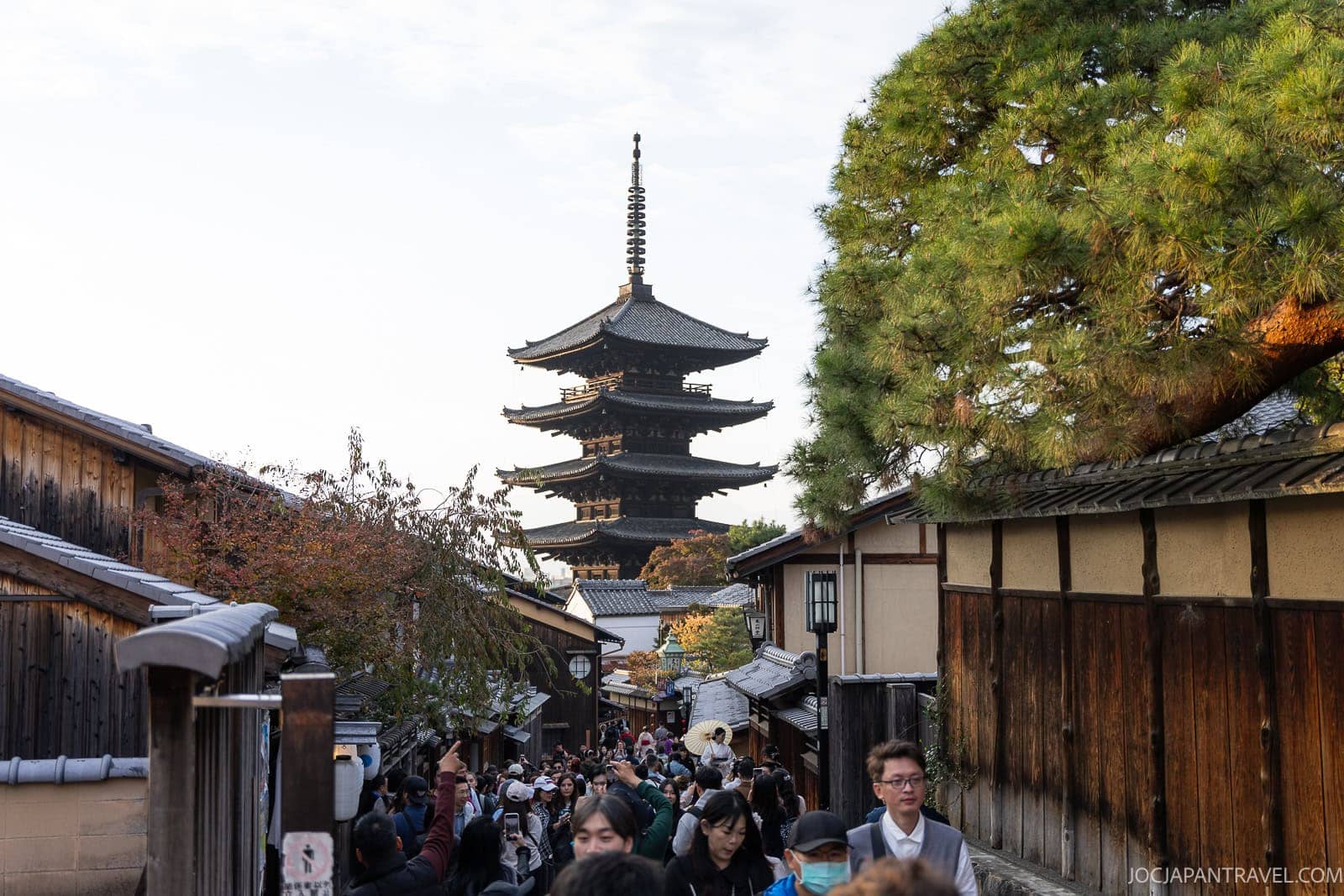
The pagoda is all that remains of Hokanji Temple, and it is the landmark you keep catching between rooftops as you walk. Five stories, and unusually, you can go inside it. Most pagodas in Japan stay shut. The opening days are irregular, so treat getting in as luck rather than a plan.
- Hours and fees. 10:00–15:00, irregular opening days. 400 yen
Gion
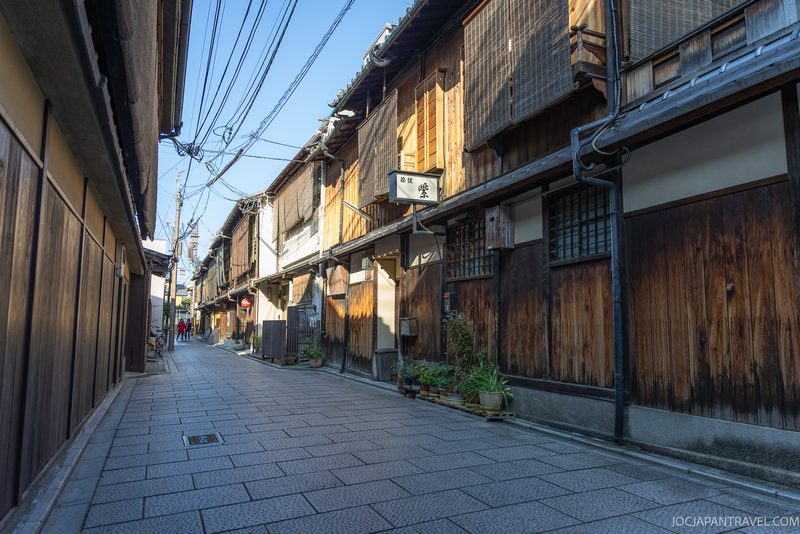
Kyoto’s geisha district, and the one part of Higashiyama that is still somebody’s workplace. Machiya townhouses, tea houses, and ryotei restaurants line the lanes. Geiko and maiko still work here, and they are not a display. Keep out of doorways, do not block the narrow streets, and do not chase anyone down them for a photograph. Our guide to Gion goes further into the district.
- Hours and fees. Open 24 hours, though shop hours vary. Free
Kodaiji Temple
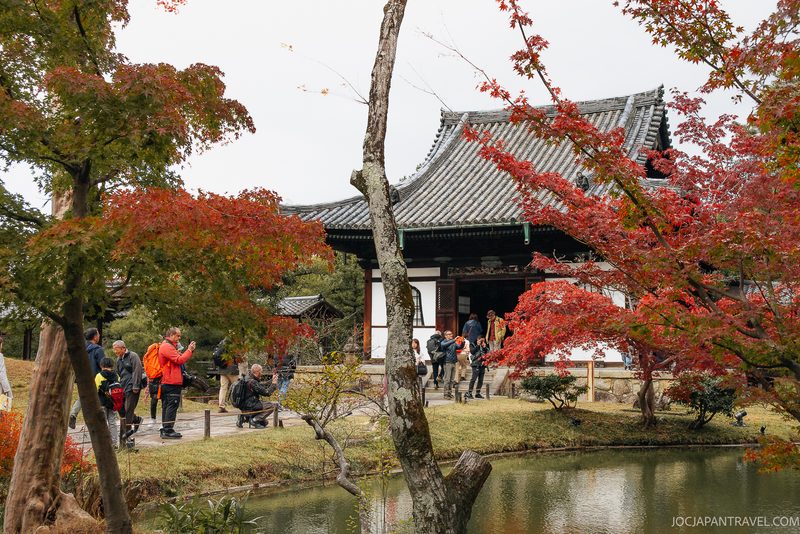
A Rinzai Zen complex built in 1606, and the quietest of the temples on this route. Nene raised it in memory of her husband, Toyotomi Hideyoshi, and both are entombed here. There are two landscaped gardens, an ornate main hall, and several tea houses. The spring night illuminations are worth planning around if your dates line up.
- Hours and fees. 9:00–17:30, last entry 17:00. Spring illuminations run until 21:30. Open year-round. 600 yen
Maruyama Park and Yasaka Shrine
The green space in the middle of it all, with orchards, rest houses, and somewhere to sit down. After the climb to Kiyomizu-dera, you will want it. The giant weeping cherry is the centerpiece, and it is lit at night in spring. That is when I would come, rather than the middle of a spring afternoon.
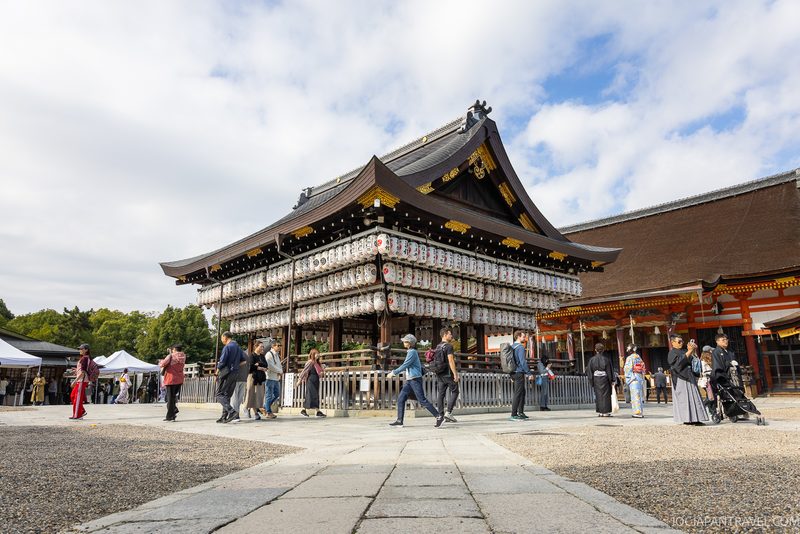
Yasaka Shrine at the eastern end of Maruyama Park, also called Gion Shrine, was founded over 1,350 years ago. Its main hall is unusual in that it puts the inner sanctuary and the offering hall under one roof. In front of it stands a dance stage hung with hundreds of lanterns, which are lit after dark. The shrine runs Gion Matsuri in July, one of the largest festivals in the country.
- Hours and fees. Open 24 hours. Free

Andy’s Travel Tips
These simple tips will help you when you visit.
- Start at the top and walk down. Take a bus or taxi to Kiyomizu-dera and let gravity handle the rest of the route.
- Go early or go late. The lanes below Kiyomizu-dera choke up by mid-morning, and the crowd does not thin until closing.
- Walk rather than ride in peak season. Buses along this route fill and stop taking passengers during cherry blossom and autumn foliage weeks.
- Treat Gion as a working neighborhood. Stay out of doorways, keep the lanes clear, and never follow a geiko or maiko for a photograph.
- Come back after dark for Maruyama Park. The weeping cherry is illuminated in spring and the park is a different place at night.
Is Higashiyama Worth Visiting?
Yes, and if you only have one day in Kyoto this is where to spend it. Nowhere else in the city holds this much history in walking distance. The crowds are the real cost, and they are worse than anywhere else on this side of Kyoto. Start at dawn or come in the last two hours and you get a different district entirely.
More to Explore Nearby
- Philosopher’s Path – The canal walk north from Nanzenji, and the quiet counterpart to these lanes.
- Nanzen-ji – A grand Zen complex at the north end of the eastern hills, with a brick aqueduct running through it.
- Ginkakuji – The Silver Pavilion, where the Philosopher’s Path ends, and a short bus ride north.
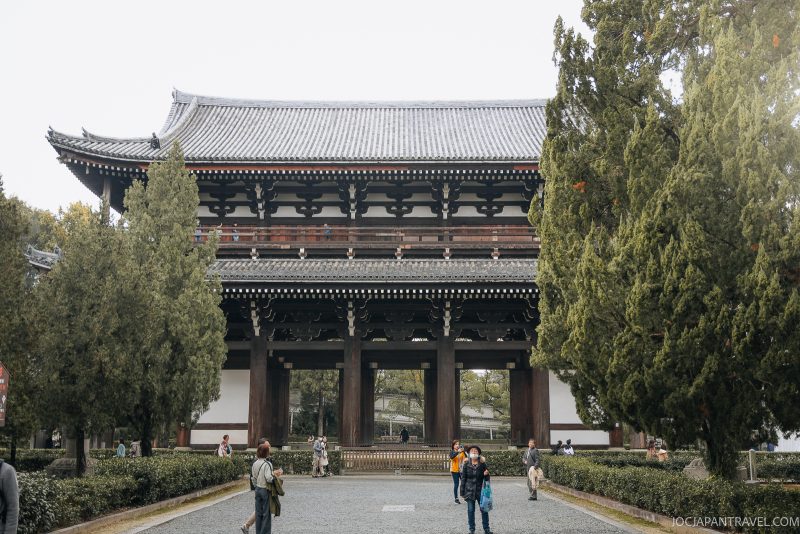
- Tofukuji – A large Zen temple south of Higashiyama, best known for the maples in its valley.