This post may contain affiliate links. Please read our disclosure policy.
An evening in Gion offers a glimpse of old Kyoto, with lantern-lit streets, traditional wooden townhouses, and the rare chance to spot a geisha or maiko.

What Makes Gion Special
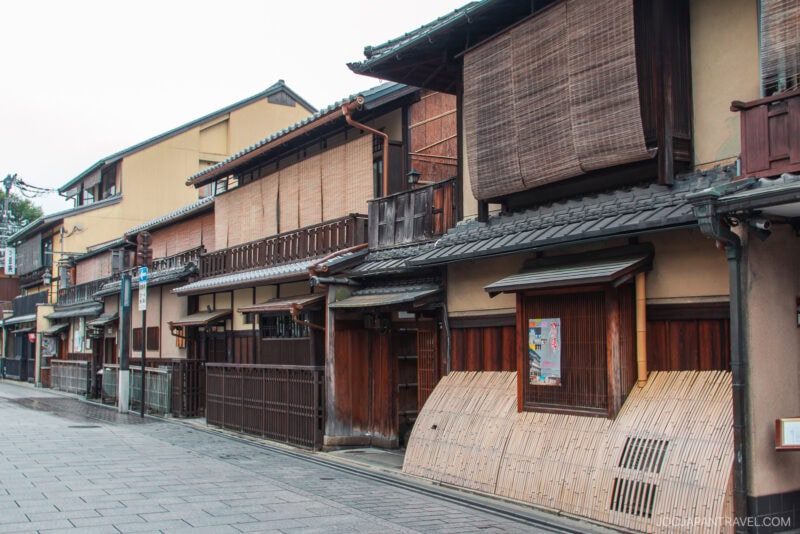
Gion is Kyoto’s most famous geisha district and one of Japan’s best-preserved historic neighborhoods. Its charm comes not just from the rows of traditional machiya townhouses but also from the fact that geisha and maiko still live, train, and work here.
Walking through Gion, we could almost imagine life as it once was. We admired the architecture and soaked in the soft glow of lanterns that light up the streets at night.
Highlights of Gion
Tea Houses and Geisha Culture
Tea houses (ochaya) remain central to Gion’s identity. While private geisha entertainment is invitation-only, visitors can enjoy cultural performances at venues like Gion Corner or certain ryotei restaurants.
Traveler Tip: If you see a geisha or maiko in public, admire quietly from a distance. Blocking their path or asking for selfies is considered disrespectful and has caused frustration among locals.
A Photographer’s Dream
The early morning and evening are the best times to walk through Gion. The streets are calmer, bathed in soft light, and filled with the glow of paper lanterns. We saw rickshaws passing by, adding to the timeless atmosphere.
Where to Explore in Gion

Hanami-koji Street
The heart of Gion, Hanami-koji is lined with historic restaurants and teahouses. Strolling down this cobbled street surrounded by wooden buildings gave us a deep appreciation for Kyoto’s commitment to preservation.
Shirakawa Area
Along the Shirakawa Canal, willow trees and stone bridges create one of Gion’s most romantic corners. It felt quieter here, with traditional restaurants overlooking the water.
Yasaka Shrine
At the eastern edge of Gion is Yasaka Shrine, which has stood for more than 1,300 years. We especially enjoyed visiting in the evening when the shrine grounds were softly illuminated. In July, Yasaka becomes the center of the Gion Matsuri, one of Japan’s most famous summer festivals.
How to Get to Gion
Gion is located in central Kyoto, just east of the Kamo River and close to the Higashiyama district.
From Kyoto Station
Take Kyoto City Bus #100 or #206 to the Gion bus stop. Travel time is about 20 minutes, depending on traffic.
By Train
- Keihan Line – Gion-Shijo Station (5-minute walk)
- Hankyu Line – Kawaramachi Station (10-minute walk)
By Taxi
A taxi from Kyoto Station to Gion takes about 10 minutes. The fare is around ¥1,500 to ¥2,000.
On Foot
Gion is within walking distance of Kiyomizu-dera, Maruyama Park, and the Philosopher’s Path. It makes it easy to add to your sightseeing route.
Pro Tip: Visit in the evening to enjoy the lantern-lit streets with fewer crowds, but avoid taking photos of geisha and maiko without permission.
Is Gion Worth Visiting?
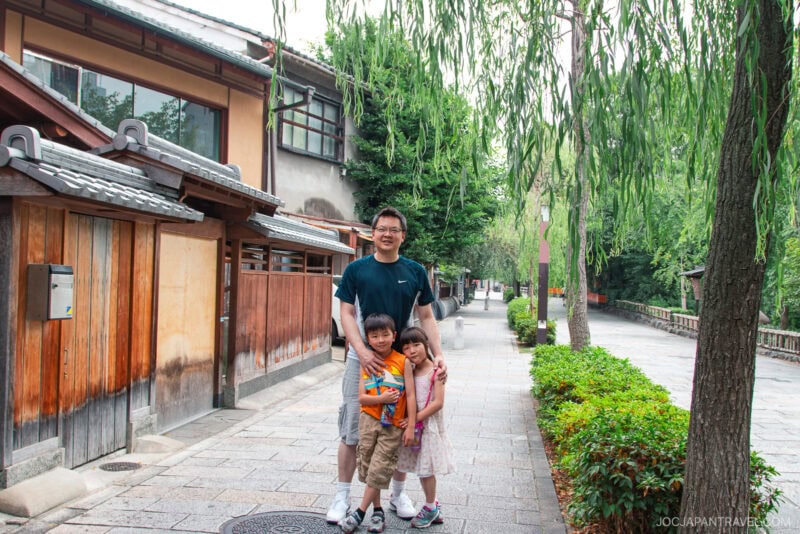
Gion is one of Kyoto’s most atmospheric neighborhoods and a rare place where traditional culture is still part of daily life. Every corner of Gion felt magical and gave us a timeless glimpse of Kyoto that we’ll never forget.
More to Explore Nearby
The Gion District is Kyoto’s most famous geisha district, placing you in the heart of traditional culture and historical architecture. From here, you are steps away from profound temples, scenic rivers, and cultural experiences.
- Kiyomizu-dera Temple – Explore one of Kyoto’s most celebrated temples, noted for its massive wooden stage built without the use of a single nail, offering stunning city views.
- Nishiki Market (Kyoto) – Explore Kyoto’s famous “Kitchen,” a bustling covered market filled with specialized food vendors, perfect for sampling local pickles, seafood, and sweets.
- Kodai-ji Temple – Visit this nearby significant temple, noted for its beautiful rock garden and elegant bamboo grove, offering a peaceful retreat from the crowds.
- Fushimi Inari Taisha – Hike through the mountain trails lined with thousands of brilliant vermillion torii gates at this iconic and historically significant shrine.