This post may contain affiliate links. Please read our disclosure policy.
Explore Tofukuji Temple, one of Kyoto’s Five Great Zen Temples, where Japan’s oldest Zen gate, stunning rock gardens, and a ravine full of crimson maple trees make it one of the finest autumn destinations in the city.
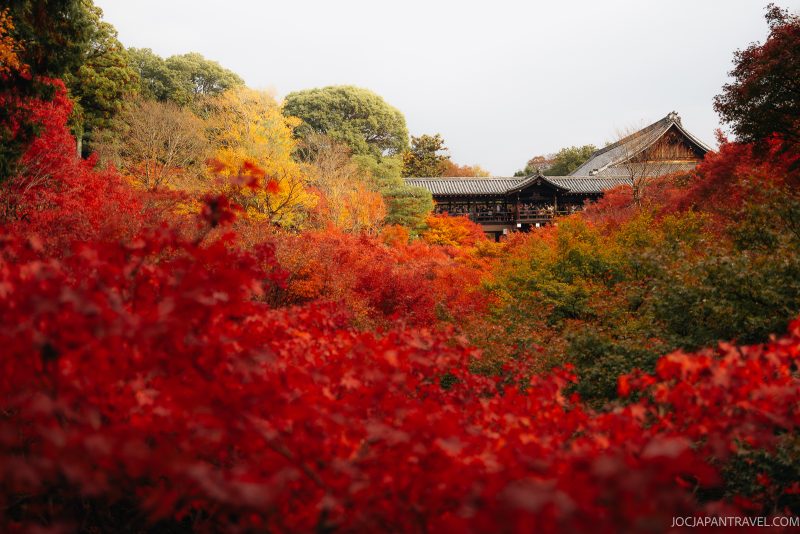
Founded in 1236 by statesman Kujo Michiie, Tofukuji (東福寺) is one of Kyoto’s Five Great Zen Temples and the head temple of its own Rinzai school. Michiie set out to build a complex that would rival Nara’s monumental Todaiji and Kofukuji—even combining characters from both names to create “Tofukuji.”
Located in southeastern Kyoto just two minutes from Kyoto Station by train, this expansive complex features 25 sub-temples, historic Muromachi-period structures, and the famed Hojo rock gardens. While the main grounds are free to explore, paid areas like the Tsutenkyo Bridge draw massive crowds in November when the surrounding maple ravine turns vibrant red and gold. During my peak autumn visit, it quickly became one of the most impressive temple stops on my itinerary.
Quick Facts
- Founded in 1236 by Kujo Michiie; one of Kyoto’s Five Great Zen Temples
- Head temple of its own school within the Rinzai sect of Zen Buddhism
- The Sanmon Gate (rebuilt 1425) is the oldest Zen Buddhist gate in Japan
- Hojo rock gardens designed in 1939 by landscape architect Mirei Shigemori
My Experience at Tofukuji
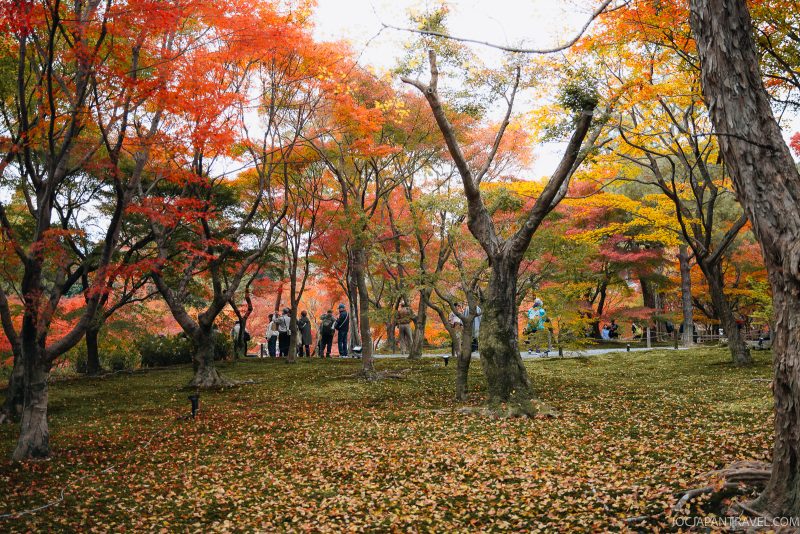
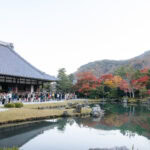
The main grounds open freely to the public. You pass structures like the zendo (meditation hall), the shoro (belfry), the yokushitsu (bath), and the tosu (lavatory), all dating to the early Muromachi period (1338–1573). Walking through them gives a strong sense of the scale and age of the complex before you reach the paid areas.
The Sanmon Gate and Hondo
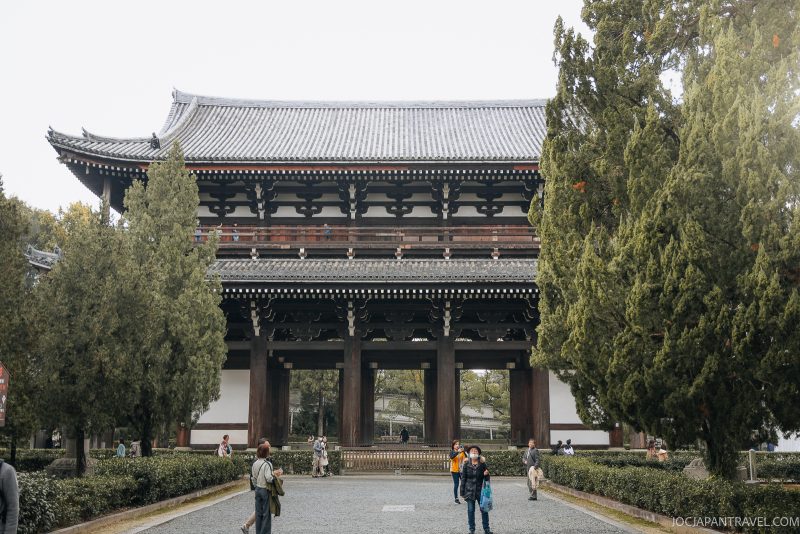
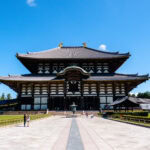
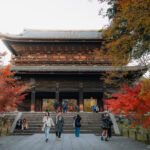
The Sanmon Gate stands 22 meters tall and dates to 1425, making it the oldest surviving Zen Buddhist gate of its kind in Japan. It has burned down and been rebuilt multiple times over the centuries. This version has stood for 600 years. Behind it, the Hondo (main hall) was reconstructed in 1934.
The building stays closed to the public, but you can see the gilded historical Buddha on the altar through the open front from outside. It is worth pausing here before moving further into the complex.
The Hojo Rock Gardens
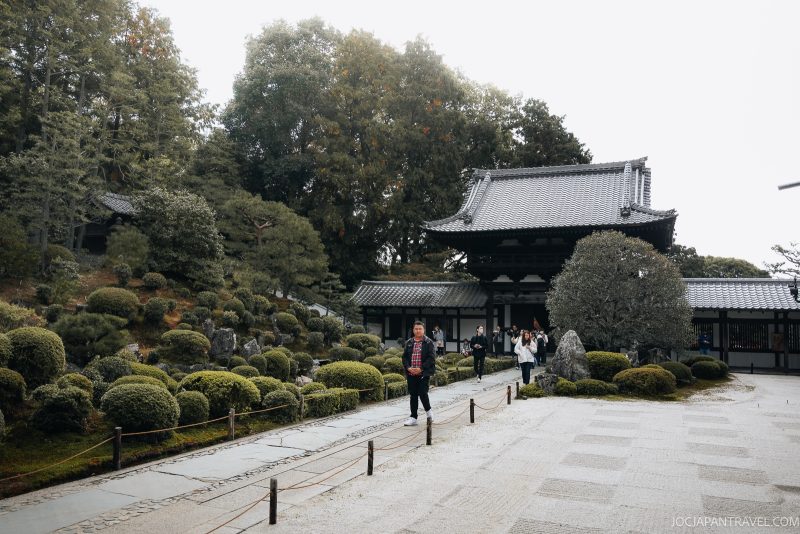
The Hojo, or former abbot’s quarters, sits at the center of four distinct rock gardens. Landscape architect Mirei Shigemori designed all four in 1939. Each uses a different approach: rocks, azalea shrubs, raked sand, moss, and in one case a checkered stone-and-moss pattern that feels strikingly modern against the historic buildings.
Together they show a range of Zen garden philosophy in one compact space. The combination ticket covers this area and is worth buying when available.
Tsutenkyo Bridge and Kaisando Hall

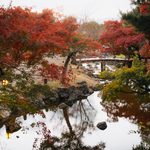
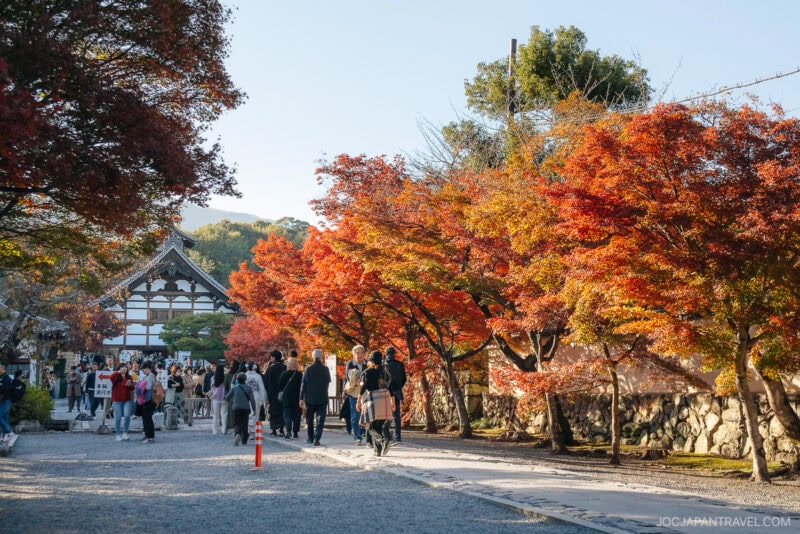
This is the area that makes Tofukuji famous in autumn, and it earns every bit of the reputation. A roofed wooden walkway leads to Tsutenkyo Bridge, which spans a ravine filled entirely with maple trees. The name translates to “bridge crossing heaven.” When the maples turn red in November, the view from the bridge is one of the most striking autumn scenes I have encountered in Japan. It tops almost everything else I saw in Kyoto that trip.
Past the bridge, the path leads through the temple gardens to Kaisando Hall. It serves as the mausoleum of Enni Ben’en, the temple’s first abbot. A rock garden sits to the left of the hall and a small pond to the right. The atmosphere here is quieter and more contemplative than the bridge, which makes it a good place to slow down after the crowds at Tsutenkyo.

Andy’s Travel Tips
These simple tips will help you when you visit.
- Visit in mid to late November for peak autumn foliage. The maples in the Tsutenkyo ravine reach their best color around this window. Expect larger crowds but genuinely exceptional scenery.
- Buy the combination ticket (1,000 yen adults) to cover both the Hojo gardens and the Tsutenkyo and Kaisando area. Note that the combination ticket is unavailable from November 9 to December 8, when separate tickets apply.
- Arrive early. Tsutenkyo Bridge gets very crowded during autumn peak. An early morning visit gives you better photos and a calmer experience before the tour groups arrive.
- Take the JR Nara Line from Kyoto Station. Tofukuji Station is just 2 minutes away and costs 150 yen. It is one of the easiest major temples in Kyoto to reach from the station.
- Explore the free main grounds first before buying tickets for the paid areas. The Sanmon Gate, the Muromachi-era buildings, and the free paths through the complex are worth seeing on their own.
- Check the seasonal hours before visiting. Opening and closing times change three times a year, and the last admission is 30 minutes before closing.
How to Get to Tofukuji
Train
Rail is by far the easiest and most practical way to reach the temple grounds.
- JR Line (From Kyoto Station): Board the JR Nara Line at Kyoto Station and take it just one stop south to Tofukuji Station. The train ride takes only about 2 to 3 minutes. From the station exit, the temple’s main entrance is a flat 10-minute walk through a quiet residential neighborhood.
- Keihan Electric Railway (From Central Kyoto or Osaka): The same station, Tofukuji Station, is also served by the Keihan Main Line. If you are coming from central Kyoto (such as Gion-shijo Station or Sanjo Station) or from Osaka (such as Yodoyabashi Station), take a Keihan train directly to Tofukuji Station and walk 10 minutes to the grounds.
Bus
- Kyoto City Bus routes 88 and 208 stop nearby.
- From Kyoto Station, you can board Bus 208 and disembark at the Tofukuji bus stop. The ride takes around 10 minutes, followed by a 10-minute walk to the temple gates.
Taxi
- A taxi hailed from Kyoto Station takes approximately 10 minutes and costs around ¥1,200 to ¥1,800.
Pro Tip If you are visiting during the peak autumn leaf season (late November), expect heavy crowds along the Tsutenkyo Bridge. Arrive right at the opening time (8:30 AM in autumn) to beat the primary tour groups, then walk a few minutes south to visit Fushimi Inari Shrine, which is just one stop away on the JR line or Keihan line.
Is Tofukuji Worth Visiting?
Yes, and especially so in autumn. The Tsutenkyo Bridge view over the maple ravine is genuinely one of the finest seasonal scenes in Kyoto. The Hojo rock gardens add real depth to the visit beyond the foliage. The temple is easy to reach, affordable, and less overwhelming than some of Kyoto’s more heavily trafficked sites. Even outside of autumn, the historic architecture and the free main grounds make it a rewarding stop.
More to Explore Nearby
Tofukuji sits in southeastern Kyoto, famous for its stunning autumn foliage. The surrounding area offers a rich mix of shrines, historic streets, and culinary traditions.
- Fushimi Inari Taisha — Just one station south, Kyoto’s iconic shrine with thousands of vermillion torii gates is an easy pairing with Tofukuji.
- Gion — Kyoto’s historic geisha district is a short walk north, with lantern-lit streets and traditional teahouses.
- Kiyomizudera Temple — A hilltop temple with sweeping views over eastern Kyoto, connected to Tofukuji by scenic walking routes.
- Nanzenji Temple — A grand Zen temple further north along Kyoto’s eastern hills, known for its massive gate and brick aqueduct.
- Kyoto Autumn Foliage Guide — Tofukuji is one of Kyoto’s top autumn spots. This guide covers the best viewing locations across the city.