This post may contain affiliate links. Please read our disclosure policy.
Walking through the endless red torii gates of Fushimi Inari Taisha is one of Kyoto’s most captivating experiences, surrounded by the beauty of nature and centuries of tradition.
What Is Fushimi Inari Taisha?
Fushimi Inari Taisha is the head shrine of all Inari shrines in Japan. It is dedicated to Inari Okami, the Shinto deity of rice, prosperity, and success. While the god was once tied mainly to agriculture, today Inari is worshipped by people from many professions, especially business owners.
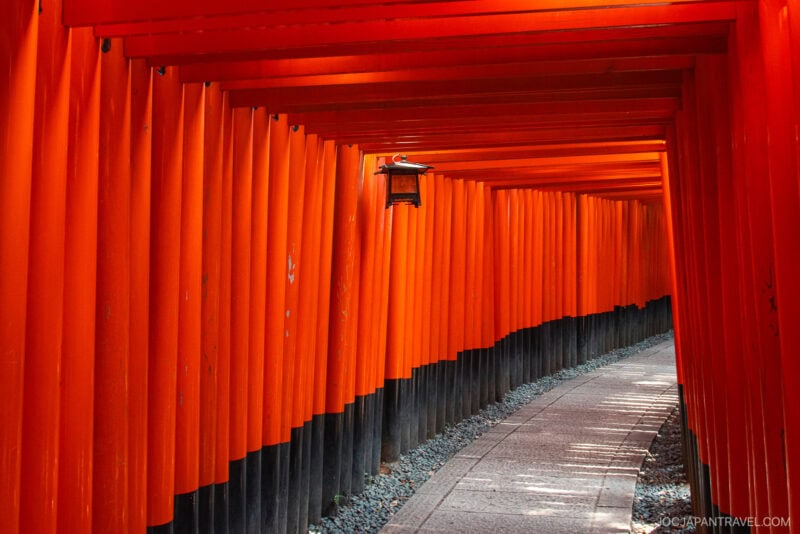
The shrine’s most iconic feature is the trail of vibrant torii gates that climbs Mount Inari. Each gate is a donation from individuals or companies across Japan, symbolizing gratitude and prayers for good fortune.
Quick Facts
- Founded in 711, relocated to its current site in 816
- Main shrine hall (honden) built in 1499 in Muromachi style
- More than 10,000 torii gates across the mountain paths
- Fox statues (kitsune), considered messengers of Inari, often hold keys in their mouths
- Inscriptions on gates record donors’ names, locations, and dedication dates. Depending on the size, donating a gate costs between $2,500 and $15,000.
Our Experience at Fushimi Inari

We arrived in the morning, and it was the best decision. The air was cool, the paths were quiet, and we could take photos of the gates without crowds. After passing through the impressive Romon Gate, we explored the main shrine grounds before starting our climb.
Walking the Senbon Torii

The Senbon Torii (“Thousand Torii Gates”) begins just behind the main hall. Walking through felt surreal—the gates stood so close together that they formed a glowing red tunnel. Light slipped through the narrow spaces, and we paused often to admire the scenery and take photos.
Climbing Mount Inari
The full round-trip hike takes about two to three hours, but we enjoyed taking it slow. Along the way, we passed smaller shrines, tea houses, and lookout points with incredible views of Kyoto. At one stop, we shared a snack while the kids made up stories about the fox statues watching us climb.
Tips for Visiting

- Visit early in the morning or later in the evening to avoid crowds. Avoid visiting during the holidays, as the crowds can become overwhelming.
- Wear sturdy shoes for the uneven steps
- Bring water, especially in warmer months
- Even if you don’t hike to the summit, continue at least halfway to experience the quieter, less crowded paths
How to Get to Fushimi Inari Taisha
By Train
- JR Nara Line: From Kyoto Station to Inari Station in about 5 minutes. The shrine entrance is directly across the street.
- Keihan Main Line: Ride to Fushimi Inari Station. It is about a 5 minute walk to the Romon Gate.
By Taxi or Car
A taxi from Kyoto Station takes about 15 to 20 minutes depending on traffic.
Accessibility Notes
The main shrine grounds are mostly flat and paved. The mountain path has many stairs and uneven stone steps.
Pro Tip: Arrive around sunrise or after sunset for fewer crowds and easier photos under the torii gates.
Is Fushimi Inari Taisha Worth Visiting?
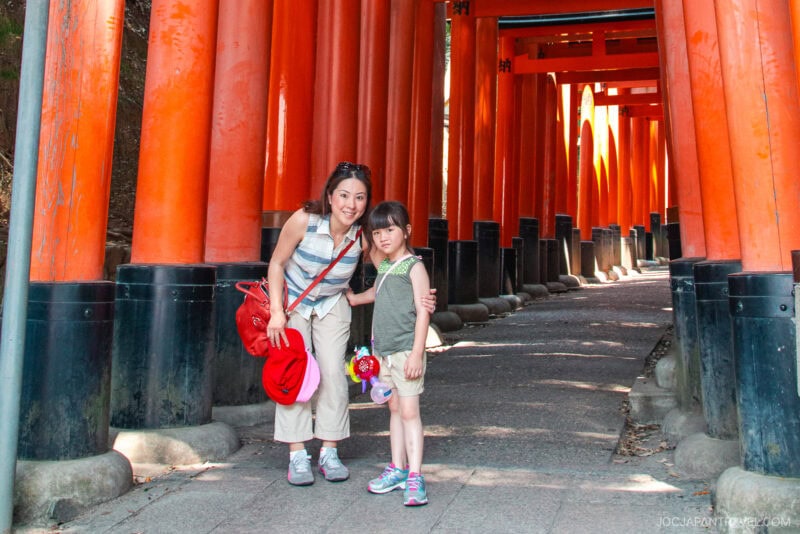
Fushimi Inari is one of Kyoto’s most remarkable sights and most photographed spots. It is also a cultural and spiritual journey that leaves a lasting impression.
We loved wandering beneath the Senbon Torii, spotting little shrines along the way, and watching the kids’ eyes widen as we climbed higher toward the summit. Every step felt alive with history, nature, and tradition, making it an experience our whole family will never forget.
More to Explore Nearby
Fushimi Inari Taisha is Kyoto’s most famous shrine, celebrated for its thousands of vermillion torii gates. Its location offers easy access to the city’s other iconic temples, historical sites, and cultural landscapes.
- Kinkaku-ji (Golden Pavilion) – Visit this UNESCO World Heritage Site, famous for its brilliant gold leaf facade reflecting beautifully over a tranquil pond.
- Kiyomizu-dera Temple – Explore one of Kyoto’s most celebrated temples, noted for its massive wooden stage built without the use of a single nail, offering stunning city views.
- Arashiyama Bamboo Grove – Wander through this famous towering bamboo forest, a natural and serene contrast to the vibrant red of the torii gates.
- Osaka Castle – Take a short trip to the nearby city of Osaka to explore one of Japan’s most historically significant and visually impressive feudal castles.