This post may contain affiliate links. Please read our disclosure policy.
Stretching beneath Mt. Wakakusa, Nara Park is a walkable wonderland of history, nature, and wildlife, where temples, museums, and hundreds of deer await.
A Cultural and Natural Landmark
Whenever we think of Nara, Nara Park is the place that instantly comes to mind. Since its opening in 1880, this expansive green space has been the heart of the city, stretching across more than 500 hectares and embracing some of Japan’s most cherished landmarks—all just a pleasant walk apart.
What makes the park so special is the way it brings together culture and simple joys. You might find yourself gazing up at the Great Buddha in Todai-ji, strolling beneath the lantern-lined paths of Kasuga Taisha, or sharing a snack with the park’s famously bowing deer.
Temples and Shrines Within the Park
Todai-ji (東大寺)
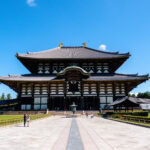
One of Japan’s most important temples, Todai-ji houses the Daibutsu—the largest bronze Buddha statue in the country—inside one of the world’s largest wooden structures.
Kasuga Taisha (春日大社)
A UNESCO World Heritage Site known for its thousands of stone and bronze lanterns, many of which are lit during seasonal festivals.
Kofuku-ji (興福寺)
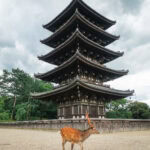
Located on the park’s western edge, Kofuku-ji features a striking five-story pagoda and an impressive collection of Buddhist art.
Nara National Museum
This museum’s collection focuses on Buddhist art and cultural heritage, with many works on display originating from the temples in and around the park. It’s an excellent stop if you want to deepen your understanding of Nara’s religious history.
Scenic Walks and Photo Spots
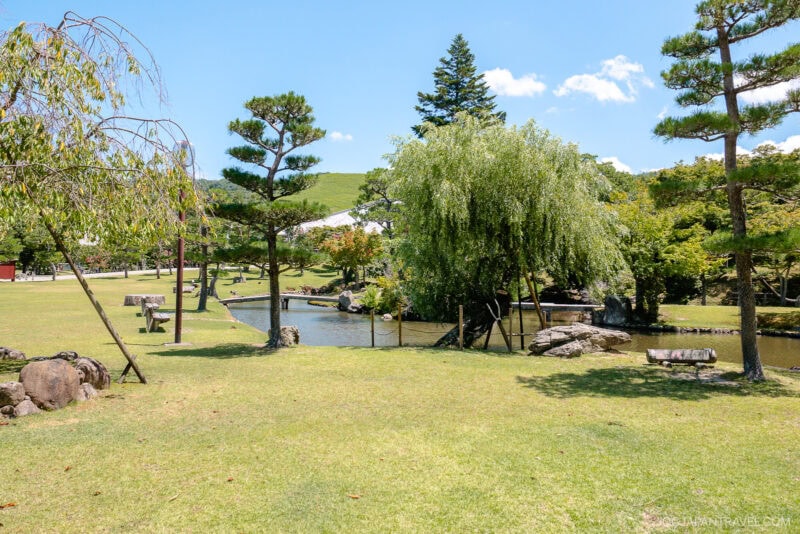
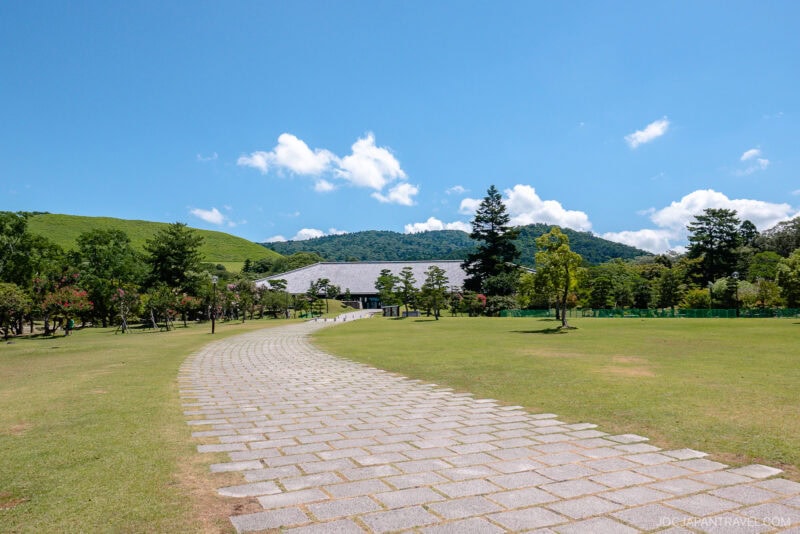
Wide lawns, reflective ponds, and tree-lined paths make Nara Park a beautiful place to explore in any season. We enjoyed the open views from Ukigumo-enchi (Floating Cloud Lawn) and the quieter trails along the park’s outskirts.
Feeding the Deer
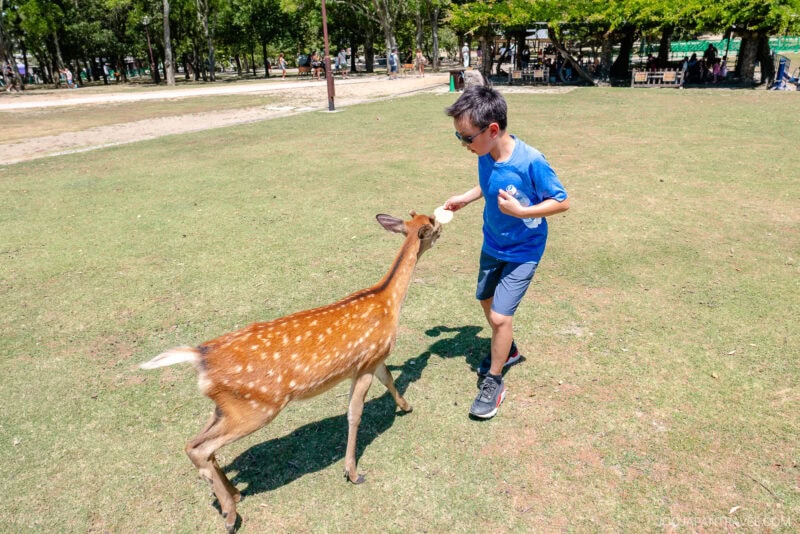
The park’s over 1,000 deer, considered messengers of the gods in Shinto belief, have been protected here for centuries and are now a designated Natural Monument of Japan. Vendors sell shika senbei (deer crackers) for feeding, and many deer have learned to bow politely before taking a treat.
Tips for Feeding the Deer:
- Offer crackers with a flat hand and release quickly.
- Supervise children closely—some deer can get pushy when food is visible. Our children has gotten bitten before (small bruise)
- Avoid carrying other snacks in the open, or the deer may follow you.
Our kids loved the bowing deer, though they were surprised by how quickly their crackers disappeared. It was playful, a bit chaotic, and definitely memorable.
How to Get to Nara Park
Train
From Kintetsu Nara Station: Walk 5–10 minutes to the park entrances along Nobori-oji Street.
Bus
Use the Nara City Loop Bus. Buy a one-day pass if you plan several stops.
Is Nara Park Worth Visiting?
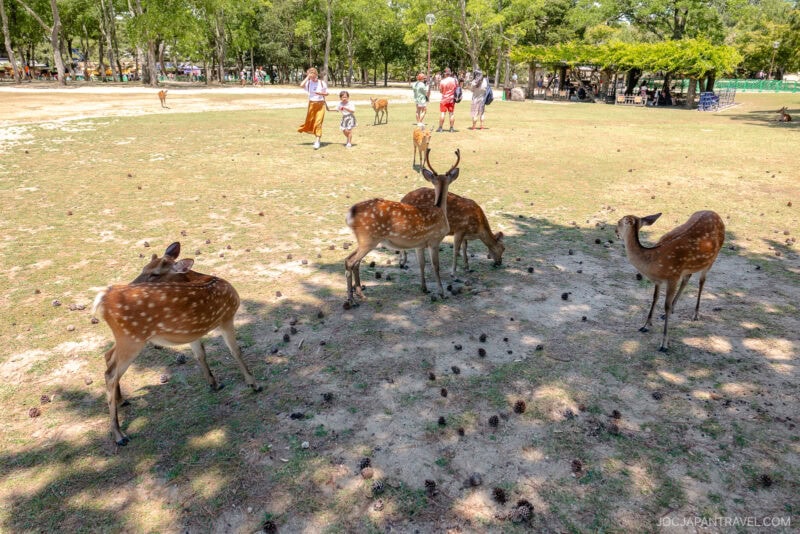
Nara Park is the heart of the city, offering a rare mix of cultural heritage, natural beauty, and close-up wildlife encounters. You can stand before a monumental Buddha, walk under vermilion torii gates, and share a moment with a bowing deer all in the same afternoon. It’s an experience we’d recommend to anyone visiting Nara.
More to Explore Nearby
The expansive Nara Park is the cultural and historical core of the city, placing you in immediate proximity to colossal World Heritage temples, magnificent shrines, and the charm of the old merchant quarter.
- Todai-ji Temple – Visit this monumental temple to see the world’s largest bronze statue of the Buddha, housed inside the world’s largest wooden building.
- Kasuga Taisha – Explore this famous Shinto shrine, a World Heritage site renowned for its stunning vermillion architecture and thousands of hanging lanterns.
- Kofuku-ji Temple – Discover the site of Nara’s iconic five-story pagoda, one of the oldest and most historically significant temples in the city.
- Naramachi – Wander through the preserved old merchant quarter just south of the park, characterized by traditional wooden houses, unique shops, and quiet cafes.