This post may contain affiliate links. Please read our disclosure policy.
Home to one of the largest calderas on Earth, Mount Aso lets you stand at the edge of an active volcanic crater, ride horses across open grasslands, and soak in natural hot springs, all within one of Kyushu’s most dramatic landscapes.
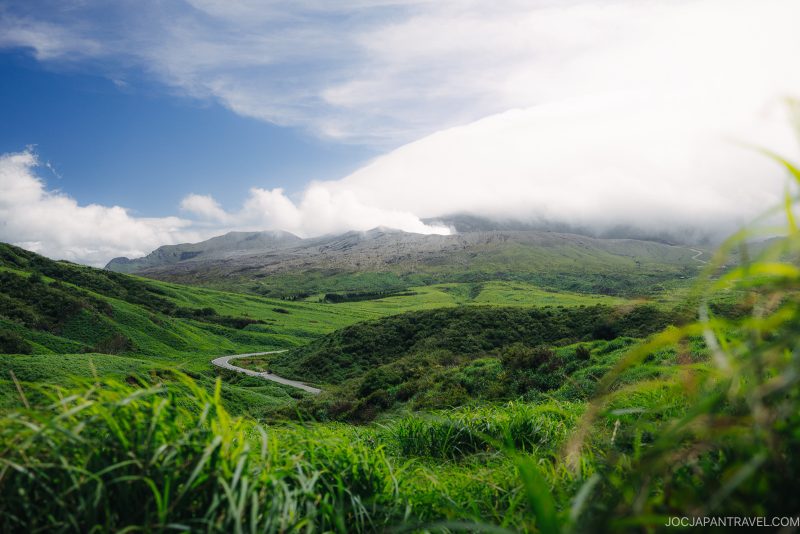
Mount Aso (阿蘇山) sits between Kumamoto and Oita Prefectures in central Kyushu. It is not a single volcano but a caldera system of five peaks. The caldera stretches up to 25 kilometers wide with a circumference of over 100 kilometers.
The five peaks, known as Aso Gogaku, include Mt. Takadake (1,592 m), Mt. Nakadake (1,506 m), Mt. Nekodake (1,433 m), Mt. Eboshidake (1,337 m), and Mt. Kishimadake (1,326 m). Among them, Nakadake is the most active and the main draw. Standing at its crater rim is one of the most extraordinary experiences Kyushu has to offer.
Current Volcanic Notice: Mount Aso is an active volcano. The Japan Meteorological Agency raised the volcanic alert to Level 2 (Crater Area Restriction). This means entry within a 1 km radius of the Nakadake Crater is strictly prohibited. While you cannot look directly into the smoking crater right now, the surrounding scenic highlands, museums, and panoramic view spots remain completely open and safe to visit.
What is Mount Aso
Mount Aso is an active volcanic complex in Aso City, Kumamoto Prefecture, sitting within one of the world’s largest calderas. The entire area falls within Aso-Kuju National Park and holds UNESCO Global Geopark designation. People actually live inside the caldera.
Farms, towns, and onsen resorts spread across the flat caldera floor, giving the landscape a quality unlike any other volcanic region in Japan. The main attraction is Nakadake Crater, accessible by car or bus when volcanic conditions allow.
My Experience at Mount Aso
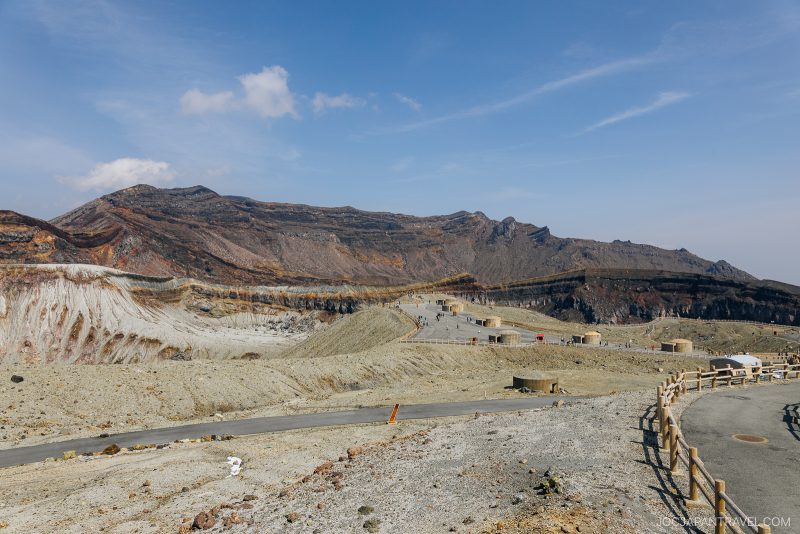
Check the current volcanic alert level before planning your visit. Nakadake Crater closes frequently due to gases, weather, and eruption activity. Even when open, gas levels can be hazardous.
Pregnant women, those with respiratory or heart conditions, and young children should not visit the crater. When access is available, it is not an experience you will forget quickly.
Kusasenri Grasslands and the Visitor Center
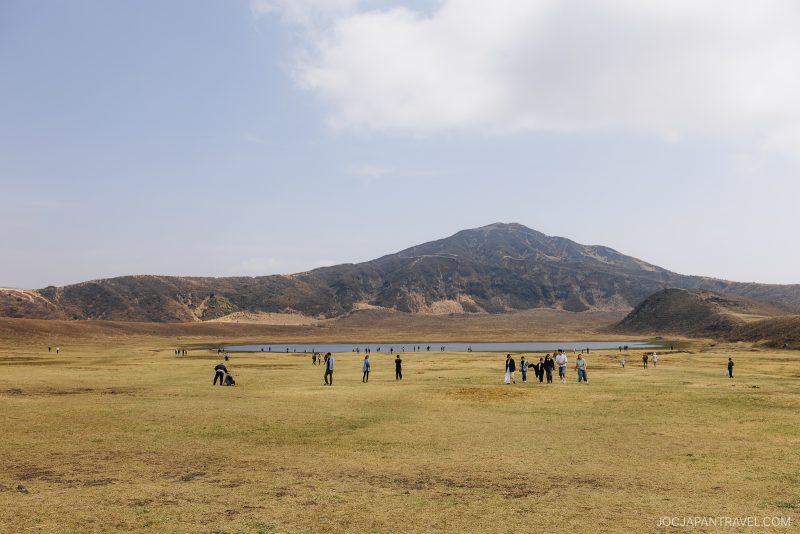
The road to Nakadake passes through Kusasenri, a wide volcanic grassland with sweeping views across the caldera. It is easy to drive straight past without stopping. Horse riding is available from early March to mid-December. The open terrain also serves as a starting point for hiking trails around the wider Aso area.
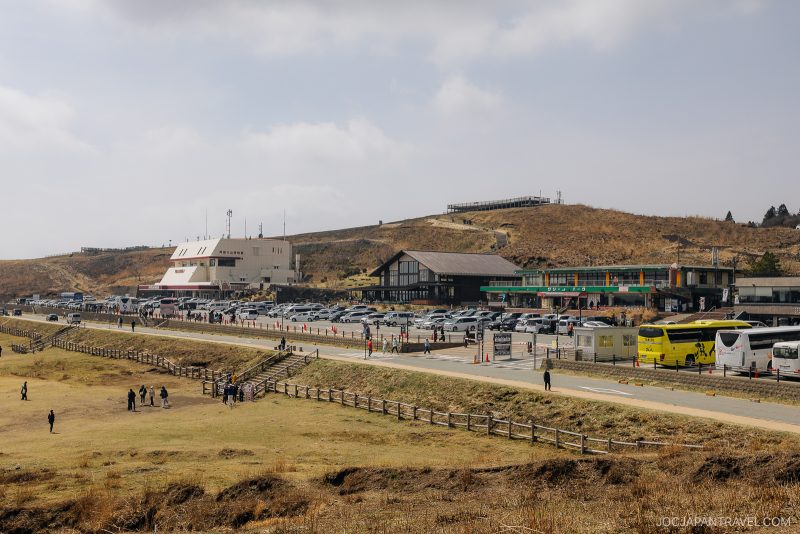
On the opposite side of Kusasenri, the visitor center covers Mount Aso’s geology, wildlife, disaster prevention, and local culture. It is free to enter. In the same building, the Aso Volcano Museum charges an additional fee and offers a more detailed experience: photographs, maps, multimedia displays, a live camera feed of Nakadake Crater, VR experiences, and a multilingual immersive video. Admission is 880 yen for adults and 440 yen for children.
Nakadake Crater
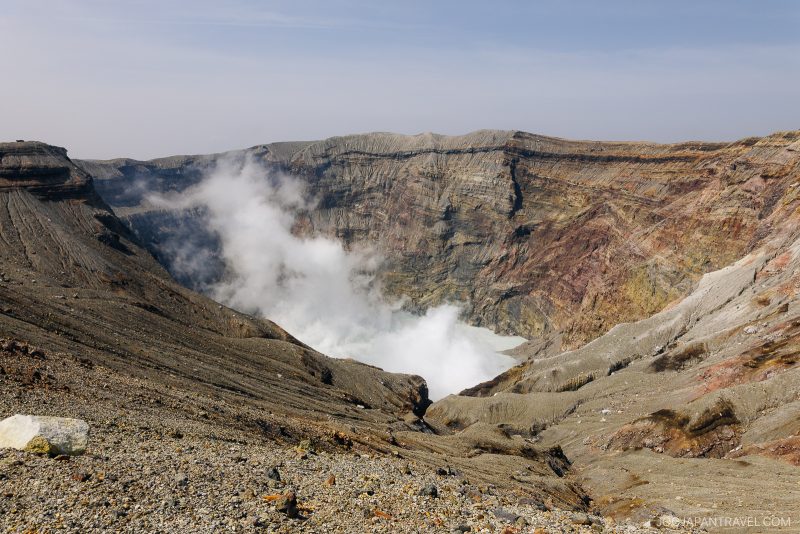
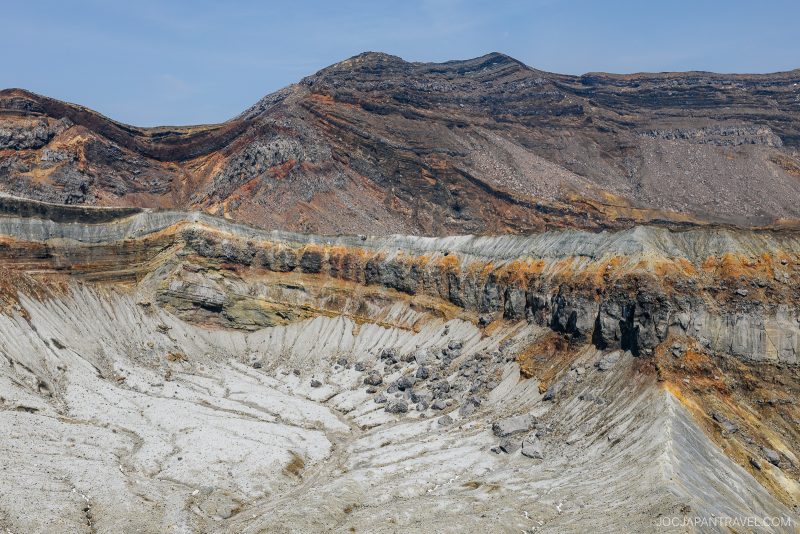
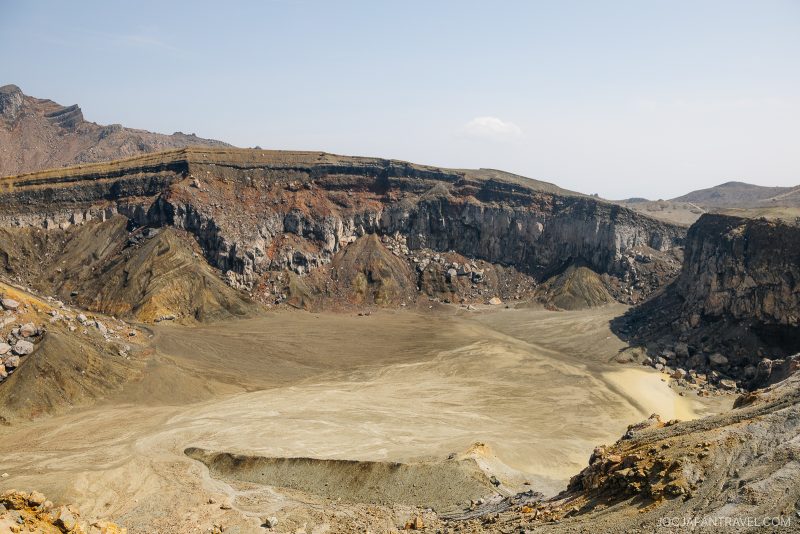
The route to Nakadake Crater closed for several years after the 2016 Kumamoto Earthquake. It has since reopened. The crater measures 600 meters across, 130 meters deep, and 4 kilometers around.
The vivid blue-green lake at the bottom, the rising volcanic smoke, and the exposed rock walls make the view genuinely otherworldly. Photographs do not do it justice. Bring a windbreaker or jacket, especially in spring and autumn. The crater rim gets cold and extremely windy very quickly.
Aso Uchinomaki Onsen and Aso Shrine
The Aso Uchinomaki Onsen area has around 80 hot springs fed by the same natural underground source as the volcano. Views over the caldera from the baths are exceptional. The area is worth visiting year-round.
Close by, Aso Shrine dates back almost 2,000 years to the end of the Yayoi Period (300 BC to 300 AD), making it one of the oldest shrines in Japan. Set within the caldera with the peaks rising behind it, it is a place that carries real historical weight.

Andy’s Travel Tips
These simple tips will help you when you visit.
- Check the crater access status the morning of your visit. The Japan Meteorological Agency publishes current volcanic alert levels online. Access can change quickly and a wasted drive to a closed crater is easy to avoid.
- Bring a windbreaker even on warm days. The caldera floor can feel mild. The crater rim is a different environment entirely. It gets cold and gusty with very little warning.
- Do not visit the crater if you are pregnant, have respiratory or heart conditions, or are traveling with young children, even when access is officially open. Gas conditions can change without notice.
- Rent a car. The caldera is large. A car lets you stop at Kusasenri, the visitor center, the crater, and the onsen area at your own pace. Parking at the crater costs 1,000 yen.
- Stop at Kusasenri on the way up. The grassland views over the caldera are among the best in the area. It takes just a few minutes to pull over and take them in properly.
- Consider staying overnight to experience the onsen, Aso Shrine, and the caldera at different times of day. The area at dawn and dusk looks completely different from a standard day-trip visit.
How to Get to Mount Aso
Train
The railway line skirts the northern floor of the caldera, offering a convenient connection to a local mountain transit bus.
- From Kumamoto Station: Take the JR Hohi Main Line (either a local train or the Limited Express Aso Boy! / Kyushu Odan Tokkyu) directly to Aso Station. The limited express makes the scenic run into the mountains in about 50 to 70 minutes.
- From Oita Station or Beppu Station: Take the JR Hohi Main Line heading west through the mountains to Aso Station. The limited express trip takes roughly 2 hours.
Bus
- From Aso Station (To the Highlands): Walk out of Aso Station and board the Sanko “Aso Crater Line” bus. It climbs the switchbacks up the volcanic cone, stopping at the picturesque Kusasenri prairie before terminating at the Asosanjo Terminal in about 30 to 40 minutes.
- From Kumamoto Airport: You can catch the direct “Kyushu Odan Bus” which climbs straight up into the caldera, reaching Aso Station in roughly 50 minutes.
Car
Driving is highly recommended for Mount Aso because the caldera is massive, and public buses only run to a few specific tourist points.
- From Kumamoto: Drive east along Route 57 and branch onto the scenic Asotozan Road (Bochusen) at the Aso Station intersection. The drive up to the central peaks takes about 60 to 80 minutes.
- From Yufuin or Beppu: Drive down the legendary Yamanami Highway, which cuts through the Kuju mountains directly into the northern rim of the Aso caldera. It is considered one of Japan’s most spectacular road trips.
A Note on the Ropeway
- The original Mt. Aso Ropeway was permanently destroyed and abandoned following an explosive eruption. It has been replaced by a shuttle bus system and a toll road operating out of the Asosanjo Terminal (though these are currently closed due to the active Level 2 status).
Is Mount Aso Worth Visiting?
Without question. Mount Aso is one of the most dramatic and accessible active volcanoes in the world. The caldera scale is difficult to fully grasp until you are standing in the middle of it. The crater is the headline, but Kusasenri, the onsen, and Aso Shrine give the area enough depth for a full day or a very satisfying overnight. Access restrictions are a real consideration, but when the crater is open, it delivers one of the most memorable experiences in Kyushu.
More to Explore Nearby
Mount Aso dominates the heart of Kumamoto Prefecture. The surrounding highlands and cities offer hot springs, history, and rich local cuisine.
- Kyushu Ramen Guide — Kumamoto’s rich tonkotsu ramen is a regional classic. This guide covers the best bowls across the island.
- Kurokawa Onsen — A tucked-away hot spring village in the mountains north of Aso, famous for its rustic outdoor baths and wooded lanes.
- Kokonoe Yume Suspension Bridge — A dramatic pedestrian bridge suspended high above a forested gorge, just across the border in Oita.
- Kumamoto Castle — One of Japan’s most iconic castles, still undergoing impressive restoration after the 2016 earthquake.
- Suizenji Jojuen — A beautifully landscaped strolling garden in Kumamoto city, featuring a miniature Mount Fuji and crystal-clear spring water.