This post may contain affiliate links. Please read our disclosure policy.
Despite the devastating Kumamoto Earthquake in 2016, Kumamoto Castle has now been restored to its former glory, meticulously replicated to its former glory days.
What Makes Kumamoto Castle Special?
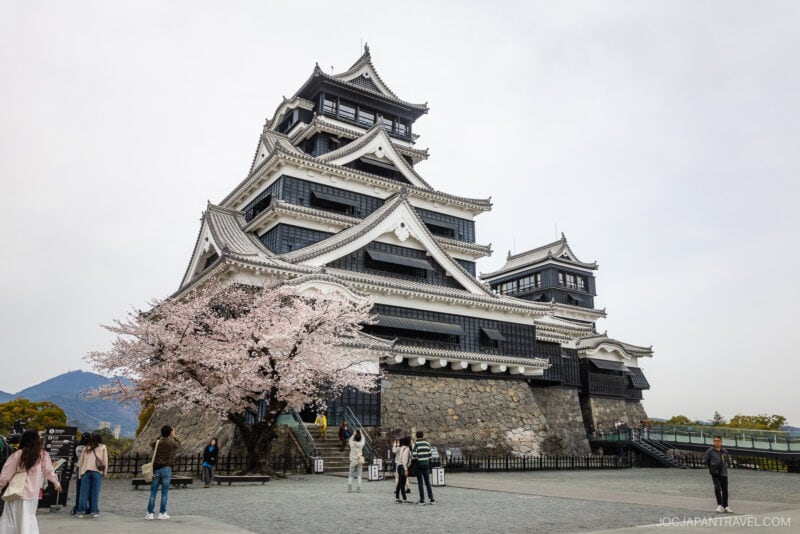
Kumamoto Castle (熊本城, Kumamotojō) offers one of the most impressive castle experiences in Japan. Despite its long history of destruction and renovation, it remains celebrated as one of Japan’s three grandest castles, alongside Himeji Castle and Matsumoto Castle.
The castle features 13 buildings designated as nationally important cultural properties, and its rich history adds layers of intrigue.
In its prime, after expansion in 1607 by Kumamoto’s first feudal lord, Kiyomasa Kato, the castle grounds included 49 turrets, 18 turret gates, and 29 smaller gates.
Kato was known for his strategic castle designs, admired for both beauty and defense. Yet in 1877, the castle became the center of the Satsuma Rebellion, with the main keep and many other structures destroyed during the siege.
2016 Earthquake
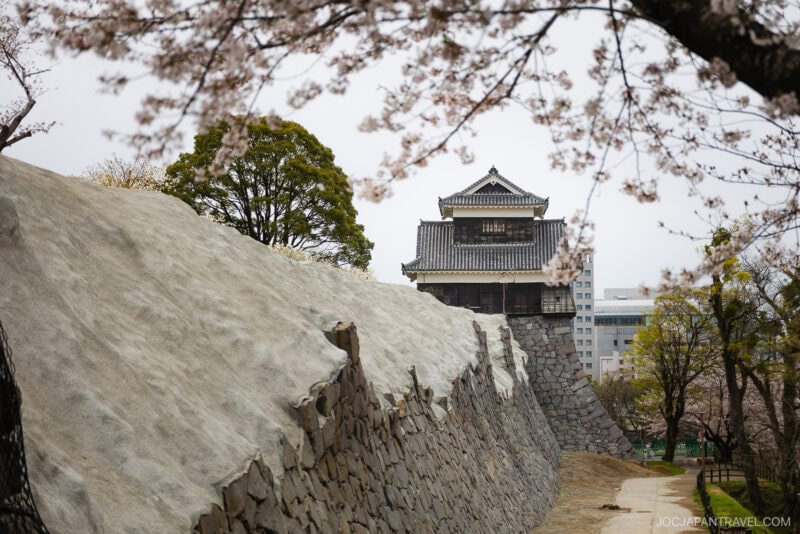
On April 14, 2016, a 6.3 magnitude earthquake caused part of the stone wall at the base of the main keep to collapse. The following day, a 7.3 magnitude earthquake damaged two turrets and several stone walls.
Thankfully, the main keep survived with only minor damage, though large amounts of roof tiles fell. The castle underwent intensive restoration for five years and reopened to the public in 2021. Full restoration is expected to be completed by 2038.
Touring the Castle Grounds

I suggest entering through the South Exit Ticket Office. From there, follow the elevated walkway to enjoy unique views of the castle. The temporary walkway avoids interfering with ongoing restoration work and will come down once the project is complete.
As you explore, you’ll discover the Kuragari-Tsuro, an underground passage beneath the Honmaru Goten Palace, a rare feature in Japanese castles. The original palace, built in 1610, housed the feudal lord. Today, the restored structure, though smaller in scale, lets visitors admire its golden tatami rooms.
The palace remains under renovation following the 2016 earthquake and is slated to reopen in 2033.
Inside the Main Keep
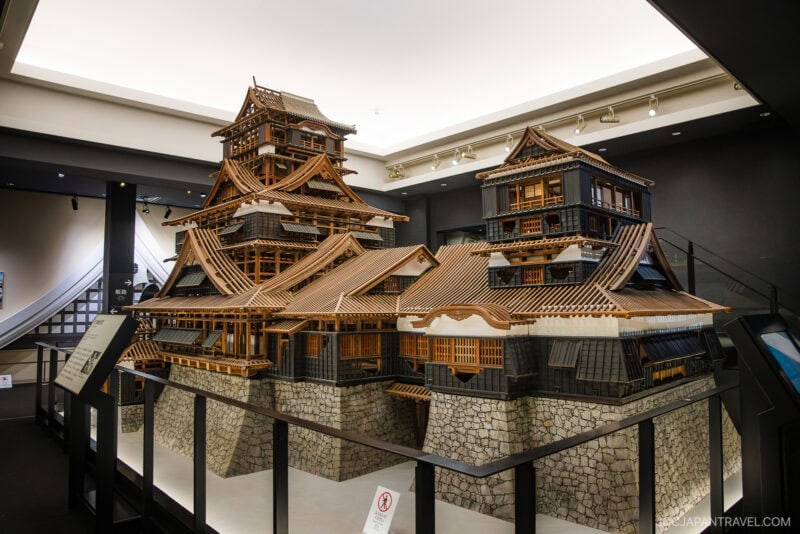
The main keep was rebuilt using traditional techniques and now serves as a multi-level museum:
- 1st Floor: Exhibits on Kato Kiyomasa and his era
- 2nd Floor: Life under the Hosokawa clan
- 3rd & 4th Floors: Modern history and restoration process
- Top Floor: Observation deck with sweeping views of the city and castle grounds
From the top, I could really appreciate the scale of the 2016 earthquake’s destruction and the incredible restoration efforts.
Exploring the Castle Grounds

Beyond the main keep, you can stroll the grounds to admire the stone walls, moats, turrets, and storehouses. Among these structures, the Uto Turret stands out, having withstood centuries, including the 1877 siege, and remaining a remarkable piece of history.
After exploring, visit Kato Shrine, which honors Kato Kiyomasa. Don’t miss the ancient ginkgo tree and the stunning view over the castle from the shrine grounds!
How to Get to Kumamoto Castle
Kumamoto Castle is located in Kumamoto City, the capital of Kumamoto Prefecture in Kyushu.
- From Tokyo: Take the Tokaido/Sanyo Shinkansen to Hakata Station, then transfer to the Kyushu Shinkansen to Kumamoto Station (total around 5–6 hours).
- From Fukuoka (Hakata): The Kyushu Shinkansen takes about 40 minutes.
- From Kumamoto Station: Take a tram to Kumamotojo-mae stop. The walk from there is about 10 minutes.
Is Kumamoto Castle Worth Visiting?
Yes, without a doubt! Kumamoto Castle isn’t just a beautiful reconstruction; it’s a symbol of resilience and rebirth. The mix of surviving original elements and carefully rebuilt structures provides a rare view into Japan’s architectural legacy. If you’re traveling in Kyushu, don’t skip it.
More to Explore Nearby
Kumamoto Castle (熊本城) is one of Japan’s most impressive and historically significant castles, currently undergoing a massive restoration following a major earthquake. After exploring the castle grounds and the surrounding historical area, the city and its prefecture offer a wealth of natural beauty, hot springs, and cultural sites.
- Suizenji Jojuen Garden – Visit this beautiful, expansive traditional Japanese garden located in the heart of the city, famous for its miniature representation of the Tokaido post road, including a small Mount Fuji.
- Sakura no Baba Josaien – Located at the base of the castle, this historical village recreates the look of the old castle town and offers a fantastic place to sample local Kumamoto cuisine and shop for unique souvenirs.
- Mount Aso and Aso-Kuju National Park – Journey east to one of the world’s largest active calderas. The region offers dramatic volcanic landscapes, vast grasslands, and scenic drives.
- Kurokawa Onsen – Head into the northern part of the prefecture for this charming, secluded hot spring town, famous for its rustic, traditional atmosphere and its system of onsen-hopping between different baths.