This post may contain affiliate links. Please read our disclosure policy.
A quiet stroll through Fukuoka Castle offers rich history, panoramic city views, and seasonal beauty in the heart of Kyushu’s largest city.
A Glimpse Into Fukuoka Castle’s History
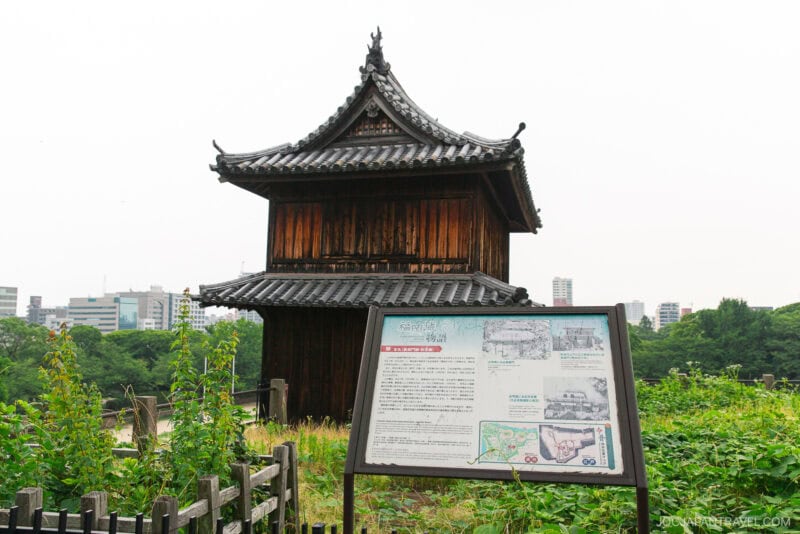
Fukuoka Castle was built in 1601 by Kuroda Nagamasa, a powerful feudal lord who helped bring Kyushu under Tokugawa rule. At its peak, the castle spread across more than 47 hectares and featured 47 watchtowers. Its extensive stone walls earned it the nickname “Stone Castle”.
After the Meiji Restoration, most of the castle was dismantled, and only three turrets remain today: Tamon, Kinen, and Shiomi. These preserved structures give visitors a rare window into the castle’s original scale and Edo-period craftsmanship.
Walking Through the Castle Grounds
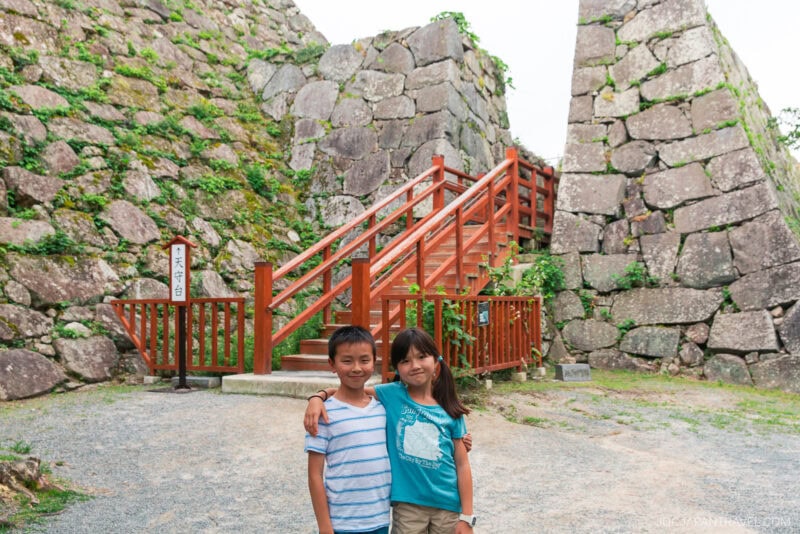
As we explored the grounds, we were struck by how much of the old foundation remains. Large stone walls, stairways, and turret bases gave us a sense of the scale of this former stronghold.
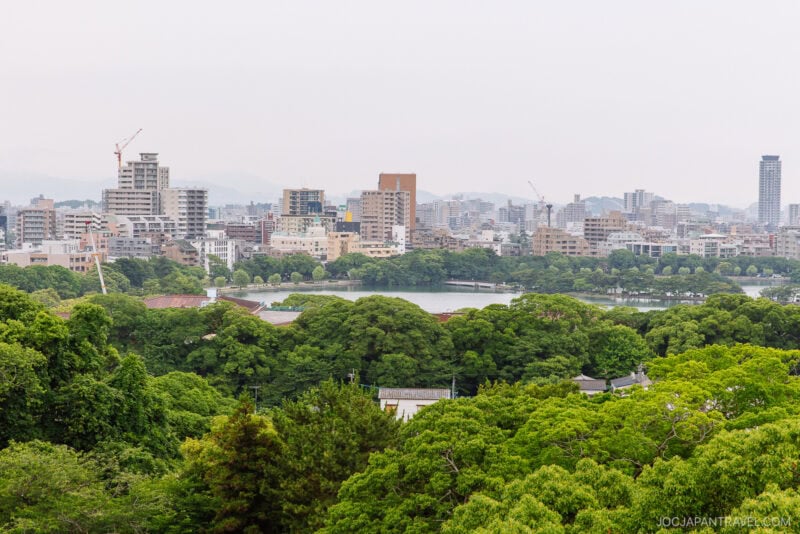
We climbed to the highest point, the former Tenshu Tower site, for a panoramic view of Fukuoka City, Hakata Bay, and the surrounding mountains.
Maizuru Park: Where History Meets Modern Life
The castle ruins sit within Maizuru Park, a spacious green area that blends the past and present. The park preserves many historical features while also offering ball fields, trails, and event spaces.
When to Visit Fukuoka Castle
Spring (March–April): Cherry blossoms fill the park, drawing large crowds for hanami picnics.
Summer (June–August): Quieter days and blooming lotus flowers create a calm, relaxed vibe.
Autumn (October–November): Fiery foliage frames the stone ruins with dramatic beauty.
Winter (December–February): The trees are bare, but the wide-open spaces are peaceful and uncrowded.
How to Get to Fukuoka Castle
Train
- From Hakata Station, take the Kuko Line to Ohorikoen Station (10 minutes). From Exit 3 or 6, it’s a 10–15 minute walk to the castle ruins in Maizuru Park, next to Ohori Park.
- Total travel time: 10–20 minutes from Hakata Station.
Bus
- From Hakata Bus Terminal, take a bus heading towards the Ohori Park area and get off at the “Fukuoka Castle Ruins”.
Taxi
- A taxi from Hakata Station takes about 15 minutes and costs around ¥1,500 to ¥2,000.
Is Fukuoka Castle Worth Visiting?
If you have extra time in Fukuoka, the castle ruins are worth a visit. While not fully reconstructed like other famous castles, the preserved stonework and quiet paths offer a peaceful setting to reflect on the city’s past. It’s a nice place for a short walk, a quick photo stop, or a break from the busier parts of town.
More to Explore Nearby
After exploring the stone ruins and seasonal beauty of Fukuoka Castle, enjoy more food and views nearby in this dynamic city.
- Daruma Ramen Fukuoka – Slurp up rich, smoky tonkotsu broth at this ramen shop known for helping define the local Hakata flavor.
- Fukuoka Yatai Stalls – As night falls, head to Nakasu or Tenjin for these open-air food stalls serving classic street fare like oden, yakitori, and ramen.
- Hakata Port Tower – A short ride away, this retro-style tower offers free panoramic views over Hakata Bay and the city skyline.
- Kyushu National Museum – Dive into Japan’s ancient cultural exchanges with Asia at this beautifully designed museum just a short train ride from the city.