
This post may contain affiliate links. Please read our disclosure policy.
Located in historic Dazaifu, the Kyushu National Museum combines stunning architecture with a family-friendly, global approach to Japanese history.
Why Kyushu National Museum Stands Out
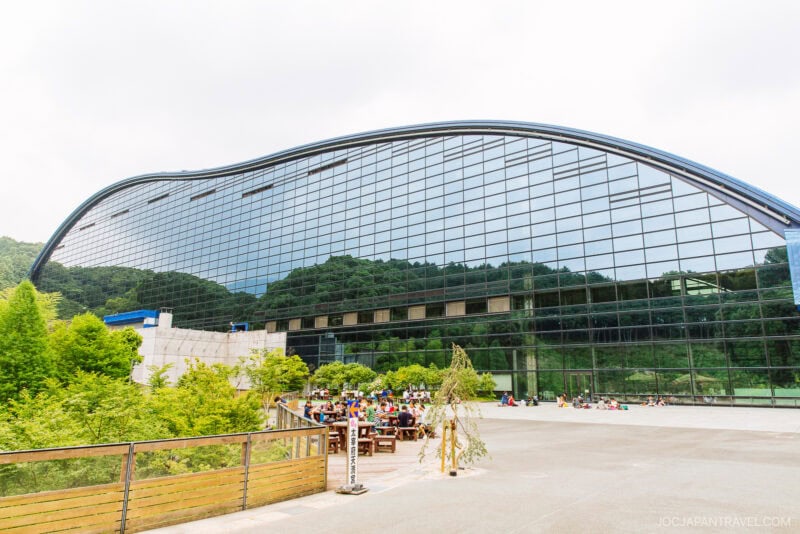
Just outside Fukuoka City, the charming town of Dazaifu is home to one of Japan’s most impressive cultural institutions. We visited the Kyushu National Museum during our day trip to Dazaifu, and we were amazed by its sweeping architecture, engaging exhibits, and hands-on experiences for kids.
This isn’t your typical museum. Its mission is to explore how Japan’s culture evolved through contact with the wider world—especially China and Korea. That global perspective sets it apart from other national museums in Japan.
A Meaningful Location With Deep Roots
Dazaifu was once the administrative heart of Kyushu and Japan’s gateway to the Asian continent. For centuries, it played a major role in diplomacy and cultural exchange.
Rather than focusing on Japan in isolation, the museum highlights how international influences shaped everything from art and religion to politics and daily life. It’s a refreshing way to see Japanese history through a wider lens.
First Impressions: Nature Meets Modern Design
As we walked through the covered moving walkway from Dazaifu Tenmangu Shrine, the museum came into view. Its curved glass facade reflects the surrounding hills, blending beautifully into the landscape.
Inside, the space felt open and serene, with a striking mix of wood, steel, and natural light. The soaring ceilings and quiet flow of each gallery made it easy to slow down and really take in each exhibit.
Highlights From Our Visit
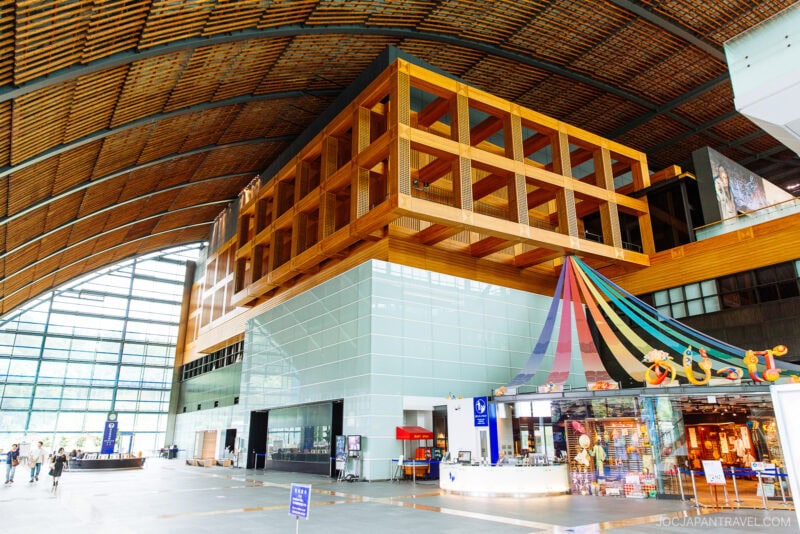
Our kids immediately ran toward Ajippa, an interactive cultural gallery on the first floor. This playful space introduces the cultures that influenced Japan, with hands-on activities like traditional games, crafts, and dress-up areas.
The museum has a cafe, restaurant, and gift shop, so it’s easy to spend a few hours here without needing to rush. And although photography isn’t allowed in the main exhibits, we found ourselves more focused and immersed as a result.
The Cultural Exchange Exhibition
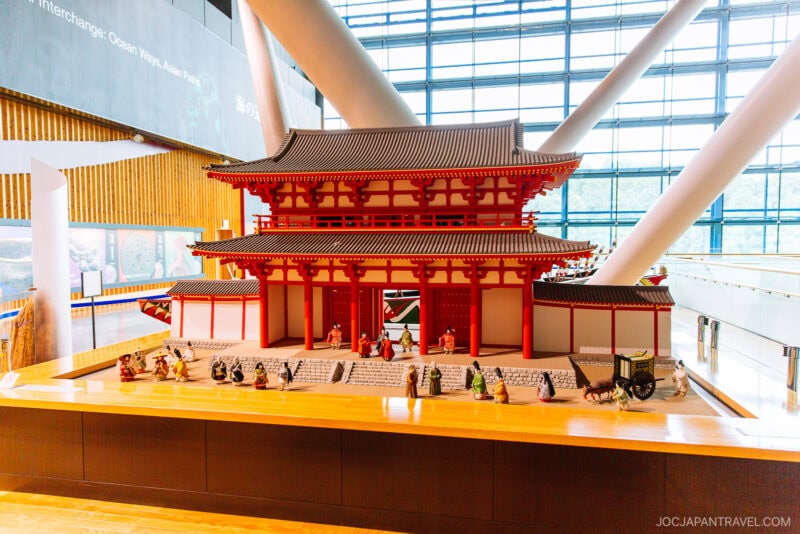
The fourth floor is home to the permanent collection, organized into five sections that trace Japan’s development through international exchange:
- Old Stone Age to Jomon Period: Early seafaring and spiritual beliefs
- Yayoi to Kofun Periods: The start of rice farming, metalwork, and early kingdoms
- Nara and Heian Periods: Court life, Buddhism, and diplomatic missions
- Kamakura to Azuchi-Momoyama Periods: Warrior rule and merchant trade
- Edo Period: Artistic growth and limited but impactful foreign contact
Each gallery offers detailed, multilingual displays and beautifully presented artifacts that connect Japan’s story with the broader history of East Asia.
How to Get to Kyushu National Museum
Train
- From Tenjin Station, take the Nishitetsu Tenjin Omuta Line to Nishitetsu Futsukaichi Station (15–25 minutes), then transfer to the Nishitetsu Dazaifu Line and ride to Dazaifu Station (5 minutes). From there, walk through the Dazaifu Tenmangu Shrine grounds and follow the signs to the museum via the covered “Rainbow Tunnel” walkway (10–15 minutes).
- Total travel time: 30–40 minutes.
Bus
- There is limited direct bus service from Hakata Station to Dazaifu. The train is usually faster and more convenient.
Taxi
- A taxi from central Fukuoka to Dazaifu takes about 30 minutes and costs ¥5,000–¥6,000 one way.
Pro Tip: Combine your visit with Dazaifu Tenmangu Shrine—there’s a scenic walkway that connects the two sites seamlessly.
Should You Visit Kyushu National Museum?
If you’re already planning to visit Dazaifu Tenmangu Shrine, this museum adds a deeper layer of context and meaning to your trip. It offers a rich, global perspective on Japan’s cultural development and presents it in a way accessible to adults and children.
More to Explore Nearby
After exploring the exhibits at Kyushu National Museum, extend your visit with these nearby cultural and culinary stops around Fukuoka and Dazaifu.
- Fukuoka Castle – Walk the stone paths and peaceful grounds of this historic castle site, now a city park with seasonal blooms.
- Daruma Ramen Fukuoka – Enjoy a hearty bowl of tonkotsu ramen at this famous local shop known for its rich, smoky broth.
- Fukuoka Yatai Stalls – In the evening, sample street food at open-air yatai stalls serving everything from oden to gyoza in a festive setting.