This post may contain affiliate links. Please read our disclosure policy.
Step into Kitakyushu’s samurai past at Kokura Castle, where five floors of interactive history, a serene garden tea ceremony, and beautiful cherry blossoms make for one of Fukuoka Prefecture’s most rewarding day trips.
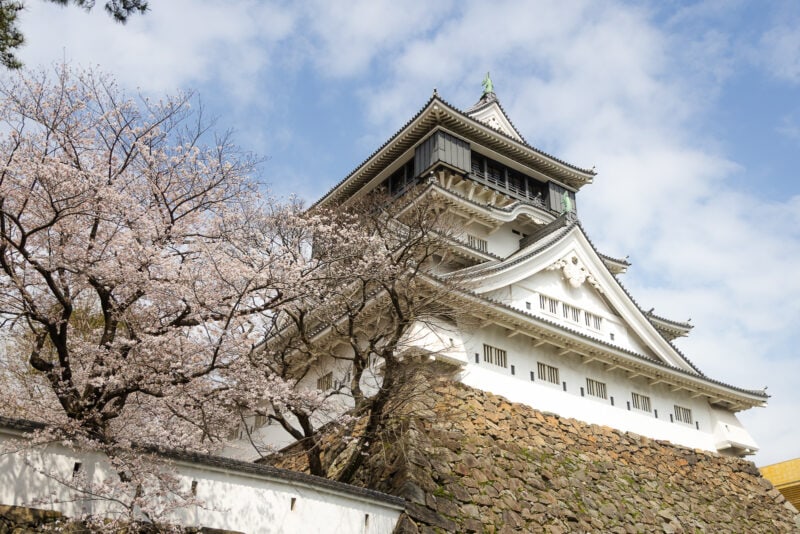
Kokura Castle (小倉城) sits in the heart of Kitakyushu, about an hour north of central Fukuoka. The original structure was built in 1602 at the start of the Edo Period and remained under the control of the Ogasawara clan from 1632 until 1866, when it was burned down during a conflict between the Kokura and Choshu clans.
The castle was reconstructed in 1959 and today stands as the only castle in Fukuoka Prefecture with a Tenshukaku, the traditional main keep. I came here on a day trip from Fukuoka, and I won’t lie, I didn’t know much about the castle or area, but I left genuinely impressed. The interior is more engaging than most castles I have visited in Japan, and the combination of the castle, the garden, and the surrounding park makes for a satisfying full morning.
What Is Kokura Castle
Kokura Castle is a restored Edo-period castle in central Kitakyushu, built on the banks of the Murasa River within Katsuyama Park. Originally constructed by daimyo Hosokawa Tadaoki in 1602, it served as the seat of power for the Ogasawara clan for over two centuries before being destroyed in 1866.
The current five-story reconstruction opened in 1959 and underwent significant renovation in recent years, making it one of the most interactive and visitor-friendly castle museums in Kyushu. It is also one of the few castles in Japan that deliberately lacks a defensive turret on the top floor, a deliberate architectural choice from its original design.
Quick Facts
- Originally built in 1602 by Hosokawa Tadaoki; under Ogasawara clan control from 1632 to 1866
- The only castle in Fukuoka Prefecture with a Tenshukaku (main keep)
- Current structure reconstructed in 1959; major interior renovation completed in recent years
- Located within Katsuyama Park, one of Kitakyushu’s top cherry blossom spots in early April
- Open daily 9:00 to 20:00, no regular closing days
- Admission: Castle 350 yen / Garden 350 yen / Combined 560 yen / Castle, Garden, and Matsumoto Seicho Memorial Museum 700 yen
My Experience at Kokura Castle

I visited in early April, which turned out to be perfect timing. The castle grounds, known as Katsuyama Park, were full of cherry blossoms, and the contrast of the pale pink trees against the dark castle walls was impressive.
There were yatai stalls set up under the trees serving traditional Japanese street food, and the whole atmosphere felt more festive and local than the usual castle visit. I would strongly recommend timing a trip here to coincide with the cherry blossoms if you can.
Inside the Castle: Five Floors of History
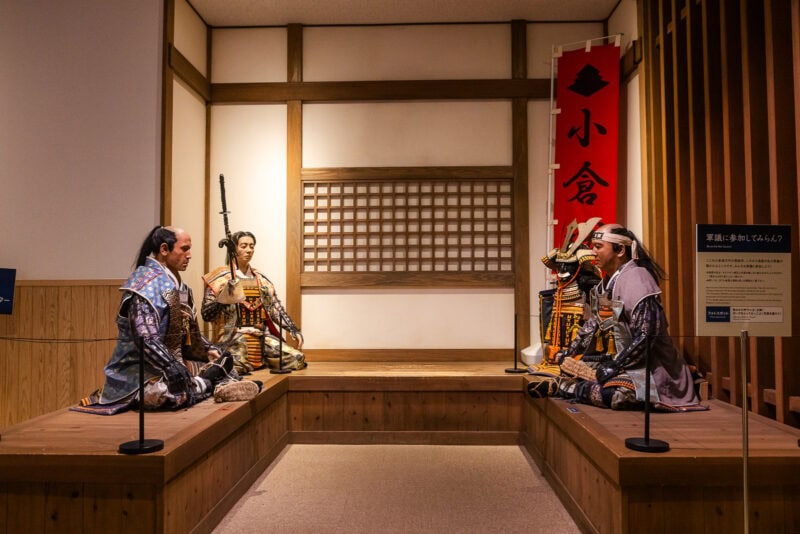
What sets Kokura Castle apart from most others I have visited in Japan is how genuinely engaging the interior is. Each floor has its own distinct focus rather than simply displaying artifacts behind glass.
- First floor: An impressive theater experience covering 400 years of the castle’s history
- Second floor: Profiles of the feudal lords and rulers of Kokura, with historic artifacts
- Third floor: A dedicated exhibition on the legendary duel at Ganryu Island between Miyamoto Musashi and Sasaki Kojiro
- Fourth floor: A rotating art gallery featuring local artists and special exhibitions
- Fifth floor: An observatory with panoramic views over Kitakyushu city
Kokura Castle Garden and Tea Ceremony
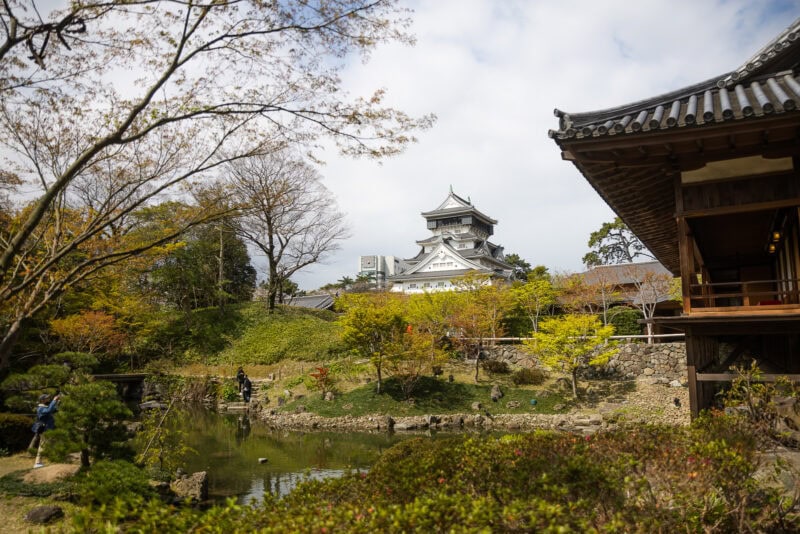
Right next to the castle is the Kokura Castle Garden, and I recommend picking up the combo ticket to visit both. The garden is beautiful on its own, but the real draw is that you can enjoy a tea ceremony here without a reservation, which is rare. Seated with a view over the garden pond and the castle, you are served matcha or sencha paired with seasonal wagashi sweets. It is a quietly memorable way to finish the visit, and the 560 yen combined ticket for the castle and garden makes it an easy decision.

Andy’s Travel Tips
These simple tips will help you when you visit.
- Visit in early April if you can, as the cherry blossoms in Katsuyama Park around the castle are among the best in the north Fukuoka region and make the whole setting feel especially dramatic.
- Buy the combo ticket for the castle and garden for 560 yen. The garden alone is worth it, and the no-reservation tea ceremony is a genuine highlight.
- Allow at least two hours to go through all five castle floors properly, visit the garden, and enjoy tea without rushing.
- Take the Shinkansen from Hakata if time is tight. It is only 15 minutes and 3,460 yen, making it a fast and easy day trip from central Fukuoka. The JR limited express takes around 45 minutes for 2,640 yen if you want to save money.
- The castle is open until 8:00 pm with no regular closing days, so it works well as an evening visit too if your daytime schedule is full.
How to Get to Kokura Castle
Train
The castle is highly accessible by rail, making it an easy day trip from anywhere in northern Kyushu.
- From JR Kokura Station: The castle is a flat, scenic 15-minute walk east through the downtown area and across the Murasaki River.
- From JR Nishi-Kokura Station: This local station is actually the closest to the castle grounds. It is just a 10-minute walk to the main keep.
Car
- From Fukuoka City: Take the Kyushu Expressway and transfer to the Kitakyushu Urban Expressway, exiting at the Otemachi IC. The drive takes about 1 hour and 15 minutes.
Taxi
- Because the castle is so close to the main station, a taxi from JR Kokura Station takes only about 5 minutes.
- The fare is very affordable, usually costing around ¥800 to ¥1,200.
Pro Tip: Right next to the castle keep, you will find the Kokura Castle Garden. This is a reconstructed samurai residence featuring a traditional wooden stilt house that overlooks a pond.
It is one of the few places in Japan where you can experience an authentic tea ceremony while looking up at a castle keep. If you buy a triple combination ticket, it includes entry to the castle, the garden, and the nearby Seicho Matsumoto Museum at a discounted rate.
Is Kokura Castle Worth Visiting?
Yes and no. If you have an interest in Japanese history or want a day trip that feels different from central Fukuoka. However, it doesn’t have the same grandeur or draw power as larger castles like Himeji Castle, which makes it a must-visit.
The interior is more thoughtfully put together than most I have visited, the garden tea ceremony is a nice treat, and in cherry blossom season, the whole complex is beautiful. An hour’s journey from Fukuoka is nothing, but Kokura is a compact and rewarding destination that makes the trip.
More to Explore Nearby
Kokura Castle stands in Kitakyushu, the gateway between Honshu and Kyushu. Fukuoka’s highlights and Oita’s famous hot spring towns are all within easy reach.
- Kunisaki Peninsula — A remote, spiritual landscape dotted with ancient temples and stone Buddhas, unique to Oita’s northern coast.
- Fukuoka Castle — The ruins of a once-grand castle in Fukuoka city, set within the greenery of Maizuru Park.
- Dazaifu Tenmangu — One of Japan’s most celebrated shrines, dedicated to the god of learning and surrounded by plum trees.
- Yanagawa Canals — A charming canal town in southern Fukuoka, best explored by traditional flat-bottomed boat.