This post may contain affiliate links. Please read our disclosure policy.
Drift through the historic waterways of Yanagawa City on a traditional donkobune punt boat, where willow-lined canals, folk songs, and centuries of history make for one of Kyushu’s most memorable day trips.
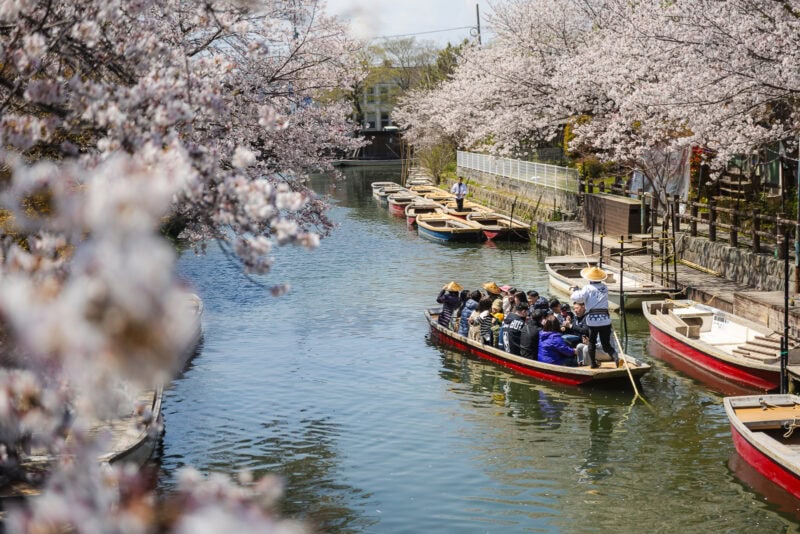
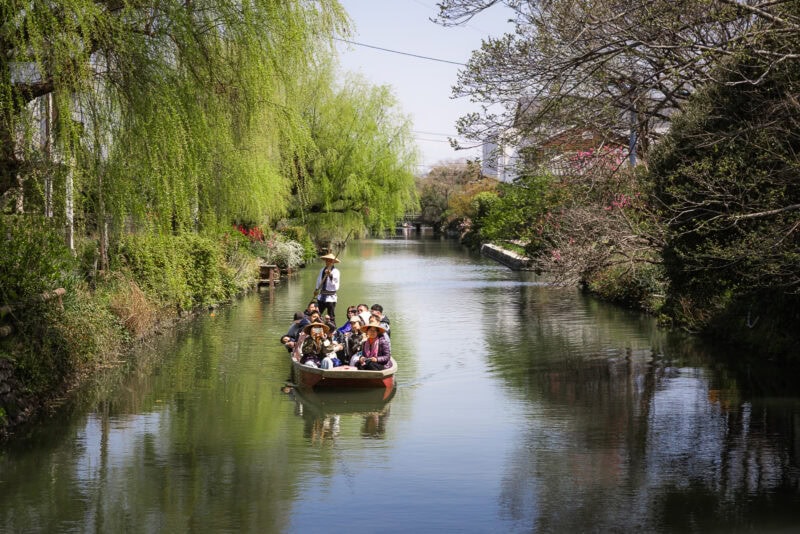
Yanagawa City (柳川市) is a small city in southern Fukuoka Prefecture that feels like it belongs to a quieter era. Its canals, once built for irrigation and later fortified as castle moats, now meander gently through neighborhoods shaded by drooping willows and, in spring, walls of cherry blossoms.
I came here on a day trip from Fukuoka and wished I had stayed longer. It was a relaxing break from the city hustle of central Fukuoka, and the cherry blossoms made it even better. If you are anywhere near Fukuoka and want something genuinely different from the city, Yanagawa is worth every minute of the journey.
What Are the Yanagawa Canals
The Yanagawa Canals are a network of historic waterways stretching approximately 930 kilometers through Yanagawa City. They were originally built as irrigation channels drawing water from the Chikugo River, then deepened and expanded during the Sengoku Period (1467–1600) when the area became a fortified castle town.
Today they are peaceful, navigable waterways that you can explore by boat or on foot, with the canal banks changing character completely depending on the season.
Quick Facts
- Located in Yanagawa City, southern Fukuoka Prefecture, under two hours from Hakata Station by train
- Approximately 930 kilometers of canals originally built as irrigation channels from the Chikugo River
- Donkobune punt boat cruises last approximately one hour
- In winter, kotatsu-bune boats are available, fitted with heated tables and blankets
- Ohana, the former residence of the Tachibana lords, is the only national cultural asset of its kind in Japan where visitors can stay overnight
- Famous for unagi no seiro-mushi, a local dish of freshwater eel steamed over rice in a lacquerware box
My Experience at the Yanagawa Canals
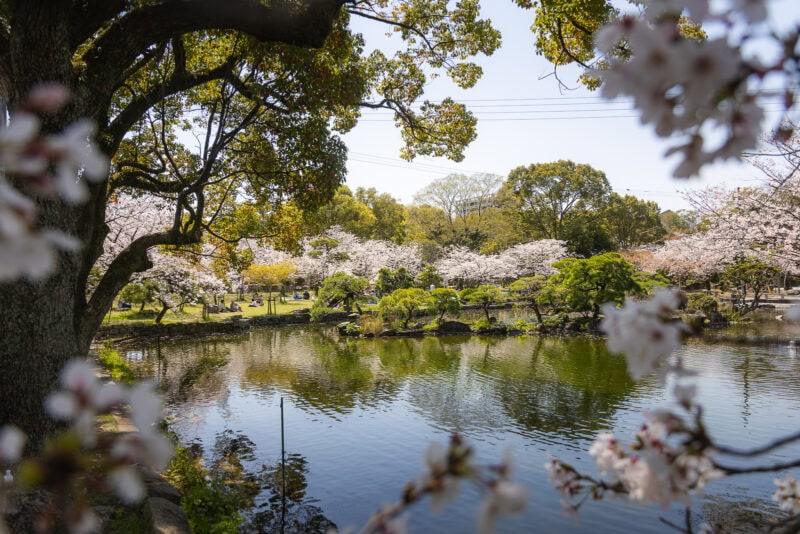
Arriving from Nishitetsu-Yanagawa Station, the punt boat departure point known as Shogetsu Punting Station is just a 5-minute walk away. Before boarding, I detoured slightly north to Mihashira Shrine, a quieter corner of town where locals come to pray for safe travels and good fortune. It was a good way to ease into the atmosphere of the area before getting to the boats.
The Donkobune Canal Cruise
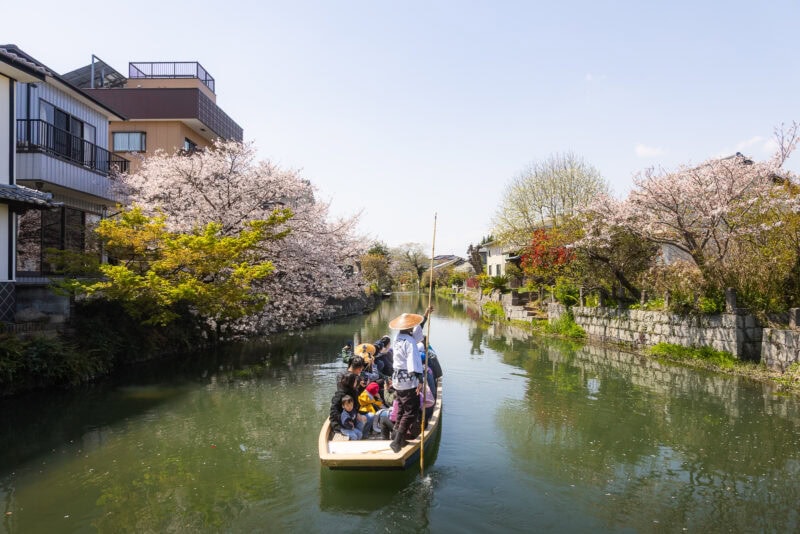
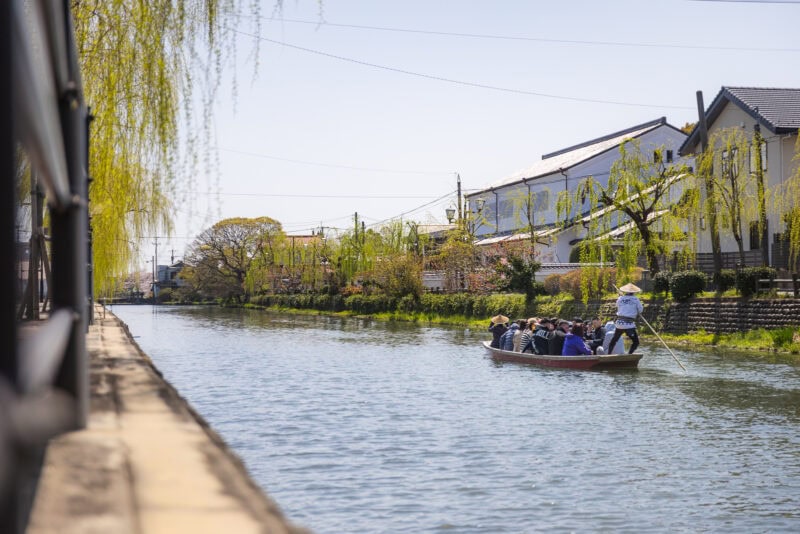
The cruise lasts about an hour and covers the most scenic stretch of the waterways, passing under low stone bridges and through curtains of trailing willow branches. The oarsmen are the real highlight. They share the city’s history as they go, and along the way they sing nursery rhymes by Hakushu Kitahara, Yanagawa’s beloved poet.
It sounds like it could feel staged, but on the water, with the willows brushing the sides of the boat and the town drifting past slowly, it feels right.
The canals look different in every season. In spring, cherry blossoms line the banks in hues of vivid pink. Summer brings the bloom of around 30,000 irises at the Kabashima Iris Garden.
Autumn turns the willows gold, and in winter the boats are converted into kotatsu-bune, fitted with heated tables and blankets so you can stay warm as you drift through the cold, quiet waterways. I visited in spring, and the timing felt almost unfairly beautiful.
Ohana and the Tachibana Legacy
The cruise ends at Ohana, the former residence of the Tachibana family, who served as Lords of the Yanagawa Domain. The property has been designated a national cultural asset and a place of scenic beauty, and it is the only one of its kind in Japan where visitors can still stay overnight.
Descendants of the Tachibana clan continue to preserve and run it as a ryotei ryokan, which gives the whole place a living quality that feels rare. Even if you are not staying, it is worth walking the grounds and taking in 400 years of history in one place.
Unagi no Seiro-Mushi and Yanagawa Festivals
After the boat ride, I recommend trying out Yanagawa’s signature dish: unagi no seiro. Made from freshwater eel marinated and steamed over rice, it is served in a lacquerware box and finished with a sweet sauce. Every restaurant in town has its own version of the sauce, many passed down through generations. Unfortunately, I didn’t have time to visit, but for the original, go to Ganso Motoyoshiya, where the dish was first created.
Yanagawa also hosts some of Kyushu’s most distinctive festivals. Each November, the city holds a three-day celebration of Hakushu Kitahara’s life with poetry readings, fireworks, music, and evening boat parades on the canals.
From mid-February to early April, the Hina Matsuri Doll Festival transforms the town, with sagemon decorations and ornate dolls filling the waterways, houses, and shops. The highlight is the Ohinasama Water Parade in mid-March, when families dressed in colorful kimonos ride boats through the decorated canals.

Andy’s Travel Tips
These simple tips will help you when you visit.
- Visit in spring if you can, as the cherry blossoms along the canal banks are genuinely stunning and make the boat ride feel even more special.
- Do not skip the kotatsu-bune in winter. Drifting through the quiet canals wrapped in a heated blanket is one of the more unique travel experiences you can have in Japan.
- Walk north to Mihashira Shrine before boarding your boat for a quieter, more local side of Yanagawa before the cruise begins.
- Eat unagi no seiro-mushi for lunch or dinner. Go to Ganso Motoyoshiya for the original version. It’s the perfect way to end your boat ride.
- Plan around the festivals if your dates allow. The Hina Matsuri Doll Festival (mid-February to early April) and the Hakushu Kitahara Festival (November) are both worth timing your visit around.
- Consider staying overnight at Ohana if your budget allows. It is the only place of its kind in Japan and the experience of staying in a 400-year-old lord’s residence is difficult to replicate anywhere else.
Is Yanagawa Worth Visiting?
Yes, without hesitation. Yanagawa is one of those places that delivers more than it promises. The boat cruise sounds like a tourist activity on paper, and it does get busy, but on the water, it feels genuinely peaceful and memorable. Add the food, the festivals, and the Ohana estate, and you have a full, satisfying day out of Fukuoka that most visitors to Japan never make time for. If you are based in Kyushu for any length of time, this should be near the top of your list.
More to Explore Nearby
- Dazaifu Tenmangu – Visit one of Kyushu’s most celebrated Shinto shrines, dedicated to the god of learning and set among plum trees and historic grounds.
- Kyushu National Museum – Explore Japan’s fourth national museum right next to Dazaifu Tenmangu, housing an impressive collection of Asian art and cultural artifacts.
- Fukuoka Castle – Explore the ruins of this grand feudal castle in the heart of Fukuoka city, surrounded by a beautiful park with seasonal cherry blossoms and city views.