This post may contain affiliate links. Please read our disclosure policy.
With its picturesque pond, serene Japanese garden, and relaxing walking trails, Ohori Park is the perfect place to slow down and escape the city’s rush in central Fukuoka.
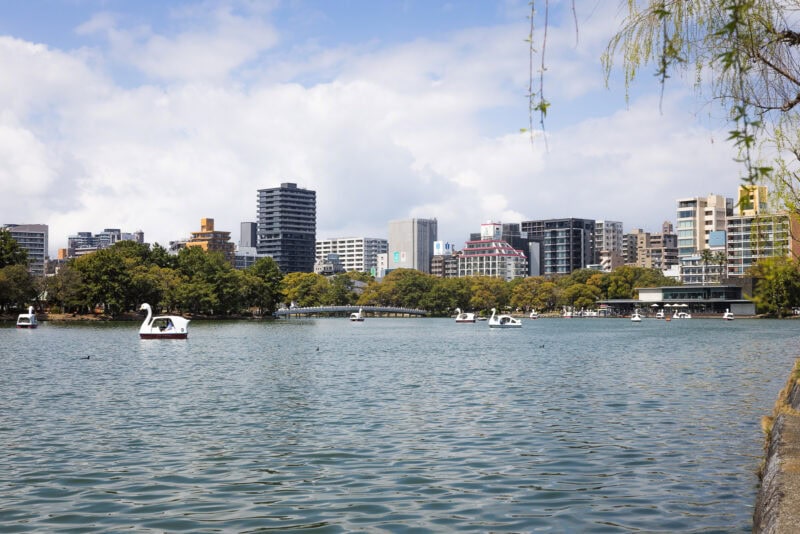
Ohori Park (大濠公園) is a large urban park in the heart of Fukuoka, recognized as a nationally designated place of scenic beauty. Originally part of the moat system for Fukuoka Castle, it opened to the public in 1929 and has been a retreat for locals ever since.
The park is built around a large central pond with a 2-kilometer walking path. Three connected islands, a Japanese garden, an art museum, and a waterside cafe round it out. Despite having visited Fukuoka many times, I only made it here for the first time in spring 2025. It quickly became one of my favorite spots in the city, as I love wandering around city parks.
What Is Ohori Park
Ohori Park is a nationally designated scenic landmark in central Fukuoka’s Chuo Ward, built on what was once the outer moat of Fukuoka Castle. The name “Ohori” means large moat, and the park’s wide central pond reflects that history directly. Since opening in 1929, it has grown into a beloved local destination. Joggers, cyclists, families, and visitors come year-round, and every season brings something different.
Quick Facts
- Opened in 1929 on the former outer moat of Fukuoka Castle; designated a nationally scenic place of beauty
- Central pond circumference: approximately 2 kilometers, with three connected artificial islands
- Ohori Park Japanese Garden covers 12,000 square meters and opened in 1984 to mark the park’s 50th anniversary
- Fukuoka Art Museum houses approximately 16,000 works, including pieces by Salvador Dalí and Joan Miró
- Cherry blossoms bloom along the pond pathway from late March to April
My Experience at Ohori Park
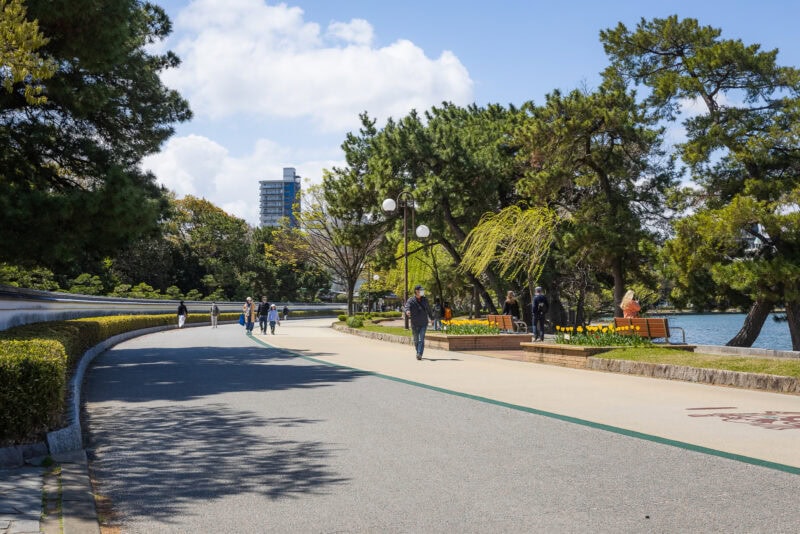
I arrived on a spring morning, and the park immediately felt different from what I expected. It is large enough that it never feels crowded, even with plenty of people out jogging and walking their dogs along the pond path.
The 2-kilometer loop around the water is easy and pleasant at any pace, lined with willow trees, seasonal flowers, and in spring, rows of cherry blossoms that make the whole walk feel like you have stepped and become a Fukuoka local.
The Pond, Islands, and Ukimi Pavilion
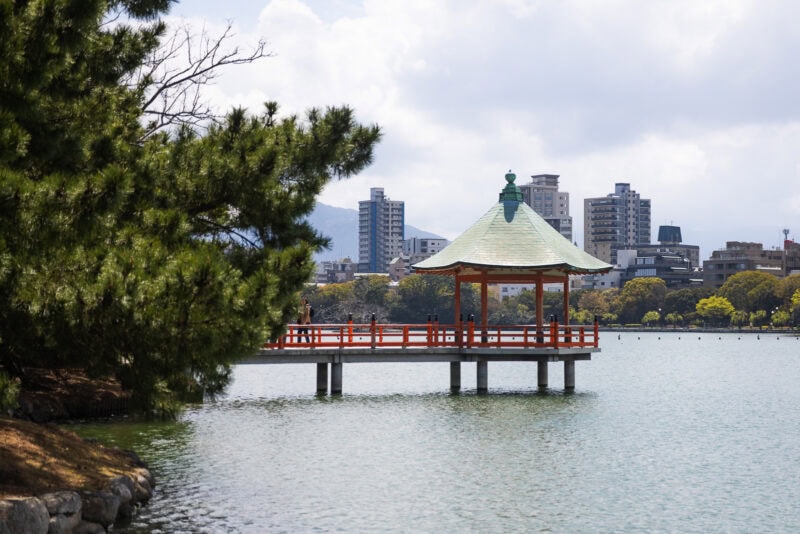
At the heart of the pond are three artificial islands: Yanagishima (柳島), Matsushima (松島), and Shobujima (菖蒲島). Bridges connect them, so you can walk the full length of the water. The islands are filled with pine trees and quiet corners. The most photographed spot is the Ukimi Pavilion, a vermilion structure relocated here in 1949 from Fukuoka City Zoological Garden. It gets busy, but I found it actually photographs better from a distance.
Royal Garden Cafe, Swan Boats, and the Wild Bird Forest
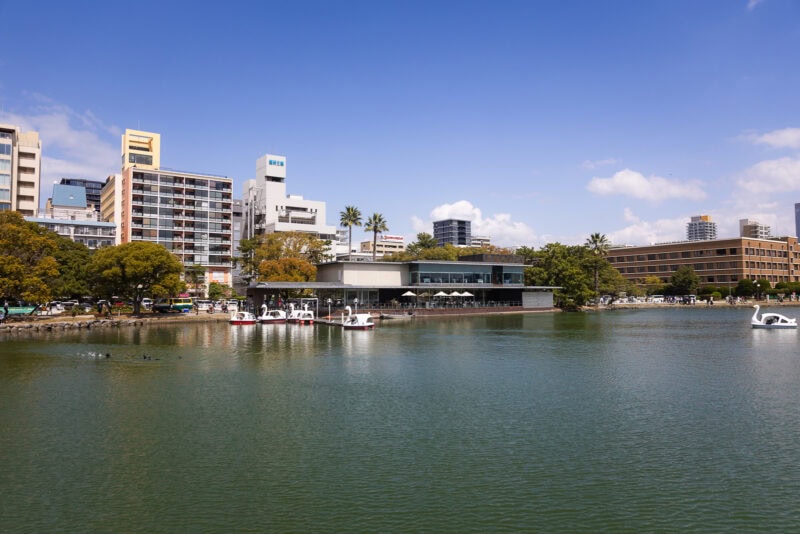
On the northern side, the Kangetsu Bridge leads to the Royal Garden Cafe. It is a pleasant spot for bistro-style food with views over the water. Just outside is a small pier where you can rent swan boats.
Further west, the park has a wild bird forest that becomes particularly lively from November to March, when hundreds of migratory birds arrive from Siberia. It is a quieter part of the park that most visitors skip, which makes it worth the detour.
Ohori Park Japanese Garden and Fukuoka Art Museum
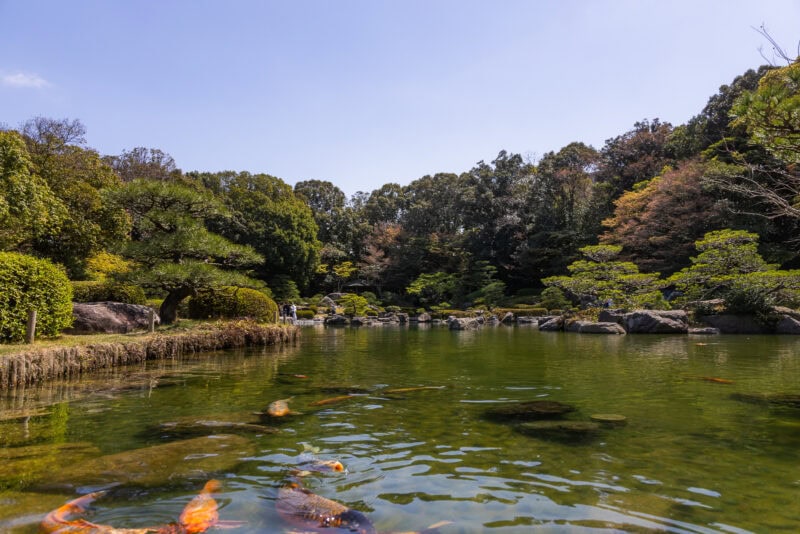
On the south side of the park is the Ohori Park Japanese Garden, opened in 1984 to mark the park’s 50th anniversary. The garden covers 12,000 square meters. It has a central koi pond, artificial hills, a meandering stream, and a dry landscape garden. A sukiya-zukuri-style teahouse on the grounds hosts tea ceremonies. It is the kind of place that naturally slows you down. The entrance fee is 250 yen, and I highly recommend everyone to visit if you are in the area.
Just a short walk from the garden is the Fukuoka Art Museum, which holds around 16,000 works ranging from ancient artifacts to contemporary art, with notable pieces by Salvador Dalí and Joan Miró. It is a genuinely good museum and easy to combine with the garden as part of the same visit. Admission is 200 yen for the permanent collection, with seasonal hours so check the official site before you go.

Andy’s Travel Tips
These simple tips will help you when you visit.
- Visit in late March to April if you can time it, as the cherry blossoms along the pond path are genuinely beautiful and the park is at its most photogenic.
- Walk the full 2-kilometer pond loop before stopping anywhere. It gives you a feel for the whole park and helps you decide where you want to spend more time.
- Cross the bridges to the three islands and look for the Ukimi Pavilion. It is the best photo spot in the park, especially in the morning when the water is still.
- Budget extra time for the Japanese Garden. The 250 yen entry is worth it, and it is easy to spend 30 to 45 minutes there without noticing the time pass.
- Check the Fukuoka Art Museum hours before visiting, as they vary by season and the museum is closed on Mondays (unless Monday falls on a national holiday).
- Come back in winter if you visit more than once. The wild bird forest on the west side is at its best from November to March when the Siberian migratory birds arrive.
How to Get to Ohori Park
Subway
- From Hakata Station: Take the Kiku-fuku (Airport) Line toward Meinohama. Get off at Ohori Koen Station. The park is a 2-minute walk from Exit 3 or 6. Total Time: Approximately 10 minutes.
- From Tenjin Station: Take the Airport Line toward Meinohama. Get off at Ohori Koen Station. Total Time: Approximately 4 minutes.
Car or Taxi
- From Hakata Station, a taxi takes about 15 minutes and costs roughly ¥1,800 to ¥2,500.
- From Tenjin, a taxi takes about 5 to 10 minutes and costs roughly ¥1,000 to ¥1,500.
Foot
- If you are visiting Maizuru Park (the site of the Fukuoka Castle Ruins), Ohori Park is immediately adjacent to the west. You can easily walk between the two in about 5 minutes.
Pro Tip
The park has a 2-kilometer walking and jogging path circling the water. If you want a unique experience, head to the Starbucks located right on the water’s edge—it’s one of the most famous “Regional Landmark” stores in Japan for its view.
Is Ohori Park Worth Visiting?
Yes, without hesitation. I love exploring parks like these, as you can really unwind and relax from the city, while watching locals go about their day. Ohori Park is one of those places that earns its reputation honestly. The pond loop alone is a lovely way to spend an hour. Add the Japanese Garden, the art museum, and a swan boat ride, and it becomes a easy half day. If you are spending more than a day or two in Fukuoka, it is a great spot to slow down without leaving the city.
More to Explore Nearby
More to Explore Nearby
Ohori Park sits at the heart of Fukuoka, surrounded by some of the city’s most beloved landmarks and a short hop from day-trip destinations that showcase the best of Kyushu. Whether you’re after feudal history, street food culture, or a scenic countryside escape, there’s plenty to discover close by.
- Fukuoka Castle — The castle ruins sit right next to Ohori Park, making it a natural next stop. Climb the old stone walls for sweeping views over the city and the park’s lake below.
- Dazaifu Tenmangu — Just 30 minutes away, this iconic shrine dedicated to the god of learning is famous for its plum blossoms and dramatic torii tunnel leading to the main hall.
- Fukuoka Yatai — As evening falls, join locals at Fukuoka’s legendary open-air food stalls for tonkotsu ramen, yakitori, and cold beer under the lantern light.
- Yanagawa Canals — An hour south of the city, drift along willow-lined waterways on a flat-bottomed donko boat and finish with a bowl of Yanagawa’s famous eel rice.