This post may contain affiliate links. Please read our disclosure policy.
Japan’s tallest seaside tower, Fukuoka Tower, soars 234 meters above the coastline and captures the best of the city from above: Hakata Bay shimmering to the north, mountains framing the skyline, and the sprawling city stretching to the south.

Fukuoka Tower (福岡タワー) is one of the city’s most recognizable landmarks. Its sleek triangular design, sheathed in more than 8,000 half mirrors, stands in striking contrast to the rustic yatai food stalls that line the streets nearby.
The yatai represent Fukuoka’s warm, nostalgic street culture. The tower represents its modern ambition. Both feel completely true to the city. From the observation deck, you get both at once: the bay to one side, the urban sprawl to the other, and mountains framing everything in the distance.
What is Fukuoka Tower
Fukuoka Tower is a 234-meter observation tower in the Momochi district of Fukuoka, standing on the edge of Hakata Bay. It holds the title of Japan’s tallest seaside tower. The 123-meter observation deck offers 360-degree views across the city, the bay, and the mountains beyond. The tower opens daily from 9:30 to 22:00 and charges 1,000 yen for adult admission.
My Experience at Fukuoka Tower
I have visited a lot of observation towers across Japan. Fukuoka Tower is one of the better ones. The view from the 123-meter deck is genuinely impressive.
To the south, the city spreads as far as you can see. To the north, Hakata Bay stretches to the horizon. Mountains frame the distance on both sides. It is a wide, clear panorama that gives you a proper sense of the city’s scale and geography.
Lover’s Sanctuary and Interactive Attractions

Couples should head straight to the Lover’s Sanctuary, a romance-themed photo spot on the observation deck. A large heart-shaped arch lights up when two people hold hands and press the switches together. You can choose from eight colors. Heart-shaped locks are also available to purchase: write your names and date on one, then lock it to the ceremonial fence. It is a popular spot and genuinely well done.
The tower also has several interactive attractions. SKY Gacha is an oversized capsule toy machine that drops random Fukuoka Tower-themed prizes. Omikuji Pinball is a large pinball machine that dispenses fortunes written in the Fukuoka dialect. Magic Window uses augmented reality to place UFOs and robots over real-time views of the city below. The Refuge Sky Café and Dining serves food and drinks with panoramic views if you want to slow down and eat.
Evening Illuminations and Momochi Seaside Park

The tower is also famous for its evening light shows. The 2,700 LED bulbs built into the half-mirror exterior create displays that change with the seasons. I did not visit in the evening during my trip, but the illuminated tower is one of Fukuoka’s more distinctive after-dark landmarks. Worth planning a return visit around.
After the tower, head north to Momochi Seaside Park. The artificial beach stretches 2.5 kilometers of white sand along the bay. It is a good place to stroll or cool your feet in summer. Marizon, a Mediterranean-style complex nearby, has restaurants, cafes, and shops if you want to eat or browse before heading back into the city.

Andy’s Travel Tips
These simple tips will help you when you visit.
- Visit in the evening if possible. The LED light show after dark is one of the tower’s best features, and the night view over Hakata Bay is noticeably more dramatic than during the day.
- Combine with Momochi Seaside Park right after your visit. The 2.5-kilometer beach is a short walk north of the tower and makes for a natural, relaxed way to finish the afternoon.
- Take the bus rather than the subway. The Nishitetsu Bus 306 from Hakata Bus Terminal drops you directly at Fukuoka Tower South Exit. The subway requires a 20-minute walk from Nishijin Station. Both cost 260 yen, but the bus is far more convenient.
- Check the official website for irregular closures before heading out. The tower closes periodically for maintenance and events.
- Bring someone to try the Lover’s Sanctuary. The heart arch only lights up when two people press the switches together. It is one of the more fun interactive details on the observation deck.

How to Get to Fukuoka Tower
Bus (Most Direct Route)
Taking a highway or city bus is the most convenient option because they drop you off right at the base of the plaza, bypassing the need for a long walk from the subway grid.
- From Hakata Station: Walk to the Hakata Station Bus Terminal (1st Floor, Gate 6) and board Nishitetsu Bus Route 306 or 312. The bus drives along the urban expressway, offering a fast trip of about 25 minutes. Get off at the Fukuoka Tower bus stop.
- From Tenjin Station: Go to the Tenjin Bus Center (Stop 1A) and board Bus Route W1 or 302. The journey takes roughly 20 minutes.
Subway
While the subway doesn’t stop directly at the waterfront, you can take it part of the way and finish the journey on foot or by transferring to a local bus.
- From Hakata Station or Tenjin Station: Take the Kuko Subway Line west toward Meinohama and disembark at Nishishin Station or Fujisaki Station. The subway ride takes about 10 to 15 minutes.
- On Foot from the Subway: From either station, the tower is located about 1.5 kilometers to the north. Walking straight down the tree-lined avenues toward the ocean takes roughly 20 minutes.
Car
- From central Fukuoka: Take the Fukuoka Urban Expressway Route 1 heading west along the coast and exit at the Momochi IC. The tower sits just a 2-minute drive from the ramp exit.
Pro Tip
The main 360-degree observation deck sits at 123 meters above the ground, offering unmatched views of the city grid, the Hakata Bay islands, and the mountain horizon. Time your visit late in the afternoon so you can watch the sunset melt over the ocean, then stay to watch the tower’s famous external LED illumination theme turn on for the night.
Is Fukuoka Tower Worth Visiting?
Yes, especially if you are already spending time in the Momochi area. The views are genuinely impressive, the interactive attractions add something beyond a standard observation deck, and the evening illuminations make it worth a return visit after dark. At 1,000 yen it is reasonable value, and pairing it with Momochi Seaside Park makes for a relaxed half-day on the bay side of the city.
More to Explore Nearby
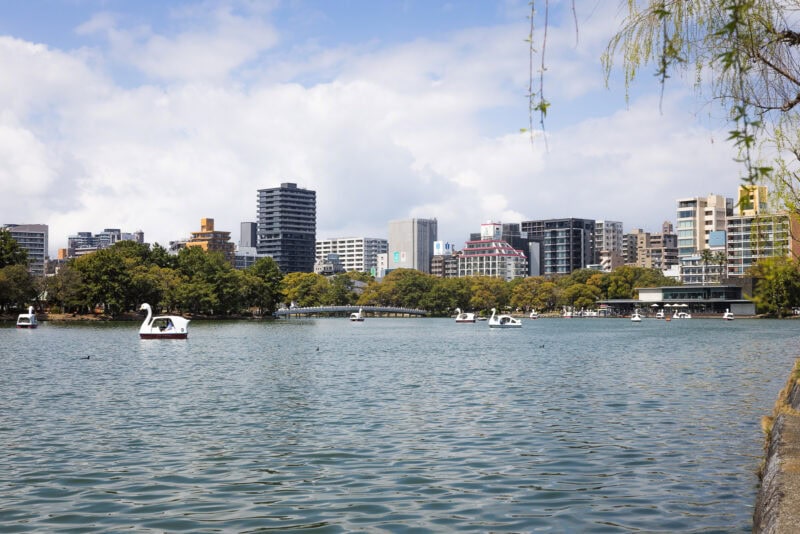
Fukuoka Tower rises above the Momochi seaside district, offering panoramic views over the city and coast. Fukuoka’s mix of history, food, and coastal scenery is never far away.
- Ohori Park — A beautiful lakeside park just inland from the tower, perfect for a relaxed stroll or afternoon picnic.
- Fukuoka Food Guide — From tonkotsu ramen to mentaiko and yatai culture, a guide to the best eating across the city.
- Kushida Shrine — Hakata’s most beloved shrine and spiritual home of the famous Yamakasa festival, in the heart of the city.
- Uminonakamichi Seaside Park — A vast coastal park on a narrow peninsula east of the city, known for seasonal flower fields and ocean views.
- Yanagawa Canals — A charming canal town south of Fukuoka, best explored by traditional flat-bottomed boat.