This post may contain affiliate links. Please read our disclosure policy.
Fukuoka is one of Japan’s best food cities, famous for rich tonkotsu ramen, fresh seafood, and its lively yatai food stall culture. Here are the six things you need to eat when you visit.
Eating in Fukuoka feels casual and local in a way that most major Japanese cities do not. Street-side food stalls line the riverside at night. Ramen shops run vending machines at the door. Izakayas serve fresh sesame mackerel straight from the Genkai Sea.
During my trip, I focused on the city’s best-known specialties and compared popular restaurants with smaller local spots. Some dishes lived up to the hype immediately. Others surprised me far more than I expected. Here are the six things you should not leave Fukuoka without eating.
Tonkotsu Ramen (豚骨ラーメン)
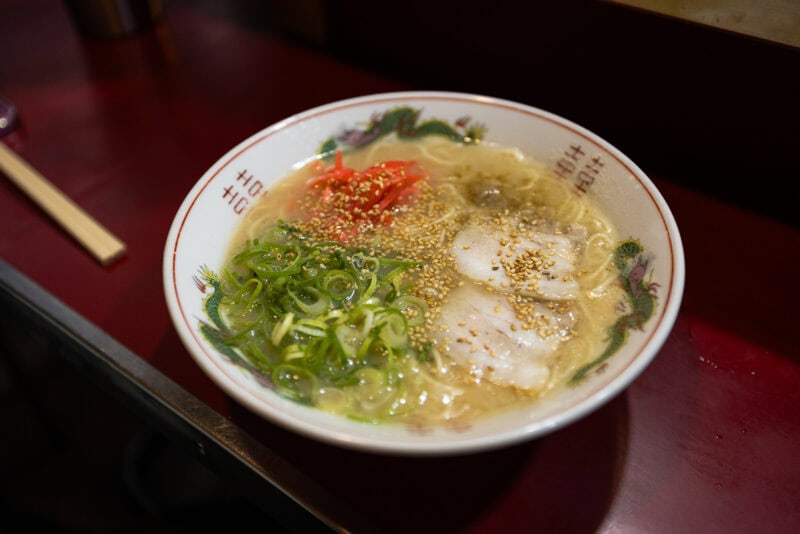
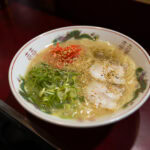
Tonkotsu ramen is the most iconic dish in Fukuoka. The city has over 1,000 ramen shops. At its core, it uses a rich pork bone broth and thin noodles, but each district within Fukuoka puts its own spin on the style. Hakata ramen is the most internationally recognized. It features a cloudy white pork bone soup with slim noodles, topped with chashu, green onion, benishouga (pickled ginger), ajitama (marinated egg), and kikurage (wood ear mushroom).
Most shops use vending machines at the entrance. Buy your ticket, and the staff may ask how you want your noodles cooked. If nobody asks, you will get futsu, or normal hardness.
How to Choose Your Noodle Firmness:
- Nama (生) – Flash-dipped; cooked just long enough to remove the raw flour surface, leaving a doughy center.
- Harigane (針金) – “Wire”; incredibly rigid with a distinct, snappy bite.
- Barikata (バリカタ) – Extra firm; the local favorite that offers a satisfying, toothsome crunch.
- Kata (カタ) – Firm; has a solid bite and holds its texture well in hot broth.
- Futsu (普通) – Standard; your baseline, everyday noodle texture.
- Yawa (ヤワ) – Soft; tender and yields easily with every bite.
- Bariyawa (バリヤワ) – Extra soft; completely melt-in-your-mouth tender.
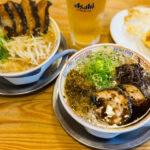
I tried two bowls. Menya Gaga Tenjin serves a rich, deeply flavored broth with a homemade chili spice that adds a sharp kick. Eichan (永ちゃん) takes a more classic Hakata approach: lighter, cleaner, but still with that distinct pork aroma. I preferred Eichan. I sometimes find tonkotsu too overwhelming, and the lighter style suits me better.
Mentaiko (明太子): Spicy Cod Roe
Fukuoka is the birthplace of mentaiko in Japan. The tradition of eating processed Alaska Pollock roe originated on the Korean Peninsula. The name derives from the Korean word “myeongtae,” meaning pollock.
Toshio Kawahara, founder of Fukuya, tasted mentai in Korea and developed a Japanese version. In 1949, he sold Japan’s first karashi mentaiko: cod roe marinated in chili-pepper-based seasoning. Fukuya is now the most famous shop for mentaiko and a popular stop for souvenirs.
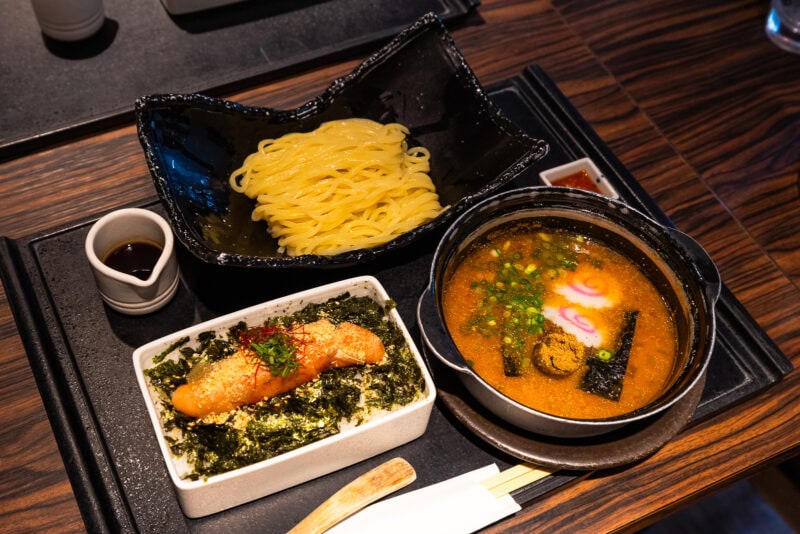
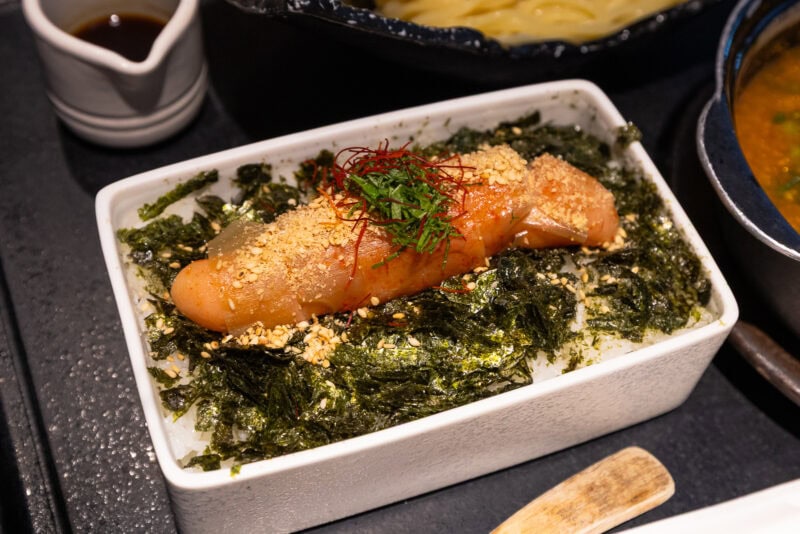
For a proper sit-down mentaiko experience, go to Ganso Hakata Mentaiju Nishinakasu. I went in with low expectations after seeing mixed reviews online. It exceeded them. The Mentaiju arrives as kombu-wrapped mentaiko on hot white rice covered in nori. It is simple, precise, and excellent. They also offer a mentaiko tsukemen, which is good, but the pure Mentaiju is the one to order.
Motsunabe (もつ鍋): Offal Hot Pot
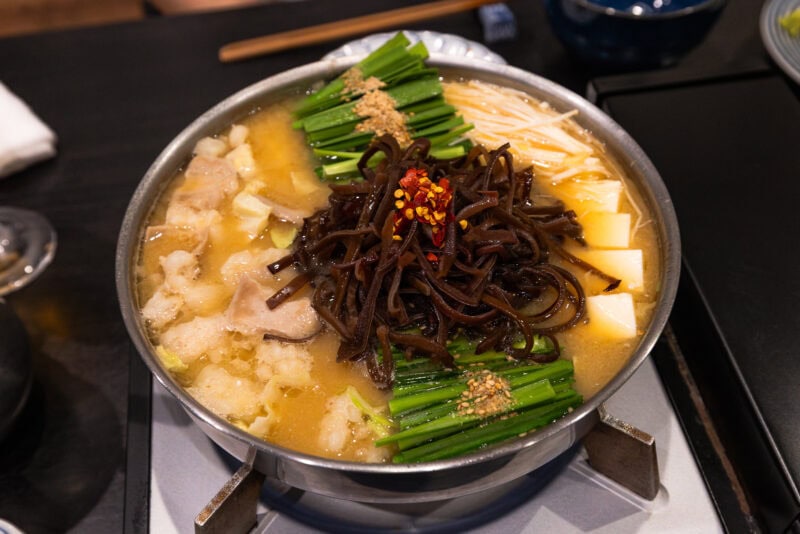
Motsu refers to the internal organs of cows, pigs, and chickens. Nabe means hot pot. Motsunabe uses fatty beef intestines, simmered with cabbage, garlic chives, chili peppers, and garlic. The dish dates back to the 1950s, when coal miners in Fukuoka began cooking offal discarded by others. Cheap, filling, and nutritious, it became a staple of the city.
I recommend Motsunabe Anmei, popular with locals rather than tourists. Choose from shoyu, miso, or karamiso broth. I picked miso. The motsu was fatty, chewy, and tender. The cabbage added sweetness and crunch. The broth carried a deep umami from the miso and a richness from the fat that had dissolved into it overcooking.
Order the champon noodles to finish the pot. One word of caution: avoid cheap motsunabe. Low-quality motsu gets rubbery and unpleasant. Go to a reputable shop.
Goma Saba (ごまさば): Sesame Mackerel
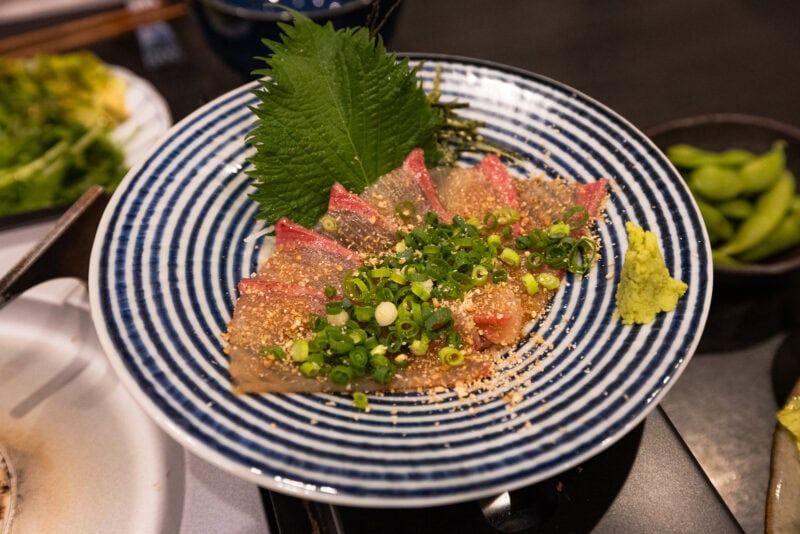
Fukuoka’s Genkai Sea produces excellent oily fish, particularly saba (mackerel). Because mackerel spoils quickly, locals developed goma saba: fresh fish mixed with a slightly sweet soy sauce, ground sesame seeds, wasabi, and green onions. The dressing removes any fishiness and replaces it with a rich umami and nutty aroma. You find it at most izakayas as a side dish. Other fatty fish like kanpachi (amberjack), hiramasa (yellowtail amberjack), and aji (horse mackerel) appear in the same preparation.
The staff at Motsunabe Anmei recommended the goma kanpachi. The sauce was sweet-salty from the soy, and the sesame added a nutty depth that worked well with the amberjack’s natural flavor. It was a welcome contrast alongside the heaviness of the motsunabe. Do not rearrange your entire meal around it, but order it if it appears on the menu.
Yari Ika (ヤリイカ): Spear Squid
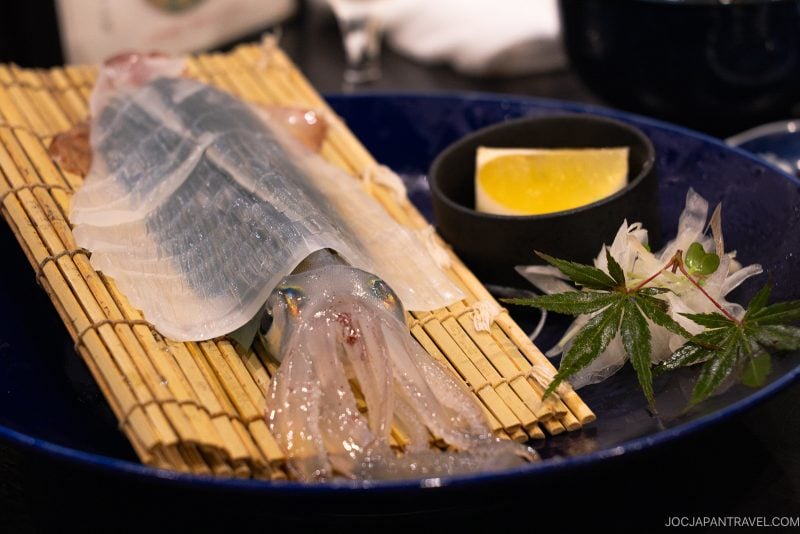
Another one of Fukuoka’s seafood delicacies is yari ika, or spear squid. What makes Fukuoka’s yari ika so special is that it is often caught and served within hours, making it extremely fresh. Again at Motsunabe Anmei, we enjoyed the yari ika, which they house in their own tanks, full of squid. They are killed and served to order, making them some of the freshest squid you will ever eat.
The flesh is transparent and has a crisp, springy, yet tender texture. I don’t usually like raw squid, but this one had a pleasant texture and delicious sweetness that paired nicely with the rich soy sauce. While we enjoyed many local specialties at Motsunabe Anmei, you can find them in many different izakayas across the city.
Amaou Strawberries (あまおう)
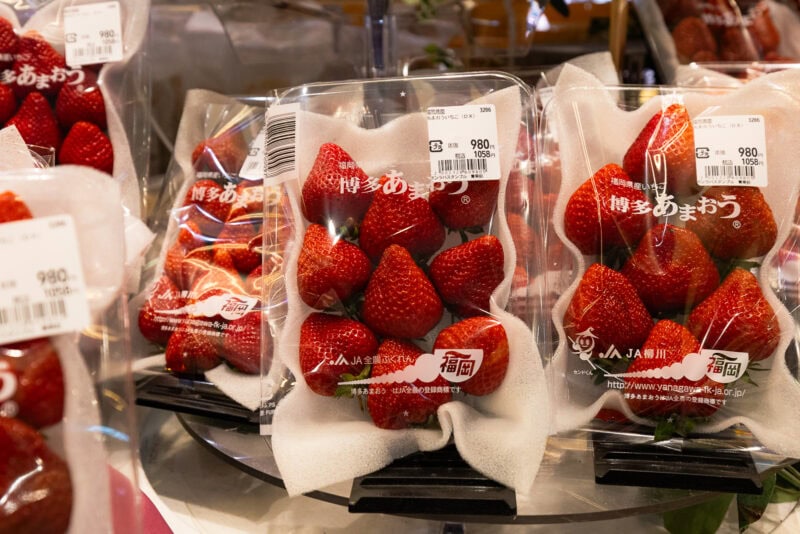
Fukuoka is one of Japan’s top strawberry-producing regions. Its signature variety is the Amaou, a name that stands for akai (red), marui (round), ookii (large), and umai (delicious). Amaou are in season from winter through spring. During that window, strawberry farms open for picking.
Outside the farm season, cafes across the city serve strawberry-themed parfaits, cakes, and ice cream. Supermarkets and department stores stock packaged Amaou throughout the season. Look for packaging marked “あまおう” to ensure you are buying the genuine variety, as other brands are often sold alongside it.
Yatai (屋台): Food Stalls
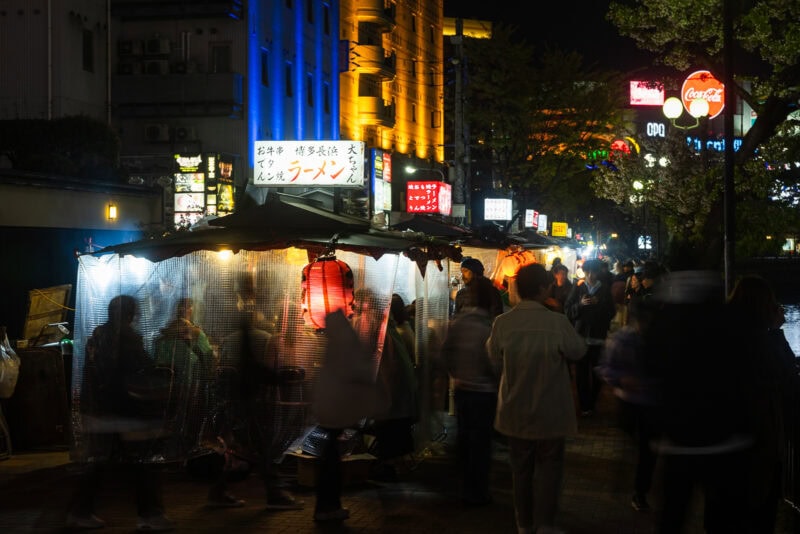
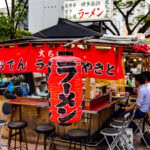
No Fukuoka food guide is complete without yatai. These open-air food stalls are set up across the city every evening, typically from 7:00 pm. Each runs independently, so hours vary. Most serve local Fukuoka dishes like tonkotsu ramen alongside broader Japanese staples like oden, tempura, and gyoza. The experience is casual, social, and very Fukuoka.
Nakasu Yatai Street is the most famous area, but it draws large crowds and often has queues. I prefer wandering the side streets and finding individual stalls instead. At Eichan, I had some of the best ramen of the trip, along with mentaiko-stuffed tamagoyaki, oden, gyoza, and grilled shiitake mushrooms. The shiitake was the surprise highlight of the evening. One note: yatai meals add up quickly. Ordering several small dishes and drinks can make the bill surprisingly expensive.
Andy’s Food Tips
These simple tips will help you eat well in Fukuoka.
- Specify your noodle hardness at ramen shops. Most staff will ask, but if they do not, you will get futsu (normal). Try kata (firm) for your first bowl at a Hakata-style shop.
- Skip the mentaiko tsukemen at Ganso Hakata Mentaiju and go straight for the Mentaiju rice bowl. It lets the mentaiko speak for itself without distraction.
- Order champon noodles to finish your motsunabe pot. The broth absorbs into the noodles by the end of the meal and makes for a deeply satisfying final course.
- Avoid the Nakasu Yatai strip on weekends. The queues are long and the prices skew toward tourists. Wander the side streets instead and look for stalls with locals sitting at them.
- Look for the あまおう label when buying strawberries. Other varieties sit right next to Amaou on the same shelves, and the difference in flavor is significant.
Is Fukuoka Worth Visiting for Food?
Absolutely, especially if you enjoy casual dining and local specialties. Tonkotsu ramen is a must. Mentaiko is genuinely delicious and unlike anything else in Japan. Motsunabe is worth trying if you like fatty, chewy textures. But the yatai culture is the real differentiator. Few major Japanese cities still have this kind of late-night street food scene, and it makes Fukuoka feel unique in a way that a great restaurant district alone cannot replicate.