This post may contain affiliate links. Please read our disclosure policy.
From bold tonkotsu broths born by accident in 1947 to spicy karamen noodles from Nobeoka, Kyushu is the ramen kingdom of Japan, and every prefecture has its own bowl worth seeking out.
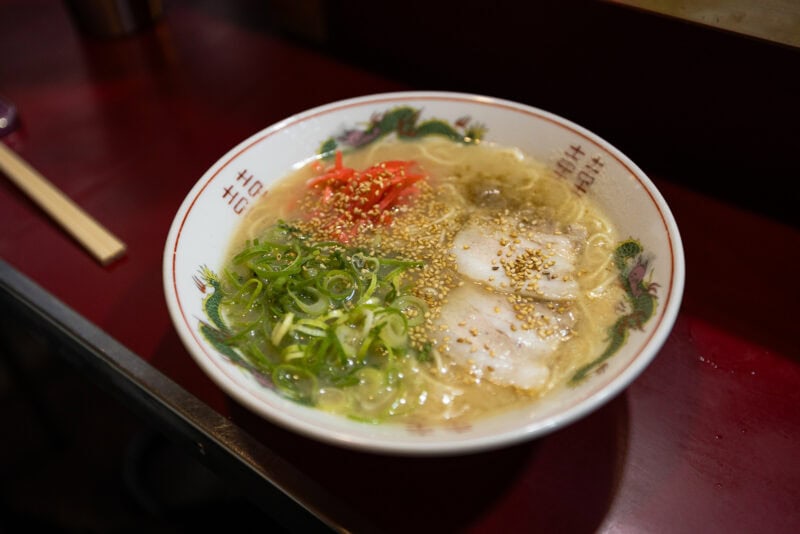
When it comes to ramen, Kyushu is not just a region. It is a lifestyle. You might think of Tokyo for variety or trend-chasing, but Kyushu is where ramen gets its soul. Each prefecture has its own distinct style. The broths, noodles, and toppings shift dramatically as you move from city to city. Here is a breakdown of what to order and where to find it.
Fukuoka Ramen: Kurume, Nagahama, and Hakata
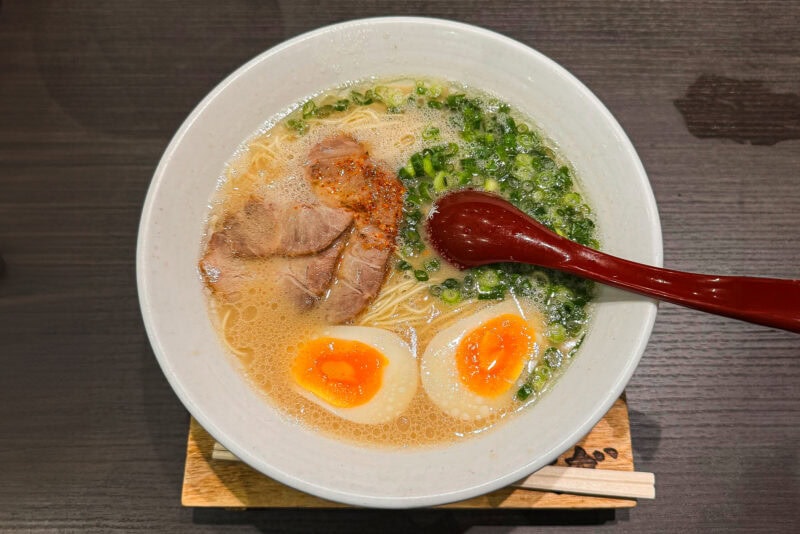
Fukuoka is home to over 1,000 ramen shops. The city’s signature style, tonkotsu, uses thin straight noodles in a rich, milky pork bone broth. But Fukuoka ramen is not a single thing. Three distinct styles have developed within the prefecture: Kurume, Nagahama, and Hakata.
Kurume: The Happy Accident
Modern tonkotsu ramen began by accident in 1947 at a Kurume food stall called Sankyu. Owner Sugino Katsumi left his mother in charge of the broth. She overboiled the pork bones, emulsifying the soup into a creamy, milky white base. Pressed for time, they seasoned it anyway. The result was a deep, bold flavor that changed ramen forever. That happy accident became the foundation of tonkotsu ramen as we know it today. Classic toppings include wood ear mushrooms, bamboo shoots, scallions, and nori.
Nagahama: Ultra-Thin Noodles and the Refill Culture
Nagahama ramen appeared in 1952 at a port stall called Ganso Nagahamaya. It served busy fish market workers who needed food fast. To speed things up, the shop introduced ultra-thin noodles and kaedama, the custom of ordering refill noodles so your bowl never goes soggy. The broth is rich, cloudy, and famously aromatic. Garlic, sesame, and pickled ginger sit on the table so you can adjust the flavor yourself.
Hakata: Global Popularity
Hakata ramen borrowed the emulsification technique from Kurume and the thin noodles and kaedama system from Nagahama. The result is the most internationally recognized style in Fukuoka. Hakata ramen is fattier and more intensely aromatic than its counterparts.
Personally, I find the aroma too strong. But if you want the full Fukuoka ramen experience, Hakata is where most visitors start. During a trip to Fukuoka with Nami and her family, we ate at Menya Gaga Tenjin. The broth simmers premium pork head bones from Kagoshima for over 20 hours. It is creamy, full-bodied, and free of any gaminess, with a homemade spicy sauce that adds a sharp kick.
Kumamoto Ramen
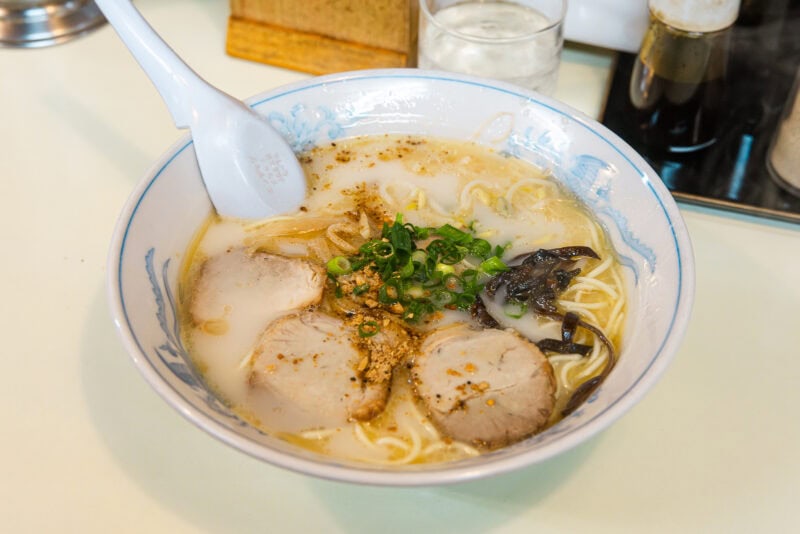
One hour south of Fukuoka by train, Kumamoto serves a ramen that looks familiar but tastes different. The noodles are slightly thicker. The broth blends chicken and pork bones, producing a creamy tonkotsu base that is milder in aroma and taste than Hakata. The defining touch is roasted garlic. It arrives at the table as both a subtle aroma and crunchy fried chips on top of the bowl.
I ate at Komurasaki, founded in 1954 and widely credited with defining the Kumamoto style. Their O-sama ramen is the bowl to order. The broth is deep and complex without feeling heavy. The thicker noodles hold up to it perfectly. The garlic chips add texture and depth that I did not expect. It is one of the best bowls I have had in Kyushu.
Kagoshima Ramen
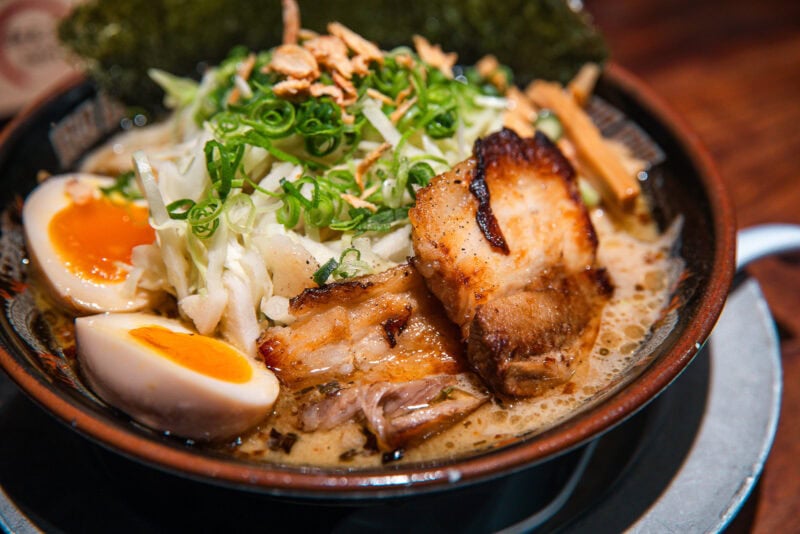
Kagoshima ramen takes a different approach from the rest of Kyushu. The first ramen shop in the city, Noboruya, opened in 1947. The broth simmers pork bones with chicken carcasses and vegetables, producing a gentler, lighter flavor than traditional tonkotsu. Unlike Hakata or Kumamoto, there is no single standard style. Each shop puts its own spin on the bowl.
Another difference is the noodles. Kagoshima ramen skips kansui, the alkaline solution that gives most ramen noodles their chewy bite. The result is a soft noodle that suits the lighter broth. I visited Mengarufu Tenmonkan in the Tenmonkan shopping arcade. The broth was flavorful without being overpowering. The noodles had a gentle, soft bite I really enjoyed. I chose traditional char siu, but kurobuta, Kagoshima’s famous pork brand, is available at many shops. The bowl came with sliced cabbage, which surprised me. It added a fresh crunch that balanced the richness perfectly.
Miyazaki Ramen
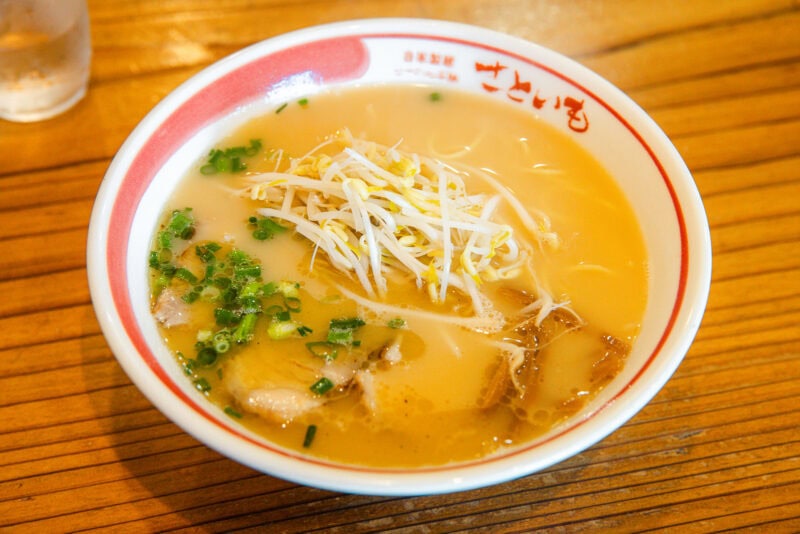
Miyazaki ramen uses a lighter pork bone broth than Hakata, though some shops serve richer versions. The noodles are thick and soft with a high water content. Garlic, soy sauce, and pickles sit on the table so diners can adjust the flavor as they eat. I visited Satoimo, where the bowl comes topped with green onions, bamboo shoots, bean sprouts, and Miyazaki pork belly. Adding a raw egg for 50 yen extra is worth it.
Miyazaki also gave birth to karamen, a spicy ramen from Nobeoka City. The broth runs a vibrant red. It packs garlic, chili, minced meat, and chives, all bound with egg. The shop serves it with chewy konnyaku noodles made from buckwheat and wheat flour. Spice levels are adjustable, making it accessible even for those who usually avoid heat.
Nagasaki Ramen: Champon
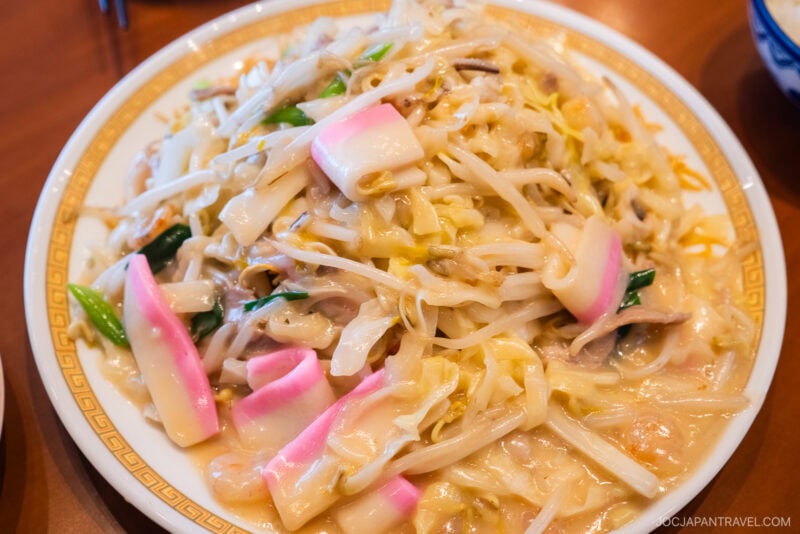
Nagasaki is the home of champon. It looks like ramen at first glance, but the cooking method sets it apart. Pork, seafood, and vegetables are stir-fried in lard. A rich chicken-and-pork bone broth goes in next, creating a deeply layered flavor in one pot. Thick noodles add a satisfying bite. The bowl is hearty, nutritious, and comforting in a way that purely broth-based ramen rarely achieves.
Nami and her family tried champon at the famous Shikairou Chinese Restaurant but found it slightly disappointing.
Andy’s Ramen Tips
These simple tips will help you eat your way through Kyushu’s ramen scene.
- Order kaedama at Nagahama-style shops. When your noodles run low, order a refill for the bowl rather than drinking the remaining broth. It keeps the noodles firm and doubles the value of your visit.
- Try Kumamoto ramen before Hakata if you are sensitive to strong pork aromas. The milder chicken-pork blend and the roasted garlic make it a gentler entry point into Kyushu tonkotsu.
- Seek out kurobuta char siu in Kagoshima. The famous Kagoshima black pork elevates the bowl significantly over standard char siu. Ask for it specifically when ordering.
- Adjust the flavor at the table. Most Kyushu ramen shops put garlic, sesame, pickled ginger, and chili on the table. Use them. The broth is designed to be customized, not served as-is.
- Go to Nagasaki specifically for champon. The dish exists everywhere in Japan, but eating it in its birthplace with local ingredients is a completely different experience.