This post may contain affiliate links. Please read our disclosure policy.
In Nagasaki, champon and sara udon capture centuries of cultural exchange, blending Chinese flavors with Japanese tradition in two of the city’s most iconic noodle dishes.
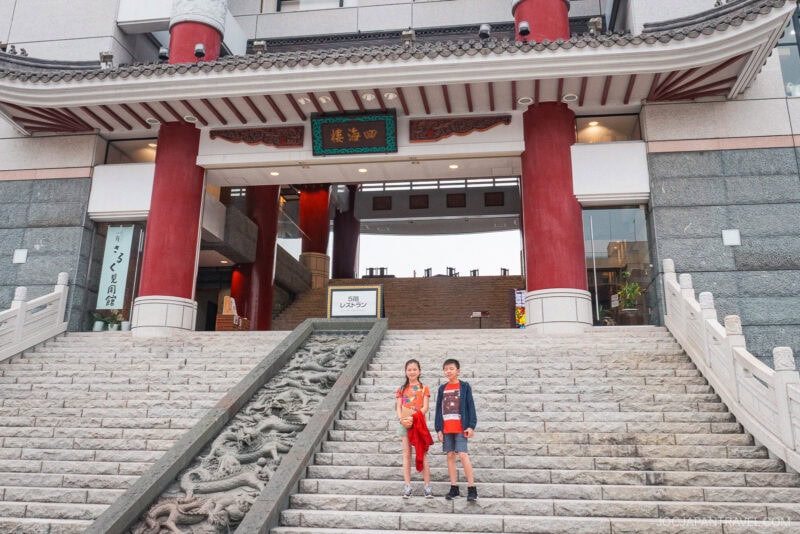
A Global Story in a Bowl
Nagasaki’s history as Japan’s only international port during the sakoku (isolation) era gave rise to a unique food culture. Unlike much of Japan, which developed its cuisine in isolation, Nagasaki absorbed flavors from China, Europe, and Southeast Asia. Out of this exchange came two hearty noodle dishes that remain local favorites today: champon and sara udon.
What Is Champon?
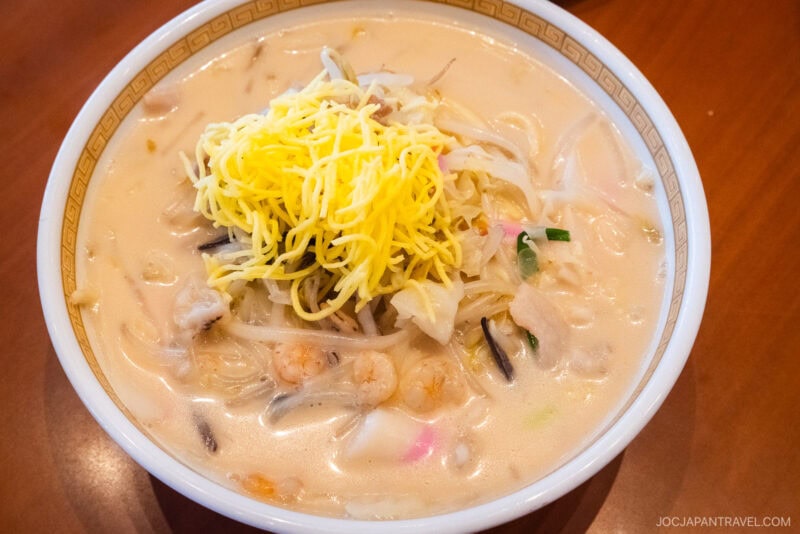
Champon is a rich noodle soup filled with pork, seafood, and vegetables simmered in a broth made from chicken and pork bones. The dish originated in 1899 at Shikairou Chinese Restaurant (四海樓), where founder Heijun Ching created it as an affordable, nourishing meal for Chinese students in Nagasaki.
Typical Ingredients in Champon:
- Pork and cabbage
- Squid or other seasonal seafood
- Kamaboko (fish cake)
- Broth of pork and chicken bones with soy sauce
Unlike most noodle soups, the ingredients are stir-fried first, then simmered with the broth and noodles together in one pan. This method gives champon its signature depth and umami flavor.
👉🏻 Wish to try it at home? Check out Nami’s Champon recipe!
What Is Sara Udon?
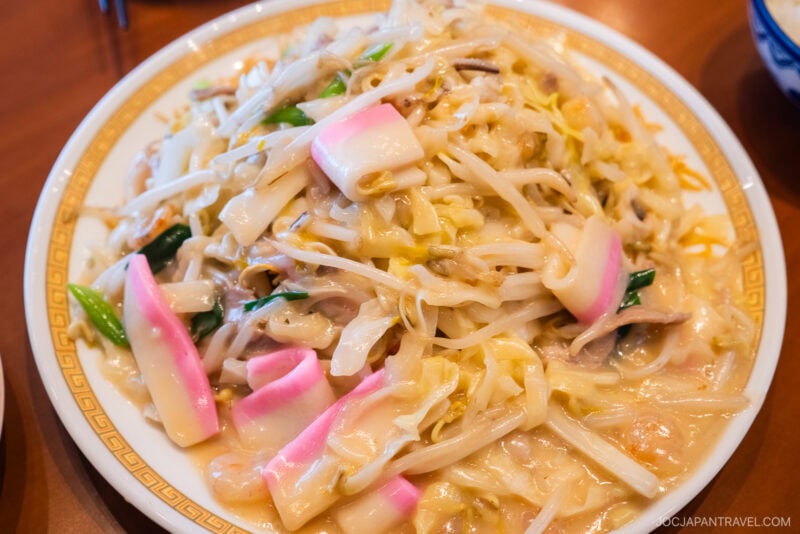
Sara udon is essentially champon without the soup. The same mix of pork, seafood, and vegetables is stir-fried, then topped with a thick savory sauce. Instead of udon, it’s usually served over crispy fried Chinese-style noodles.
The name literally means “noodles on a plate,” and the contrast between crunchy noodles and silky sauce is part of its charm.
👉🏻 Wish to try it at home? Check out Nami’s Sara Udon recipe!
Dining at Shikairou Chinese Restaurant
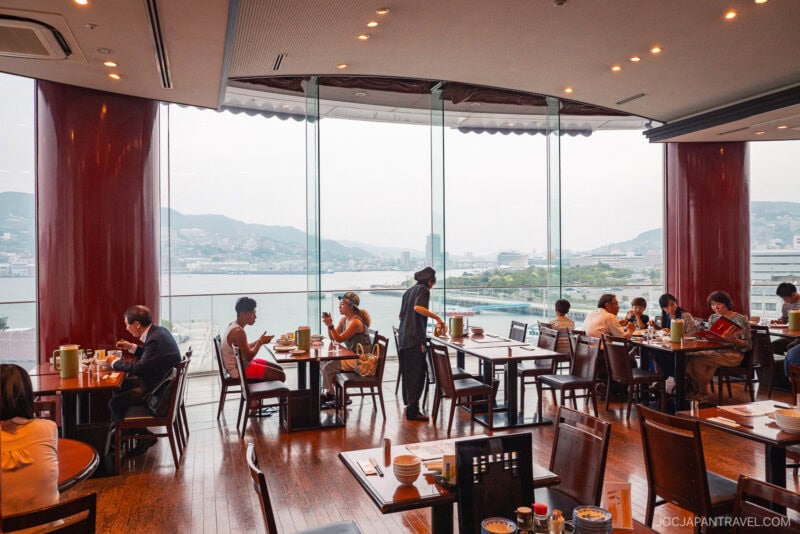
We had the chance to try both dishes at Shikairou, the birthplace of champon and sara udon. The modern five-story building sits by Nagasaki’s waterfront and offers more than just food.
What You’ll Find at Shikairou:
- 1st floor: Souvenir shop
- 2nd floor: Champon Museum
- 3rd–5th floors: Dining halls with panoramic views of Nagasaki Bay
When we visited, each dish cost around ¥1,000, making it both affordable and filling. Eating champon while gazing out over the harbor was a highlight of our trip.
The Champon Museum Experience
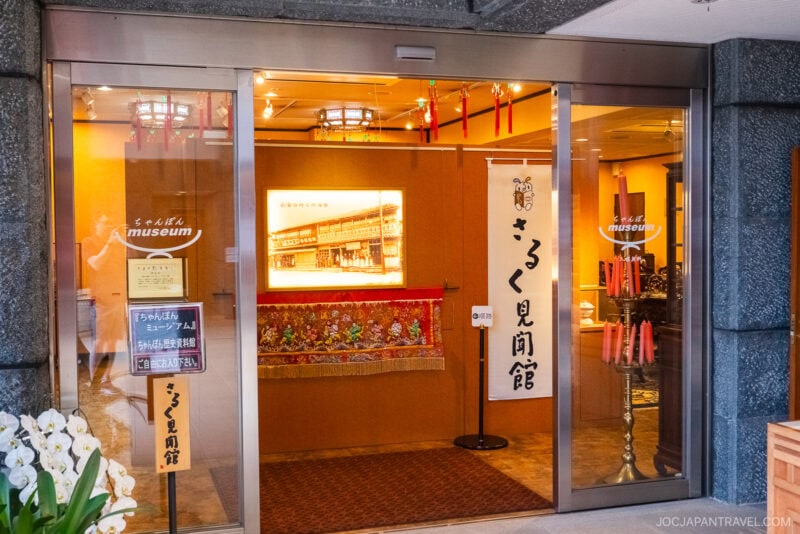
The Champon Museum inside Shikairou adds a cultural layer to the meal.
Museum Highlights:
- Historic photos of Shikairou and its founder
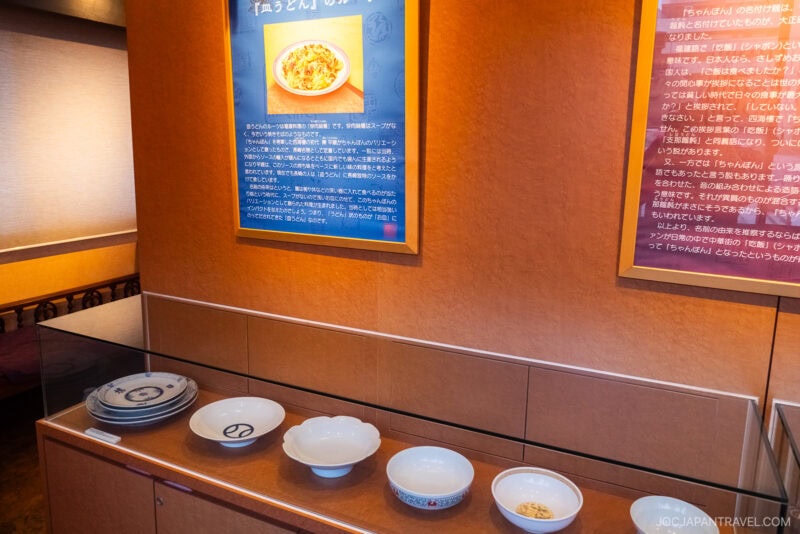
- Exhibits on how champon and sara udon developed
- The original recipe on display
- Trivia about the word “champon,” which comes from the Fuzhounese phrase cha pon meaning “Have you eaten yet?”
The museum felt warm and welcoming, and we loved how openly they shared their culinary history.
How to Get to Shikairou Chinese Restaurant
By Tram
Take Nagasaki Electric Tram Line 1 or 5 to Ouratenshudoshita Station. From the station, it’s about a 5-minute walk downhill toward the bay.
On Foot
If you are visiting Oura Church or Glover Garden, Shikairou is just 5 to 10 minutes away on foot, making it easy to pair sightseeing with lunch or dinner.
By Car or Taxi
From Nagasaki Station, the ride takes about 10 minutes. Parking is available nearby for those driving.
Pro Tip: Plan your meal here after exploring Oura Church and Glover Garden. The panoramic view of Nagasaki Bay from the upper floors is a highlight.
Our Take on Champon and Sara Udon in Nagasaki
To be honest, we were a little underwhelmed by both dishes when we tried them at Shikairou, perhaps because our expectations were so high for the restaurant where they originated.
That said, we still think they’re worth ordering while you’re in Nagasaki. Champon and sara udon are more than just local specialties—they represent the city’s multicultural heritage. Tasting them here connects you to Nagasaki’s history, culture, and food traditions all in one bite.
More to Explore Nearby
The rich, unique flavors of Nagasaki Champon and Sara Udon reflect the city’s unique blend of Chinese and Japanese port culture, placing you near the best historical sites and essential local cuisine.
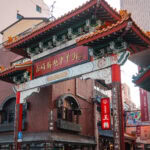
- Nagasaki Shinchi Chinatown – Explore the vibrant district where the city’s unique Chinese culinary tradition was born, famous for its colorful gates and authentic atmosphere.
- Nagasaki Castella Cake – Sample this fluffy sponge cake that is Nagasaki’s most famous souvenir, introduced by the Portuguese during the city’s earliest international trade.
- Nagasaki Museum of History and Culture – Discover the city’s complex past at this excellent museum, which showcases the unique cultural exchange that occurred when Nagasaki was the sole point of foreign trade.
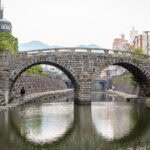
- Nakashima River Stone Bridges – Discover the picturesque historical stone bridges of the Nakashima River in the city center, a beautiful and enduring symbol of the city’s long history.