This post may contain affiliate links. Please read our disclosure policy.
Nagasaki Koshibyo Confucius Shrine is a striking red-and-gold landmark built by the Chinese community that remains Japan’s largest Confucian temple.

A Living Symbol of Cultural Exchange
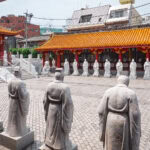
Walking into Koshibyo, we felt transported to a different time and place. The vivid colors, tiled roofs, and solemn stone statues stood in sharp contrast to Nagasaki’s Japanese temples. Built in 1893 by the Qing government and Nagasaki’s Chinese community, this shrine was meant to honor Confucius while serving as an educational and spiritual center for local Chinese residents.
What Makes the Shrine Special
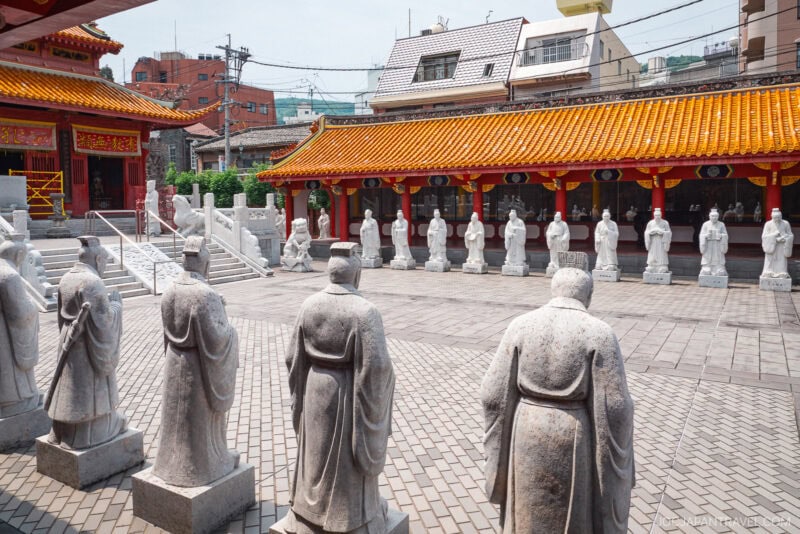
- Japan’s Largest Confucian Shrine – While Confucianism shaped Japanese intellectual life, full-scale shrines are rare. Koshibyo stands out with its scale and ornate detail.
- Statues of the 72 Sages – In the main courtyard, 72 life-sized statues represent Confucius’s disciples. Each weighs 1.8 tons and was carved in China before being brought to Nagasaki.
- Classic Confucian Layout – The grounds are designed symmetrically, with pavilions, courtyards, and stone paths meant to inspire balance and reflection.
Exploring the Grounds
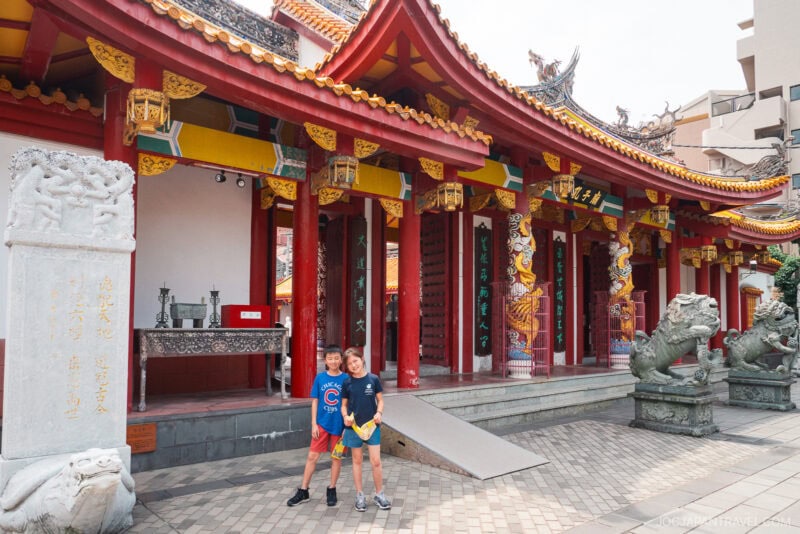
We spent time wandering through the grounds and discovering each corner at our own pace:
- The Main Hall – A grand building housing a statue of Confucius and ceremonial relics.
- Museum Rooms – Spaces displaying rare Chinese books, art, and cultural items.
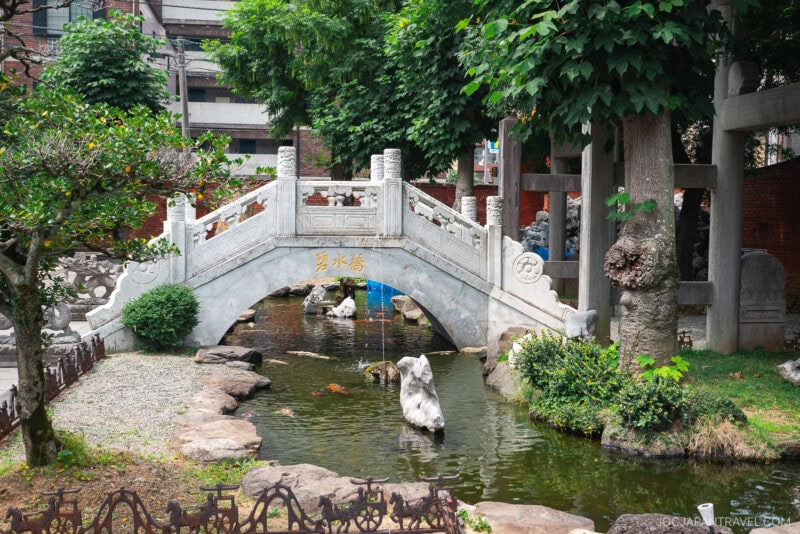
- Gardens and Pavilions – Perfect photo spots framed by bright red pillars, stone lions, and lotus ponds.
It’s easy to be drawn in by the artistry and atmosphere, even if you’re not familiar with Confucian philosophy.
Historical Museum of China (中国歴代博物館)
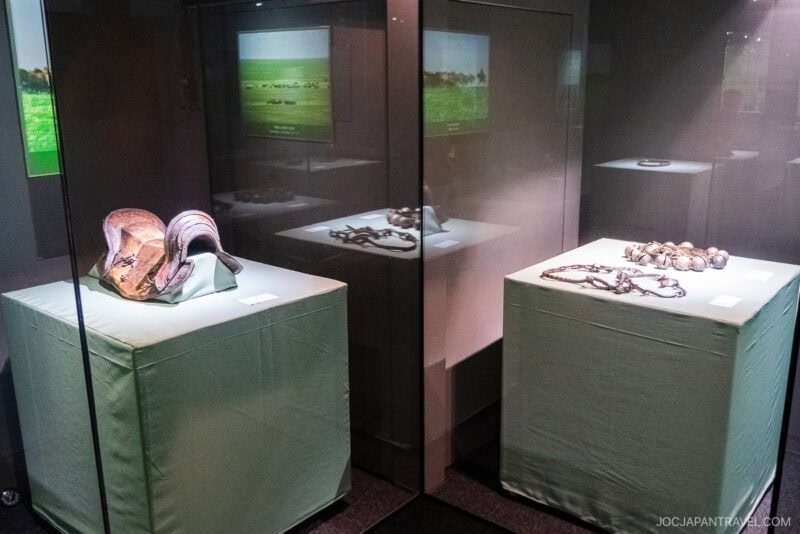
Housed within the shrine complex, the Historical Museum of China is a hidden gem showcasing artifacts and treasures from China’s long dynastic history.
What You’ll See Inside
Opened in 1983, this three-story museum was established to mark the shrine’s 90th anniversary. The exhibits focus on the cultural and diplomatic ties between China and Japan, and many items were donated by national museums in China.
- First and Second Floors – Artifacts from Chinese dynasties, including bronzeware, coins, ceramics, manuscripts, and calligraphy.
- Third Floor – Documents and blueprints related to the founding and restoration of the Confucius Shrine, giving deeper context to what you’ve just seen outside.
How to Get to Nagasaki Koshibyo Confucius Shrine (長崎孔子廟)
The shrine sits in Oura-machi, south of central Nagasaki. It pairs well with Glover Garden and Oura Church.
By Tram
- From Nagasaki Station, ride Tram Line 1 toward Sofukuji and get off at Shinchi Chinatown.
- Transfer to Tram Line 5 toward Ishibashi and get off at Ouratenshudo-shita or Oura-Kaigan-dori.
- Walk 3–5 minutes to the shrine entrance.
On Foot
- About 10 minutes on foot from Glover Garden.
By Taxi or Car
- Taxi from Nagasaki Station takes around 10 minutes in light traffic.
Pro Tip: One ticket covers both the shrine and the Historical Museum of China. Plan 60–90 minutes for both.
Is Nagasaki Koshibyo Confucius Shrine Worth Visiting?
Yes, especially if you’re interested in Chinese culture or Nagasaki’s unique international past. We were impressed by the scale of the statues and the colorful architecture.
The Historical Museum of China added context and depth, turning the visit into more than just a stroll through beautiful buildings. Together, they form one of Nagasaki’s most fascinating cultural stops, and we highly recommend including them in your walking tour of the city.
More to Explore Nearby
The vibrant colors and historical significance of the Confucius Shrine reflect Nagasaki’s deep international heritage, placing you close to other key historical sites, unique food culture, and stunning panoramic views.
- Nagasaki History and Culture Museum – Discover the city’s complex past at this excellent museum, which showcases the cultural exchange that occurred when Nagasaki was the sole point of foreign trade.
- Dejima – Step back in time on this reconstructed fan-shaped artificial island that served as Japan’s only point of contact with the West during the Edo period.
- Mt. Inasayama Observatory – Take a ropeway up the mountain to experience one of Japan’s most famous night views, often called the “10 Million Dollar Night View”.
- Champon and Sara Udon – Dive into the city’s unique culinary heritage by sampling these hearty noodle dishes, developed with strong Chinese influence at the port.