This post may contain affiliate links. Please read our disclosure policy.
The Nakashima River’s graceful stone bridges connect you to Nagasaki’s Edo-period past, where everyday life, faith, and architecture come together in the heart of the city.
A Riverside Walk Through History
The Nakashima River flows through the heart of Nagasaki, lined with 17th-century stone bridges that once connected neighborhoods, temples, and shrines. Built by stonemasons and monks, these bridges are more than practical crossings. They represent the city’s cultural exchange and resilience, having survived centuries of floods and earthquakes with the help of local restoration.
Meganebashi Bridge (眼鏡橋) – The Icon of Nagasaki
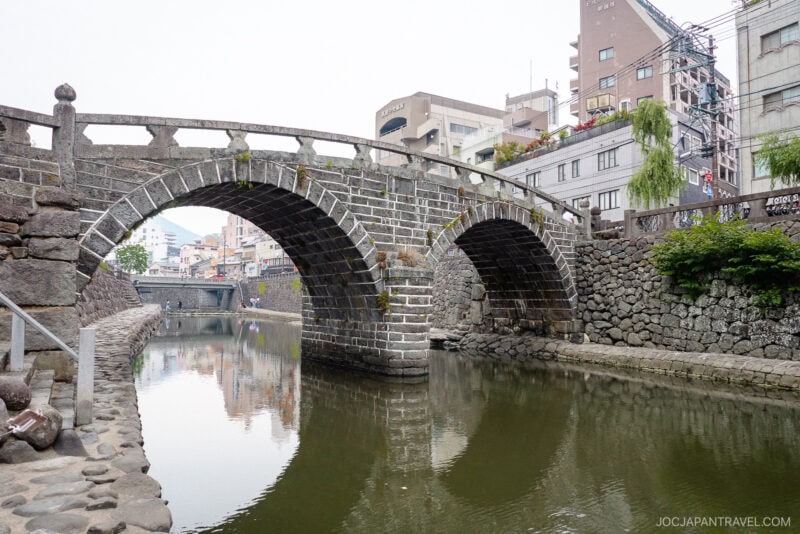
Japan’s Oldest Stone Arch Bridge
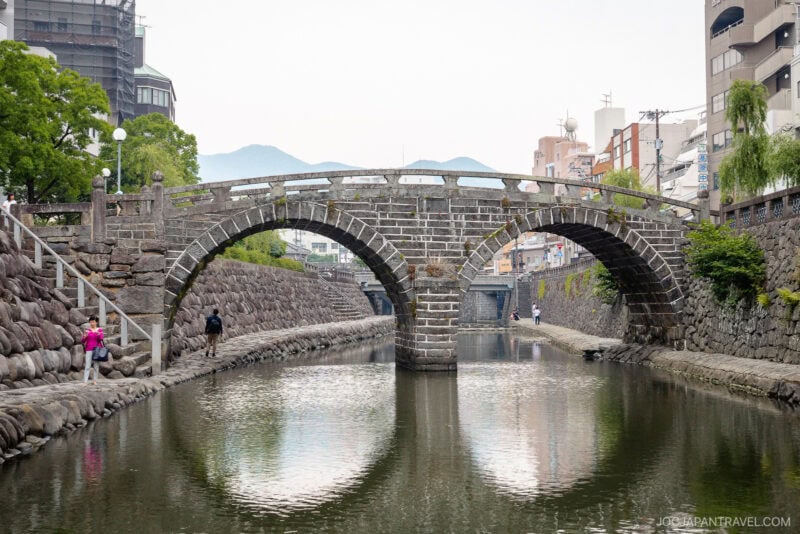
Built in 1634 by Chinese monk Mokusu Nyoujo of Kofukuji Temple, Meganebashi holds the honor of being the oldest stone arch bridge in Japan. Despite major floods in the past, careful repairs have kept it in remarkable condition.
Why It’s Called “Spectacles Bridge”
Meganebashi means “spectacles” in Japanese. When the two arches reflect in the river below, they look like a pair of eyeglasses. It’s one of the most famous views in Nagasaki.
A Nationally Recognized Landmark
Meganebashi is celebrated as one of Japan’s “Three Famous Bridges,” alongside Nihonbashi in Tokyo and Kintaikyo in Iwakuni. It’s a reminder of Nagasaki’s unique place in the country’s history.
Hidden Details Along the River
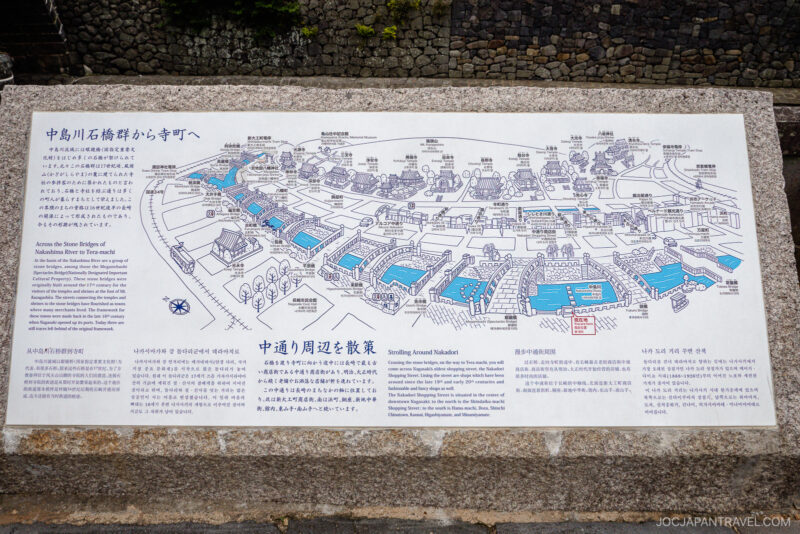
- Heart-Shaped Stones – Look closely at the stone walls near Meganebashi and you’ll spot heart-shaped carvings. They’ve become a symbol of luck and romance, making the area popular with couples.
- Nearby Temples – The bridges originally connected worshippers to local temples such as Kofukuji, still just a short walk away.
- Cafes and Shops – Today, riverside cafes make this a pleasant stop to enjoy coffee while watching the water flow beneath the arches.
How to Get to the Nakashima River Bridges
The stone bridges are in central Nagasaki and easy to add to a walking route.
By Tram
- Take Nagasaki Electric Tram Line 4 or 5 to Nishihamano-machi. Walk about 5 minutes.
On Foot
Meganebashi is a 10 to 15 minute walk from Dejima.
Pro Tip: Go in the morning or late afternoon for softer light and calmer water for the reflection photo.
Our Final Thought on the Nakashima River and Meganebashi
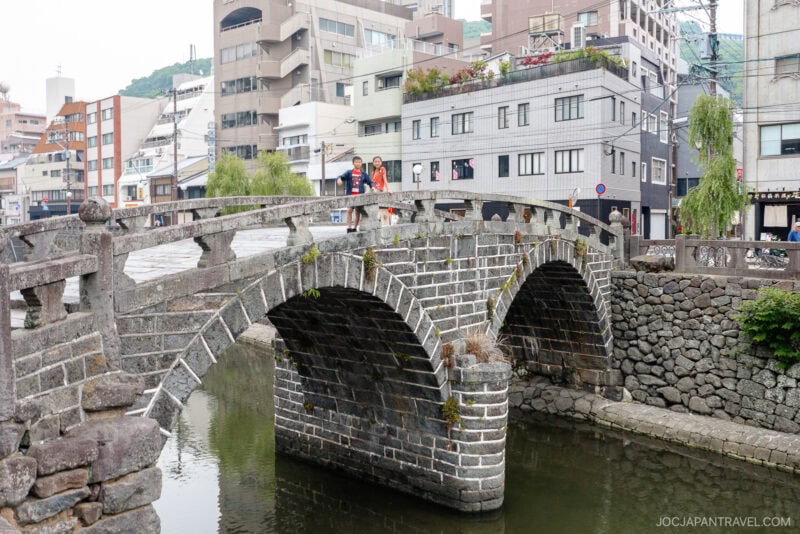
The stone bridges offer a quieter side of Nagasaki compared to Glover Garden or Dejima. Walking here felt authentic and relaxing—there were no tickets or big crowds. Meganebashi is especially memorable, both for its history and its striking reflection.
More to Explore Nearby
The historic stone bridges of the Nakashima River showcase Nagasaki’s early international connections, placing you close to unique cultural sites, dramatic city views, and the city’s essential, foreign-influenced cuisine.
- Nagasaki Museum of History and Culture – Discover the city’s complex past at this excellent museum, which showcases the unique cultural exchange that occurred when Nagasaki was the sole point of foreign trade.
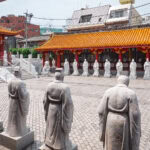
- Nagasaki Koshibyo Confucius Shrine – Visit the historically significant shrine nearby, famous for its elaborate Chinese architecture and vibrant colors.
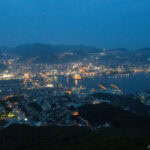
- Mt. Inasayama Observatory – Take a ropeway up the mountain to experience one of Japan’s most famous night views, often called the “10 Million Dollar Night View”.
- Champon and Sara Udon – Dive into the city’s signature culinary heritage by sampling these hearty noodle dishes, which were developed with strong Chinese influence at the port.