This post may contain affiliate links. Please read our disclosure policy.
Experience the charm of Nagasaki Shinchi Chinatown, Japan’s oldest Chinatown, where history, local flavors, and festive energy make every visit memorable.

A Chinatown Born from Isolation
Shinchi Chinatown traces its roots to the Edo period, when Japan limited contact with the outside world. During Japan’s sakoku (isolation) era, Dutch traders were confined to Dejima Island while Chinese merchants lived in a walled settlement in Shinchi.
Over the centuries, this community shaped Nagasaki’s culture with Chinese architecture, food, and festivals. Today, the district may be small, just four streets in a cross-shaped layout, but it still tells the story of how global exchange quietly thrived in an age of isolation.
Top Reasons to Visit Nagasaki Shinchi Chinatown

A Compact, Walkable Cultural Hub
Unlike the larger Chinatowns in Yokohama and Kobe, you can explore Shinchi in less than 1 hour. We loved how easy it was to wander the streets at a relaxed pace, taking in colorful gates, quaint shops, and bustling food stalls—all without feeling rushed.
Chinese Cuisine with a Nagasaki Twist

Food is the highlight of any Chinatown, and Shinchi has turned a few specialties into local legends:
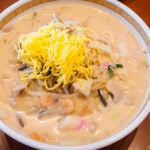
- Champon (ちゃんぽん): A hearty noodle soup filled with pork, seafood, and vegetables.
- Sara Udon (皿うどん): Crispy fried noodles topped with a savory stir-fry.
- Dim sum, buns, and mooncakes: Found in family-run shops and small eateries throughout the district.
Our tip? Skip the flashier restaurants and settle into a cozy, local spot. You’ll enjoy the flavors and the experience so much more.
The Nagasaki Lantern Festival
Visiting during Chinese New Year? You’re in for a treat. Shinchi comes alive with the Nagasaki Lantern Festival, where over 15,000 lanterns light up the streets alongside lion dances, acrobatics, and stunning zodiac displays.
How to Get to Nagasaki Shinchi Chinatown
By Tram
Ride Nagasaki Electric Tram Line 1 or 5 to Tsukimachi Station (築町駅). From the stop, walk about 3 minutes to the entrance gates.
On Foot
- From Dejima (出島) – 10 to 12 minutes
- From Nagasaki Museum of History and Culture – 15 to 20 minutes
- From Nagasaki Station – about 20 minutes
Pro Tip: Visit just before lunch for shorter waits at champon and sara udon shops, or after 7 p.m. for easier seating.
Is Nagasaki Shinchi Chinatown Worth Visiting?
Shinchi Chinatown may be small, but it offers a unique look at how Chinese culture blended into Nagasaki’s history. We loved the food, the walkable layout, and the chance to experience Japan’s oldest Chinatown. If your trip lines up with the Lantern Festival, it becomes one of the city’s most unforgettable highlights.
More to Explore Nearby
Nagasaki’s Chinatown is the center of the city’s unique culinary fusion, placing you close to other historical sites, iconic viewpoints, and unique food traditions that blend Japanese and foreign influences.
- Dejima – Step back in time on this reconstructed fan-shaped artificial island that served as Japan’s only point of contact with the West during the two centuries of national isolation.
- Nagasaki Champon & Sara Udon – Dive into the city’s signature culinary heritage by sampling these hearty noodle dishes, which were developed with strong Chinese influence at the city’s port.
- Nakashima River Stone Bridges – Discover the picturesque historical stone bridges of the Nakashima River in the city center, a beautiful and enduring symbol of the city’s long history.
- Nagasaki Castella Cake – Sample this fluffy sponge cake that is Nagasaki’s most famous souvenir, introduced by the Portuguese during the city’s earliest international trade.