This post may contain affiliate links. Please read our disclosure policy.
Dejima Asa offers a cozy izakaya dining experience in the heart of Nagasaki, serving regional specialties like kakuni and sashimi in a lively, local atmosphere.
Why We Chose Dejima Asa
After trying Nagasaki’s famous specialties like champon and Toruko rice, we were eager to find a spot that locals actually love. In Japan, izakayas are often the best places to discover regional flavors, since they serve a wide range of small plates meant for sharing.
Dejima Asa promised exactly that, a lively atmosphere and plenty of dishes that would let us taste the authentic flavors of Nagasaki in one sitting.
What Is an Izakaya?
An izakaya is best described as a Japanese gastropub. These casual restaurants serve a mix of grilled skewers, fried snacks, sashimi, and seasonal specialties, along with drinks like sake and beer. It’s where locals gather after work, and it’s one of the best ways to experience everyday Japanese food culture.
Dining at Dejima Asa
The restaurant had a welcoming, lively atmosphere. The dishes came quickly, and each one was wonderfully prepared.
What We Ordered and Loved
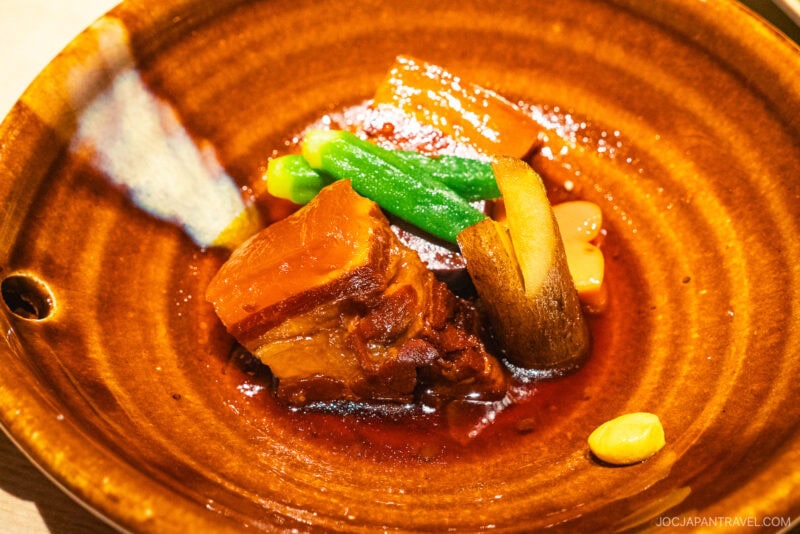
- Kakuni (角煮): Tender braised pork belly simmered in sweet soy broth. A Nagasaki specialty with Chinese roots, it melted in our mouths.
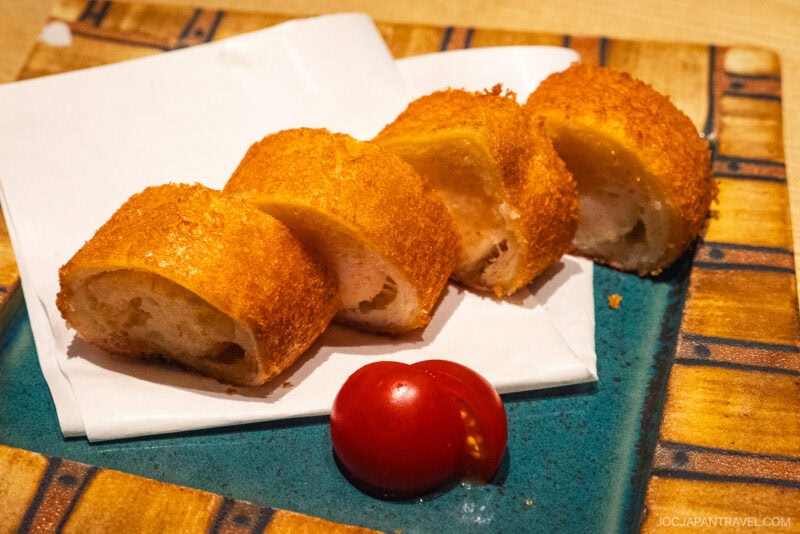
- Fish Paste in Fried Bread: Unusual but delicious—a warm bread pocket stuffed with savory fish paste, deep-fried until golden.
- Grilled Squid Legs: Simply seasoned and perfectly charred, with a chewy texture that paired well with drinks.
- Corn Kakiage (かき揚げ): A light tempura fritter of sweet corn kernels, crisp and naturally sweet.
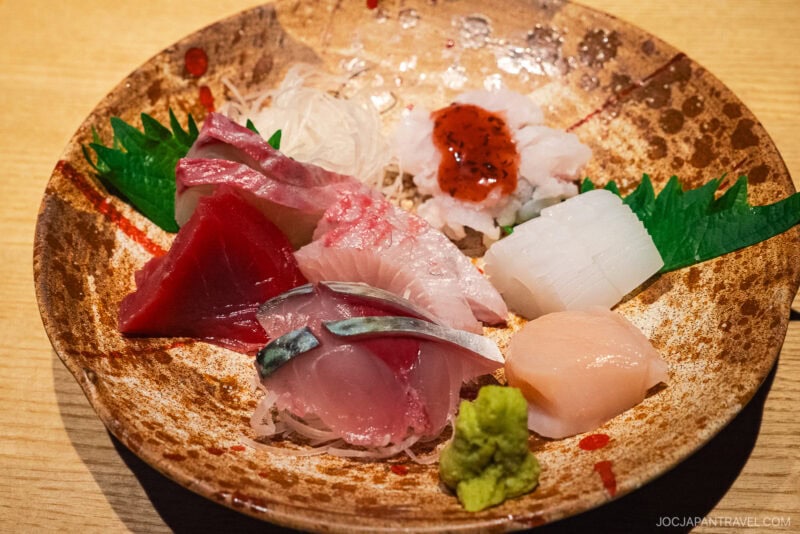
- Assorted Sashimi: Fresh, colorful, and beautifully presented without being overly formal.
How to Get to Dejima Asa (出島亜紗)
By Tram
- Ride Nagasaki Electric Tram Line 1 or 5 to Tsukimachi Station.
- Walk about 3 minutes toward Dejima Wharf.
By Car
From Nagasaki Station, the drive takes about 5 minutes without traffic. The route is to head south on Route 202 along the tram tracks. The restaurant is located in the Dejima Wharf area which is a short distance from the main road.
On Foot
- It is a short walk from Dejima and Shinchi Chinatown.
Is Dejima Asa Worth Visiting?

Dejima Asa gave us a balanced taste of Nagasaki’s food culture, beyond the tourist-famous dishes. The mix of regional specialties, casual atmosphere, and friendly service made it one of our favorite meals in the city.
For anyone wanting a real sense of Nagasaki’s dining scene, an evening at Dejima Asa is time well spent.
More to Explore Nearby
After enjoying the local specialties and drinks at Dejima Asa, you are perfectly situated to explore Nagasaki’s unique history, stunning harbor views, and the international heritage that defines the city’s culture.
- Dejima – Step back in time on this reconstructed fan-shaped artificial island that served as Japan’s only point of contact with the West during the two centuries of national isolation.
- Nagasaki Champon & Sara Udon – Dive into the city’s signature culinary heritage by sampling these hearty noodle dishes, which were developed with strong Chinese influence at the port.
- Nakashima River Stone Bridges – Discover the picturesque historical stone bridges of the Nakashima River in the city center, a beautiful and enduring symbol of the city’s long history.
- Nagasaki Castella Cake – Sample this fluffy sponge cake that is Nagasaki’s most famous souvenir, introduced by the Portuguese during the city’s earliest international trade.