This post may contain affiliate links. Please read our disclosure policy.
Experience Miyazaki’s mouth-watering cuisine, featuring home-grown chickens grilled over charcoal, some of Japan’s finest wagyu, and tropical fruits.

Located on the southwest coast of Kyushu, you may recognise Miyazaki for its sandy beaches on Aoshima Island. You might also know it for the picturesque scenery of Takachiko Gorge. But you’ll most definitely be staying for the food.
Miyazaki’s cuisine features locally sourced ingredients, from the rugged mountains to the sandy shores. It offers classic comfort food and simple dishes done right. These are complemented by some of the finest wagyu beef in all of Japan. Here are six must-try dishes when you are in Miyazaki!
Miyazaki Beef
While many people looking to eat wagyu think of Kobe Beef, it often does not compare in taste and value to other regions. This is especially true of Miyazaki. In fact, Miyazaki scored the prime minister’s award for three consecutive years.
The term Miyazaki beef refers to the Japanese Black cattle born and raised in Miyazaki Prefecture. These cattle have been ranked Grade 4 or Grade 5. It’s characterized by its distinct marbling, tenderness, and rich beef flavor.

Without a doubt, the best way to experience Miyazaki beef, or any other premium wagyu, is at a yakiniku or teppanyaki restaurant. At yakiniku, you can enjoy a variety of cuts from tongue to sirloin. At a teppanyaki restaurant, chefs will expertly grill your steak in a theatrical display in front of you. I particularly enjoyed the Miyazaki beef at Hishimeki. While it was fatty and tender as you would expect from wagyu, it did not feel too oily and overwhelming. It was rich in deep umami, with a slight sweetness from the fat.
However, if you want an inexpensive way to enjoy the premium beef, I recommend the gyukatsu at Gyukatsu Nakazaki. Miyazaki beef is breaded and deep-fried until the exterior is golden brown and crisp, while the interior remains rare. You can then cook your gyukatsu to your liking on the candlelit grill, alongside rice, miso soup, and shredded cabbage. You can pair your gyukatsu with wasabi and sea salt (my preferred option), a miso-based sauce, or a soy-sauce-based sauce.
Chicken Nanban

Amongst all of the local specialties, chicken nanban is undoubtedly the most popular dish and one of my all-time favorite Japanese comfort foods. It is said to have originated at a restaurant called Ogura in Miyazaki City. Chicken thigh is coated in flour, then in beaten egg, and deep-fried until crispy on the outside and succulent on the inside. Many restaurants keep the chicken crispy and serve it with a sweet vinegar-and-tartar sauce on top. However, at Ogura, it is then doused in a sweet and sour sauce, giving the batter a satisfying, moist texture.
I’ve had chicken nanban all across Japan, and it can be a heavy dish that makes you feel bloated. At Ogura, the batter is light and soaked in the sauce, which gives a subtle sweet-and-sour flavor that helps cut through the heaviness. The tartar sauce is creamy and adds a delicious richness to the tender chicken. It also comes with a side of shredded cabbage, spaghetti, and rice for a hearty meal that will keep you energized for your Miyazaki travels.
Jidori no Sumibiyaki (Charcoal-Grilled Chicken)
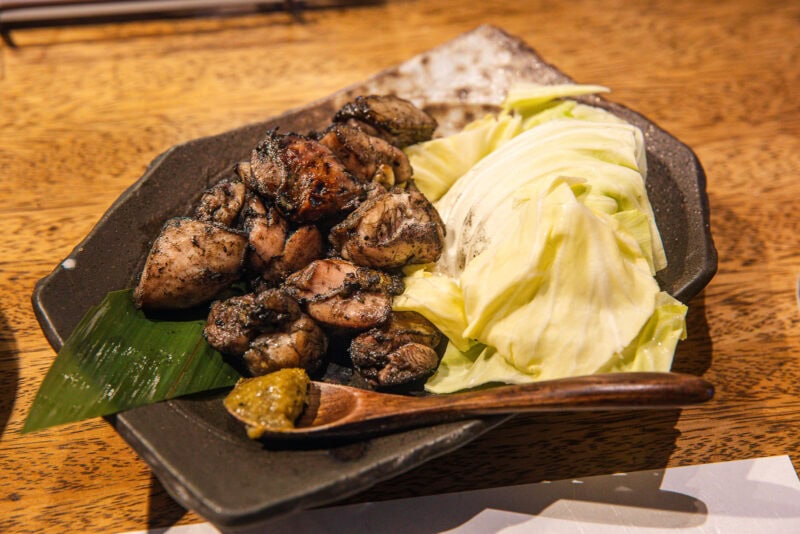
Another popular chicken dish is jidori no sumibyaki, which uses Miyazaki Jidori – a type of chicken that is free-range and can only be raised by farmers in environments approved by the Miyazaki Jitokko Cooperative Association. The chicken is simply seasoned with salt and pepper, and grilled over charcoal (known as sumibiyaki) with intense heat.
The exterior gets the distinctive blackened char, while the interior remains irresistibly juicy. The chicken is high-quality and tender, but it has a slight bite. As you continue to chew, the chicken flavor intensifies, enhanced by the charcoal’s smokiness. This was one of the few dishes I think I could have eaten by the bucketload.
You can find sumibidori in many izakayas, as it pairs perfectly with alcohol as a side dish. I visited Haneya, which specializes in a wide range of chicken dishes, from sashimi to yakitori and chicken nanban. I recommend getting a counter seat so you can watch the chef expertly work his way around the charcoal grill.
Kamaage Udon
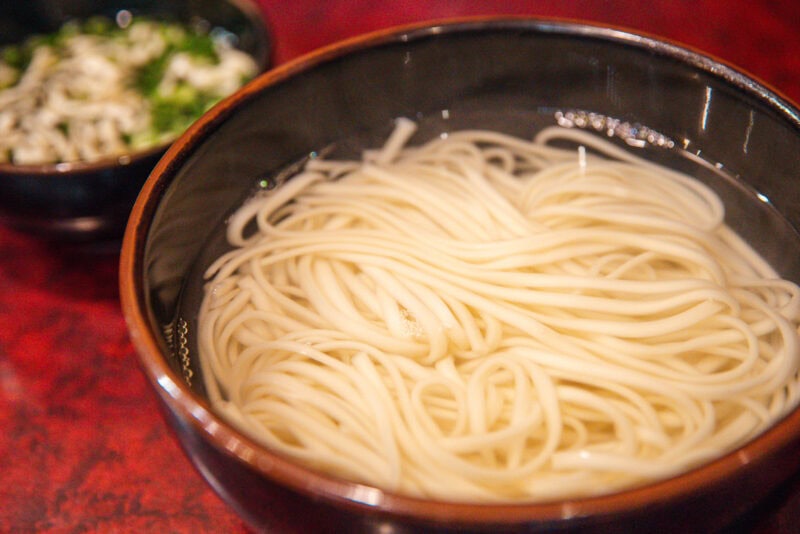
One dish that I was surprised was so popular was udon. It’s believed that udon culture in Miyazaki emerged after people from Shikoku moved there and brought their famous udon with them. It’s often said that instead of grabbing a bowl of ramen after a night out, locals eat udon! Kamaage udon has emerged as one of the most popular dishes due to its thin and soft noodles, which make it easy to prepare and eat.
The udon noodles are served in hot water and alongside a strong, seasoned dashi-based broth. Similar to tsukemen, you dip the udon noodles into the broth and slurp away. I recommend Kamaage Udon Odamaki Hon Ten, a restaurant that specialises in kamaage udon for just 700 yen. As soon as it was open, the restaurant was full, and within minutes, the udon was on my table. The broth has a slight sardine-like flavor and is topped with lots of tenkasu (tempura scraps), scallions, and yuzu peel, adding a refreshing aroma and taste. While it may not be the most extravagant meal, it’s quick, convenient, and deliciously simple.
Miyazaki Ramen
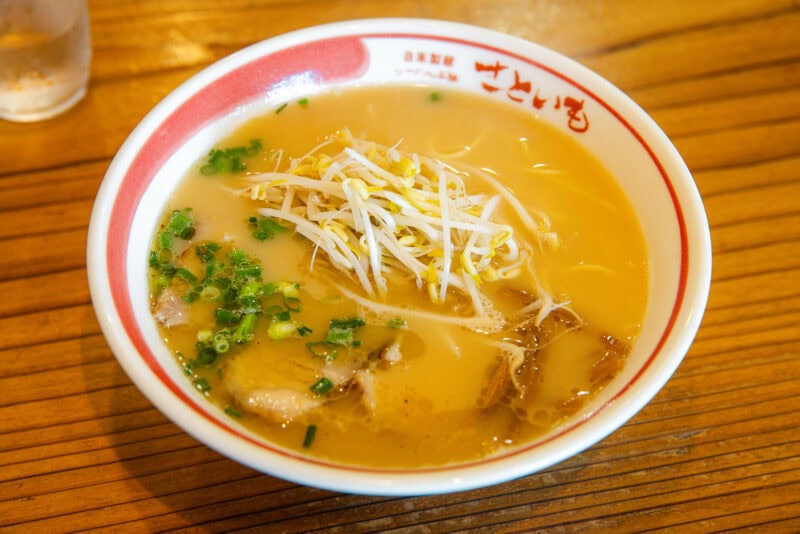
Miyazaki ramen stands out for its lighter pork bone broth, offering a gentler take on the traditional tonkotsu style. Some shops, however, serve a richer version. It typically features soft, thick noodles with a high water content. In many restaurants, you can customize the flavor by adding garlic, soy sauce, and pickles, which are available at your table. One popular local spot I visited, Sataimo, serves ramen topped with green onions, bamboo shoots, bean sprouts, and Miyazaki pork belly. For just 50 yen more, you can add a raw egg for an extra boost of richness.
Miyazaki is also the home of karamen, a spicy ramen that originated in Nobeoka City. Known for its fiery red broth, karamen is packed with garlic, chili, minced meat, and chives, all bound together with egg. It’s served with chewy “konnyaku noodles,” made from a mix of buckwheat and wheat flour. While the soup is typically soy sauce-based, some restaurants add their own twist to it. They offer variations such as tomato, seafood, or miso flavors.
Mango
Miyazaki’s warm climate, long hours of sunshine, and ideal rainfall have made it a prime region for fruit cultivation. Hyuganatsu, kinkan (kumquat), and lychee were traditionally the area’s main fruits. It wasn’t until 1984 that mango production began. Farmers developed a technique where mangoes were grown in nets.
They were harvested only when they naturally ripened and fell from the branch. Once perfected, this method sparked a boom in mango popularity. It helped to make Miyazaki famous for its golden fruit.
One of the most renowned brands is Taiyo-no-Tamago (Eggs of the Sun), with some mangoes selling for over 10,000 yen apiece. To earn the Taiyo-no-Tamago label, each mango must weigh over 350 grams. It must also have a sugar content of at least 15% and display perfect color and shape.
These premium mangoes are often reserved for special occasions or given as luxury gifts. More affordable mango varieties are also widely available. They are served fresh, in desserts like parfaits, or as souvenir treats such as cookies.
Is Miyazaki Worth Visiting For The Food?
For me, Miyazaki was my favorite gourmet destination alongside Fukuoka. It has something for everyone, whether you want premium wagyu beef or comforting noodle dishes. The standout highlight was definitely the chicken nanban at Ogura, as I love the dish, but the other dishes are just delicious. If you’re traveling in Kyushu, Miyazaki is definitely worth putting on your itinerary just for the food alone.
More to Explore Nearby
Miyazaki’s food scene is just one reason to explore the region. The prefecture’s coastline, shrines, and parks make it worth sticking around well beyond mealtime.
- Aoshima Island — A small subtropical island fringed by striking washboard rock formations, a perfect seaside detour along the Nichinan Coast.
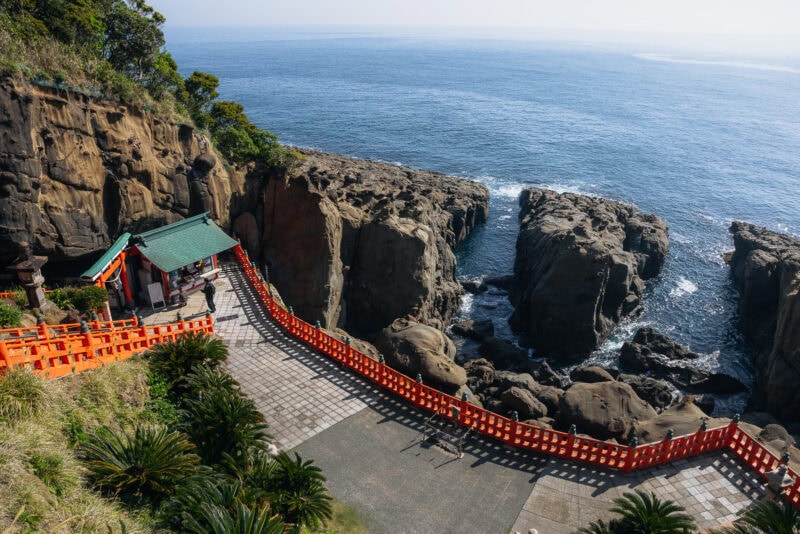
- Udo Shrine — A breathtaking cave shrine perched dramatically on the Nichinan cliffs, one of Miyazaki’s most iconic sights.
- Miyazaki Shrine — The prefecture’s most important shrine, set within a serene forested precinct in the heart of the city.
- Sun Messe Nichinan — A clifftop park famous for its replica Easter Island moai statues and sweeping Pacific views.
- Tabelog Guide — A practical guide to using Japan’s most trusted restaurant review app, helpful for finding hidden gems across Miyazaki and beyond.