This post may contain affiliate links. Please read our disclosure policy.
Perched on a dramatic clifftop above the Pacific Ocean, Udo Shrine is visually striking. It is one of Japan’s most striking shrines. The shrine features a cave sanctuary, mythological birthstones, and an undama ball-throwing tradition. Together, these make it the highlight of the Nichinan Coast.
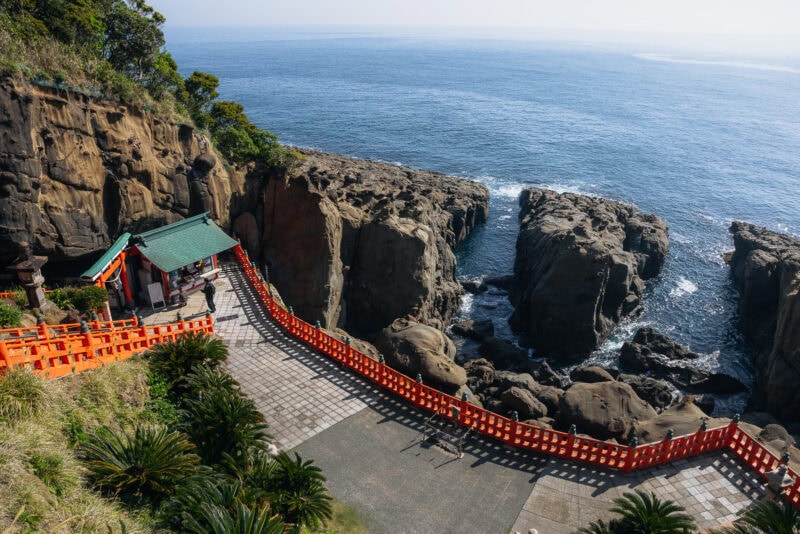
Udo Shrine (鵜戸神宮) sits on the Nichinan Coast south of Miyazaki City, built into a sea cave carved into the cliffside by centuries of wave erosion. The approach, as you descend a long stone staircase cut into the cliff with the sound of the ocean growing louder with each step, is very much a part of the experience as the shrine itself.
Udo Shrine wasn’t on the top of my radar when visiting Miyazaki, but it quickly became one of the highlights of my trip.
What is Udo Shrine
Udo Shrine is a Shinto shrine on the Nichinan Coast in Nichinan City, Miyazaki Prefecture. It is dedicated to Ugayafukiaezu, the father of Japan’s legendary first emperor, Jimmu. The main hall is situated inside a natural sea cave in the cliff face. This makes it one of the most architecturally distinctive shrines in Kyushu.
The shrine is particularly associated with blessings for fertility, pregnancy, and safe childbirth. It is also associated with the healthy growth of children. Visitors from across Japan come to pray here. Many also take part in the undama ball-throwing tradition at Turtle Rock.
My Experience at Udo Shrine
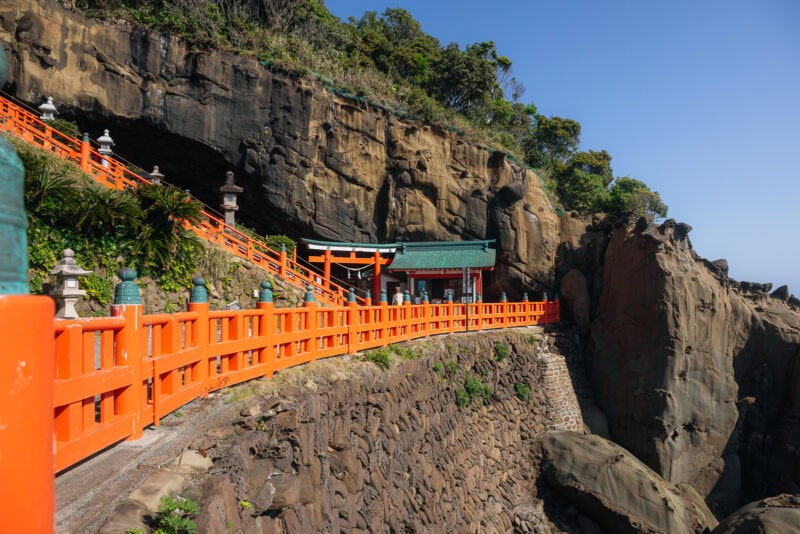
The walkway to the main shrine sets the tone before you even reach the cave. To the left are a souvenir shop, a sweets shop, and a series of smaller subsidiary shrines. To the right, the Pacific stretches out below the cliff and you can hear the waves crashing against the rock face with every step.
Past the rabbit statues, which are said to be the messengers of the gods at this shrine, the main precinct reveals itself in stages rather than all at once.
The Cave Shrine and the Sacred Rocks
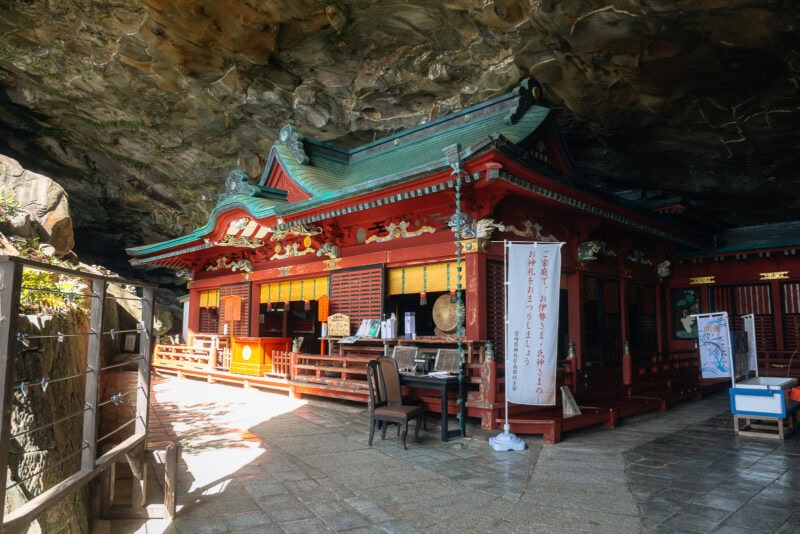
The honden, or main hall, is set inside a low cave in the cliff face. The cave was shaped over countless years by the erosion of ocean waves. The interior is striking and intimate in a way that most shrine halls are not.
According to legend, Emperor Jimmu was born here. He suckled from the breast-shaped rocks inside the cave. These rocks provided the nourishment that allowed him to grow into a strong leader.
Locals still hold that water dripping from these rocks carries blessings for pregnancy and safe childbirth, and the shrine draws many visitors who come specifically to pray for exactly that.
Turtle Rock and the Undama Tradition
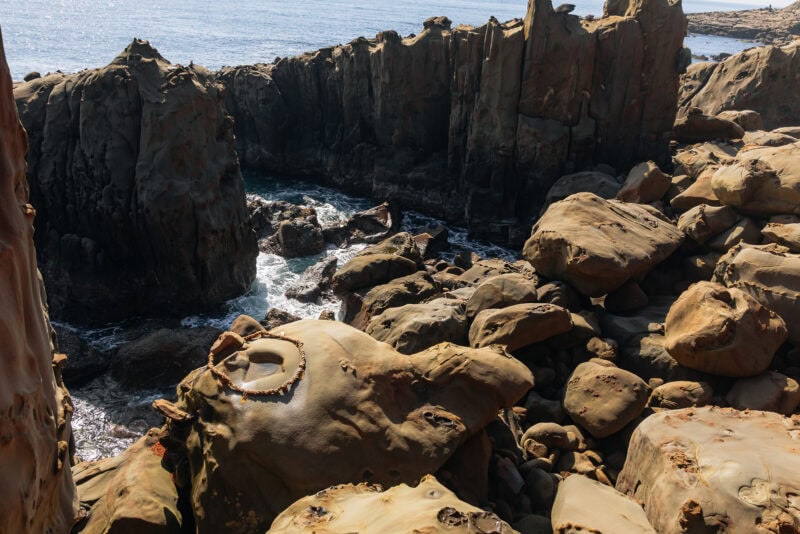
From the clifftop overlooking the cave, a small circular indentation in the rock is visible below. It is marked by a shimenawa rope. This is Turtle Rock (Kameishi). It is believed to be the giant turtle that carried Toyotama-hime. She was Ugayafukiaezu’s mother. The turtle brought her from the Palace of the Sea God when she came here to give birth.
The tradition at Turtle Rock is to purchase small clay balls called undama from the nearby stall, make a wish, and throw the ball into the indentation. Men throw with their left hand and women with their right. If your stone lands inside, your wish is said to be granted.
It sounds straightforward until you are actually standing there throwing with your weaker hand. I missed more times than I care to admit, but that is part of what makes it memorable.

Andy’s Travel Tips
These simple tips will help you when you visit.
- Rent a car if possible. The bus from Miyazaki Station runs only once every two hours and takes nearly two hours each way. A car makes the journey about one hour each way and lets you combine Udo Shrine with Aoshima Island and Sun Messe Nichinan in a single day along the Nichinan Coast.
- Buy undama from the stall near Turtle Rock and take your time with the throw. Men use their left hand and women use their right. Make your wish before each throw, not after.
- Look for the rabbit statues on the approach before you reach the main shrine. They are easy to walk past when you are focused on getting to the cave, but they are part of the shrine’s identity and worth pausing for.
- The shrine opens at 6:00 am, and an early morning visit before tour groups arrive is worth the effort if you are staying nearby on the Nichinan Coast.
How to Get to Udo Shrine
Bus
The bus is the primary public transport option from central Miyazaki and offers a scenic route along the Nichinan Coast.
- From Miyazaki Station: Go to the bus terminal outside the station and take a Miyazaki Kotsu (Miyakoh) Bus bound for Obi or Aburatsu. The journey takes approximately 1 hour and 30 minutes.
- Get off at the Udo Jingu bus stop. From there, it is a 10 to 15-minute walk along a paved path to reach the shrine.
Car
Driving is the most recommended way to visit Udo Shrine, as it allows you to easily combine the trip with stops at Aoshima and Horikiri Pass.
- From Miyazaki City, take Route 220 south along the coast. The drive takes about 45 to 60 minutes.
Is Udo Shrine Worth Visiting?
Absolutely yes, and it was a highlight of my time in Miyazaki. The cave setting alone makes it one of the most visually distinctive shrines in Japan, but the mythology, the undama tradition, and the sound and energy of the Pacific crashing below the clifftop give it a presence that I can still vividly remember.
It is free to enter, the drive along the Nichinan Coast is beautiful in its own right, and it complements Aoshima Island and Sun Messe Nichinan for a full day of Miyazaki’s most memorable sights.
More to Explore Nearby
Udo Shrine sits at the heart of Kyushu’s southern coast, a region rich with natural drama and deep history. Whether you’re continuing through Kagoshima or looping north through Kumamoto, there’s plenty more to discover.
- Kirishima Shrine — Tucked into the mountains on the Kagoshima-Miyazaki border, this ancient shrine complex is one of Kyushu’s most atmospheric, surrounded by volcanic peaks and cedar forest.
- Sogi Falls — One of Kagoshima’s most striking natural sights, this wide curtain of water is often called the “Niagara of Japan” and makes a memorable stop on any southern Kyushu drive.
- Chiran Samurai District — A beautifully preserved street of samurai-era gardens and stone-walled lanes in southern Kagoshima, offering a rare glimpse into feudal-era provincial life.
- Amakusa Islands — A chain of islands off Kumamoto’s coast with a dramatic Christian history, scenic sea views, and a slower pace that pairs perfectly with the spirit of Udo’s rugged coastline.