This post may contain affiliate links. Please read our disclosure policy.
Miyazaki’s most revered spiritual landmark, Miyazaki Shrine, is dedicated to Emperor Jimmu and set within ancient cedar forests, wisteria trellises, and gardens.
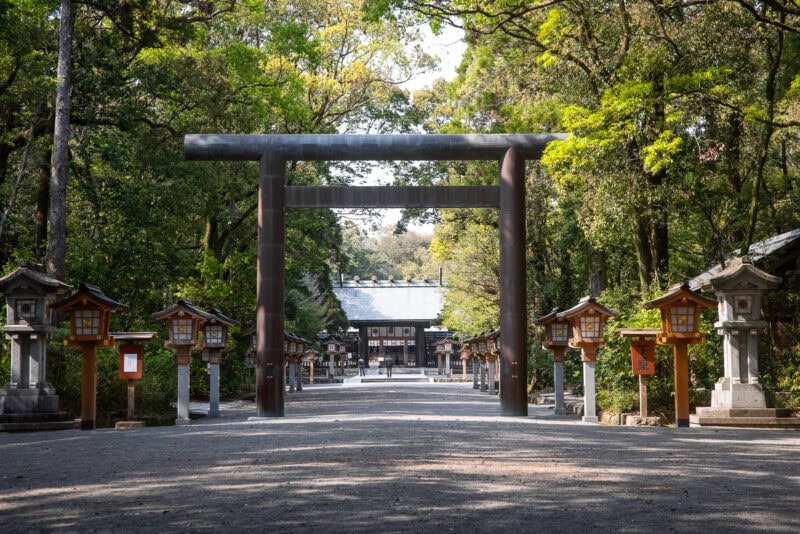
Miyazaki Shrine (宮崎神宮) is one of the oldest and most historically significant shrines in Japan, dating back over 2,600 years. Visitors pray here for family safety, marital happiness, pregnancy and childbirth, and victory and success in exams.
I did not know much about the shrine before visiting, which made the experience of walking through the towering trees and across the raked stone gardens a nice surprise. The comparison that came to mind immediately was Meiji Jingu in Tokyo, and while not as grand, it holds up well against that benchmark.
What is Miyazaki Shrine
Miyazaki Shrine is a major Shinto shrine in northern Miyazaki City, enshrining Emperor Jimmu, the legendary founder of the Japanese imperial line. The shrine grounds cover a large forested area that includes a Japanese garden, a wisteria trellis said to be among the largest in Japan, an open-air museum of traditional farmhouses, and two additional subsidiary shrines. It is open 24 hours, free to enter, and easy to reach from Miyazaki Station in under 10 minutes by train.
My Experience at Miyazaki Shrine
The approach through the cedar trees sets the tone before you even reach the main torii gate. There were very few other visitors when I was there, and the only sounds were the chirping birds, the crunch of gravel underfoot, and the occasional clap from someone praying at the main hall.
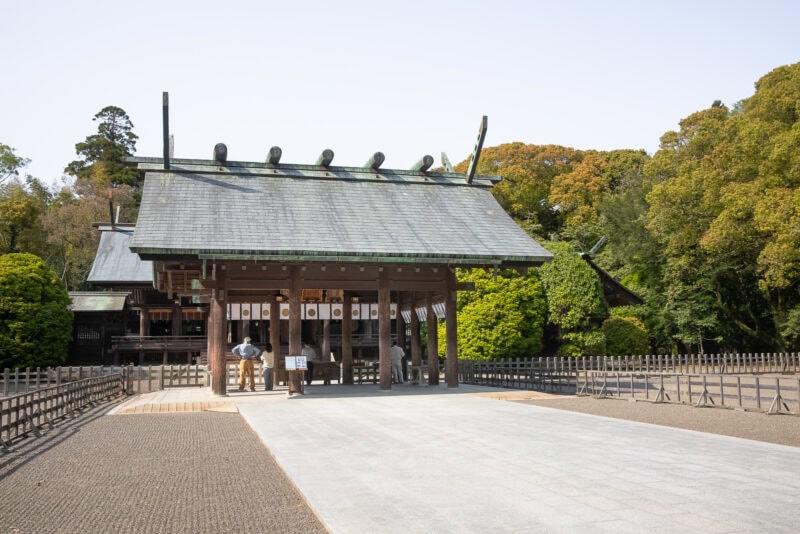
It has a similar grandeur to Meiji Jingu as I mentioned above, but with the noise and people. The altar and main shrine building are beautifully constructed from cypress with perfectly raked stone gardens surrounding them.
The Main Shrine and Gardens
The Japanese garden on the grounds contains 400-year-old azalea trees and a pond overlooked by a wisteria trellis said to be among the largest in Japan. In late spring, the wisteria bloom covers the area in whimsical shades of purple.
Keep an eye out for the Okiyo-maru, a replica of an ancient ship that appears in the Kojiki and Nihonshoki, two of the oldest surviving written records in Japan. It is easy to walk past without noticing, so be sure to take your time exploring.
Gokoku Shrine and Goshoinari Shrine
On the western side of the grounds is Gokoku Shrine, a quiet, tree-shaded memorial dedicated to Japanese soldiers killed in combat. It is a somber and contemplative space within an already peaceful complex. Further along, a series of vermilion torii gates leads to Goshoinari Shrine, dedicated to the guardian of agriculture, industry, food, and business.
Many visitors come specifically to this section to pray for commercial success and prosperity, and the colorful torii gates make it one of the most photogenic corners of the grounds.
The Prefectural Museum, Minkaen, and Seasonal Festivals
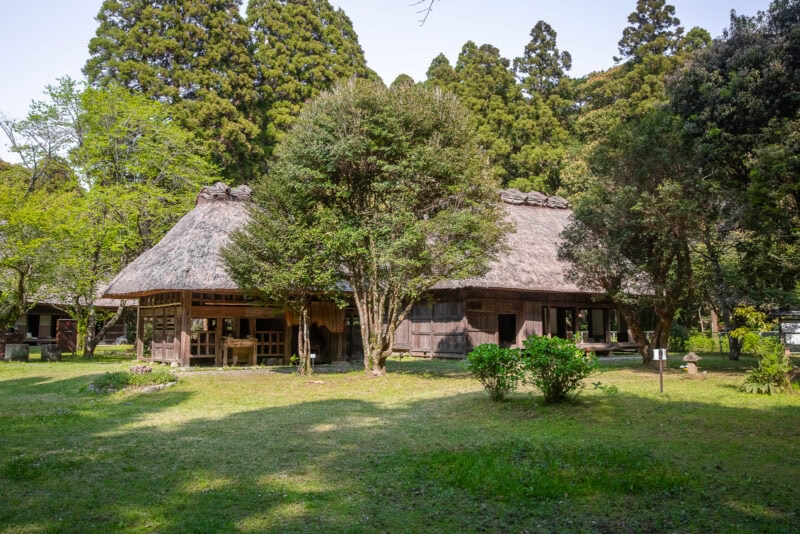
Within the shrine grounds is the Miyazaki Prefectural Museum, which covers the natural and cultural history of Miyazaki Prefecture through permanent and temporary exhibitions. Adjacent to it is Minkaen, a small open-air museum of four traditional farmhouses relocated from around the prefecture, dating back approximately 200 years and some designated as Important Cultural Properties. Together they make a worthwhile addition to the shrine visit, particularly if you want broader context for Miyazaki’s history.
The shrine’s most celebrated annual event is the Jimmu-sama Festival, held each autumn for over 140 years. Across two days, the festival features a parade depicting Emperor Jimmu, a mikoshi portable shrine procession, taiko drum performances, and traditional dance. The Niiname Festival, held to pray for a bountiful harvest, and Yabusame horseback archery are also held at the shrine throughout the year.

Andy’s Travel Tips
These simple tips will help you when you visit.
- Walk slowly and look for the Okiyo-maru replica ship on the grounds. It is easy to pass without noticing, but it is a historically significant object with direct ties to Japan’s oldest written texts, the Kojiki and Nihonshoki.
- Visit in late spring to see the wisteria trellis in bloom. One of the largest in Japan, it transforms the garden section of the grounds and is worth timing your Miyazaki visit around if possible.
- Follow the vermilion torii gates to Goshoinari Shrine on the western side of the grounds. It is one of the most photogenic sections of the complex and easy to miss if you stick to the main path.
- Check whether the Jimmu-sama Festival dates coincide with your visit. The two-day autumn festival has been running for over 140 years and offers a very different experience from a standard shrine visit.
- Add the Minkaen open-air farmhouse museum to your route if you have extra time. The 200-year-old houses are quietly fascinating and the detour adds no more than 30 minutes to the visit.
How to Get to Miyazaki Shrine
Train
The shrine is conveniently located within walking distance of a local train station.
- From Miyazaki Station, take the JR Nippo Main Line (headed toward Nobeoka or Saiki). Get off at Miyazaki-Jingu Station. The ride takes only about 3 to 5 minutes.
- From the station, it is a 10-minute walk to the shrine’s main entrance.
Bus
Buses run frequently from the main city centers and stop very close to the shrine grounds.
- From Miyazaki Station or the Miyazaki City center (Tachibana-dori), take a bus bound for Miyazaki Jingu. Get off at the Miyazaki Jingu bus stop. The shrine entrance is just a 2-minute walk from the stop. Total travel time from the station is approximately 10 to 15 minutes.
Car
- From Miyazaki Station, the drive takes about 10 minutes.
- From Miyazaki Airport, the drive takes approximately 20 to 25 minutes.
Taxi
- A taxi from Miyazaki Station is a quick and affordable option. The ride takes about 7 to 10 minutes and typically costs between ¥1,200 and ¥1,800.
Pro Tip: While on the grounds, look for the Oshirafuji (Great White Wisteria). This massive wisteria tree is estimated to be over 400 years old and is designated as a national natural monument. It usually blooms in late April, creating a stunning canopy of white flowers. Also, the Miyazaki Prefectural Museum of Nature and History is located right next to the shrine if you want to dive deeper into local heritage.
Is Miyazaki Shrine Worth Visiting?
Yes, but prioritize Aoshima and Udo Shrine first.
Miyazaki Shrine works best as a morning add-on if you are based in the city center. The grounds are expansive, the history runs as deep as any shrine in Japan, and the various structures reward a slow, unhurried visit. It is free, open 24 hours, and less than 10 minutes from Miyazaki Station. If you have the time, it is worth it.
More to Explore Nearby
Miyazaki Shrine sits in the heart of Miyazaki city, a gateway to the prefecture’s coast and mountains. Kyushu’s southern region has plenty more to explore in every direction.
- Udo Shrine — A spectacular cave shrine clinging to the Nichinan cliffs. One of Miyazaki’s most iconic and sacred sites.
- Sun Messe Nichinan — A clifftop park on the Nichinan Coast, famous for its replica Easter Island moai statues and sweeping ocean views.
- Kirishima Shrine — One of Kyushu’s most revered shrines, nestled among volcanic peaks near the Kagoshima-Miyazaki border.
- Kumamoto Castle — One of Japan’s most iconic castles, still undergoing impressive post-earthquake restoration. A compelling stop heading north through Kyushu.