This post may contain affiliate links. Please read our disclosure policy.
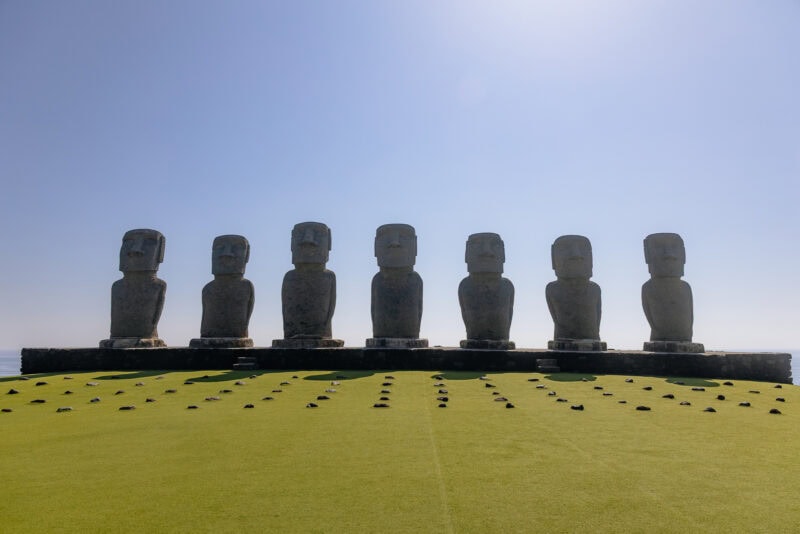
Amongst the coastline shrines and swaying palm trees of southern Miyazaki, Sun Messe Nichinan stands out. Seven towering Moai statues gaze over the glittering Pacific Ocean. They are the world’s only authorized replicas of their kind.
Sun Messe Nichinan (サンメッセ日南) is a 20-hectare park along the Nichinan Coast in southern Miyazaki Prefecture, built around one of the most unexpected sights in all of Kyushu: seven full-scale replica Moai statues from Easter Island, standing in a row above the Pacific Ocean.
The park also has sculpture gardens, an insect museum, panoramic ocean views, and a restaurant serving local Miyazaki dishes. It is one of those places that is difficult to explain to people before they visit, but easy to recommend once they have.
What is Sun Messe Nichinan
Sun Messe Nichinan is a hilltop coastal park in Nichinan City, Miyazaki Prefecture. It is operated as a cultural and scenic attraction along the Nichinan Coast. The park spans 20 hectares on a hillside above the Pacific Ocean. It is best known for its seven replica Moai statues. These are the first and only authorized reproductions of the original Easter Island statues anywhere in the world.
The replicas exist because of a remarkable act of restoration diplomacy between Japan and Chile. The park is open Thursday through Tuesday, 9:30 to 17:00, with an admission fee of 1,000 yen for adults.
My Experience at Sun Messe Nichinan
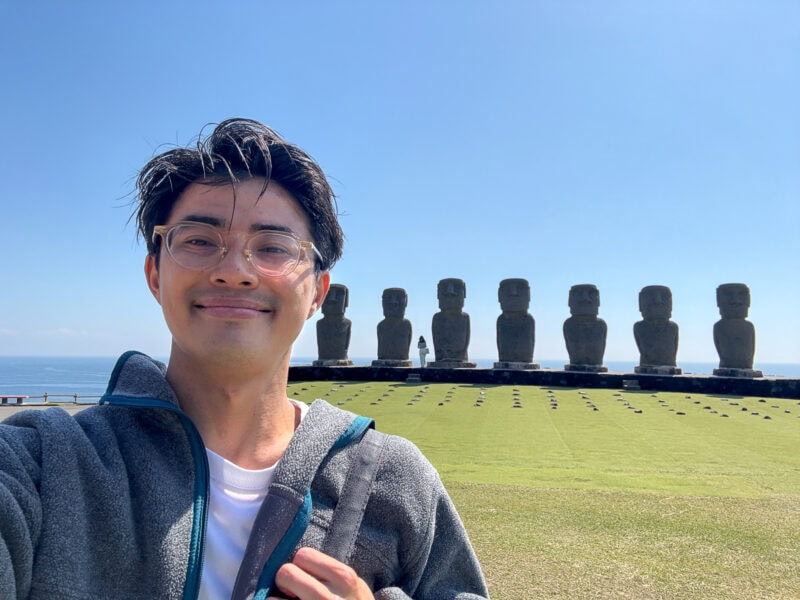
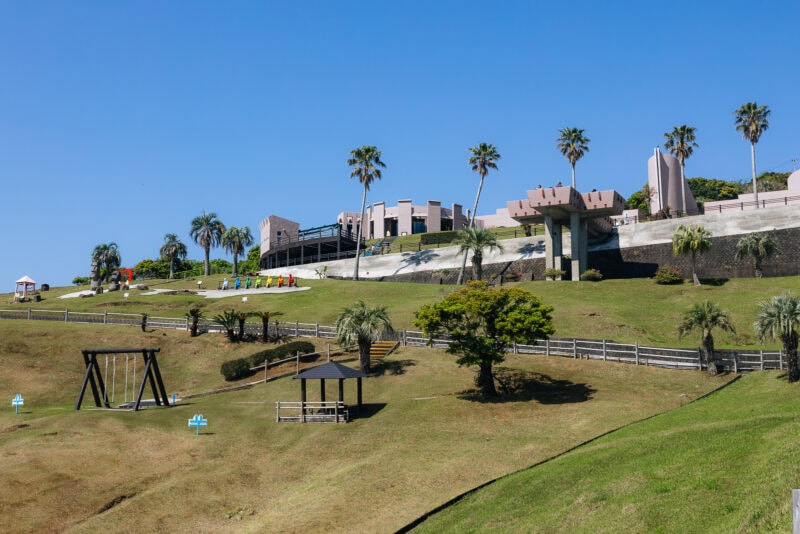
The park is spread across a small hill, and while every section is accessible on foot, the buggy rental is a fun option if you want to cover the terrain faster. If you have a Japanese or international driving license, you can rent a 5-passenger buggy for 1,000 yen and drive between the sections yourself. I explored on foot, which took a relaxed couple of hours including time spent with the Moai statues and the upper sections of the park.
The Moai Statues and Their Story
The seven Moai statues are replicas of the originals at Ahu Akivi on Easter Island. The originals were badly damaged by the 9.5-magnitude earthquake that struck Chile in 1960. It was one of the most powerful earthquakes ever recorded.
Tadano Corporation, a Japanese crane manufacturer, formed the Moai Restoration Committee. They worked with archaeologists and the Nara National Research Institute for Cultural Properties. Together, they excavated and restored the original statues.
After three years of work, the site was restored and subsequently achieved UNESCO World Heritage status. As a gesture of gratitude, Chilean officials authorized the construction of seven replica statues in Japan, making them the first and only authorized reproductions of Easter Island Moai in the world.
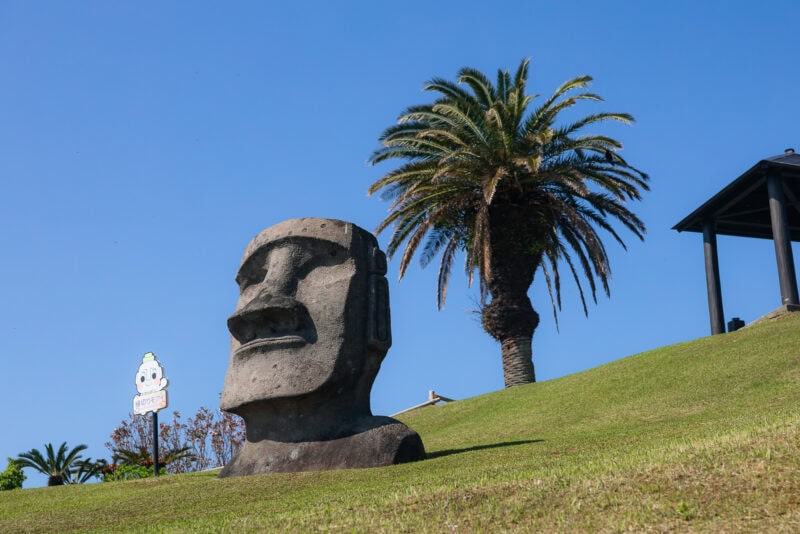
The replicas were positioned to face inland, oriented so that they point directly toward Ahu Akivi, 15,000 kilometers across the Pacific Ocean. Each statue is associated with a blessing: good health, love, leisure, marriage, business, and academics.
It is said that touching them will help your wishes come true. I’ll be honest, at first I didn’t know about its history, so it felt like a novelty attraction. However, after doing more research, it made my visit more meaningful and interesting. The view of the row of statues against the blue Pacific behind them is worth the trip on its own.
The Rest of the Park
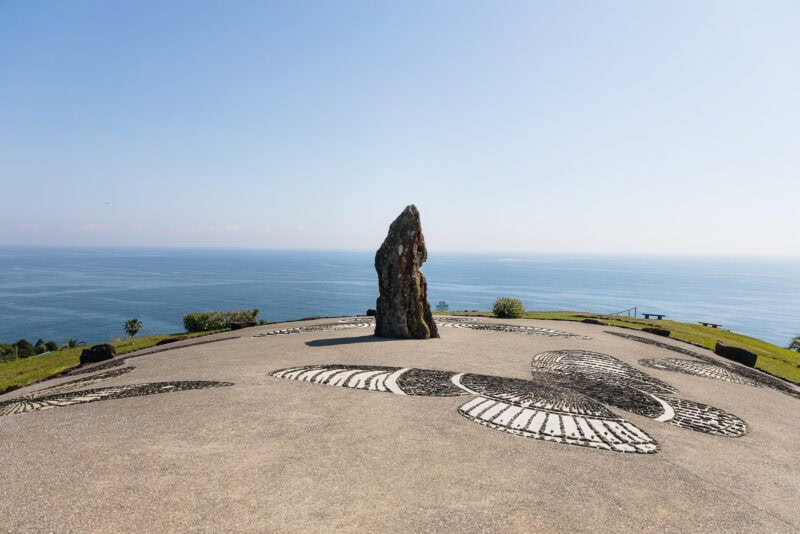
Further up the hill, the park has a collection of sculptures and photography spots. There is also a small insect museum. A stone monument with butterfly drawings etched into the ground surrounds it.
At the top of the park stands the Bell of Thanksgiving for the Earth. It is a small monument created by 18 religious organizations.
A restaurant near the park entrance serves Japanese cuisine and local Miyazaki specialties including chicken nanban, which makes a convenient lunch stop before or after exploring the grounds.

Andy’s Travel Tips
These simple tips will help you when you visit.
- Read the restoration story before you go. Understanding how Japanese engineers spent three years restoring the original Easter Island statues, and why Chile authorized these replicas as a gesture of thanks, makes standing in front of them a far more interesting experience.
- Rent a car to get here. The bus from Miyazaki City runs only once every two hours, takes around 90 minutes, and costs 1,510 yen one way. By car it is about one hour and you can combine the visit with Aoshima Island and Udo Shrine along the same coastal route.
- Consider the buggy rental if you have a valid driving license. The park is walkable, but the buggy is a fun way to cover the hill between sections and gives you more time at each stop.
- Check the closing day before visiting. The park is closed on Wednesdays except during Golden Week, New Year’s, and summer holidays. It would be an annoying trip to waste.
- Stop at the restaurant for chicken nanban at the park entrance. It is a good version of Miyazaki’s most iconic dish and a natural break point in the middle of a full Nichinan Coast day.
How to Get to Sun Messe Nichinan
Bus
The bus is the most common way to reach the park if you are using public transit.
- From Miyazaki Station: Take a Miyazaki Kotsu (Miyakoh) Bus bound for Obi or Aburatsu. The ride takes approximately 1 hour and 20 minutes.
- From Aoshima: If you are visiting Aoshima first, you can hop on the same bus heading south. The ride from Aoshima takes about 30 to 40 minutes.
- Get off at the Sun Messe Nichinan bus stop. The entrance to the park is a short walk uphill from the stop.
Car
Driving is highly recommended as Sun Messe Nichinan is located along the scenic Nichinan Phoenix Road (Route 220).
- From Miyazaki City: The drive takes about 45 to 50 minutes. The route offers stunning views of the “Devil’s Washboard” rock formations along the coast.
- From Udo Shrine: The park is only a 5 to 10-minute drive north of Udo Shrine, making them perfect to visit together.
Is Sun Messe Nichinan Worth Visiting?
Yes, especially if you are already driving down the Nichinan Coast to visit Aoshima Island or Udo Shrine. The Moai statues are genuinely striking against the Pacific backdrop, and the restoration story behind them gives the whole park depth that justifies the 1,000 yen entry fee. It is not a full-day destination on its own, but as part of a Nichinan Coast itinerary, it is one of the more memorable stops you will make in Miyazaki Prefecture.
More to Explore Nearby
Sun Messe Nichinan sits on Miyazaki’s dramatic Nichinan Coast. The surrounding region spans rugged nature, ancient shrines, and Kagoshima’s rich cultural heritage.
- Chiran Samurai District — A beautifully preserved street of samurai-era gardens and stone-walled lanes in southern Kagoshima.
- Udo Shrine — A breathtaking cave shrine perched on the Nichinan cliffs, just a short drive up the coast.
- Kirishima Shrine — One of Kyushu’s most sacred sites, set among volcanic peaks near the Kagoshima-Miyazaki border.
- Sengan-en — A stunning feudal-era garden in Kagoshima city, with Sakurajima volcano as its dramatic natural backdrop.