This post may contain affiliate links. Please read our disclosure policy.
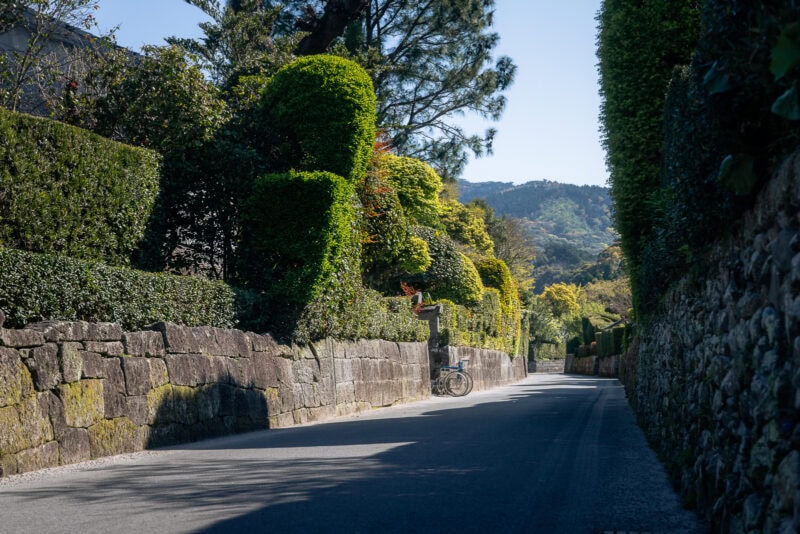
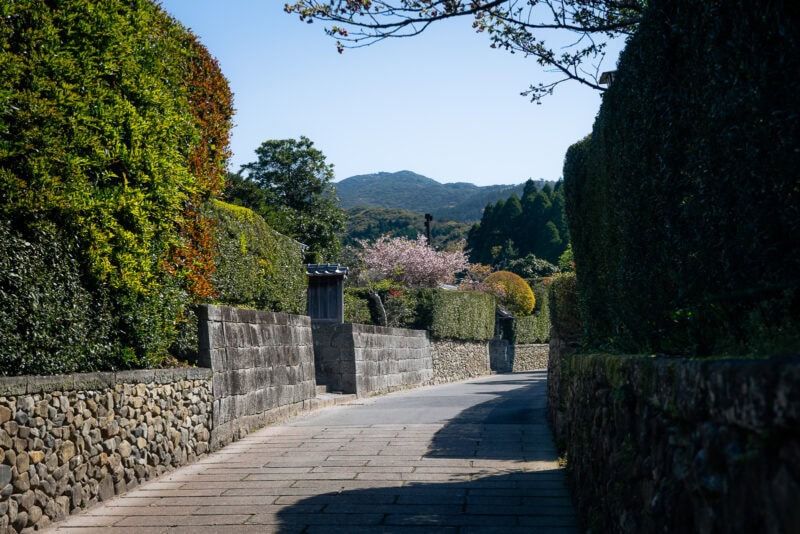
Dubbed the Little Kyoto of Satsuma, the Chiran Samurai District offers a rare glimpse into samurai life. It is one of the best-preserved samurai districts in Japan. A 700-meter stonewall path runs through it, lined with seven historic gardens in southern Kagoshima.
The Chiran Samurai District (知覧武家屋敷) is a series of seven historic samurai houses and gardens in the southern part of the Satsuma Peninsula in Kagoshima Prefecture. During the Edo Period (1603–1868), the Satsuma Domain adopted a distinctive policy known as the Gaitō System, stationing samurai throughout the region rather than concentrating them in a central castle town.
This gave rise to dispersed samurai residential areas called Fumoto, and Chiran is the most notable surviving example. Dating back over 270 years, the district has been designated an Important Preservation District for Groups of Traditional Buildings, and the gardens are recognized as National Places of Scenic Beauty.
What Is the Chiran Samurai District
The Chiran Samurai District is a preserved Edo-period samurai residential area. It is located in Minamikyushu City, Kagoshima Prefecture. Seven samurai houses and gardens line a 700-meter stonewall path.
The houses themselves are not open to the public, but the gardens are accessible. A single combined ticket covers all seven. Each garden has been maintained in its original style, most dating to the 17th century.
The district also sits close to the Chiran Peace Museum. Together, they make a natural pairing for a full day in the area.
My Experience at the Chiran Samurai District

The approach is the first surprise. Chiran looks like an ordinary town until you turn off the main road, and then the stonewall paths open up in front of you with neatly pruned hedges stretching the full length of the lane. Walking that path, it is easy to see why the district earned the nickname “Little Kyoto of Satsuma.”
The Seven Samurai Gardens
Seven gardens are spread along the district, each with a ticket included in the single combined admission. Six are built in the Karesansui dry garden style, using shirasu, a local mixture of pumice and volcanic ash common in southern Kyushu, spread across the ground to represent water. Most were designed in the 17th century by gardeners from Kyoto, and the compositions draw on classic Chinese landscape imagery: mountain peaks, valleys, and waterfalls rendered in stone and raked gravel.
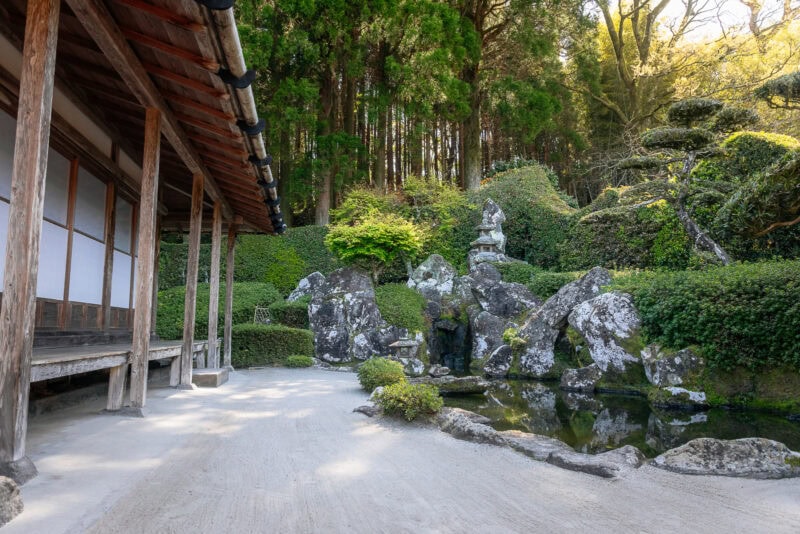
The garden I found most impressive was the Mori family garden, the only one built in the Tsukiyama Sensui style, which incorporates an actual pond. For me, water is one of the most essential elements in a Japanese garden, and the Mori garden feels the most complete as a result. If you are going to look carefully at only one, make it this one.
Chiran’s Green Tea and Peace Museum
Chiran is one of Japan’s most acclaimed green tea-producing areas. It has received the prestigious Minister of Agriculture, Forestry, and Fisheries Prize. The cafes along the main street serve the local tea. It is worth sitting down for a cup before or after walking the gardens. The flavor reflects the volcanic soil and climate of the Satsuma Peninsula. It is noticeably different from teas produced elsewhere in Japan.
The district also sits a short drive from the Chiran Peace Museum. The museum commemorates the young kamikaze pilots who departed from Chiran Air Base during World War II. The two sites together give a full picture of Chiran’s significance. This spans both the samurai era and more recent history. Combining them in a single day is the natural way to experience the town.

Andy’s Travel Tips
These simple tips will help you when you visit.
- Buy your ticket at one of the shops along the main street or at the garden entrance at the northern end of the district. One ticket covers all seven gardens.
- Prioritize the Mori family garden if you are short on time. It is the only one with a real water pond and, in my opinion, the most complete and impressive of the seven.
- Combine with the Chiran Peace Museum on the same day. Both are in Chiran and together they give a much fuller picture of the town’s historical significance than either does alone.
- Stop for local green tea at one of the cafes along the main street. Chiran is one of Japan’s most award-winning tea producing areas and the tea here is worth taking the time for.
- Rent a car if possible. Public transport to Chiran is slow and infrequent. With a car from central Kagoshima, the drive takes about 45 minutes and you can manage your own schedule across both Chiran sites.
- Allow 30 to 60 minutes for the gardens, plus extra time for tea and a walk along the stonewall path before entering. The approach is part of the experience and worth taking slowly.
How to Get to Chiran Samurai District
Bus
Taking the bus directly from Kagoshima City is the most straightforward public transit option.
- From Kagoshima-Chuo Station (Bus Stop 16), take a Kagoshima Kotsu Bus bound for Chiran. Get off at the Bukeyashiki-iriguchi (Samurai District Entrance) stop. The ride takes approximately 1 hour and 15 minutes. Buses run roughly once per hour.
Car
Driving is highly recommended if you plan to visit both the Samurai District and the nearby Chiran Peace Museum.
- From Kagoshima City, the drive takes about 50 to 60 minutes via the Ibusuki Skyline (toll road). Exit at the Chiran IC. From Ibusuki, the drive takes approximately 40 to 50 minutes through the scenic countryside.
Is the Chiran Samurai District Worth Visiting?
Yes, but only if you have more than a couple of days in Kagoshima and are also making the drive to Chiran for the Peace Museum, which most visitors do. Adding the samurai district costs very little extra in time or money and gives the day a completely different dimension.
The traditional gardens are genuinely beautiful, and the surrounding area has a nice, historic, and calm atmosphere that doesn’t feel too touristy. At 530 yen for all seven gardens, it is also one of the better-value cultural experiences in Kagoshima Prefecture.
More to Explore Nearby
- Sengan-en — The Shimadzu clan’s grand seaside garden in Kagoshima city, with Sakurajima volcano as its dramatic backdrop. A natural companion to Chiran’s samurai history.
- Kirishima Shrine — Set amid the volcanic highlands north of the city, this ancient shrine surrounded by cedar forests is one of Kagoshima’s most spiritually atmospheric stops.
- Terukuni Shrine — A lesser-visited but beautiful shrine in central Kagoshima dedicated to the Shimadzu clan lords, offering a quieter counterpoint to the busier sights.
- Kumasotei Restaurant — Head into the city for a proper Kagoshima meal — this beloved restaurant specialises in local black pork and Satsuma cuisine in a charming traditional setting.