This post may contain affiliate links. Please read our disclosure policy.
In central Kagoshima, Terukuni Shrine honors Lord Shimazu Nariakira with elegant grounds, a remarkable crane topiary, and a story that shaped modern Japan.
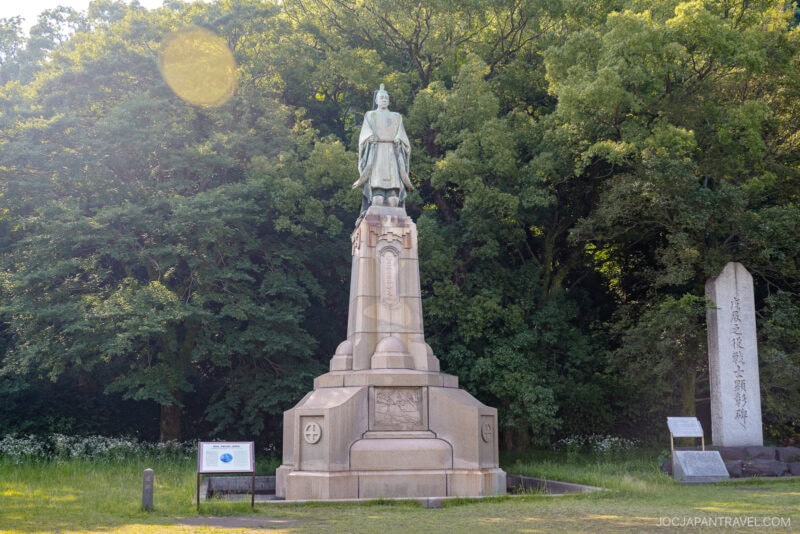
Who Was Lord Shimazu Nariakira?
Shimazu Nariakira (島津斉彬) was the 28th head of the Shimazu clan and a forward-thinking daimyo who ruled during Japan’s late feudal era. Though his leadership lasted only seven years before his death in 1858, his impact was enormous.
He championed modernization, establishing factories, military academies, and shipyards modeled on Western systems. His vision helped transform Kagoshima into a center of Meiji-era industry and innovation. Terukuni Shrine was later founded to honor him, celebrating both his leadership and his lasting influence on Japan’s modernization.
Exploring Terukuni Shrine
The Shrine Grounds
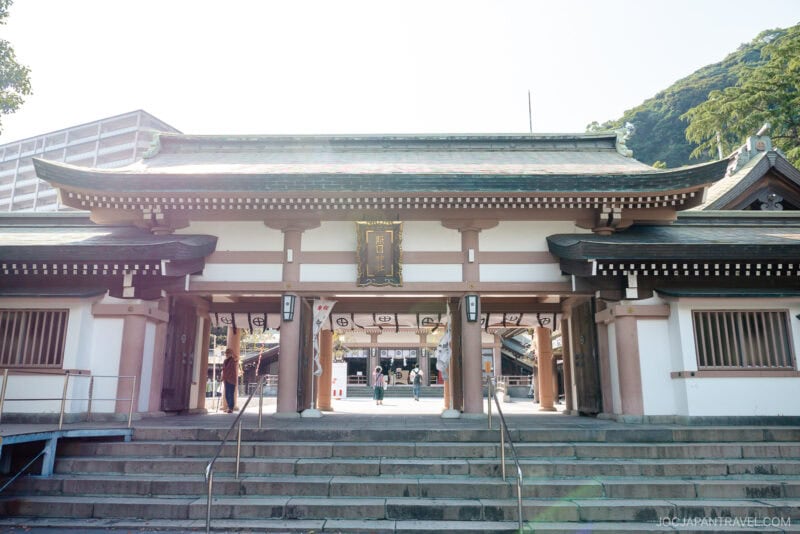
The shrine feels elegant and understated, surrounded by trees and stone lanterns. Its wide courtyard invites both quiet reflection and casual strolls. We saw many locals stopping to pray, a reminder that this is an active place of worship as well as a historic landmark.
The Giant Crane Topiary
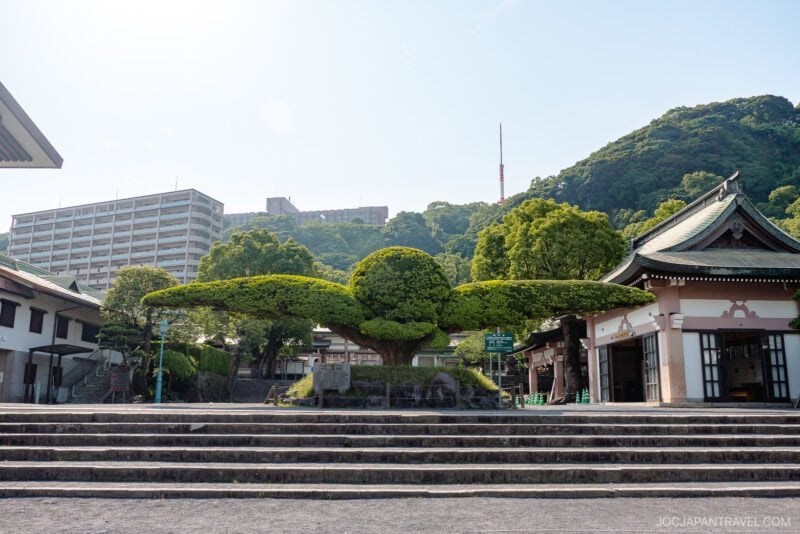
One of the most surprising sights here is the massive crane topiary at the entrance. Sculpted from a Buddhist pine, it’s whimsical and artistic at the same time. Our kids loved it, and we were equally impressed by the skill behind such a living sculpture. The crane is a symbol of longevity and good fortune.
The Shimazu Museum
Next to the shrine is a small museum that shares Nariakira’s life and achievements. Artifacts from the Edo and Meiji periods are displayed, along with exhibits about his modernization projects such as the Shuseikan industrial complex. It gave us a deeper appreciation for how Kagoshima became a driving force in Japan’s transformation.
Fascinating Facts About Lord Shimazu Nariakira

- He was the first person in Japan to use Morse code, sending a message from Terukuni Shrine to Kagoshima Castle.
- He played a role in designing the Japanese national flag, the iconic red circle on white.
- His projects included glassmaking, cannon manufacturing, shipbuilding, and military training.
How to Get to Terukuni Shrine
Terukuni Shrine is a significant landmark in central Kagoshima and is easy to reach by tram or on foot.
By Tram
- From Kagoshima Chuo Station, take the Kagoshima City Tram Line 2 toward Kagoshima Ekimae.
- Get off at the Asahi Dori stop. The shrine is about a 5 to 7 minute walk from there.
By Taxi
- Taxis from Kagoshima Chuo Station take about 5 to 10 minutes and cost roughly ¥1,200 to ¥1,600 depending on traffic.
Pro Tip: The shrine grounds are known for their towering camphor trees. It is a peaceful place to walk after exploring the city.
Is Terukuni Shrine Worth Visiting?
Terukuni Shrine is a meaningful stop in Kagoshima for anyone interested in history, culture, or simply enjoying a quiet moment in the city. The shrine connects visitors to one of Japan’s most visionary leaders and highlights Kagoshima’s role in modernization.
It may not be as large as other shrines, but its cultural weight is significant.
More to Explore Nearby
If you’ve enjoyed the tranquility of this historic shrine, you are perfectly positioned to explore more of Kagoshima’s unique history, stunning bay views, and local culinary scene just a short distance away.
- Sengan-en – Explore this majestic traditional garden that features sweeping views of Sakurajima and Kinko Bay as its “borrowed scenery.”
- Kagoshima Saigo Takamori Legacy – Discover the history and numerous monuments dedicated to this famous samurai, a critical and heroic figure in Kagoshima’s past and in the Meiji Restoration.
- Shiroyama Hotel – Head to this famous hilltop observation point for arguably the best panoramic views of Kagoshima City, Sakurajima volcano, and the surrounding Kinko Bay.
- Kumasotei Restaurant – Sample authentic Kagoshima cuisine at this well-regarded local restaurant, specializing in pork dishes and local delicacies.