

This post may contain affiliate links. Please read our disclosure policy.
Tracing the footsteps of Saigo Takamori in Kagoshima reveals the story of Japan’s last samurai, his rebellion, and the memorials that honor his enduring legacy.
Who Was Saigo Takamori?
Saigo Takamori (1828–1877) is one of Japan’s most legendary figures, and learning about him while traveling through Kagoshima added so much depth to our trip. Born here in Kagoshima, he rose to prominence as a loyal retainer to Lord Shimazu Nariakira, where he played a key role in modernizing the Satsuma Domain. Later, he became a military leader who helped overthrow the Tokugawa shogunate and establish the Meiji government.
Despite his early support, Saigo grew disillusioned with the government’s direction, particularly its disregard for samurai traditions. In 1877, he led the Satsuma Rebellion, a bold but doomed stand against the state. After being mortally wounded in the Battle of Shiroyama, he ended his life by seppuku, a choice that secured his image as “the last true samurai.”
Memorial Sites to Visit in Kagoshima
Saigo Takamori Statue
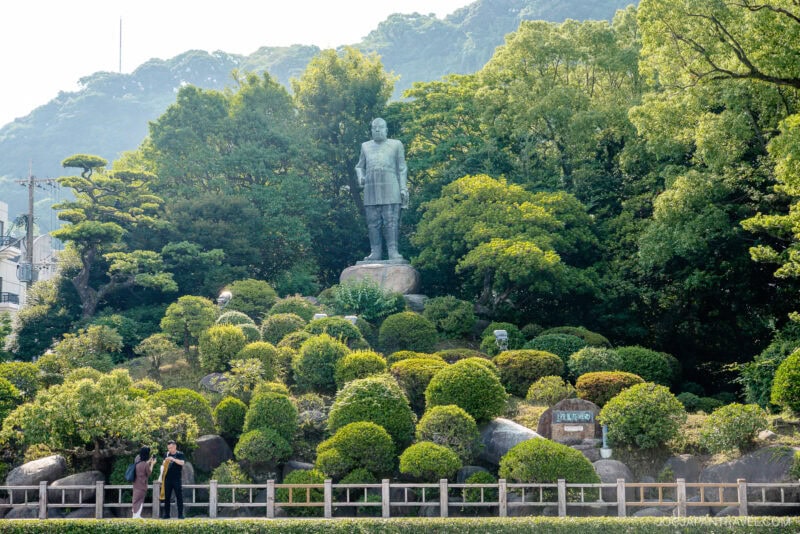
Near the Kagoshima City Museum of Meiji Restoration stands an 8-meter bronze statue of Saigo, depicted alongside his loyal dog. It’s one of the most photographed landmarks in the city, and when we visited, we were struck by how locals still pause here with quiet respect.
Saigo’s Cave (Saigo-dokutsu 西郷隆盛 洞窟)
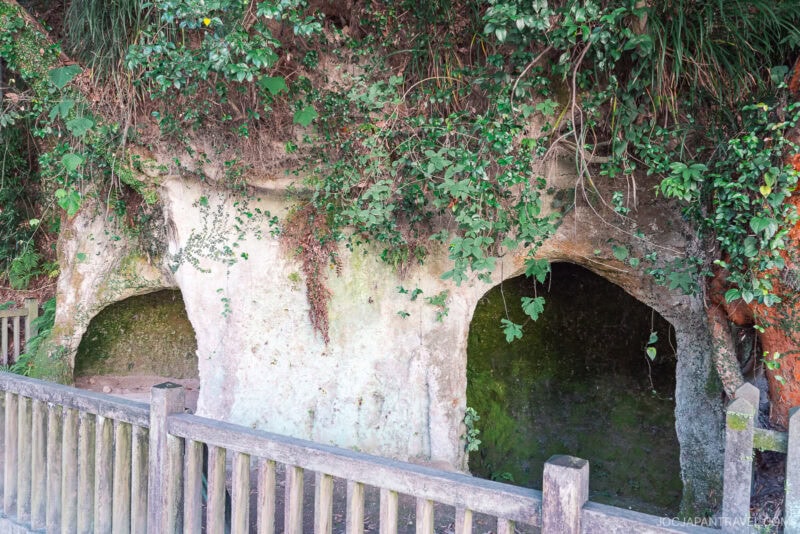
Hidden in the hills of Shiroyama, these modest caves once served as Saigo’s final command post. Standing here, it’s easy to imagine the tension of those last days of the Satsuma Rebellion.
Saigo’s Death Site (Saigo Shuen no Chi 西郷隆盛 終焉の地)
A short walk from the cave brings you to the site where Saigo’s life ended. The stone monument and peaceful garden create a space that invites reflection. It felt both humbling and moving to stand on that ground.
Saigo Nanshu Museum & Cemetery (西郷南洲顕彰館)
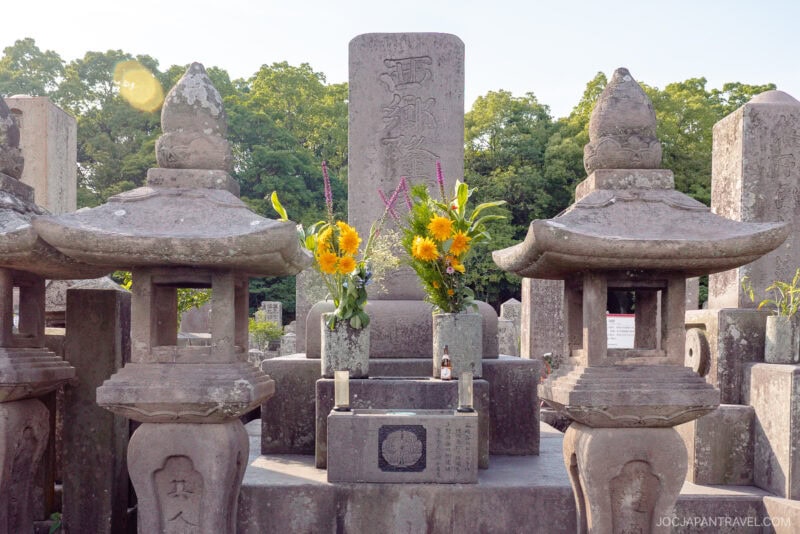
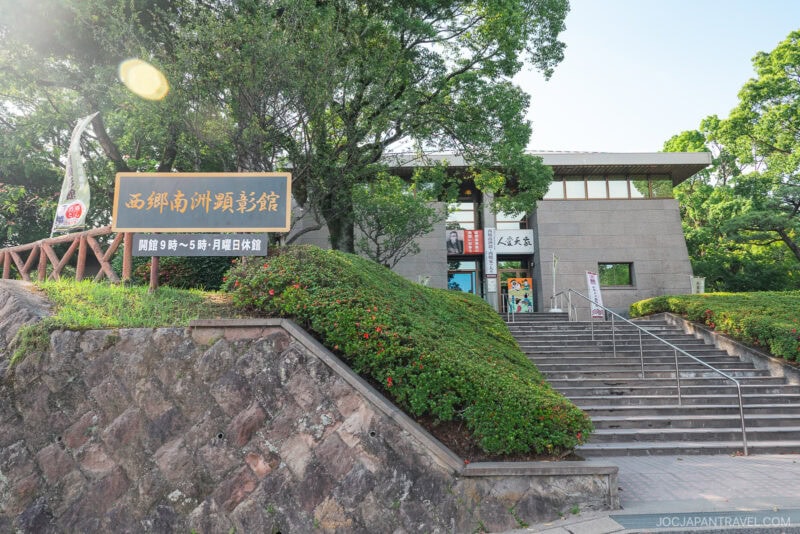
Located south of the city center, this museum displays documents, personal belongings, and accounts of Saigo’s life. Outside, the cemetery contains the graves of Saigo and many of his comrades. Walking through, we were reminded of the human cost of the rebellion and the loyalty that bound these men together.
Fascinating Facts About Saigo Takamori
- He is often considered the inspiration for the film The Last Samurai
- Saigo helped establish Japan’s national army before turning against the Meiji government.
- In 1891, he was posthumously pardoned and is now remembered as a symbol of integrity and loyalty.
- Statues of him also stand in Tokyo’s Ueno Park and other locations across Japan.
How to Get to Saigo Takamori Memorial Sites
Most sites sit around Shiroyama in central Kagoshima. Streetcars, the City View Bus, and short walks link them easily.
City View Bus
- Saigo Takamori Statue: Get off at Saigo Dozo Mae on the Kagoshima City View line.
- Saigo’s Cave (Saigo-dokutsu): Get off at Saigo Takamori Dokutsu-mae on the City View route.
- Saigo’s Death Site (Saigo Shuen no Chi): Get off at Satsuma Gishi-hi Mae, then walk about 5 minutes.
- Saigo Nanshu Museum & Cemetery: Get off at Saigo Nanshu Kenshokan (Nanshu Koen) Mae.
On Foot
The statue, cave, and death site connect by signed paths on Shiroyama. Expect short but steep hills and steps.
Pro Tip: The City View Bus costs ¥230 per ride (prices in 2025). A one-day pass is ¥600 for adults and ¥300 for children. It also covers streetcars and city buses.
Is Saigo Takamori’s Trail Worth Exploring?
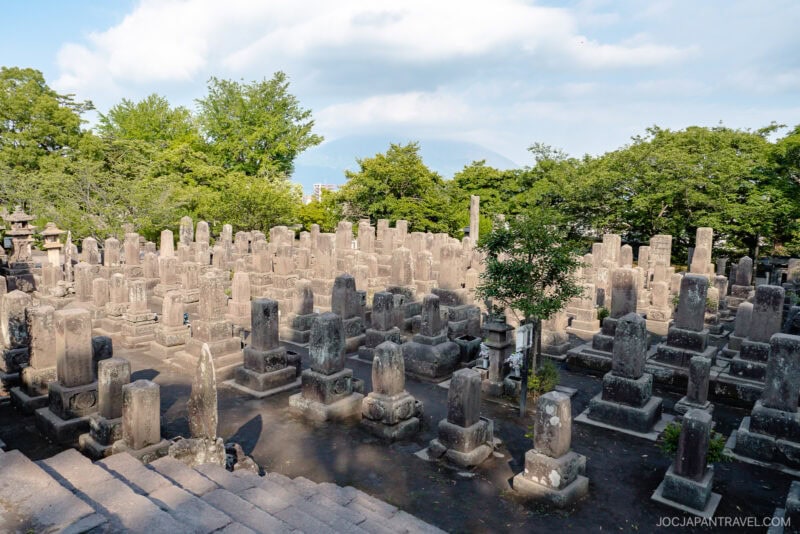
Following Saigo’s trail through Kagoshima gave us a deeper appreciation for the city’s role in shaping modern Japan. From the bronze statue that symbolizes loyalty to the caves and cemetery that recall his tragic final stand, each location tells part of a powerful story.
If you’re drawn to history, samurai culture, or just want to understand Kagoshima’s identity on a deeper level, exploring Saigo Takamori’s legacy is an experience you won’t forget.
More to Explore Nearby
The monuments and historical sites of Saigo Takamori provide a deep look into Kagoshima’s samurai past, placing you close to scenic gardens, high-altitude viewpoints, and the spiritual center of the city.
- Sengan-en – Explore this majestic traditional garden that features sweeping views of Sakurajima and Kinko Bay as its “borrowed scenery”.
- Shiroyama Hotel – Head to this famous hilltop observation point for arguably the best panoramic views of Kagoshima City, Sakurajima volcano, and the surrounding Kinko Bay.
- Terukuni Shrine – Visit this historic shrine dedicated to the region’s spiritual and historical figures, offering a peaceful space to observe traditional Shinto rituals.
- Kagoshima Shopping and Sightseeing – Dive into the modern center of the city to explore shopping arcades, ride the street cars, and find lively downtown dining and retail areas.


