This post may contain affiliate links. Please read our disclosure policy.
The Chiran Peace Museum is a solemn and deeply moving space. It honours the young pilots who were sent on suicide missions in the final stages of World War II. It is a place to reflect on the real cost of war and the value of every life.
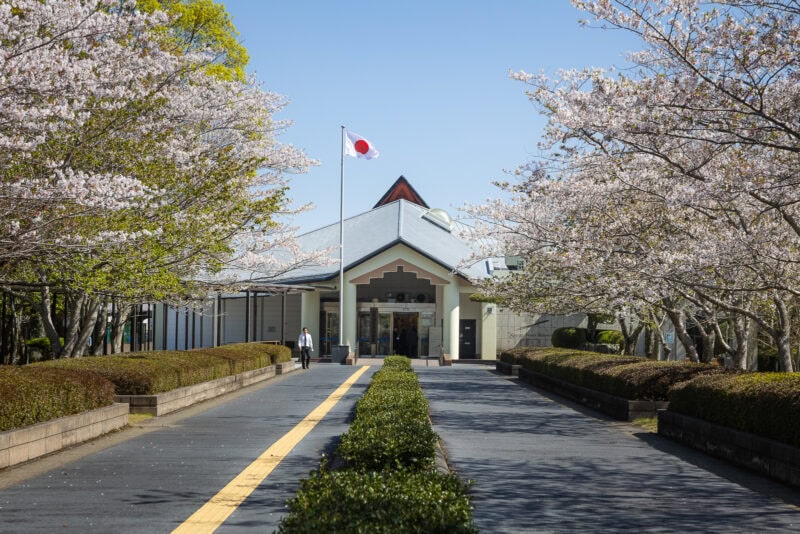
The Chiran Peace Museum (知覧特攻平和会館) stands on the site of the former Chiran Air Base in southern Kagoshima, which served as one of Japan’s primary kamikaze departure points during the final stages of World War II.
The museum commemorates the 1,036 young pilots who gave their lives in these suicide missions, known officially as Tokkōtai or “special attack units.” It is not a museum that glorifies war. It is a deeply personal memorial, built around the photographs, letters, and belongings of the men themselves, many of whom were teenagers. I did not expect to find it as affecting as I did, and I think that is true for most people who visit.
What Is the Chiran Peace Museum
The official museum name is Chiran Tokko Peace Museum (知覧特攻平和会館). It is a memorial museum in Chiran Town, Minamikyushu City. Built in 1975, it has since become one of Japan’s most significant wartime memorial sites. It draws visitors from across the country and overseas.
The museum focuses on the human stories behind the war. It does not centre on military history or strategy. Instead, it functions as a space for peace education and reflection.
My Experience at the Chiran Peace Museum
The term kamikaze combines two Japanese words, “kami” (divine) and “kaze” (wind), originally referring to the typhoon said to have repelled a Mongol invasion of Japan in the 13th century. In World War II the name was applied to pilots ordered to crash their aircraft into Allied warships in the final stages of the Pacific War, in a last attempt to slow the advancing forces. The museum documents this through the lives of the men themselves rather than through the military decisions that sent them.
Inside the Museum
Inside, photographs of all 1,036 pilots are arranged in chronological order by date of death. Alongside them are personal artifacts: hachimaki headbands, water bottles, Hinomaru flags inscribed with messages from family and friends, uniforms, and weapons.
Most of the display text is in Japanese, but English, Chinese, and Korean audio guides are available and I would strongly recommend using one. Photography is not permitted inside, which feels appropriate.

What stayed with me longest was the section of personal letters, farewell notes, and poems. Many were written by teenagers, some as young as 16. The writing is straightforward and human, full of care for family members left behind, and entirely absent of the rhetoric you might expect.
At the end of the exhibition is a recovered Mitsubishi Zero fighter, salvaged from the sea in 1980, its damage still visible. Seeing it after walking through the photographs and letters brings everything into a sharp and quiet focus.
Outside the Museum
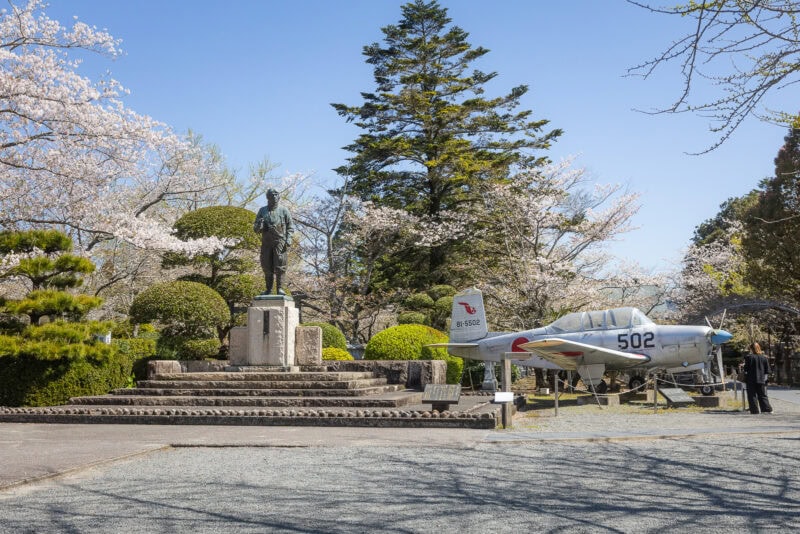
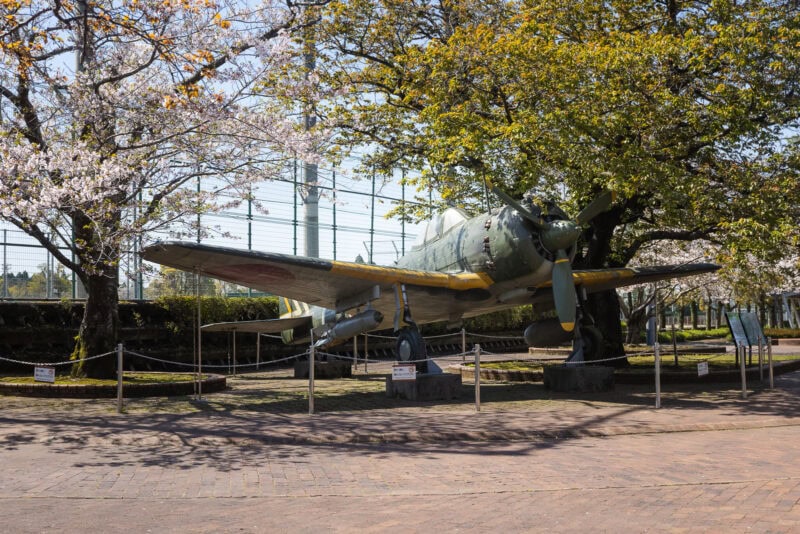
Outside, three original aircraft are displayed among the cherry trees. These are the Army Type-3 Hien, the Army Type-4 Hayate, and the Type-1 Hayabusa. A statue of a kamikaze pilot stands nearby. The Peace Kannon Shrine enshrines statues of Kannon, the bodhisattva of compassion. It serves as a memorial to the pilots’ souls and a place to pray for peace,
Also on the grounds is the Museum Chiran. It covers the broader history and people of Southern Satsuma. The ruins of the Sankaku Barracks are also here. This is the triangular barracks where pilots spent their final days before their missions.

Andy’s Travel Tips
These simple tips will help you when you visit.
- Pick up the English audio guide when you arrive. Most of the display text inside is in Japanese, and the audio guide adds essential context to the photographs, artifacts, and personal letters throughout the exhibition.
- Do not bring a camera inside. Photography is prohibited throughout the museum interior. Leave your camera in your bag before entering.
- Allow at least 90 minutes to move through the museum properly. The exhibition is dense and the personal letters and photographs deserve time. Rushing through it does not do the place justice.
- Rent a car if possible. Public transport to Chiran is infrequent and slow. With a car from central Kagoshima, the drive takes about 50 minutes and you can combine the museum with the nearby Chiran Samurai District on the same day.
- Visit the Peace Kannon Shrine and the aircraft outside before or after the museum interior. The outdoor grounds add important context and a quieter space to reflect after a heavy exhibition.
- Be prepared for the museum to be affecting, even if you do not expect it. The personal letters and the youth of the men documented here make it a more emotional experience than a typical historical museum.
- Chiran Samurai District is nearby, so if you plan to see both, they are about a 5-minute drive or a 20 to 30-minute walk apart. Most visitors prefer a short taxi or bus ride between the two to save time for the museum’s extensive exhibits.
How to Get to the Chiran Peace Museum
Bus
The bus is the most common public transportation method from the major city centers.
- From Kagoshima-Chuo Station: Go to Bus Stop 16 (East Exit) and take the Kagoshima Kotsu Bus bound for Chiran. The ride takes approximately 1 hour and 15 to 25 minutes. Get off at the Tokko-heiwakaikan-mae stop.
- From Kiire Station: If you are already on the JR Ibusuki Makurazaki Line, you can get off at Kiire and take a local bus for about 20 to 25 minutes to the museum.
- From Ibusuki Station: Direct buses run to Chiran, taking about 1 hour.
Car
Driving is the most flexible option, especially if you want to visit both the museum and the Samurai District in one afternoon.
- From Kagoshima City: Use the Ibusuki Skyline (toll road) and exit at Chiran IC. The drive takes about 50 to 60 minutes.
- From Ibusuki: The drive takes approximately 40 to 50 minutes via Route 226 and Route 27.
Is the Chiran Peace Museum Worth Visiting?
Yes. It is one of the most thoughtfully constructed and poignant war memorials I have visited in Japan, and it achieves something genuinely difficult: it makes the human cost of war feel personal and real without being exploitative or political.
The focus on individual lives, letters home, and photographs of faces keeps it from feeling like a history lesson and makes it more like a witness account. It is not an easy visit, but it is worthwhile, and I would recommend it to anyone spending time in Kagoshima with even a passing interest in 20th-century Japanese history.
More to Explore Nearby
- Chiran Samurai District — Just steps away, Chiran’s beautifully preserved samurai streets and moss-garden residences offer a serene contrast to the museum’s weighty history.
- Sengan-en — The Shimadzu clan’s grand seaside estate in Kagoshima city, framed by the smoking cone of Sakurajima across the bay. One of Kyushu’s most scenic historic gardens.
- Saigo Takamori Legacy — Kagoshima’s most celebrated samurai looms large over the city’s identity. A fascinating thread to follow for anyone drawn to Japan’s turbulent 19th-century history.
- Yakushima — Getting Around — A ferry from Kagoshima port leads to Yakushima, a UNESCO-listed island of ancient cedar forests that feels like a world apart from the mainland.