This post may contain affiliate links. Please read our disclosure policy.
Hiroshima Peace Memorial Park is a moving reminder of the past and a symbol of hope for a peaceful, nuclear-free future.
A Place for Reflection and Hope
Hiroshima is a vibrant, welcoming city filled with great food and scenic sights—but its history is impossible to overlook. One of the most meaningful places we visited was Hiroshima Peace Memorial Park (平和記念公園), located in the heart of the city. It left a lasting impression on our whole family.
This park was created to honor the victims of the atomic bombing on August 6, 1945. At the same time, it stands as a powerful message to the world: peace must be preserved. Designed by renowned architect Kenzo Tange, the park spans over 120,000 square meters and is filled with thoughtful monuments, open lawns, and spaces for quiet reflection.
During our visit, we found ourselves reflecting not only on the past but also on the strength and resilience of Hiroshima’s people.
A Brief History of Hiroshima Peace Memorial Park

Before the bombing, this area was a lively commercial and residential center known as the Nakajima district. About 6,500 people lived and worked here. Tragically, nearly everyone in the area perished when the bomb detonated just 160 meters away.
The park was established in 1949 under the Hiroshima Peace Memorial City Construction Law. It was built not just to memorialize those who died, but also to serve as a public call for peace and the elimination of nuclear weapons.
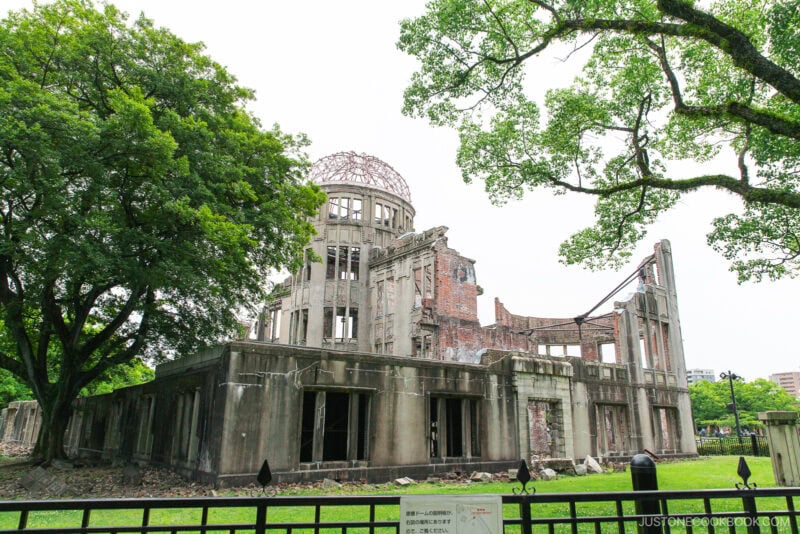
At the north end of the park, across the Motoyasu River, stands the Atomic Bomb Dome (原爆ドーム). Once the Hiroshima Prefectural Industrial Promotion Hall, this iconic ruin was left standing as a stark reminder of the destruction. It’s now a UNESCO World Heritage Site and one of the most powerful symbols of the tragedy.
Key Monuments in the Park
Memorial Tower to the Mobilized Students (動員学徒慰霊塔)
Just before entering the main park area, we stopped at this solemn tower. It honors more than 6,000 middle and high school students who were mobilized to work in factories and lost their lives in the bombing. As parents, this monument was especially moving.
Children’s Peace Monument (原爆の子の像)
One of the first sites we visited inside the park was the Children’s Peace Monument. It was inspired by Sadako Sasaki, a young girl who developed leukemia from radiation exposure. She believed that folding 1,000 paper cranes would help her recover. Although she passed away at age 12, her story has inspired generations. Even today, children around the world send origami cranes to this monument in a shared hope for peace.
Memorial Monument for Hiroshima, City of Peace (原爆死没者慰霊碑)

Also called the Cenotaph for the A-bomb Victims, this arch-shaped stone monument holds the names of all known victims of the bombing. It’s designed so that when you look through it, you can see the Peace Flame and the Atomic Bomb Dome in a straight line. It’s a simple but deeply meaningful view that connects memory, mourning, and hope.
Hiroshima Peace Memorial Museum
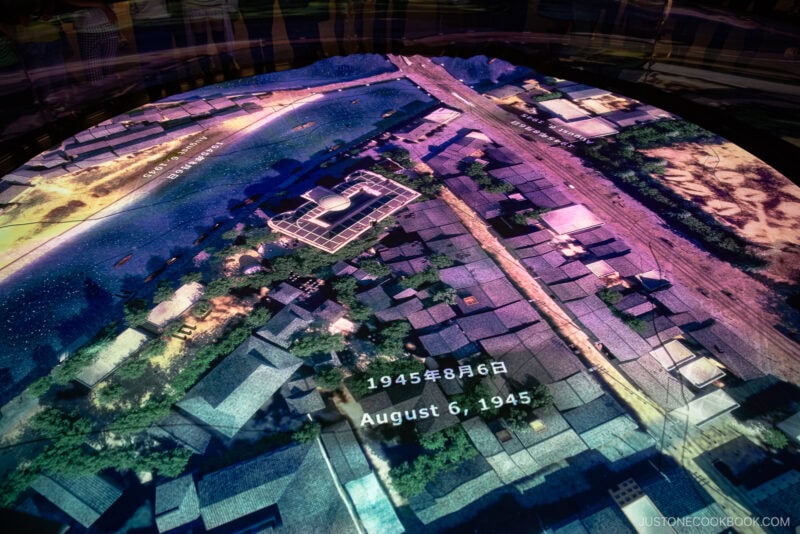
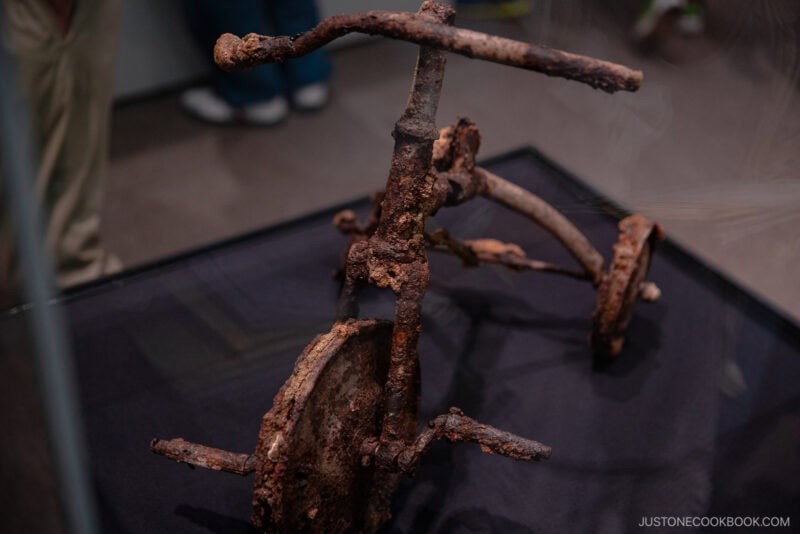
At the heart of the park is the Peace Memorial Museum. It’s a somber and emotional place, but the exhibits helped all of us, especially our children, grasp the human impact of the atomic bomb.
The museum is divided into multiple floors:
- First Floor: Personal belongings and items damaged by the blast
- Second Floor: Hiroshima’s history before and after the bombing
- Third Floor: Global issues surrounding nuclear weapons and disarmament
The museum doesn’t aim to shock, but to educate and inspire. After walking through, it sparked conversations about empathy, peace, and what kind of world we want to help create.
How to Get to Hiroshima Peace Memorial Park
Train
- From the south exit of Hiroshima Station, take tram line 2 (for Miyajimaguchi) or tram line 6 (for Eba). Ride the tram to the Genbaku Dome-mae (Atomic Bomb Dome) stop. This ride takes approximately 15 minutes and costs a flat fare. The Atomic Bomb Dome is immediately visible from this tram stop, and the Peace Memorial Park itself is just a 1-5 minute walk across the Motoyasu River bridge from there.
- Total travel time: 15–20 minutes.
Bus
- Catch the Orange or Lemon Route of the Meipuru~pu bus from the Shinkansen Entrance (North Exit) of Hiroshima Station. The bus has a direct stop for the Peace Memorial Park. The bus ride from Hiroshima Station takes approximately 6-10 minutes. Buses typically depart every 30 minutes.
Taxi
- Taxi fare from Hiroshima Station is around ¥1,500 and takes about 10 minutes.
Is Hiroshima Peace Memorial Park Worth Visiting?
Visiting Hiroshima Peace Memorial Park was one of the most meaningful experiences on our visits to Japan. It gave us space to reflect, learn, and have heartfelt conversations as a family. The park’s beauty, its message of peace, and the resilience of Hiroshima’s people are deeply moving. If you’re visiting Hiroshima, this is a must-see that will stay with you long after you leave.
More to Explore Nearby
After reflecting at the Peace Memorial Park and visiting the museum, continue your Hiroshima visit with these nearby highlights:
- Hiroshima Castle – Walk through peaceful grounds and explore the history inside this reconstructed castle keep.
- Shukkeien Garden – A beautifully landscaped traditional garden just a short walk away, ideal for a quiet break from the city.
- Okonomimura – Try different styles of Hiroshima okonomiyaki at this dedicated food hall packed with lively stalls.
- Hondori Shopping Street – A covered pedestrian arcade filled with local shops, souvenirs, and street food options.