

This post may contain affiliate links. Please read our disclosure policy.
Celebrated as the guardian shrine of Hakata, Kushida Shrine weaves over 1,000 years of history, legendary festival floats, and unique sacred treasures into one of Fukuoka’s most rewarding and surprising shrine visits.

Kushida Shrine (櫛田神社), known affectionately by locals as Okushida-san, is the oldest shrine in Fukuoka City. It is also the guardian shrine of the Hakata district. Founded in 757, its current main hall was rebuilt under Toyotomi Hideyoshi during the Hakata restoration. The shrine enshrines three deities: Ohatanushi-no-Mikoto, Amaterasu, and Susanoo, worshipped for blessings of health and good fortune.
From the outside it looks like many other Shinto shrines across Japan, but that impression does not last long. The more you wander the grounds, the more you find, and by the time I left I had already decided it was one of the most interesting shrines I have visited anywhere in the country.
What Is Kushida Shrine
Kushida Shrine is a Shinto shrine in the Hakata district of Fukuoka City and is considered the spiritual heart of the neighborhood. It is the home of the Hakata Gion Yamakasa festival, one of Japan’s most famous summer festivals with over 770 years of history.
It also holds a permanent display of the enormous kazariyama floats used in the celebration. The shrine is open 24 hours with no admission fee. This makes it easy to visit at any time of day as part of a broader Hakata itinerary.
My Experience at Kushida Shrine
The first thing that stopped me at the entrance was the ginkgo tree. The Kushida Ginkgo is over 1,000 years old, towers above the main gate, and has its own entry in the Hakata Iwai Uta, the traditional Hakata celebration song.
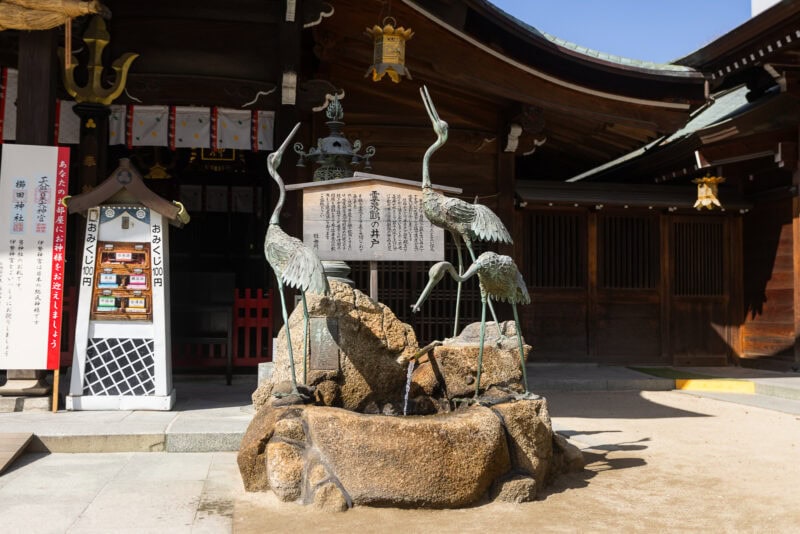
It is a designated cultural property of Fukuoka Prefecture, and standing next to it gives you an immediate sense of just how deep the roots of this place go. Just beside the main hall is the Fountain of Youth, decorated with three dancing cranes. Legend says that anyone who takes three sips from the fountain is granted longevity and eternal youth. I took my three sips without hesitation.
The Hakata Gion Yamakasa Floats
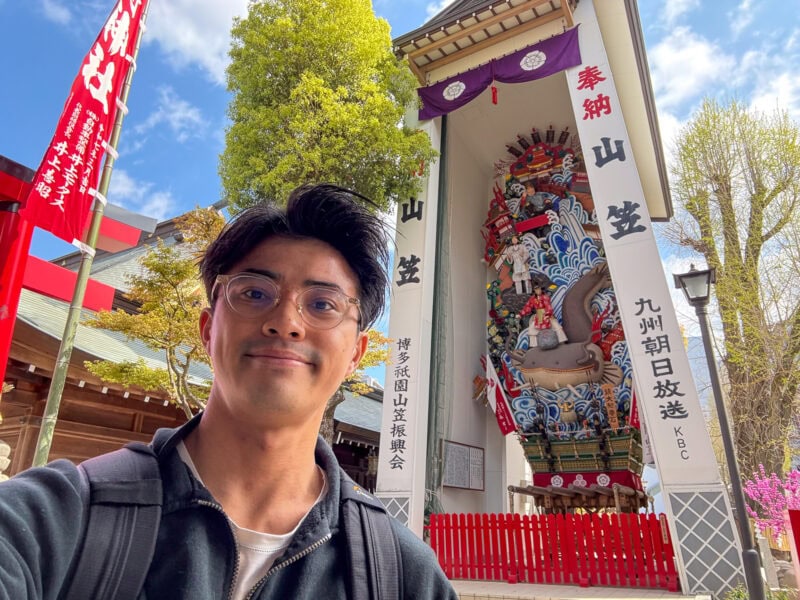
The highlight of the shrine for me was the kazariyama, the giant decorative floats from the Hakata Gion Yamakasa festival. These 13-meter-tall structures are adorned with vivid figures of samurai, legendary heroes, and scenes from history and folklore. They are displayed at the shrine year-round except in June.
In the past, these enormous floats were raced through the streets of Hakata. Today, however, the racing is done with the smaller, more maneuverable kakiyama floats during the festival itself. Standing next to a kazariyama and looking up at the detail on them is genuinely impressive. It gives context to the festival that no photograph quite captures.
The Chikaraishi and the Otafuku Mask
Behind the main hall are the Chikaraishi, or power stones, which were originally used for fortune-telling before evolving into a test of strength. The tradition is said to have begun when a sumo wrestler lifted one of the stones and dedicated it to the shrine.
One of the stones is carved with the characters for shiseki, or trial stone, and visitors are welcome to try lifting it. I gave it my best and failed completely, which apparently puts me in good company. If you visit on February 3rd for the Setsubun festival, look out for the enormous Otafuku mask at the entrance. It is said to be the largest theatrical mask of its kind in Japan.
Visitors pass through the mouth of the mask as part of the festival ritual, which is as memorable as it sounds. The shrine is also worth visiting in late March to April when the cherry blossoms fill the grounds. The combination of blossoms and the ancient shrine architecture is quietly beautiful.

Andy’s Travel Tips
These simple tips will help you when you visit.
- Take three sips from the Fountain of Youth next to the main hall. It takes about ten seconds and grants eternal youth according to legend, so there is really no reason to skip it.
- Try lifting the Chikaraishi trial stone behind the main hall. Most people cannot, but it is worth the attempt and makes for a good story either way.
- Visit between July and May to see the kazariyama floats. They are taken down in June ahead of the Hakata Gion Yamakasa festival, so plan accordingly if the floats are your main reason for visiting.
- Come on February 3rd for the Setsubun festival if your dates allow. Walking through the giant Otafuku mask at the entrance is one of the more unusual and fun shrine experiences in Fukuoka.
- Combine with the surrounding Hakata neighborhood since the shrine sits in the heart of the district. Canal City Hakata and Tochoji Temple are both within easy walking distance.
- The shrine is open 24 hours and free to enter, so an early morning visit before the area gets busy is a great option if you are already staying nearby in Hakata.
How to Get to Kushida Shrine
Subway
The city subway system offers the closest and most convenient drop-off points directly adjacent to the sacred grounds.
- Kushida-jinja-mae Station: Take the Nanakuma Line directly to this dedicated station. The shrine entrance is an easy 2-minute walk from Exit 1.
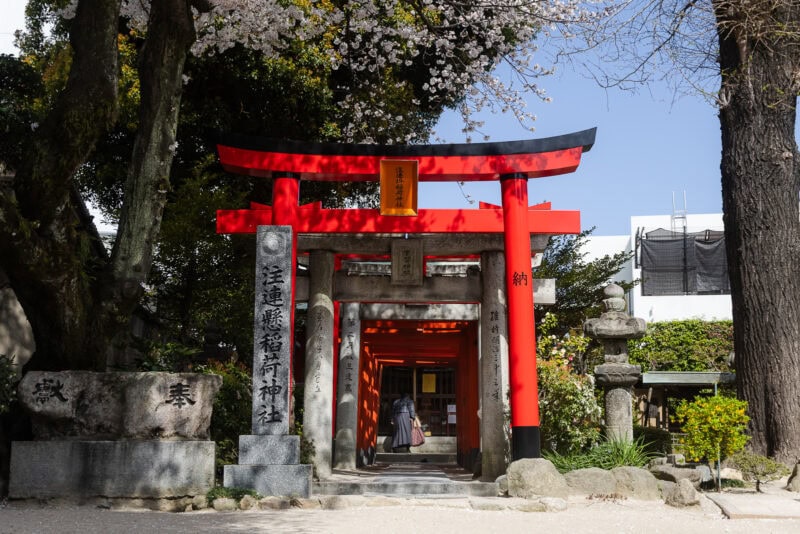
- Gion Station: If you are riding the Kuko Line, get off here. The walk down the street to the shrine’s main torii gate takes roughly 5 minutes.
- Nakasu-Kawabata Station: Also located on the Kuko Line, this stop places you at the northern end of the Kawabata Shopping Arcade. Walking through the covered arcade to reach the shrine takes about 7 minutes.
Bus
- Catch any bus heading toward the canal district and step off at the Canal City Hakata-mae or Gion-machi bus stops. The paths to the temple grounds take less than 5 minutes from either location.
Is Kushida Shrine Worth Visiting?
Yes, and I would put it near the top of any Fukuoka shrine list. It is free, centrally located in Hakata, and has more to discover than its modest footprint suggests. The Yamakasa floats alone are worth stopping for, with plenty of other unique spots that most shrines simply do not have. Even if you are not particularly interested in shrines, Kushida is the kind of place that tends to win people over once they are actually there.
More to Explore Nearby
Kushida Shrine sits in the heart of Hakata, Fukuoka’s historic downtown district. The city and its surroundings pack in history, food culture, and natural escapes.
- Yanagawa Canals — A charming canal town south of Fukuoka, best explored by traditional flat-bottomed boat.
- Hakata Port Tower — A distinctive red lattice tower on Hakata’s waterfront, offering free panoramic views over the city and bay.
- Fukuoka Yatai — Fukuoka’s iconic open-air food stalls, best experienced at night along the Nakasu and Tenjin riverbanks.
- Ohori Park — A beautiful lakeside park in central Fukuoka, ideal for a leisurely stroll or picnic.


