This post may contain affiliate links. Please read our disclosure policy.
Discover the sacred heart of northern Fukuoka at Munakata Taisha, a UNESCO World Heritage triad of shrines honoring the three goddesses who have protected travelers and seafarers for centuries.
Munakata Shrine (宗像大社) is the collective name for three Shinto shrines spread across Munakata City in northern Fukuoka Prefecture. Together, the three shrines, Hetsu Shrine, Nakatsu Shrine, and Okitsu Shrine, form the head shrine of several thousand Munakata shrines across Japan.
They enshrine the Three Munakata Goddesses: Takiribime, Tagitsuhime, and Ichikishima-hime, deities said to protect travelers and seafarers. That tradition goes back centuries. During those times, Munakata was a vital hub on the sea routes connecting Japan with the rest of Asia.
The shrines were inscribed as a UNESCO World Heritage Site in 2017, recognizing their exceptional cultural and historical significance. In addition, a visit here feels genuinely different from the more heavily touristed shrines of Kyoto or Nara.
What Is Munakata Shrine
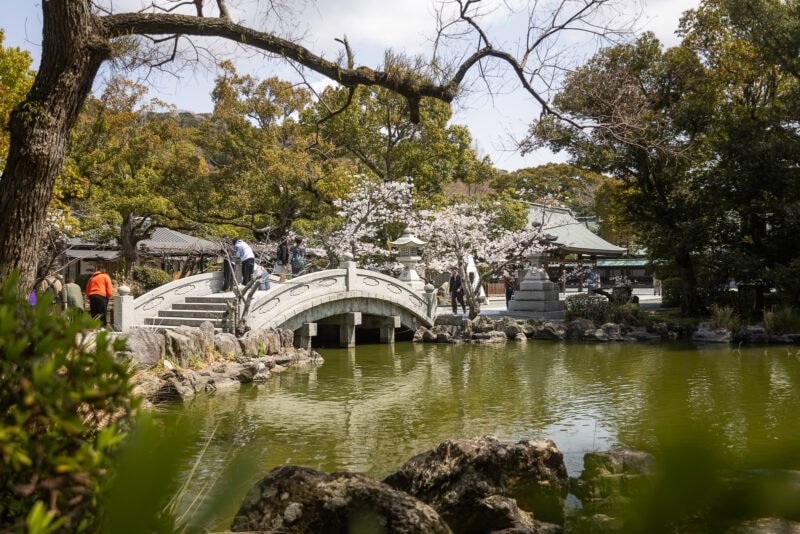
Munakata Shrine, or Munakata Taisha, is a UNESCO World Heritage Shinto complex comprising three individual shrines, each located in a different setting: one on the mainland, one on a nearby island, and one on a remote sacred island that is entirely off-limits to the public. The three shrines function together as a single religious entity. Furthermore, they collectively represent one of the oldest and most historically significant shrine complexes in Japan, with roots reaching back to at least the 4th century.
Quick Facts
- Located in Munakata City, northern Fukuoka Prefecture, about 30 minutes from Hakata Station by train
- Inscribed as a UNESCO World Heritage Site in 2017 as part of “Sacred Island of Okinoshima and Associated Sites in the Munakata Region”
- The three shrines enshrine the Three Munakata Goddesses, protectors of travelers and seafarers
- Over 80,000 ancient relics unearthed on Okinoshima, many designated as National Treasures
- Okinoshima Island is strictly off-limits to the public; only Shinto priests are permitted entry
My Experience at Munakata Shrine
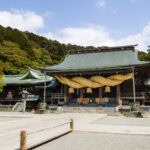
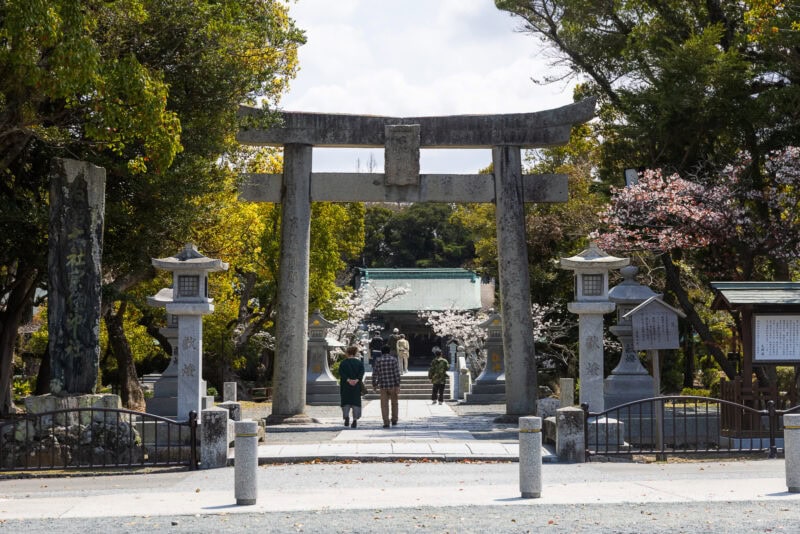
Of the three shrines, I was only able to visit Hetsu Shrine on the mainland during my trip, but it was well worth making the journey from Fukuoka. The shrine grounds were covered in cherry blossoms when I arrived, which made the already beautiful architecture feel even more special. The golden roof of the main hall stands out against the surrounding trees, and the whole complex has a calm, unhurried atmosphere that is rare for a site of this historical stature.
Okitsumiya Shrine and Okinoshima Island
The most historically significant of the three shrines is Okitsumiya, located on the remote island of Okinoshima about 50 kilometers off the Kyushu coast. The island is entirely closed to the public, with only Shinto priests permitted to enter in order to protect its sanctity.
What makes Okinoshima extraordinary is what has been found there: over 80,000 ancient relics and sacred treasures dating back to the 4th through 9th centuries, many of which are designated National Treasures of Japan. These artifacts reveal the island’s central role in the historic sea trade routes between Japan, the Korean Peninsula, and mainland China.
Nakatsu Shrine on Oshima Island
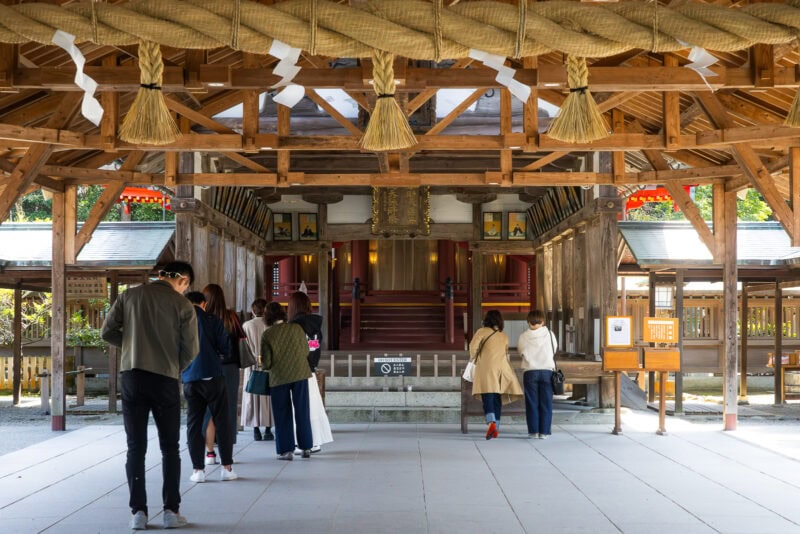
Nakatsu Shrine sits on Oshima Island, accessible by a short ferry ride from the Kyushu coast. Sacred rituals were originally held on nearby Mount Mitake. While the current shrine buildings were established at the mountain’s base around the 16th century, you can still climb a short set of stone steps to reach the peaceful grounds with views over the sea.
A hiking trail behind the shrine leads up to the summit of Mount Mitake for those who want to go further. It is a quieter, more contemplative version of the shrine experience compared to the mainland, but it requires more planning to catch the ferry.
Hetsu Shrine and the Shinpokan Treasure House
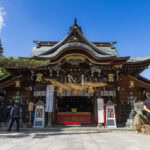
Hetsu Shrine on the Fukuoka mainland is the largest, most accessible, and most visited of the three. The shrine itself is free to enter, and the architecture is striking, particularly the main hall’s distinctive golden roof.
When I visited during cherry blossom season, the surrounding grounds were painted pink. Seeing shrines surrounded by the pink blossoms always excites me. It has a quintessential Japanese aesthetic, given the importance of both shrines and the cherry blossoms in Japanese culture.
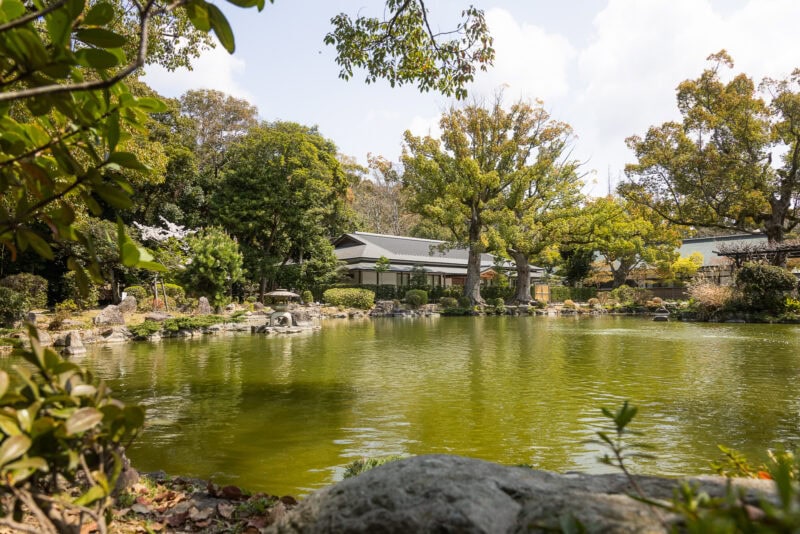
Inside the grounds is the Shinpokan Museum, a three-story treasure house holding thousands of offerings and artifacts unearthed on Okinoshima and the surrounding area. Admission is 800 yen, which is worth a visit if you are into the shrine’s history.
Seeing the actual relics in person, knowing they came from a sacred island that has been closed to the public for centuries, gives them a significance that a photograph cannot convey.

Andy’s Travel Tips
These simple tips will help you when you visit.
- Consider renting a car if you want to visit more than just Hetsu Shrine. Public transport to the area is manageable but limited, and a car gives you the flexibility to visit Nakatsu Shrine on Oshima and explore at your own pace.
- Visit Hetsu Shrine during cherry blossom season in late March to early April. The combination of the golden-roofed shrine and the surrounding blossoms is beautiful.
- Pay the 800 yen for the Shinpokan Treasure House. The collection of relics from Okinoshima is rare and remarkable, and you will not find anything quite like it elsewhere in Japan.
- Check the ferry schedule to Oshima Island in advance if you plan to visit Nakatsu Shrine. Sailings are not constant and missing a ferry can significantly disrupt your day.
- The shrine grounds open at 6:00 am if you want a quieter, early morning visit before day-trippers arrive from Fukuoka.
Is Munakata Shrine Worth Visiting?
Yes, especially if you want a shrine experience that feels genuinely historic rather than heavily touristed. Hetsu Shrine alone makes the trip from Fukuoka worthwhile, and the Shinpokan Treasure House adds real depth to the visit.
The fact that the most sacred part of the complex, Okinoshima, is entirely off-limits to the public only adds to the sense of reverence surrounding the whole place. For anyone with an interest in Japanese history, ancient maritime culture, or Shinto tradition, Munakata Shrine deserves a spot on your Fukuoka itinerary.
More to Explore Nearby
Munakata Shrine sits along the rugged northern coast of Fukuoka Prefecture, with the vibrant city of Fukuoka just a short drive south offering everything from ancient shrines to legendary ramen.
- Hakata Port Tower – Take in retro views over Hakata Bay from this charming landmark — a fitting complement to Munakata’s own coastal setting.
- Dazaifu Tenmangu – Continue your shrine-hopping at one of Kyushu’s most celebrated Shinto shrines, dedicated to the god of learning and surrounded by plum trees and historic grounds.
- Kyushu National Museum – Dive deeper into the region’s rich cultural heritage at Japan’s fourth national museum, right next door to Dazaifu Tenmangu.
- Fukuoka Yatai – Wind down the day at Fukuoka’s beloved open-air yatai stalls, where locals and visitors gather for ramen, yakitori, and cold drinks under the night sky.