This post may contain affiliate links. Please read our disclosure policy.
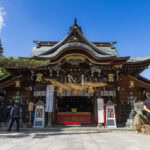
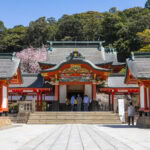
With its seasonal blooms, ancient sacred objects, and a golden sunset path that stretches to the horizon, Miyajidake Shrine is one of Fukuoka’s most sacred and visually stunning sites.

Miyajidake Shrine (宮地嶽神社) is the head shrine of the many Miyajidake shrines found throughout Japan. It is tucked into Fukutsu City just north of central Fukuoka. Founded over 1,800 years ago, the shrine is dedicated to Empress Jingu, also known as Okinagatarashi Hime no Mikoto. She is the goddess of good fortune, victory, and prosperous business.
My visit happened to fall during cherry blossom season. The combination of the blossoms, the ancient grounds, and the scale of the sacred objects made it memorable. It was one of the more memorable shrine visits I had during my trip around Kyushu. Even outside of cherry blossom season, there is enough here to make the trip from Fukuoka well worthwhile.
What Is Miyajidake Shrine
Miyajidake Shrine is renowned for its rich Shinto traditions, housing the largest ancient stone burial mound in Japan alongside three sacred objects of staggering scale. It is also famous for a natural, bi-annual solar alignment known as the “Path of Light,” which draws thousands of visitors each year. The shrine grounds are open 24 hours and free to enter, making it exceptionally accessible for travelers.
My Experience at Miyajidake Shrine
I came here as part of a day trip from Fukuoka, combining it with a visit to Munakata Shrine further north. I would recommend this as a natural pairing if you are renting a car. The shrine sits at the top of a long main boulevard that runs straight toward the sea. Even without the Path of Light in full effect, it offers a spectacular view that few other shrines do.
The Three Sacred Objects

The shrine is home to three sacred objects that are difficult to miss once you are on the grounds. These are a giant taiko drum, an enormous bell, and the shimenawa rope that hangs in front of the main shrine building. The rope is genuinely staggering in person. At 3 tons, 11 meters long, and 2.6 meters in diameter, it is one of the largest in Japan. It is also replaced every year with the help of around 1,500 people.
Standing in front of it and trying to understand the logistics of that process is oddly fascinating. If you want to maximize your visit for luck, there is a tradition of visiting all eight shrines around the grounds after the main building, said to help make dreams come true.
The Path of Light

The Path of Light is the phenomenon that puts Miyajidake Shrine on most people’s radar. Twice a year, in late February and late October, the setting sun aligns perfectly with the shrine’s main boulevard, bathing the full 1.5-kilometer stretch all the way to the ocean in a deep golden glow.
It is a genuinely rare and striking sight, and a small festival is held during both windows where you can purchase special shuin stamps commemorating the event. If you can time a Fukuoka visit around these dates, it is worth building your itinerary around them. While I wasn’t able to see it, you’ll find many pictures of it online and even around the shrine.
Seasonal Beauty and Tsuitachi Mairi
My visit during cherry blossom season made the grounds feel especially alive, but the shrine has something beautiful in every season. Peonies, azaleas, and wisteria follow the blossoms into spring and early summer. The grounds then turn a fiery red and orange in autumn.
On the 1st of every month, the shrine holds the Tsuitachi Mairi ritual, beginning with a First Prayer Festival at midnight. The paths are filled with souvenir and food stalls that stay open late, drawing worshippers throughout the day and into the evening. It is a very different atmosphere from a regular visit and is worth timing if your dates line up.


Andy’s Travel Tips
These simple tips will help you when you visit.
- Rent a car and combine Miyajidake Shrine with Munakata Shrine on the same day. Both are north of Fukuoka and pair naturally as a full-day itinerary. Kokura Castle is also reachable if you want to extend the trip further.
- Check the Path of Light dates before planning your visit. It typically occurs for a few days in late February and late October. Visiting during this window turns an already good trip into something genuinely special.
- Visit on the 1st of the month if you want to experience the Tsuitachi Mairi atmosphere, with food stalls, worshippers, and a livelier energy than a regular visit.
- Go through all eight smaller shrines on the grounds after the main building. It adds about 20 to 30 minutes but gives you a fuller sense of the complex and, according to tradition, helps make dreams come true.
- The shrine is open 24 hours and free to enter, so an early morning or late evening visit is worth considering if you want the grounds to yourself.
How to Get to Miyajidake Shrine
Train
The train network brings you remarkably close to the shrine grounds, making it a smooth excursion from major cities.
- From Hakata Station in Fukuoka: Take the JR Kagoshima Line (Local or Rapid) north to Fukuma Station. The rapid train makes the run in about 25 minutes.
- Once at Fukuma Station, you will need to complete the last leg via a short bus ride (see below) or walk.
Bus
- From Fukuma Station: Walk to the bus stop outside the station’s exit and board a Nishitetsu Bus bound for Tsuyazaki Pier (Tsuyazaki-ko).
- Ride the bus for approximately 5 minutes and get off at the Miyajidake-jinja-mae stop. The shrine entrance sits right across the street.
Car
- From central Fukuoka: Take the Kyushu Expressway heading north and exit at the Koga IC. Follow Route 3 toward Fukutsu and then switch to Route 495 toward the coast. The drive takes about 40 to 50 minutes depending on city congestion.
Is Miyajidake Shrine Worth Visiting?
Yes, and I would not limit it to people who are especially interested in shrines. The Path of Light phenomenon, the scale of the sacred objects, and the seasonal beauty of the grounds give it a character that goes beyond a standard shrine visit. It is free, open 24 hours a day, and easy to combine with a visit to Munakata Shrine as a day trip from Fukuoka.
If you are spending more than a couple of days in the city and want to get a feel for the broader Fukuoka Prefecture, Miyajidake Shrine should be on the list.
More to Explore Nearby
- Kyushu National Museum — A world-class museum in Dazaifu exploring Japan’s deep cultural connections with the rest of Asia.
- Munakata Shrine — A UNESCO-listed shrine complex just along the coast, with a history stretching back to Japan’s earliest maritime trade routes.
- Uminonakamichi Seaside Park — A sweeping coastal park on a narrow peninsula east of Fukuoka city, known for seasonal flowers and ocean breezes.
- Dazaifu Tenmangu — One of Japan’s most celebrated shrines, dedicated to the god of learning and surrounded by plum trees south of the city.