This post may contain affiliate links. Please read our disclosure policy.
Hokokuji Temple in Kamakura is known for its lush bamboo grove, historic gardens, and peaceful teahouse, making it one of the city’s most enchanting escapes.

A Quiet Forest Sanctuary
Kamakura invites slow travel, and Hokokuji Temple embodies that spirit. Founded in 1334 as the family temple of the Ashikaga clan, Hokokuji carries a strong link to Japan’s medieval history. Today, it is best known as the “Bamboo Temple,” thanks to its grove of over 2,000 towering stalks.
Walking the narrow paths beneath the bamboo canopy, we felt embraced by filtered sunlight and the gentle rustle of leaves. Unlike Kyoto’s Arashiyama grove, which can be crowded, Hokokuji feels intimate and serene. It’s an experience best savored at an unhurried pace.
What to See and Do at Hokokuji
Walk Through the Bamboo Grove
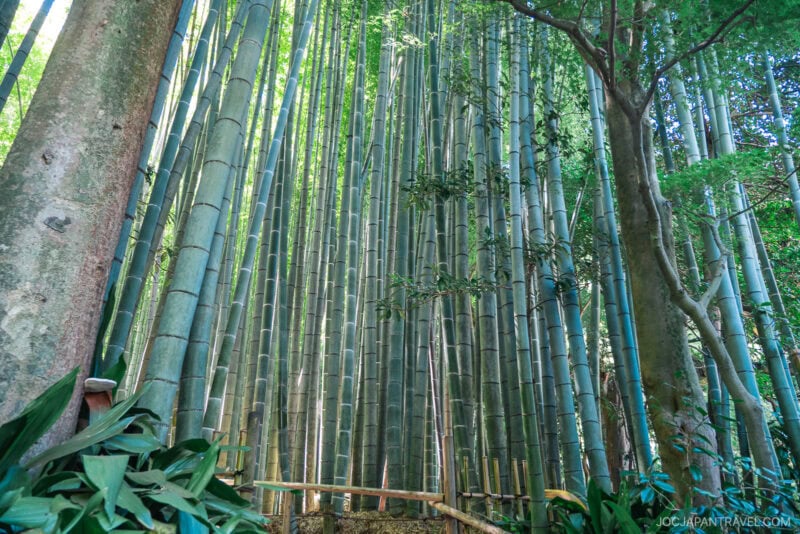
The bamboo forest is the highlight of Hokokuji. Gravel paths weave through the grove, and the soft green light gives the entire space an otherworldly glow. We paused often, taking photos and letting the sound of swaying leaves sink in.
Sip Matcha at the Teahouse
Tucked into the grove is a small teahouse where visitors can enjoy frothy matcha paired with a seasonal sweet.
Visit the Dry Landscape Garden
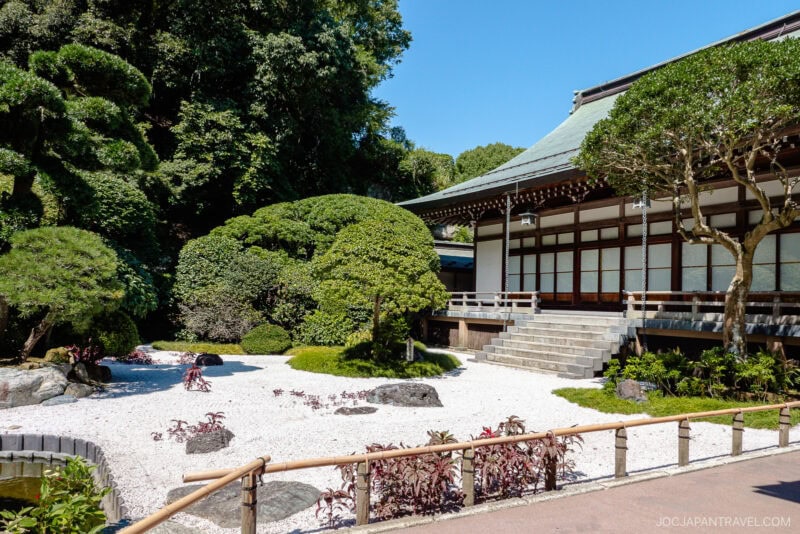
Hokokuji also has a karesansui, or dry landscape garden. Its arrangement of stones and raked gravel is designed to inspire meditation. We found it calming to sit quietly here and take in the patterns.
Sunday Zazen Meditation
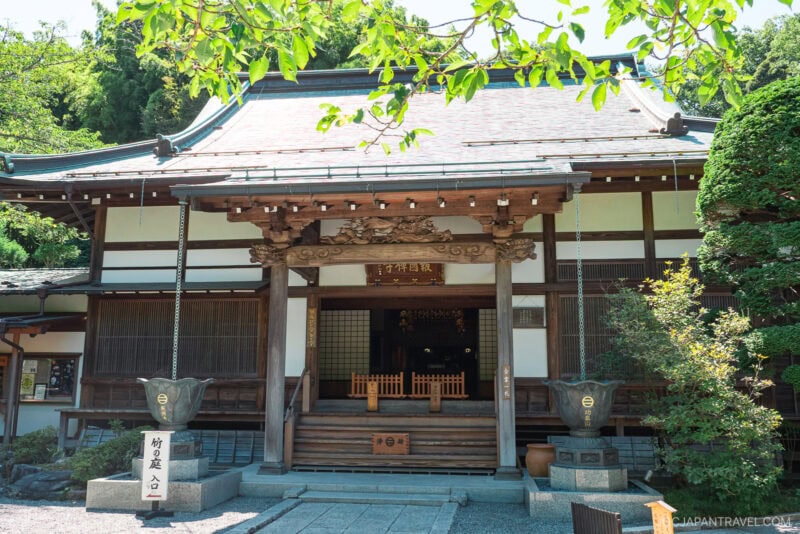
On select Sunday mornings, Hokokuji holds zazen (seated meditation) sessions inside the temple hall. These are open to visitors of all experience levels, but it’s best to check the schedule in advance and arrive in silence.
How to Get to Hokokuji Temple (報国寺)
By Train and Bus
From Kamakura Station (East Exit), take a Keikyu Bus bound for Kamakura Reien or Daito-no-miya and get off at Jomyoji. The ride takes about 10 minutes, followed by a 3-minute walk to the temple.
By Taxi
A taxi from Kamakura Station takes around 10 minutes. This is a good option if you are short on time or visiting with kids.
Pro Tip: Aim for mid to late afternoon when the low light filters through the bamboo for soft, beautiful photos.
Is Hokokuji Temple Worth Visiting?

We think Hokokuji is one of Kamakura’s most unique temples. Between its historic roots, intimate bamboo grove, and teahouse experience, it offers a quiet retreat that feels worlds away from the busy streets. If you’re looking for a place to reflect and recharge, Hokokuji is absolutely worth adding to your itinerary.
More to Explore Nearby
The tranquility of Hokoku-ji’s unique bamboo grove makes it a peaceful spiritual stop, placing you near Kamakura’s largest shrine, its iconic Great Buddha, and other essential historical temples.
- Kamakura Kencho-ji – Visit the city’s oldest Zen Buddhist temple, featuring beautiful Zen gardens and architecture.
- Tsurugaoka Hachimangu – Discover the city’s most important Shinto shrine, central to Kamakura’s history and downtown core.
- Kamakura Kotoku-in (Great Buddha) – Visit this monumental outdoor bronze statue of Amida Buddha, the most famous and recognizable symbol of Kamakura.
- Hase-dera Temple – Explore this prominent temple famous for its massive wooden Kannon statue and beautiful, seasonal ocean-view gardens.