This post may contain affiliate links. Please read our disclosure policy.
Hasedera Temple in Kamakura blends history, gardens, and spirituality, with a towering Kannon statue, hillside trails, and breathtaking coastal views.
A Temple of Flowers and Mercy
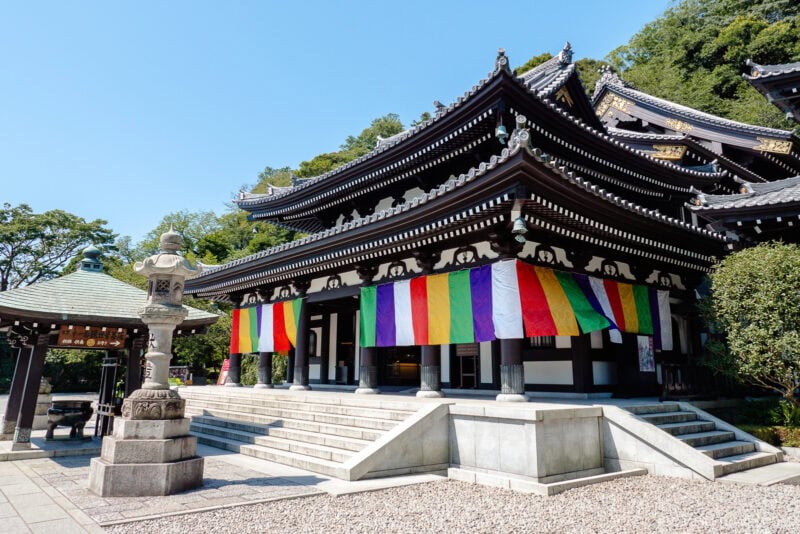
Hasedera is one of Kamakura’s most striking temples, home to the towering eleven-headed Kannon, the Goddess of Mercy. Carved from camphor wood and gilded in gold, the statue rises 9.18 meters high, making it one of Japan’s largest wooden Buddhist figures. Photography isn’t allowed inside the hall, but standing before Kannon leaves a lasting impression that feels both intimate and awe-inspiring.
The temple grounds stretch across a hillside, with walking paths, gardens, hidden caves, and coastal viewpoints. It’s the kind of place where history, art, and nature come together in every corner.
What We Loved About Hasedera
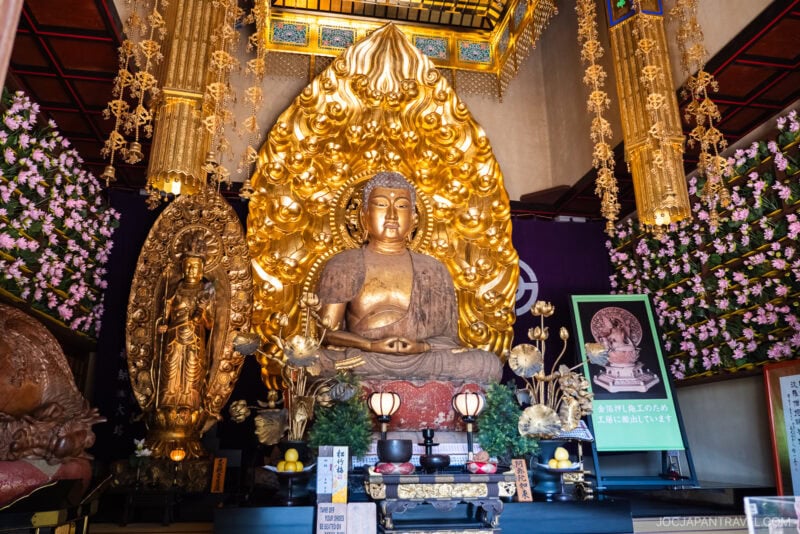
Seasonal Gardens and Nature Paths
We visited in early summer, when hydrangeas filled the slopes in shades of blue, purple, and pink. Stone paths lined with moss and shady trees made the walk feel magical. Each season brings new beauty, from cherry blossoms in spring to fiery maple leaves in autumn.
Thousands of Jizo Statues
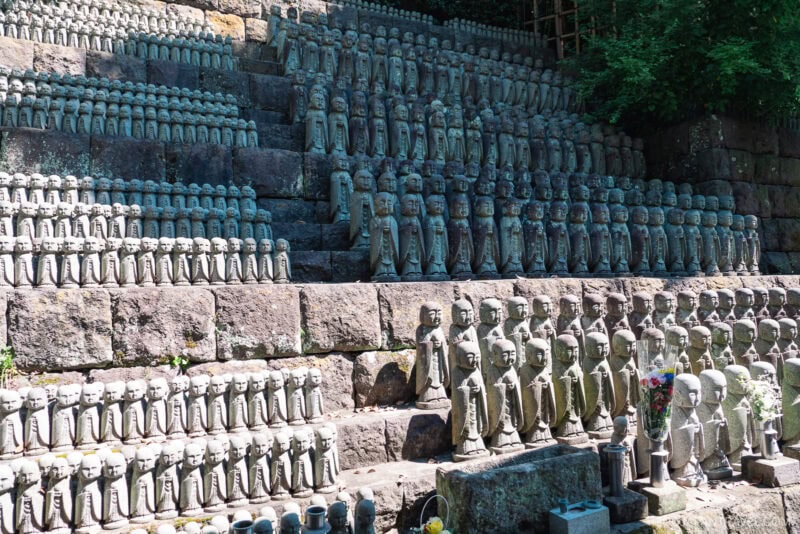
All around the temple, small stone figures of Jizo Bosatsu, the guardian of children and travelers, quietly watch over the grounds. Over the centuries, more than 50,000 have been placed here, many in memory of children. With their red bibs and hats, the statues add a deeply personal and emotional layer to the visit.
A Diverse Temple Complex
Hasedera is more like a small village than a single temple. Highlights include the main Kannon-do Hall, the Amida-do Hall, a bell tower, koi pond, tea shop, and restaurant. The Kannon Museum displays Buddhist art and historical treasures, offering more insight into the temple’s legacy.
Hillside Views of Kamakura

From the temple’s observation deck, we enjoyed sweeping views of Kamakura and Yuigahama Beach. The late afternoon light made the coastline shimmer. It’s a view that captures both Kamakura’s history and its seaside charm.
The Benzaiten Grotto
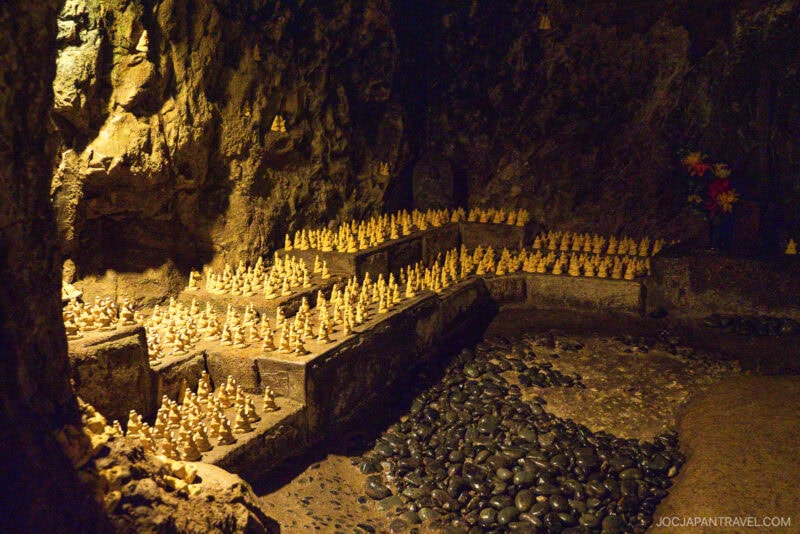
Tucked into the hillside is the Benzaiten Grotto, a small cave dedicated to Benzaiten, goddess of water, fortune, and music. Walking through the dim tunnels lit by candles felt like stepping into a hidden world. Visitors often leave small Jizo statues here for protection and remembrance.
How to Get to Hasedera Temple (長谷寺)
By Train
From Kamakura Station, ride the Enoden to Hase Station (長谷駅). The ride takes about 5 minutes. From Hase Station, walk 5 to 7 minutes uphill to the temple gate.
By Car
Driving is not recommended. Parking near Hasedera is limited and fills quickly. Use coin lots or park near Kamakura Station and ride the Enoden.
Pro Tip: Kotokuin is a 10-minute walk from Hasedera. Combine both in one visit.
Is Hasedera Temple Worth Visiting?
Hasedera is one of Kamakura’s must-see temples. Between the giant Kannon statue, seasonal gardens, Jizo figures, and stunning views, it offers something for everyone. The mix of history, spirituality, and natural beauty makes it one of the most memorable stops in the region.
More to Explore Nearby
Hase-dera’s impressive grounds, towering Kannon statue, and scenic location put you near the best of Kamakura’s iconic landmarks, deep history, and unique regional cuisine.
- Kamakura Kotoku-in (Great Buddha) – Visit this iconic landmark nearby, the monumental outdoor bronze statue of Amida Buddha.
- Tsurugaoka Hachimangu – Discover the city’s most important Shinto shrine, central to the city’s history and connected by a long approach road lined with cherry trees.
- Kamakura Kencho-ji – Visit the city’s oldest Zen Buddhist temple, featuring beautiful Zen gardens and architecture.
- Hokokuji Temple – Find tranquility at the unique “Bamboo Temple,” famous for its beautiful grove and small tea house where you can enjoy matcha.