This post may contain affiliate links. Please read our disclosure policy.
At Natadera Temple in Kaga, you’ll find dramatic cliffs, mossy gardens, and a long history of mountain worship. It’s one of Ishikawa’s most serene and scenic destinations.
What Makes Natadera Temple Special
Natadera Temple was founded in 717 by the monk Taicho Daishi, who introduced Hakusan mountain worship to the region. For more than 1,300 years, it has been a place where Shinto and Buddhist traditions meet. The temple honors Kannon, the goddess of mercy, and remains one of Kaga’s most important spiritual sites.
Highlights of the temple include:
- Spiritual Legacy: A pilgrimage site tied to Mt. Hakusan, one of Japan’s Three Sacred Mountains.
- Dramatic Setting: Mossy paths, meditation caves, and wooden halls built against the cliffside.
- Architectural Craftsmanship: Several halls were built without nails, using traditional joinery techniques.
- Kannon Statue: Inside the Kondo Keouden, visitors can see a 7.8-meter-tall statue of Kannon (photography is not allowed).
Walking Through Natadera’s Grounds

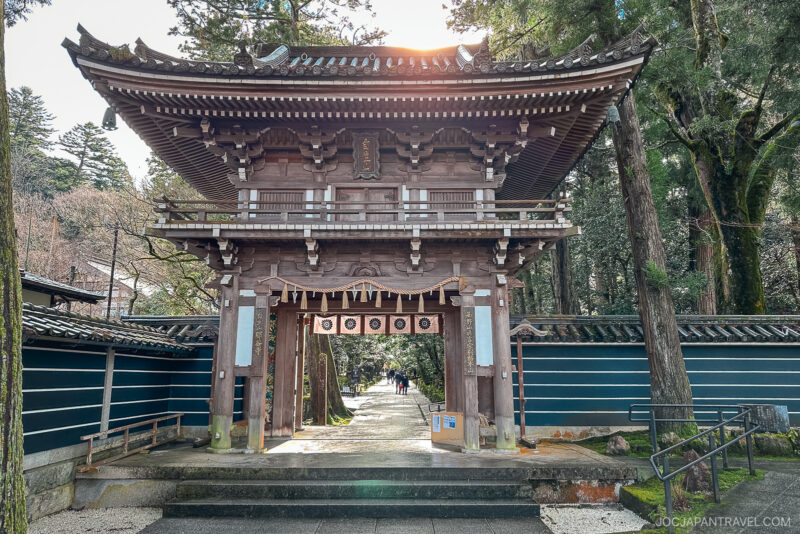
We’ve visited many temples across Japan, but Natadera truly feels special. The moment we passed through the gate, the atmosphere seemed almost otherworldly. The stone path winds through maple trees, cliffs, and koi-filled ponds, giving a quiet sense of discovery at every turn.
The meditation caves carved into the mountainside caught our attention. While visitors aren’t allowed inside, their presence adds a mysterious depth to the temple’s long spiritual history.
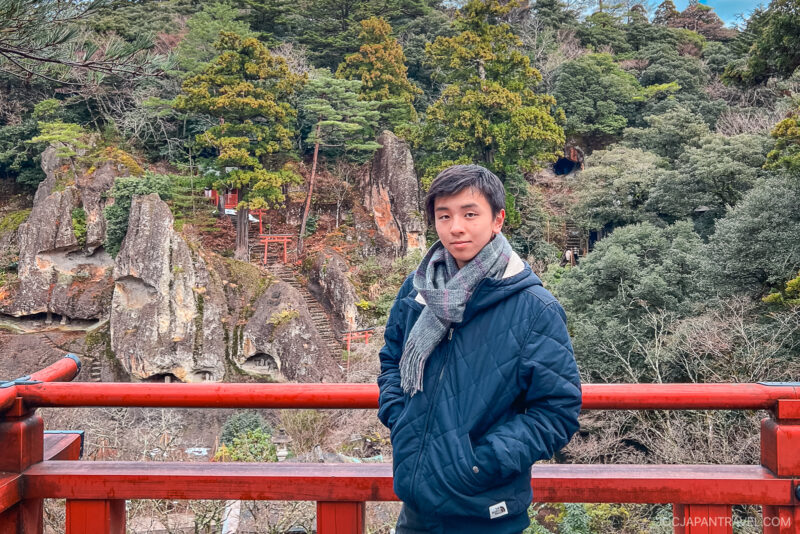
The main hall, partly built into the rock face, seems to cling to the mountain itself. We paused on the red arched bridge nearby, which offered one of the best vantage points of the grounds. Our visit concluded at the Kondo Keouden, where the massive Kannon statue stood in serene stillness.
The temple grounds are quite extensive, so plan to spend at least 1 to 1.5 hours exploring.
A Sacred Reminder
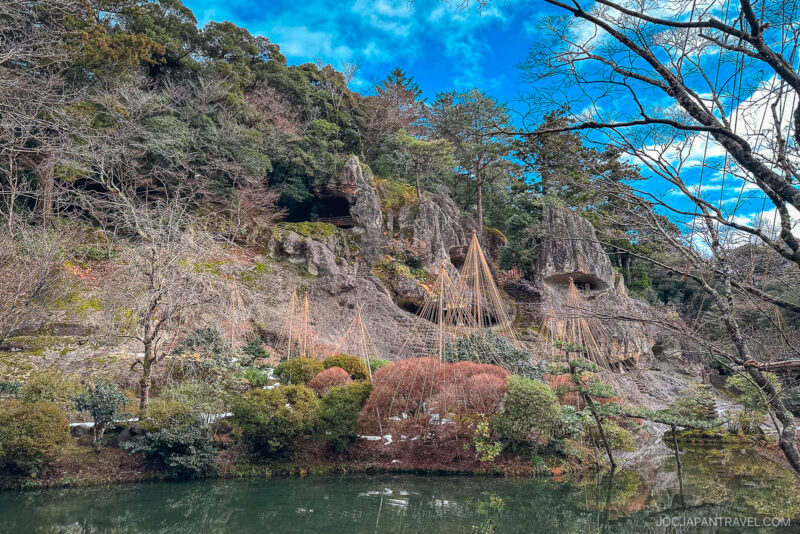
The caves at Natadera symbolize rebirth and Mother Earth. Because of their spiritual significance, visitors may not enter them. Certain cliffside stairways are also closed for safety and preservation. Walking here is less about sightseeing and more about appreciating a living sacred site.
How to Get to Natadera Temple (那谷寺)
By Train and Bus
From Kagaonsen Station, take the Canbus Mountain Route to Natadera. The ride takes about 20 minutes. Services may be limited in off-peak seasons, so check the latest timetable.
By Car
Natadera is 15 to 20 minutes from Yamashiro Onsen, Yamanaka Onsen, and Katayamazu Onsen.
By Taxi
The ride from Kagaonsen Station takes about 15 minutes.
Pro Tip: Arrive early for softer light and fewer visitors. In autumn, allow extra time for traffic and parking.
Is Natadera Temple Worth Visiting?
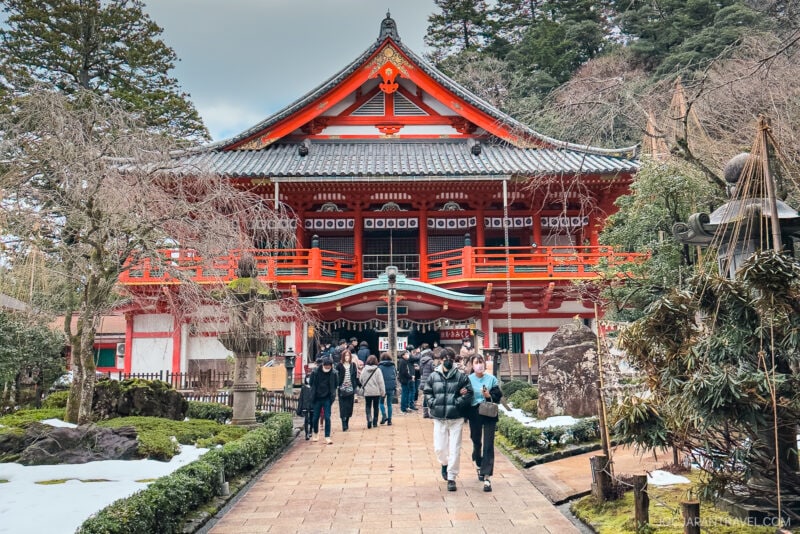
Absolutely! Natadera Temple is worth including in your Kaga itinerary as one of those remarkable temples.
The combination of dramatic cliffs, sacred caves, and centuries of spiritual tradition makes it more than just a temple. History lovers, nature enthusiasts, and photographers alike will all find something here that leaves a lasting impression.
More to Explore Nearby
Natadera Temple is a highly spiritual and scenic site renowned for its architecture built into dramatic rock caves and its beautiful seasonal landscapes. Located near the Kaga Onsen area, the surrounding region offers relaxation, traditional crafts, and the grand cultural heart of Ishikawa Prefecture.
- Kaga Onsen Travel Guide – Explore the traditional Kaga Hot Spring Village, comprised of four historic onsen towns (Yamanaka, Yamashiro, Katayamazu, Awazu), each offering a unique atmosphere for relaxation.
- Yunokuni no Mori – Visit this nearby traditional craft village where you can participate in hands-on workshops and experience various local arts, including Kutani ceramics and gold leaf application.
- Kanazawa Travel Guide – Journey north to the capital of Ishikawa Prefecture, a cultural gem famous for its beautifully preserved geisha districts, samurai neighborhoods, and traditional craftsmanship.
- Eihei-ji Temple – Head south into neighboring Fukui Prefecture to visit the prestigious head temple of the Soto Zen school, where the profound and tranquil life of practicing Zen monks can be observed.