This post may contain affiliate links. Please read our disclosure policy.
Explore Chionin, Kyoto’s 800-year-old head temple of Pure Land Buddhism, home to Japan’s largest wooden temple gate, the largest bell in the country, and beautifully preserved gardens in the historic Higashiyama district.
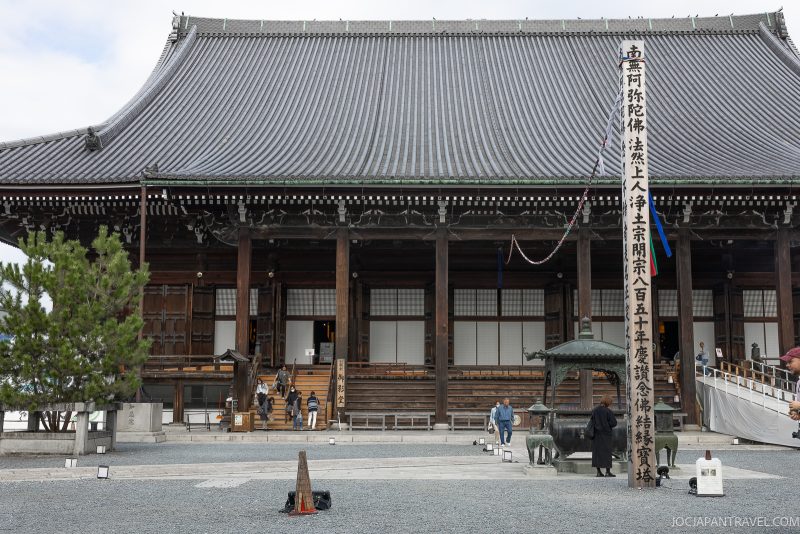
Located in Kyoto’s Higashiyama district between Maruyama Park and Gion, Chionin (知恩院) serves as the grand head temple of the Jodo (Pure Land) sect of Buddhism. Originally built in 1234 by disciples of the priest Honen Shonin (1133–1212) to honor his teachings, the complex expanded significantly under Tokugawa patronage in the centuries that followed.
Entry to the main grounds is free and includes key historic sites like the giant Sanmon gate, Mieido Hall, Amidado Hall, Gongendo Mausoleum, and the Daishoro bell tower (with the Yuzen and Hojo gardens requiring separate tickets). When I first visited in 2024, the sheer scale of the grounds genuinely took me aback, I completely underestimated how much there was to explore.
Quick Facts
- Head temple of the Jodo (Pure Land) sect of Japanese Buddhism
- Founded by Honen Shonin (1133–1212); original temple built 1234 by his disciples
- The Sanmon gate stands 24 meters tall and 50 meters wide, the largest wooden temple gate in Japan
- The Daishoro bell is the largest in Japan: 3 meters tall and over 70 tons
- The Sanmon, Mieido Hall, and Daishoro are all designated National Treasures
- Main grounds: 9:00–16:30 (entry until 15:50). Yuzen Garden: 9:00–16:00. Hojo Garden: 9:00–15:50. Irregular closures.
My Experience at Chionin
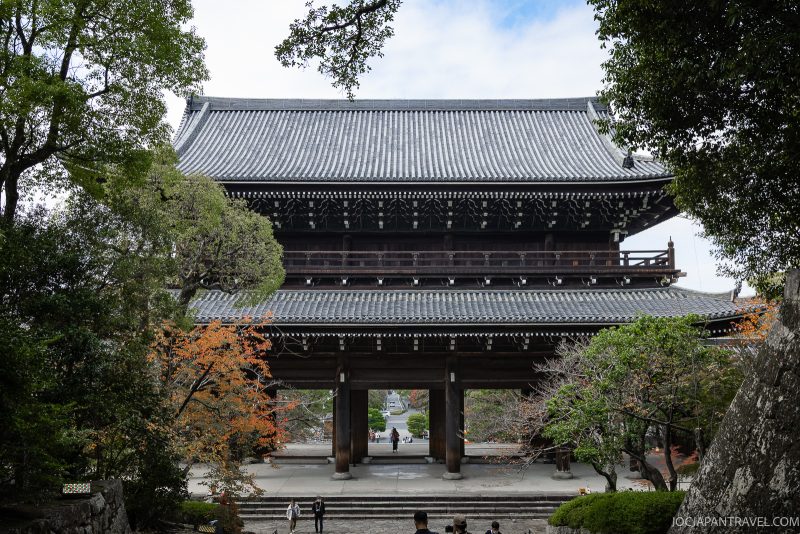
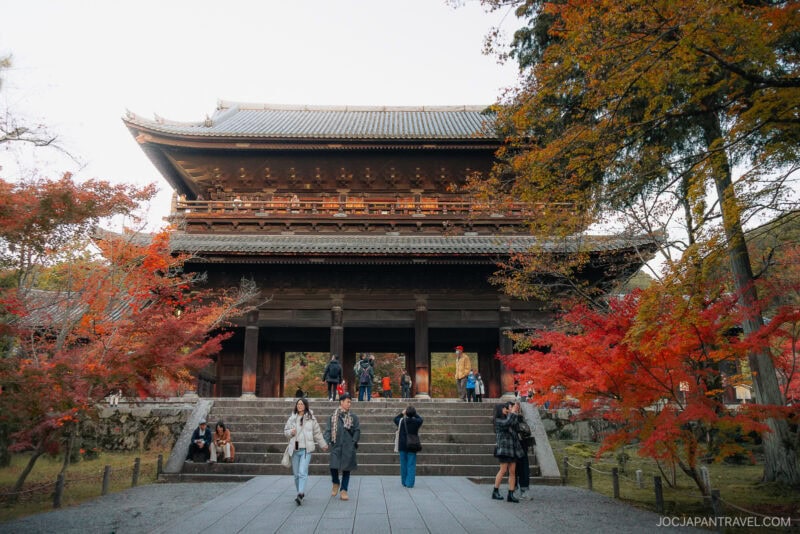
I entered from the northern side and only encountered the Sanmon gate on my way out. That was a mistake. Built in the 1600s, the gate stands 24 meters tall and 50 meters wide, making it the largest wooden temple gate in Japan.
Photographs do not capture its scale. Standing beneath it, the sheer weight of the structure above you is genuinely striking. Enter from the east side if you can, so the gate frames your arrival rather than your departure.
Yuzen Garden and Hojo Garden
Yuzen Garden sits next to the Sanmon and divides into two sections. One draws water from a Higashiyama spring. The other follows the karesansui dry rock garden style. The contrast between the two within a single garden makes it worth the entry.
Behind Mieido Hall is Hojo Garden, built alongside the priest’s living quarters. The monk Gyokuen designed it during the early Edo period (1600–1868) using the chisen kaiyushiki style, meaning it centers on a pond and unfolds as you walk around it. It is quieter than Yuzen and rewards taking your time.
Mieido Hall, Amidado, and the Gongendo Mausoleum
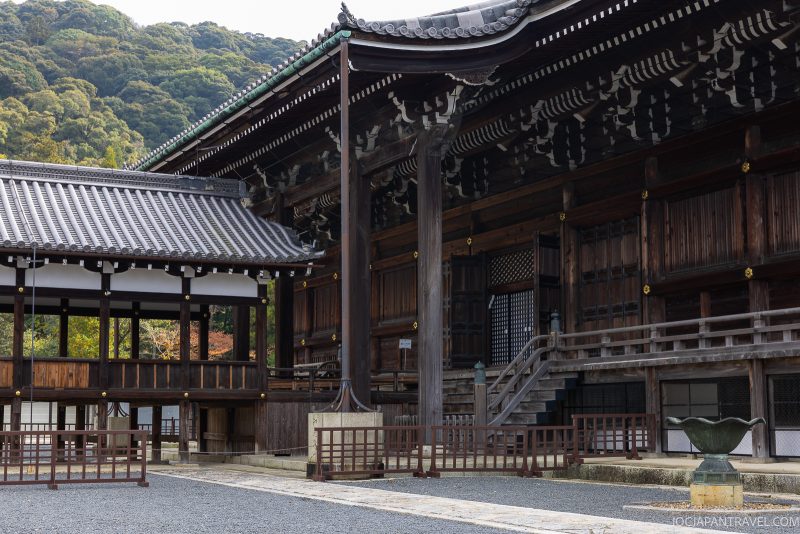
Mieido Hall sits at the heart of the grounds and houses a statue of Honen, the temple’s founder. His remains rest in a mausoleum at the far end of the complex. Nearby, Amidado Hall holds a statue of Amida Buddha, the central figure of Jodo Buddhism.
The Gongendo Mausoleum enshrines three generations of Tokugawa Shoguns who shaped the temple’s development: Tokugawa Ieyasu (1543–1616), Tokugawa Hidetada (1579–1632), and Tokugawa Iemitsu (1604–1651).
The Daishoro Great Bell Tower
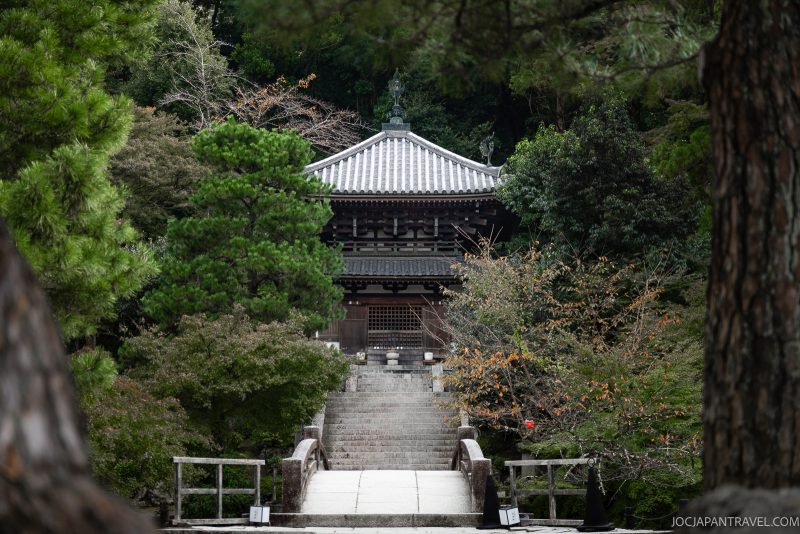
The Daishoro was my personal highlight. It houses the largest bell in Japan, standing 3 meters tall and weighing over 70 tons. A single monk cannot ring it. It takes a coordinated team of 17 monks to strike it, which they do every New Year’s Eve as part of the joya no kane ceremony. Seeing the bell in person makes the logistics obvious. It is enormous. The Daishoro, Mieido Hall, and the Sanmon all carry National Treasure designation.

Andy’s Travel Tips
These simple tips will help you when you visit.
- Enter through the Sanmon gate on the east side. I came in from the north and missed it until leaving. Arriving through Japan’s largest wooden temple gate sets the tone for the whole visit.
- Visit both gardens if you have time. Yuzen and Hojo are completely different in style and each requires separate admission. Together they show two distinct approaches to Japanese garden design.
- Combine with Maruyama Park, Yasaka Shrine, and Gion. All three sit within a short walk of Chionin, making this one of the easiest temples in Kyoto to slot into a Higashiyama walking day.
- Check the last entry time carefully. The main grounds stop admitting visitors at 15:50, and Hojo Garden closes at the same time. Arriving after 15:00 leaves you rushed.
- Visit on New Year’s Eve if you can. The joya no kane bell ringing at the Daishoro is one of Japan’s most famous New Year traditions and draws large crowds for good reason.
How to Get to Chionin
Subway
Taking the subway drops you within easy walking distance of the main outer gates.
- Higashiyama Station: Board the Kyoto Municipal Subway Tozai Line and ride to Higashiyama Station. Take Exit 2 and walk south down Shingu-michi street for about 8 minutes to reach the giant wooden Sanmon Gate.
Train
Rail lines connecting central Kyoto and Osaka provide easy access from the riverfront district.
- Keihan Electric Railway: Take the Keihan Main Line to Gion-shijo Station. From Exit 6, walk east through the famous Gion district along Shijo-dori avenue, past Yasaka Shrine, and cut north through Maruyama Park to reach the temple grounds in about 14 minutes.
- Hankyu Railway: Take the Hankyu Kyoto Line to its terminus at Kyoto-kawaramachi Station. Walk east across the Kamo River bridge into Gion and continue to the temple gates in about 18 minutes.
Bus
- Local Kyoto City Buses stop right outside the temple’s western perimeter.
- From Kyoto Station: Walk to Bus Stop A2 at the main terminal and board Kyoto City Bus Route 206. Get off at the Chionin-mae bus stop. The ride takes roughly 20 minutes depending on street traffic, placing you just a 5-minute walk from the gate.
Taxi
- A taxi hailed from the station ranks at Kyoto Station takes about 15 to 20 minutes to reach the temple entrance, costing approximately ¥1,800 to ¥2,500.
The Nightingales and the Giant Bell: The main hall features “nightingale floors” (uguisubari) designed to creak like chirping birds when walked upon to alert monks of intruders. Additionally, the temple grounds house a giant 70-ton bronze bell that requires a team of 17 monks working in unison to ring during New Year’s Eve ceremonies.
Pro Tip Once you pass through the giant Sanmon Gate, you will face a steep flight of stone steps called Otokozaka (Men’s Slope). If you have mobility concerns or simply want a gentler climb, take the Onnazaka (Women’s Slope) winding up to the right side of the gate, which offers a much gradual incline up to the main hall plaza.
Is Chionin Worth Visiting?
Yes, and it deserves more attention than it usually gets. The Sanmon gate and the Daishoro bell are both genuinely impressive in a way that photographs cannot convey. The grounds are large enough to feel unhurried even with other visitors around. Its location beside Maruyama Park and Gion makes it easy to include in a Higashiyama itinerary. If you are walking through eastern Kyoto, there is no good reason to skip it.
More to Explore Nearby
Chionin stands in Kyoto’s Higashiyama district, home to some of the city’s most atmospheric temples and streets. The surrounding hillside is packed with history and beauty in every season.
- Gion — Kyoto’s historic geisha district begins just steps from Chionin’s gate, with lantern-lit streets and traditional teahouses.
- Nanzenji Temple — A grand Zen temple just north along the eastern hills, known for its massive gate and brick aqueduct.
- Philosopher’s Path — A peaceful canal-side walk connecting Nanzenji to Ginkakuji, beautiful in cherry blossom and autumn seasons.
- Daigoji – Pagodas at the base of Mount Daigo, with trails climbing to the original summit grounds.
- Iwatayama Monkey Park – Snow monkeys roam free on a hilltop above Arashiyama, with Kyoto spread out below.