This post may contain affiliate links. Please read our disclosure policy.
Wander through this quintessential Kyoto landmark, home to Japan’s tallest wooden pagoda, thousands of priceless treasures, serene grounds, and one of the city’s most beloved monthly flea markets.
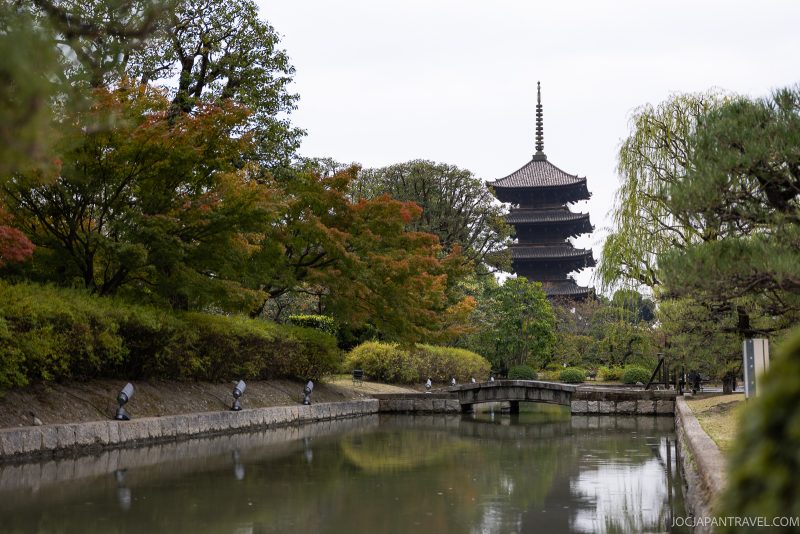
Toji Temple (東寺) is a Shingon Buddhist temple founded in 796. When Kyoto became Japan’s capital, authorities permitted only three Buddhist temples within the city. Toji was one of them. Its name translates to “East Temple.” Alongside the now-lost Saiji, or “West Temple,” it guarded the southern entrance to the capital.
Today Toji holds UNESCO World Heritage status and contains five major buildings plus over 20,000 treasures, artifacts, and historical documents. Many carry National Treasure or Important Cultural Property designation.
What is Toji Temple
Toji is a large Shingon Buddhist temple complex just south of Kyoto Station, making it one of the most accessible major temples in the city. The grounds hold the five-storied pagoda, the Kondo main hall, the Kodo lecture hall, the Miedo founder’s hall, and the Homotsukan museum. On the 21st of every month, the temple hosts a large flea market that has run for centuries. The temple opens daily with seasonal hours and charges 800 yen for adult admission.
Quick Facts
- Established in 796, it was among the three temples permitted when Kyoto became the capital to limit political interference from the clergy
- UNESCO World Heritage Site with over 20,000 treasures, artifacts, and historical documents
- The five-storied pagoda stands 55 meters tall, the tallest wooden pagoda in Japan
- Kobo Daishi, founder of Shingon Buddhism in Japan, built the original pagoda in 826
- Monthly flea market on the 21st, from early morning until around 16:30
My Experience at Toji Temple
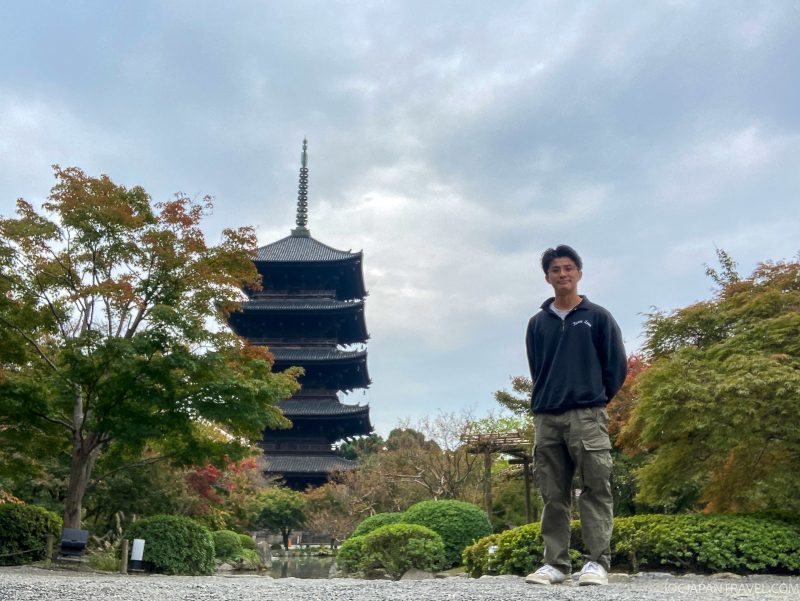
Kyoto has no shortage of temples. What struck me most about Toji was the scale. The structures are enormous and the grounds stretch wider than most temples in the city. It never feels cramped, even when other visitors are around. Coming from Kyoto Station, the pagoda rises above the surrounding buildings well before you arrive, which sets expectations high. It lives up to them.
The Five-Storied Pagoda
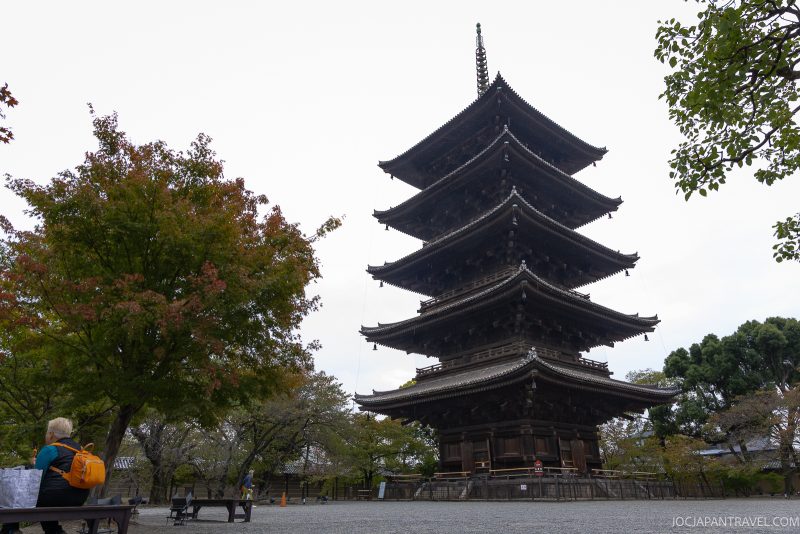
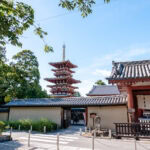
The pagoda stands 55 meters tall and holds the title of tallest wooden pagoda in Japan. Kobo Daishi, founder of the Shingon sect in Japan, built the original in 826. Fire has destroyed it four times over the centuries. Each time, craftsmen rebuilt it to the same specification. It remains visible from points across Kyoto and functions as a landmark for the whole southern district.
The interior stays closed to the public most of the year, with rare special openings. When it does open, the ground floor reveals four Buddha statues facing the cardinal directions, surrounded by detailed Buddhist paintings and motifs. Check the temple’s schedule if seeing inside matters to you.
The Kondo and Kodo Halls
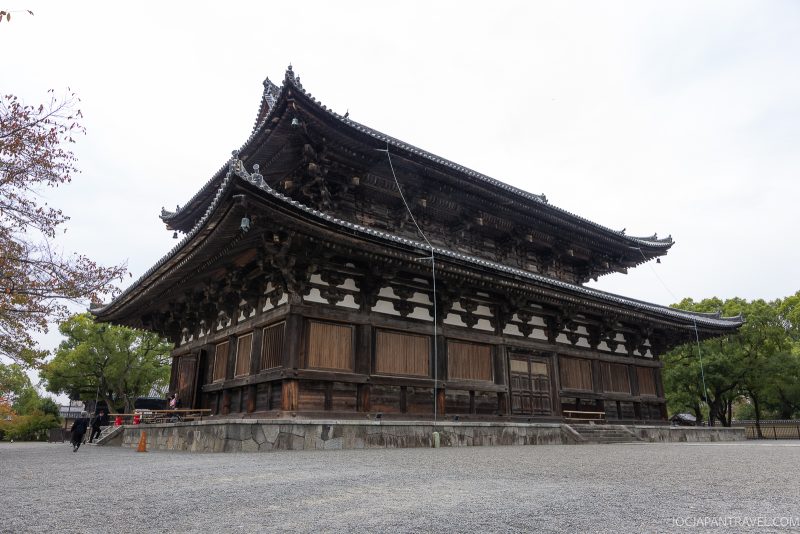
The Kondo, or main hall, is the largest building on the grounds. Builders first raised it in the 8th century. Fire destroyed it in 1486 and the current structure replaced it. Inside sits a wooden statue of Yakushi Buddha, the temple’s main object of worship. Two attendants flank him: Nikko Bosatsu, the bodhisattva of the sun, and Gakko Bosatsu, the bodhisattva of the moon.
Next to the Kondo is the Kodo, or lecture hall, originally built in 835. Typhoons and earthquakes damaged it repeatedly. The current building dates to 1491 and retains the original architectural style. Inside, 19 statues that Kobo Daishi imported from China stand arranged in a mandala formation. The arrangement represents the enlightened world at the center of Shingon Buddhist teaching. It is one of the most impressive interiors at any temple in Kyoto.
The Miedo and Homotsukan Museum
On the western side of the grounds, the Miedo founder’s hall houses a statue of Kobo Daishi. Nearby, the Homotsukan museum displays large Buddhist statues and other significant artifacts from the temple’s collection. It is a good addition if you want more context on the Shingon tradition and Toji’s role in it.
Seasonal Highlights and the Flea Market
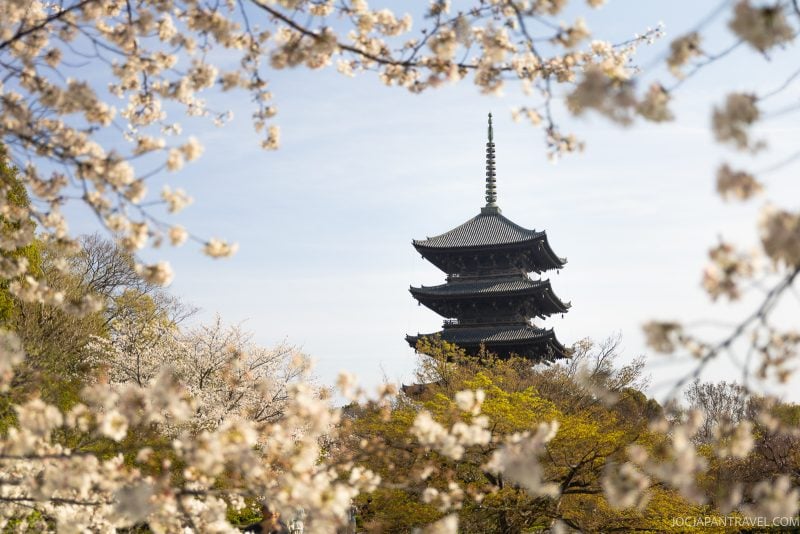
I visited twice, once at the start of autumn and once during peak sakura season. I recommend visiting during either season as it makes the visit noticeably more atmospheric.
If your visit falls on the 21st of the month, do not miss the flea market. It runs from early morning until around 16:30 across the temple grounds. Vendors sell antique kimonos, pottery, clothing, and a wide range of street food. It transforms the atmosphere completely and is one of the best markets in Kyoto.

Andy’s Travel Tips
These simple tips will help you when you visit.
- Visit on the 21st of the month for the flea market. It runs from early morning to around 16:30 and completely changes the atmosphere of the grounds. Arrive early for the best selection of antiques and kimonos.
- Walk from Kyoto Station. Toji is only 15 minutes on foot from the station, making it one of the easiest major temples to reach in Kyoto. The Kintetsu-Kyoto Line to Toji Station is faster but adds cost for little gain.
- Check the pagoda opening schedule in advance. The interior only opens for rare special viewings. If seeing the four Buddha statues inside matters to you, confirm dates with the temple before your trip.
- Do not skip the Kodo. The 19-statue mandala arrangement inside is the most remarkable interior on the grounds and easy to overlook if you head straight for the pagoda.
- Time your visit for autumn or cherry blossom season if you can. The night illumination events during sakura season are particularly worth planning around.
- Note the seasonal closing times. Hours shift three times a year, with the earliest closing at 16:00 from late September through mid-March. Check before arriving in the afternoon.
How to Get to Toji Temple
On Foot (From Kyoto Station)
Because the temple is located very close to the main railway terminal, walking is the simplest and most direct route.
- From Kyoto Station: Head out of the Hachijo Exit (the southern side of the station). Walk straight west down Hachijo-dori avenue or diagonal southwest for about 15 minutes to reach the temple’s eastern entrance (Keigamon Gate) along Omiya-dori.
Train
- Toji Station: Take the Kintetsu Kyoto Line from Kyoto Station just one stop south to Toji Station. The train ride takes 2 minutes. From the station exit, the temple is a flat, easy 5-minute walk straight down Kujo-dori avenue.
Bus
- Local Kyoto City Buses drop off immediately along the temple perimeter.
- From Kyoto Station: Board City Bus Route 19, 42, or 78 and disembark at the Toji-higashimon-mae or Toji-minamimon-mae bus stop. The ride takes roughly 5 to 10 minutes, placing you right at the entrance gates.
Taxi
- A taxi hailed from the Hachijo Exit taxi stand at Kyoto Station reaches the main gates in about 5 minutes, costing approximately ¥800 to ¥1,200.
Is Toji Temple Worth Visiting?
Yes, and its proximity to Kyoto Station makes it one of the easiest wins in the city. The pagoda alone is worth the trip, and the Kodo mandala arrangement is genuinely special. The grounds are large enough that Toji rarely feels as crowded as the Higashiyama temples. If your visit lines up with the 21st, the flea market turns it into a full morning rather than a quick stop. Well worth the 800 yen.
More to Explore Nearby
Toji Temple stands in southern Kyoto, just a short walk from Kyoto Station. The city’s most celebrated temples, shrines, and food experiences are all within easy reach.
- Kyoto Station — Kyoto’s massive transit hub is worth exploring in its own right, with a rooftop skyway and excellent dining options.
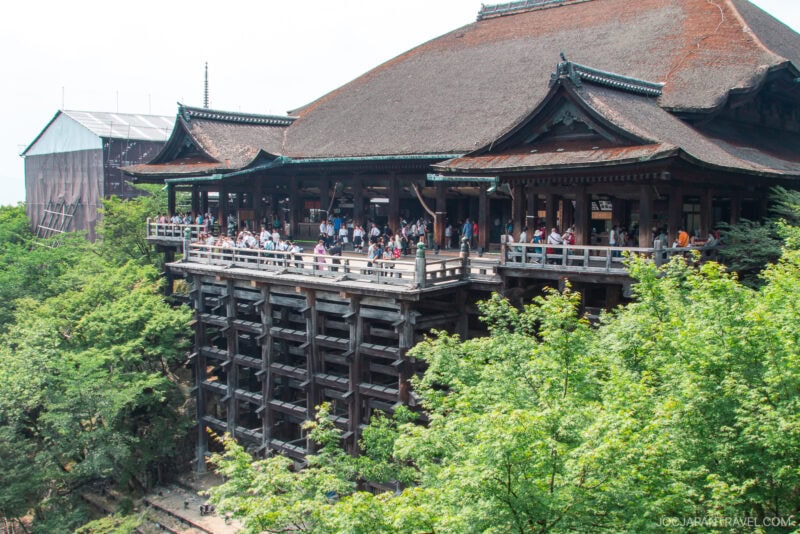
- Kiyomizudera Temple — One of Kyoto’s most iconic hilltop temples, offering sweeping views across the eastern hills of the city.
- Gion — Kyoto’s historic geisha district, where traditional wooden machiya line lantern-lit streets in the evening.
- Chionin – Japan’s largest wooden temple gate and largest bell, beside Maruyama Park in Higashiyama.
- Daigoji – Pagodas at the base of Mount Daigo, with trails climbing to the original summit grounds.