This post may contain affiliate links. Please read our disclosure policy.
Feed, walk, and relax with snow monkeys at Iwatayama Monkey Park, where over 120 semi-wild macaques roam freely across a hilltop in Arashiyama with panoramic views over Kyoto City below.
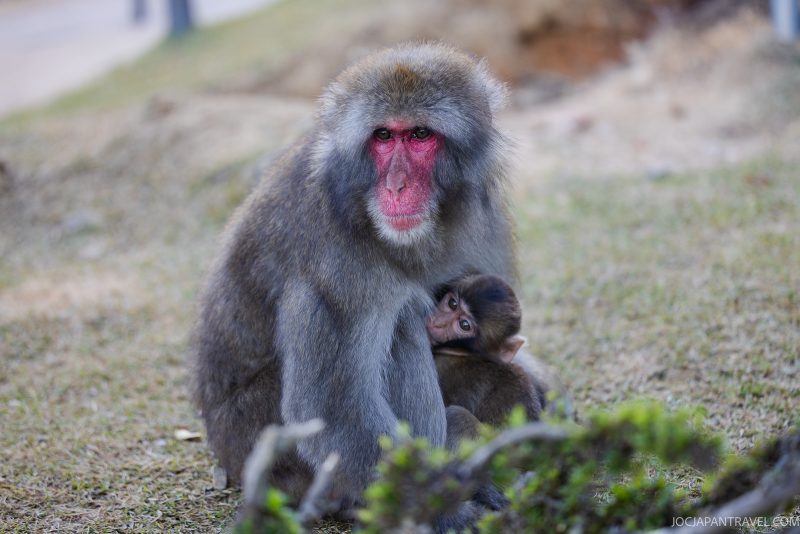
Iwatayama Monkey Park is not a zoo. No cages, no enclosures, no glass. Over 120 semi-wild Japanese macaques live freely on Mount Iwata, and visitors walk right among them. I went in slightly unsure how that would feel.
Within ten minutes, the monkeys were wandering past my feet like I wasn’t there. The panoramic view over Kyoto from the summit turned out to be an unexpected second reason to come.
What is Iwatayama Monkey Park
Iwatayama Monkey Park sits above Arashiyama, one of Kyoto’s most visited districts. The macaques here are wild but habituated to people, so they stay in the area voluntarily rather than by containment. Staff attendants supervise the summit clearing throughout the day and step in if anything needs managing. The arrangement is unusual and it works. Visitors get close-up encounters, and the monkeys keep their freedom.
Quick Facts
- Located on Mount Iwata in Arashiyama, western Kyoto
- Home to over 120 semi-wild Japanese macaques (snow monkeys)
- 20 to 30-minute uphill hike from the entrance to the summit clearing
- Monkey food (peanuts, bananas, apple chunks) available inside the hut for 100 yen
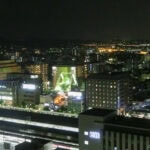
- Panoramic views over Kyoto City from the summit
- Hours: 9:00–16:00. Closed January 1, irregular holidays, and during bad weather. Admission: 800 yen adults, 400 yen children.
My Experience at Iwatayama Monkey Park
The hike up takes 20 to 30 minutes depending on your pace. Wear comfortable shoes. A vending machine sits at the entrance, so grab a drink before you start. The path climbs steadily and there is no shortcut. Take your time and enjoy the forest on the way up.
Meeting the Monkeys
At the top, a wide clearing opens up with a hut at its center. The monkeys move freely all around it. I was a little apprehensive when the first few ran past me. That feeling passed quickly. The rules are simple: do not stare and do not touch. Follow them and the area is completely safe. Staff attendants patrol throughout and will step in if anything needs managing. The monkeys mostly ignore visitors and go about their day.

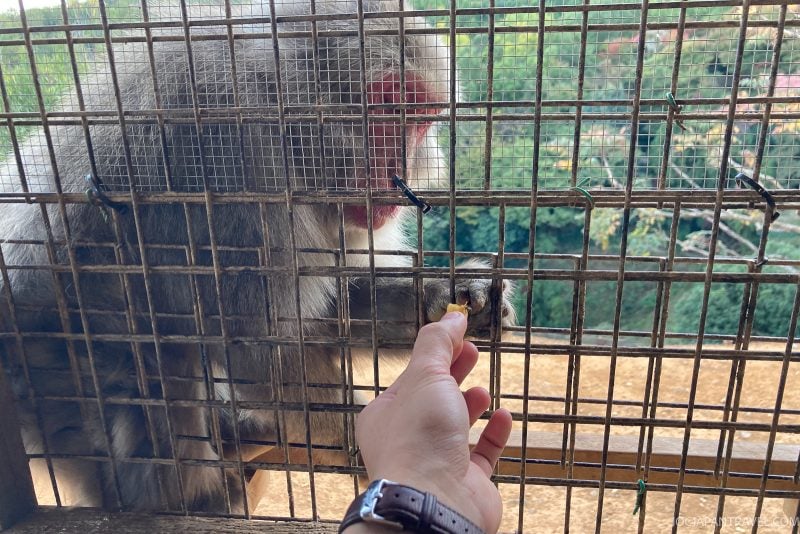
Inside the hut, 100 yen buys you peanuts, bananas, or apple chunks. The hut is fully enclosed, so the roles reverse. You stand inside and the monkeys reach in through the caged windows to take food from your hand. It is a great close-up encounter and one of the more memorable parts of the visit.
The Views Over Kyoto
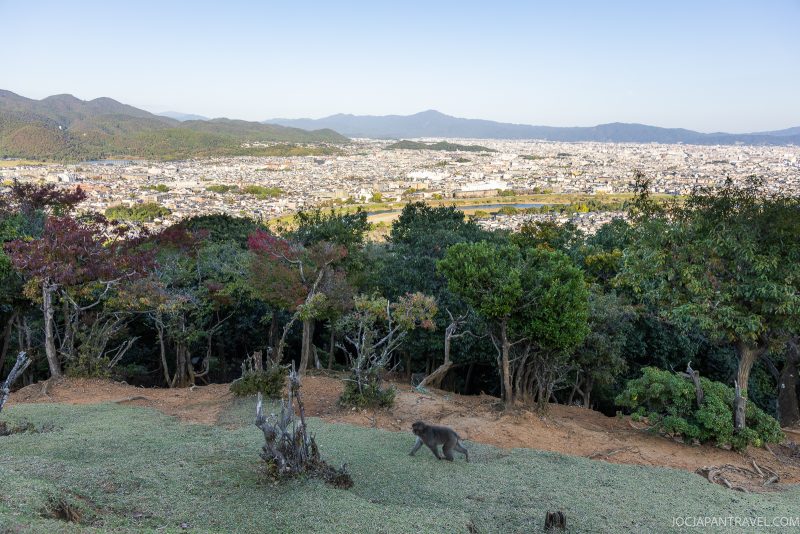
After the climb, you will want a rest. Benches line the clearing and look directly out over Kyoto City below. On the far side of the park, a small hill offers an even better vantage point. I stayed for the sunset, which was worth the wait. Including the hike, I spent about an hour and a half at the park watching the monkeys and taking in the view.
Keep looking up on the way back down. Monkeys often swing through the trees above the path, and it is easy to miss them if you are focused on your footing.


Andy’s Travel Tips
These simple tips will help you when you visit.
- Wear comfortable shoes and bring water. The hike to the summit takes 20 to 30 minutes and climbs steadily. A vending machine at the entrance is your last chance to grab a drink.
- Do not stare at or touch the monkeys. Direct eye contact reads as a threat to macaques. Follow the posted rules and the encounter stays completely safe and relaxed.
- Buy monkey food inside the hut for 100 yen. The enclosed hut lets you feed them safely through the windows. It is the best close-up moment of the visit and worth the small cost.
- Time your visit for late afternoon. The sunset view over Kyoto from the summit is excellent. Just note the park closes at 16:00, so check seasonal sunset times before planning around it.
- Combine with the rest of Arashiyama. The bamboo grove and several temples sit within easy walking distance. The park pairs naturally into a half or full day in the district.
- Check the weather before heading out. The park closes during bad weather conditions, and the hike is unpleasant in heavy rain regardless.
How to Get to Iwatayama Monkey Park
Train
Rail is the most popular way to reach the Arashiyama area, though your walk to the trailhead entrance varies depending on which line you take.
- Hankyu Railway (Shortest Walk): Take the Hankyu Arashiyama Line to Hankyu Arashiyama Station. From the exit, it is a flat, easy 5-minute walk to the river and the park entrance base.
- JR Line (From Kyoto Station): From Kyoto Station, take the JR Sagano (San-in) Line to JR Saga-Arashiyama Station. The train ride takes about 15 minutes. From the station, walk south through the town and cross the Togetsukyo Bridge; the walk to the entrance takes about 15 minutes.
- Randen Tram: Take the Keifuku Electric Railroad (Randen) to Randen Arashiyama Station. From there, walk south across the Togetsukyo Bridge for about 10 minutes to reach the trailhead.
Bus
- From Kyoto Station, take Kyoto City Bus Route 28 and get off at the Arashiyama Koen bus stop.
- The bus stop drops you right near the Togetsukyo Bridge, placing you just a 3-minute walk from the park entrance.
- Bus rides from central Kyoto can take 45 to 60 minutes depending on street traffic.
On Foot (From the Trailhead to the Park)
- The ticket booth and entrance sit right at the south end of Togetsukyo Bridge next to Ichitani-Munakata Shrine.
- Once you pass the ticket booth, reaching the monkeys requires a 20 to 30-minute uphill hike along a winding dirt and stone path.
Taxi
- A taxi from JR Saga-Arashiyama Station to the Togetsukyo Bridge entrance takes about 5 minutes and costs around ¥1,000.
- A taxi all the way from Kyoto Station takes roughly 25 to 30 minutes and typically costs between ¥3,500 and ¥4,500.
Pro Tip Wear comfortable walking shoes, as the path from the ticket gate to the top is a continuous uphill climb. Once at the summit, you can step inside a enclosed rest shelter to buy apple slices or peanuts to hand-feed the monkeys safely through a wire mesh wall.
Is Iwatayama Monkey Park Worth Visiting?
Yes, and it offers something genuinely different from the rest of Arashiyama. Walking among free-roaming macaques is not an experience you get at a standard zoo. The panoramic view over Kyoto from the summit is an unexpected bonus that makes the climb worthwhile on its own. At 800 yen and roughly 90 minutes including the hike, it slots easily into an Arashiyama day. Just be prepared for the uphill walk.
More to Explore Nearby
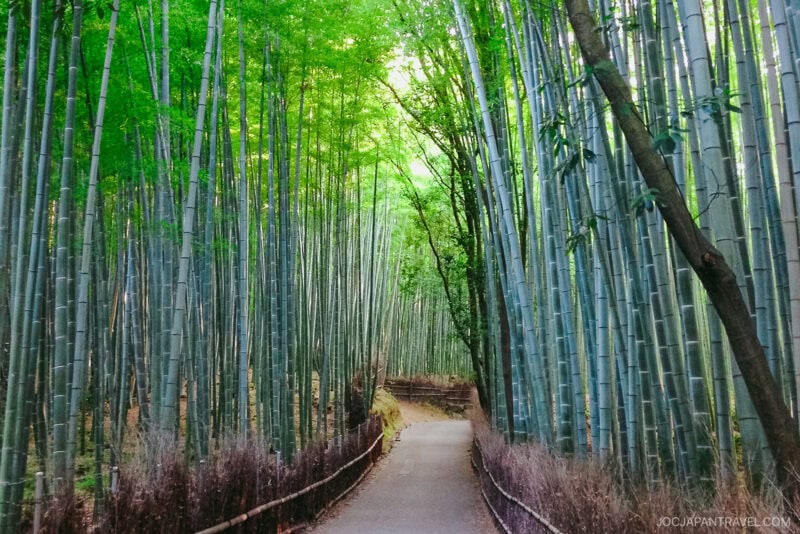
- Arashiyama Bamboo Forest — Just steps from the base of the monkey park, this towering bamboo grove is one of Kyoto’s most iconic sights.
- Tenryu-ji Temple — A UNESCO-listed Zen temple at the heart of Arashiyama, known for its stunning landscape garden.
- Toei Kyoto Studio Park — A working film studio and theme park nearby where you can dress up as samurai and explore Edo-era sets.
- Byodoin – The Phoenix Hall in Uji, one of the few Heian buildings still standing. It is on the ten yen coin.
- Toji Temple – Japan’s tallest wooden pagoda, fifteen minutes on foot from Kyoto Station. The flea market runs on the 21st.