This post may contain affiliate links. Please read our disclosure policy.
Daigoji stands as a timeless testament to Japan’s spiritual heritage, home to Kyoto’s oldest building, a UNESCO World Heritage listing, and some of the most breathtaking autumn scenery in the city.
Founded in 874 by the Buddhist monk Shobo Rigen Daishi, Daigoji (醍醐寺) is a UNESCO World Heritage Site in Kyoto and the head temple of the Daigo Branch of Shingon Buddhism. The massive 600-hectare complex holds over 150,000 preserved cultural assets and divides into two main areas: Shimo Daigo at the base of Mount Daigo, and Kami Daigo at the summit where Shobo originally established the temple.
Most visitors focus on the lower grounds (Shimo Daigo), home to historic treasures like Sanboin, Kyoto’s oldest five-story pagoda, Kondo Hall, Bentendo Hall, and the Reihokan Museum. For those seeking adventure, hiking trails climb a steep path up Mount Daigo to the original upper grounds (Kami Daigo), which takes about an hour. Note that separate tickets apply for the lower grounds, museum, and upper mountain zone.
Quick Facts
- Founded in 874 by the monk Shobo Rigen Daishi; UNESCO World Heritage Site since 1994
- Spans 600 hectares with over 150,000 preserved cultural assets
- The five-story pagoda (built 951) is the oldest building in Kyoto
- Head Temple of the Daigo Branch of Shingon Buddhism
- Toyotomi Hideyoshi planted over 700 cherry trees here in 1598 for his famous blossom viewing parties
My Experience at Daigoji
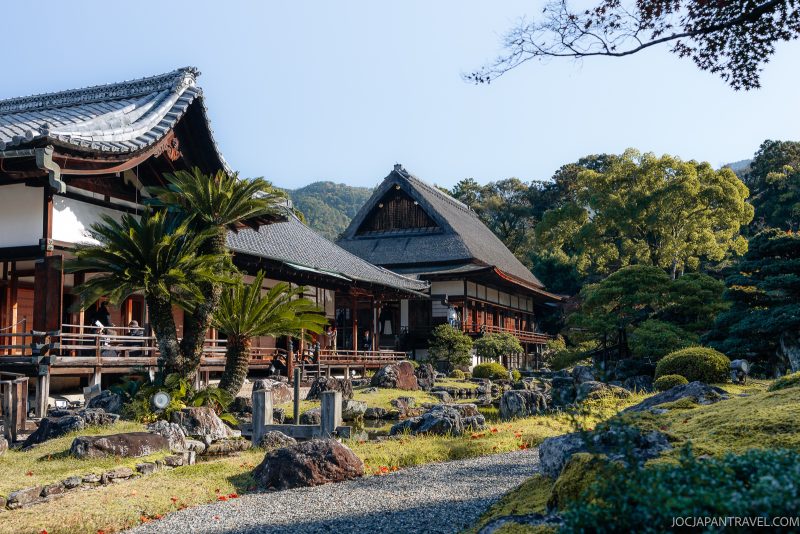
The first structure you reach is Sanboin, the former residence of the head priest. Toyotomi Hideyoshi built the current building in 1598. He also planted over 700 cherry trees across the grounds to host his legendary blossom viewing parties. Sanboin is a superb example of Momoyama architecture, with traditional landscaping that rewards a slow walk through. Do not rush this section.
The Five-Story Pagoda and Kondo Hall
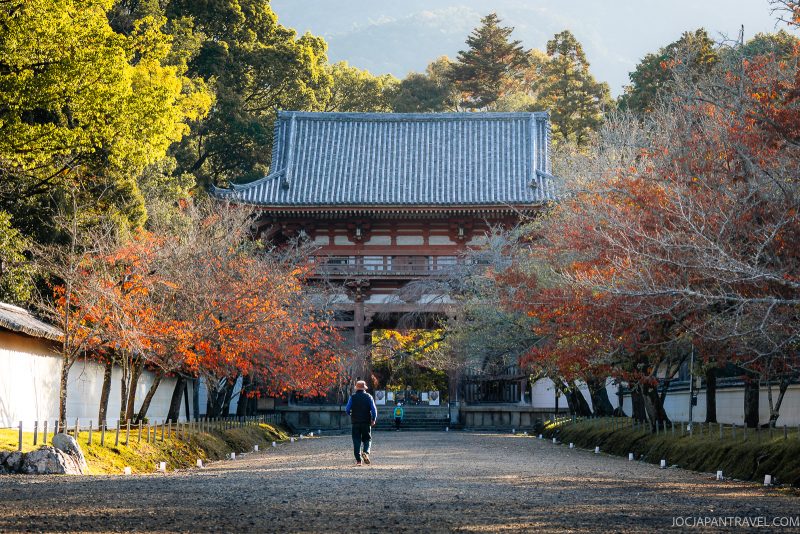
Deeper into Shimo Daigo, the five-story pagoda comes into view. Built in 951, it stands 38 meters tall and holds the title of oldest building in Kyoto. Fires have repeatedly devastated Daigoji throughout its history. The pagoda is the only structure to survive them all. Standing in front of something that has held its ground for over a thousand years is genuinely humbling.
Kondo Hall, the main hall, sits nearby alongside a number of other important cultural properties. The lower grounds hold enough historic architecture to fill a couple of hours without moving quickly.
Bentendo Hall and the Reihokan Museum
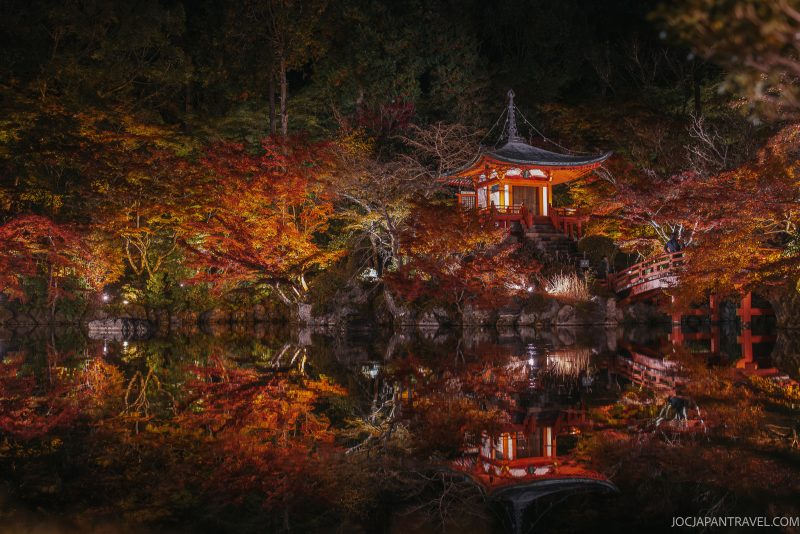
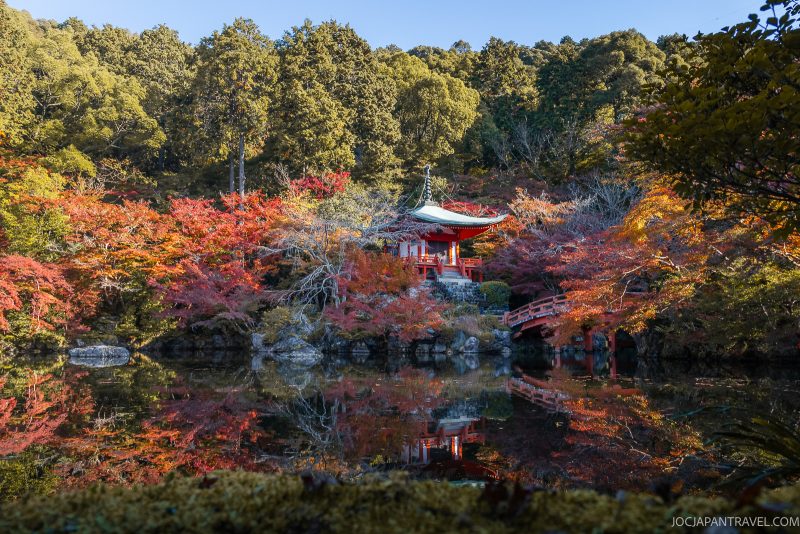
Bentendo Hall sits at the back of Shimo Daigo and ranks as the most photogenic spot on the grounds. The vermilion hall reflects in the pond in front of it. In autumn, the surrounding maples turn crimson and the reflection becomes spectacular. Evening illuminations during autumn season are especially worth planning around.
The Reihokan Museum on the lower grounds houses a rich collection of historical documents, paintings, statues, and wall scrolls. Admission costs 500 yen separately from the main grounds ticket. It is compact but well curated, and worth adding if you have an interest in Buddhist art and temple history.
Hiking to Kami Daigo
Several trailheads within Shimo Daigo lead up to Kami Daigo, the temple’s original mountain grounds. The hike takes about an hour and the climb is steep. It is worth the effort. Historic structures sit scattered through quiet forest at the top, far from the crowds below. On clear days, the view stretches across Kyoto and reaches as far as Osaka. Entry to Kami Daigo costs 600 yen for adults, with last entry at 15:00 and everyone required to return to the base by 17:00.

Andy’s Travel Tips
These simple tips will help you when you visit.
- Visit Bentendo Hall in autumn, ideally in the evening. The illuminated maples reflecting in the pond are the single best view on the grounds and worth timing your visit around.
- Start the Kami Daigo hike before 15:00. Last entry to the upper grounds is 15:00 (14:00 from early December through February), and everyone must be back at the base by 17:00. Give yourself at least two and a half hours for the round trip.
- Wear proper shoes if you plan to hike. The trail to Kami Daigo is steep and takes about an hour each way. It is a genuine hike, not a gentle stroll.
- Budget extra for spring visits. From March 20 to early May, the lower grounds ticket rises from 1,000 to 1,500 yen for adults. The cherry blossoms justify it, but plan for the difference.
- Take the bus from Yamashina Station if you want to skip the walk. The No. 1 (22 or 22A) bus stops at Daigoji-mae, right outside the temple entrance. The train to Daigo Station requires a further 10 to 15-minute walk.
- Allow a half day at minimum. The lower grounds alone take two hours to explore properly. Adding the museum and the Kami Daigo hike makes this a full-day destination.
How to Get to Daigoji
Train & Subway
- From Kyoto Station: Take the JR Tokaido-Sanyo Line (JR Biwako Line) one stop east to Yamashina Station. The train ride takes 5 minutes.
- Transfer to the Kyoto Municipal Subway Tozai Line at Yamashina Station and ride south to Daigo Station. This subway leg takes about 8 minutes.
- From Daigo Station to the Gates: Walk out of Exit 2. You can either take a flat, easy 10 to 15-minute walk through the neighborhood to the main gate or hop on the local Daigo Community Bus outside the station for a quick 3-minute ride.
Bus (Direct Express Route)
If you prefer to avoid transferring between train lines, a direct express bus runs from the main transport hub.
- From Kyoto Station: Walk to the Hachijo Exit (south side) and board the Keihan Express Bus (Yamashina Express) bound for Daigoji.
- The bus drops you off directly at the Daigo-Sanboin-mae stop right outside the temple entrance. The journey takes roughly 30 minutes depending on local traffic.
Taxi
- A taxi taken directly from the Hachijo Exit of Kyoto Station takes approximately 25 to 30 minutes, costing between ¥3,000 and ¥4,500.
- A taxi from Yamashina Station takes about 10 minutes and costs around ¥1,500.
The Two Spheres of Daigoji: The temple is divided into Lower Grounds (Shimo-Daigo) and Upper Grounds (Kami-Daigo). While the lower grounds contain the primary National Treasure halls, gardens, and pagoda, reaching the historic upper grounds requires a steep 1-hour mountain hike up a forest trail starting behind Bentendo Hall.
Is Daigoji Worth Visiting?
Yes, particularly if you want a major Kyoto temple without the crush of the central sightseeing districts. The five-story pagoda alone justifies the trip as Kyoto’s oldest surviving building. Bentendo Hall in autumn is spectacular. And the option to hike up to Kami Daigo gives Daigoji a depth that most temples cannot offer. It sits slightly outside the usual Kyoto circuit, which is exactly why it feels less crowded and more rewarding than many of the city’s headline sites.
More to Explore Nearby
More to Explore Nearby
Daigoji sits in the Fushimi district of southeastern Kyoto, renowned for its cherry blossoms and hilltop pagoda. The surrounding area is rich with shrines, scenic walks, and local flavors.
- Fushimi Inari Taisha — Kyoto’s most visited shrine is nearby in the same Fushimi district, with its iconic tunnel of vermillion torii gates.
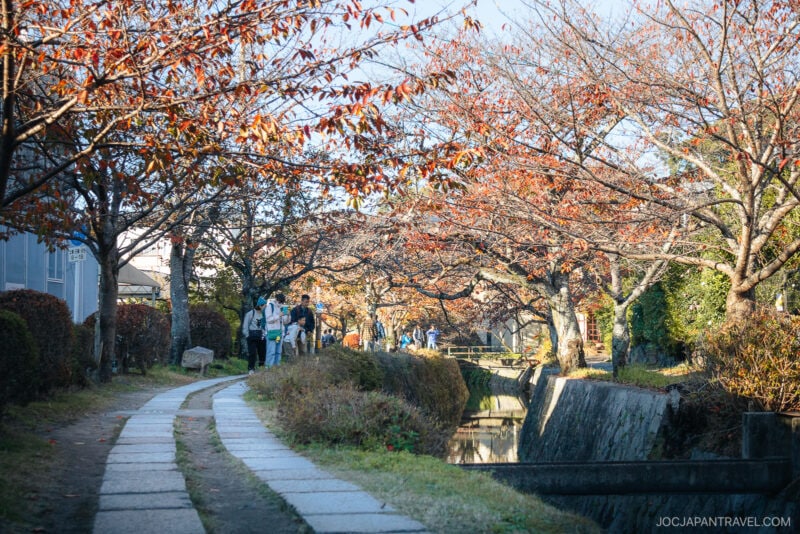
- Philosopher’s Path — A beautiful canal-side walking route through Kyoto’s eastern hills, lined with cherry trees and small temples.
- Arashiyama Autumn — If you love Daigoji’s seasonal color, Arashiyama’s autumn foliage across town is equally spectacular.
- Iwatayama Monkey Park – Snow monkeys roam free on a hilltop above Arashiyama, with Kyoto spread out below.
- Byodoin – The Phoenix Hall in Uji, one of the few Heian buildings still standing. It is on the ten yen coin.