This post may contain affiliate links. Please read our disclosure policy.
Walk the sacred paths of Seifa-Utaki, where moss-covered stones and quiet clearings preserve the heart of Okinawa’s creation myths and royal prayers.
A Sacred Site in the Forest
Seifa-Utaki, located on Okinawa’s southeastern coast, is surrounded by subtropical forest and limestone rock formations. This historic site was once the most sacred place in the Ryukyu Kingdom.
The walking path winds through shaded forest, past stone formations and quiet clearings. There are no prominent shrines or buildings. Just a peaceful setting that reflects the deep respect locals have held for this place over centuries.
The Origin of Ryukyuan Spirituality
Legend says that Amamikyu, the goddess of creation, descended at this very spot to give birth to the Ryukyu Islands. From that moment, Seifa-Utaki became the spiritual heart of the kingdom.
For centuries, it served as the site of state rituals led by the kikoe-okimi, the kingdom’s highest-ranking priestess. Kings and queens came here to pray for health, peace, and harvests. Even today, the site remains sacred. Out of respect, photography is restricted in some areas.
What You’ll See at Seifa-Utaki

The trail through the site is a gentle walk along stone paths shaded by trees. Along the way, we stopped at several important spots.
Sangui Rock Formation
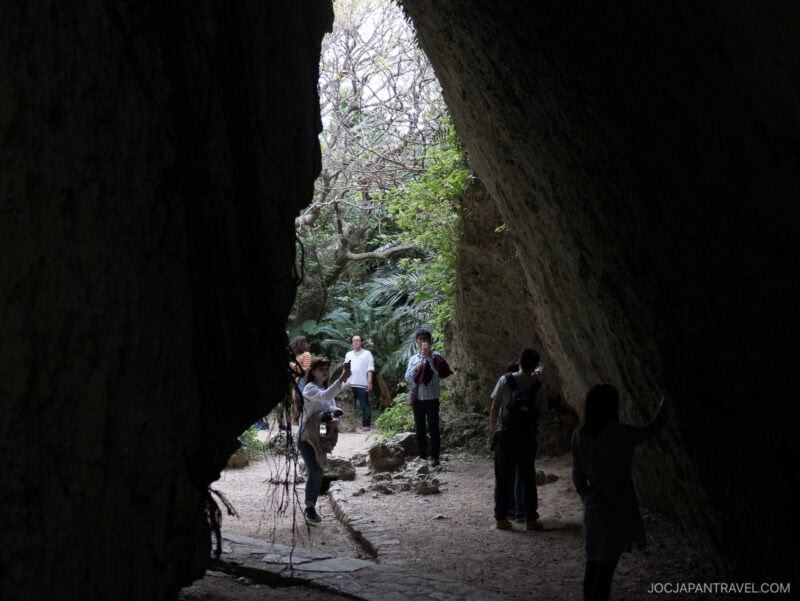
The most iconic landmark is Sangui, a triangular opening formed by two large rocks leaning together. It looks like a natural gateway. This spot was once used for rituals, and the shape makes it feel like a hidden temple carved by nature.
Sacred Utaki Sites
Scattered along the trail are several utaki, or sacred prayer areas. Some are stone markers, others are simple clearings. Each one represents a site of deep spiritual power, tied to the land rather than man-made structures.
Kudaka Island Viewpoint

At the end of the trail, we reached a peaceful overlook with views of Kudaka Island—believed to be where the goddess first landed. Seeing the island shimmer across the sea added a layer of meaning to our visit. It felt like looking across time.
Visitor Tips
- Wear comfortable walking shoes with grip. Some stone paths can be slippery, especially after rain.
- Stay quiet and respectful, it’s an active place of worship.
- Avoid touching or stepping on sacred stones.
How to Get to Seifa-Utaki
Taxi
- A taxi from central Naha to Seifa-Utaki takes about 30–45 minutes and costs around ¥5,500 to ¥7,000.
Pro Tip: If you plan to visit Okinawa World, Seifa-Utaki is only a 20-minute drive away.
Is Seifa-Utaki Worth Visiting?
If you’re looking for a quiet, meaningful stop in Okinawa, we would recommend stopping by Seifa-Utaki. It’s not a place for flashy photos or busy crowds. Instead, it invites you to slow down, reflect, and feel the deep connection between the Ryukyuan people and the land they called sacred.
More to Explore Nearby
After experiencing the spiritual stillness of Seifa Utaki, discover more of Okinawa’s cultural depth and natural beauty at these nearby sites.
- Shikinaen – Once a royal garden of the Ryukyu kings, this peaceful retreat features a palace pavilion, stone bridges, and lush greenery.
- Okinawa Prefectural Peace Memorial Park – A coastal park and museum honoring those lost in the Battle of Okinawa, offering sweeping sea views and solemn reflection.
- Himeyuri Peace Museum – Learn the story of student nurses caught in the war through touching exhibits and firsthand testimonials.
- Kokusai Dori – Wrap up your visit with a stroll down Naha’s lively “International Street,” where you’ll find souvenirs, music, and Okinawan street food.