

This post may contain affiliate links. Please read our disclosure policy.
Explore Nakagusuku Castle, a rugged 14th-century stone fortress with expansive ocean views and a glimpse into Ryukyuan history.
A Raw Look at Ryukyuan Architecture
Perched high on a ridge between Nakagusuku Bay and the Pacific Ocean, Nakagusuku Castle ruins gave us a completely different feeling from the restored grandeur of Shuri.
Here, there were no towering keeps or polished wooden halls—just ancient stone walls weathered by centuries of wind and salt air. Walking through the open-air site, we could almost imagine the 14th-century Nakagusuku Ajis overseeing the land from these same ridges. Even with only its foundations and walls remaining, the fortress feels remarkably alive, holding on to its history in every curve of its masonry.
What Makes Nakagusuku Castle Special?
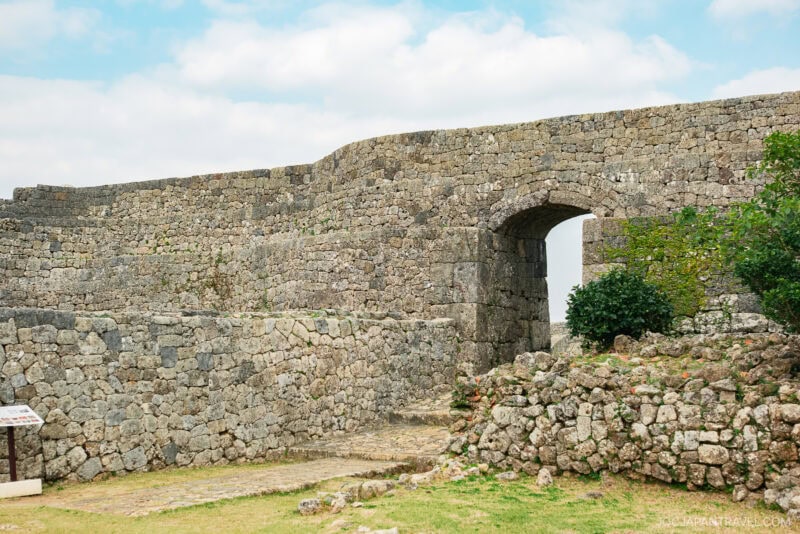
In Okinawan, the word gusuku means castle, and Nakagusuku is one of the finest examples of gusuku-style fortification still standing. It was named a UNESCO World Heritage Site in 2000, as part of the Gusuku Sites and Related Properties of the Kingdom of Ryukyu.
Instead of a single central tower, the layout consists of six distinct enclosures, each connected by gently curving stone walls. The limestone blocks were cut and stacked without mortar, fitting together so perfectly that we could barely see the seams. It was impressive craftsmanship, especially for the 14th century.
Highlights at a Glance
- Built in the 14th century by the Nakagusuku Aji clan
- Divided into six stone enclosures, each offering ocean views
- Famous for curved limestone walls with interlocking stones
- Overlooks both Nakagusuku Bay and the Pacific Ocean
- Recognized by UNESCO and listed among Japan’s Top 100 Castles
Walking the Grounds
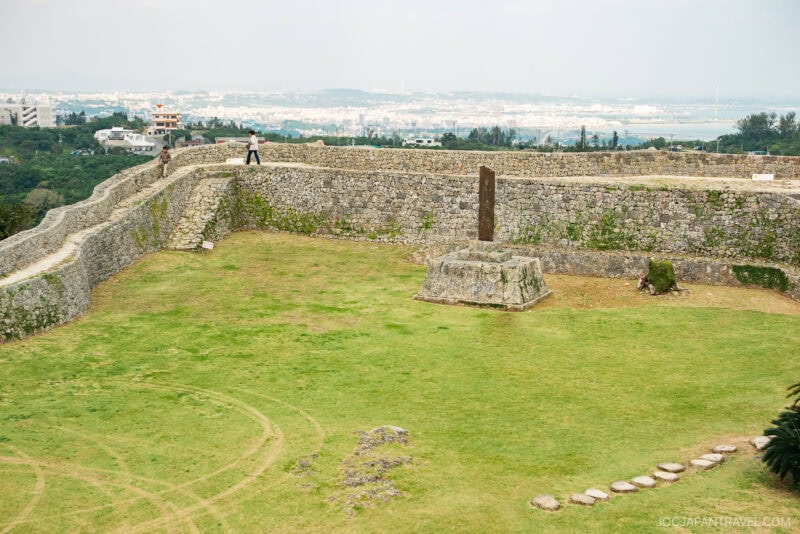
We took our time exploring each zone of the castle, pausing to enjoy the views. Some parts of the path were a little steep or uneven, but our kids had no trouble navigating them.
The wide-open spaces and quiet surroundings made it easy to take things at our own pace.
A Fun Photo Spot for the Family
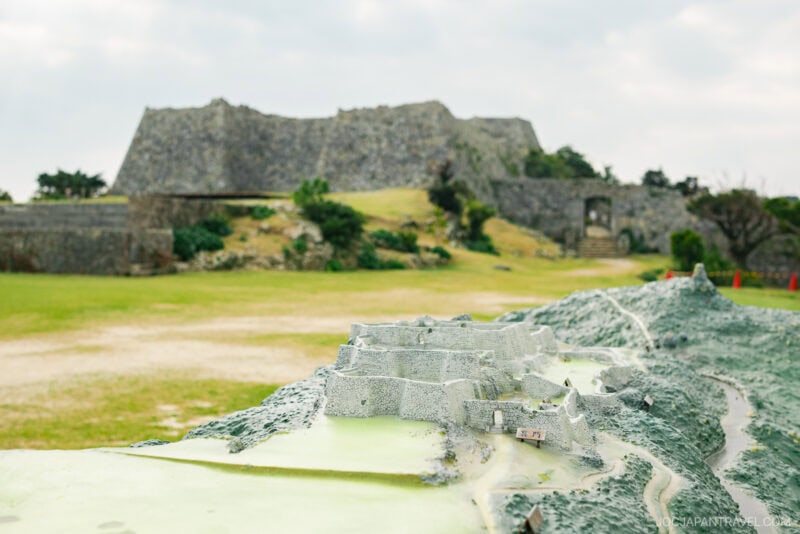
Near the end of our walk, we came across a small scale model of the castle. If you line up your camera just right, the miniature perfectly mirrors the real castle in the distance. It turned into a fun photo challenge.
How to Get to Nakagusuku Castle
Taxi or Car
- A taxi from central Naha costs around ¥3,500–¥5,000. Travel time is about 25–30 minutes.
Pro Tip: Renting a car is the easiest way to visit Nakagusuku Castle and other historical sites in Okinawa.
Is Nakagusuku Castle Worth Visiting?
If you enjoy open-air ruins and learning about regional history, Nakagusuku Castle is well worth a visit. The layout and stonework offer a different perspective from other castles in Japan.
While it doesn’t have the restored grandeur of Shuri Castle, its quiet setting and original stone walls give it a distinct character. We came away with a better appreciation for Okinawa’s history and memorable ocean views.
More to Explore Nearby
After walking the ancient stone walls of Nakagusuku Castle, continue exploring Okinawa’s heritage and landscapes at these nearby historical and spiritual sites.
- Seifa Utaki – This sacred coastal grove is one of the most important spiritual sites of the Ryukyu Kingdom, recognized as a UNESCO World Heritage Site.
- Shikinaen – A former royal garden with elegant stone bridges, seasonal foliage, and a peaceful retreat just outside central Naha.
- Shuri Castle – Visit the rebuilt royal palace of the Ryukyu Kingdom and learn how Okinawan culture shaped its architecture, art, and politics.
- Ryukyu Mura – Step into a recreated traditional village with folk performances, traditional workshops, and hands-on experiences for all ages.


[…] ### Nakagusuku Castle – JOC Japan Travel (JOC Japan Travel) […]