
This post may contain affiliate links. Please read our disclosure policy.
Explore Okinawa’s rich ceramic traditions at Yomitan Pottery Village, where local artisans shape, glaze, and fire their creations in a peaceful, working community.
A Village Where Pottery Lives and Breathes
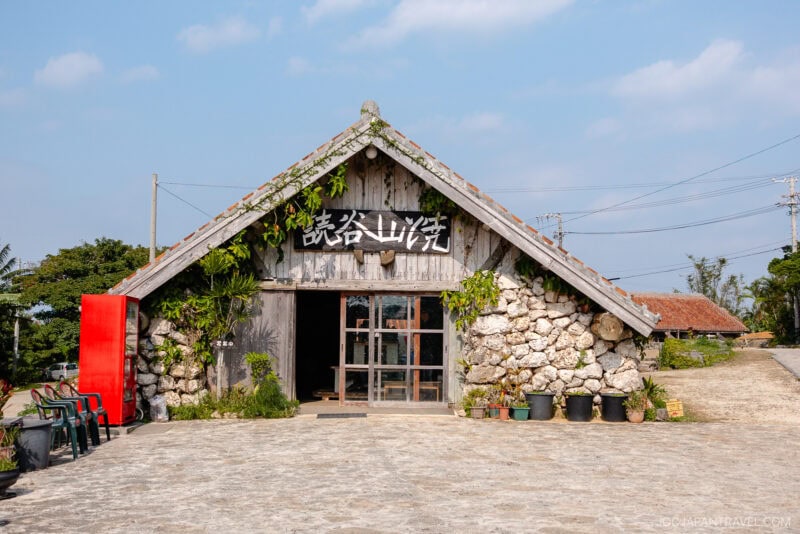
We’ve always loved visiting pottery towns across Japan, but Yomitan Pottery Village (Yachimun no Sato) on Okinawa’s western coast offered something especially memorable. Tucked into a quiet hillside in Yomitan Village, this collection of workshops, kilns, and galleries felt like a living museum.
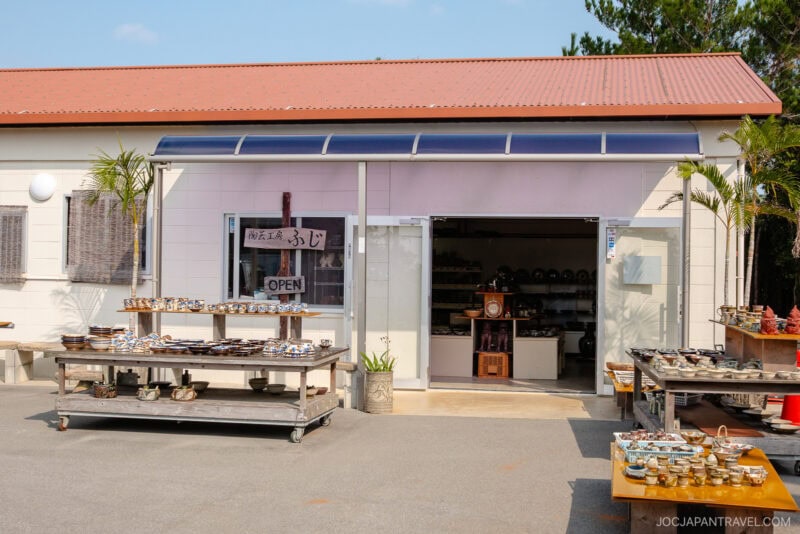
It’s not just for tourists. Potters live and work here year-round, shaping Okinawan clay into beautiful ceramics with deep local roots. As we wandered through narrow paths lined with stone walls and red-tiled roofs, we passed open studios where artisans focused intently on their craft. Some were glazing, others trimming or packing finished works.
At the heart of the village stands a traditional noborigama (climbing kiln), built into the slope with multiple red brick chambers. Though now used mostly during special firing events, it remains a powerful symbol of the cooperative spirit here.
The Roots of Okinawan Pottery
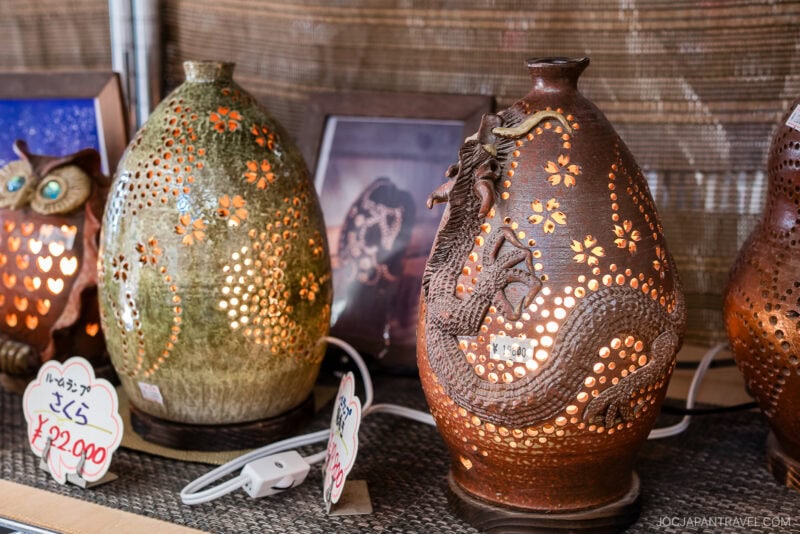
Yomitan’s ceramic tradition grew from the legacy of Tsuboya-yaki (壺屋焼き), which originated in Naha during the Ryukyu Kingdom period. Influenced by Korean potters, the style combined strong local clay with distinctive glazes and island motifs.
When Naha began modernizing in the 1970s, stricter fire regulations forced many potters to leave the city. They found a new home in Yomitan, where the air was clear and the land was open. Here, they could fire their kilns freely and build a community focused on preserving and evolving their craft.
Today, Yomitan remains one of the island’s most important centers for Okinawan pottery.
Highlights from Our Visit
Watching Potters at Work
On a weekday afternoon, we stopped by a small studio where a potter brushed glaze onto wide dinner plates. We stood quietly and watched the rhythmic motion of her hands. The moment was simple, but it gave us a deep appreciation for the finished piece.
Sea-Inspired Motifs and Glazes
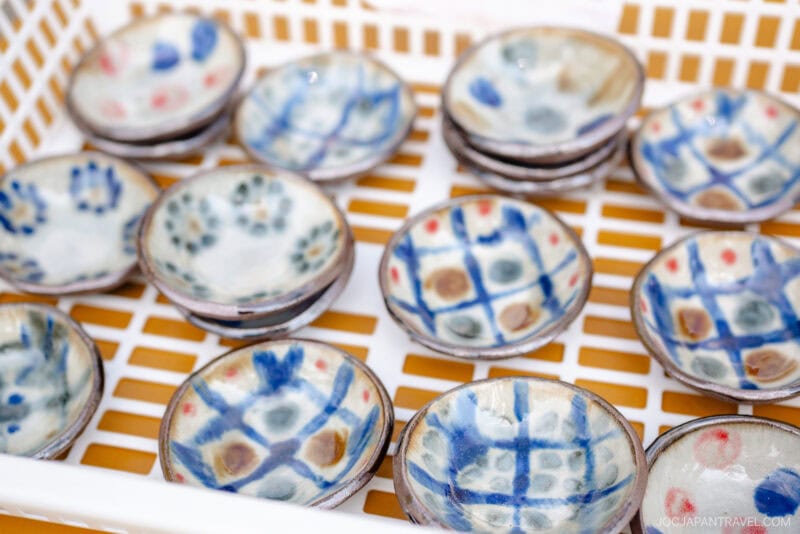
We saw plenty of dishes that echoed Okinawa’s natural beauty—deep blue bowls like tide pools, plates with swirling wave patterns, and textures that reminded us of coral reefs. The most popular colors were turquoise, cobalt, and soft sandy browns. No two pieces looked exactly alike.
The prices varied depending on the artist, but many pieces were surprisingly affordable given the craftsmanship involved.
How to Get to Yomitan Pottery Village
Car or Taxi
- Take the Okinawa Expressway north from Naha, or take the scenic Route 58 along the coast. The drive takes approximately 40-60 minutes, depending on traffic.
- A taxi from Central Naha to Yomitan Pottery Village costs about ¥8,000–¥10,000.
Is Yomitan Pottery Village Worth Visiting?
If you’re interested in traditional craftsmanship and Japanese pottery, Yomitan Pottery Village is a rewarding place to visit. It’s a quiet, working community where local artisans continue centuries-old techniques. While it’s not designed for tourists, that’s part of its appeal. The atmosphere is relaxed, and the work on display is both skillful and thoughtful.
More to Explore Nearby
After browsing the studios and shops of Yomitan Pottery Village, explore more of northern Okinawa’s culture, history, and ocean views nearby.
- Orion Happy Park – Take a free brewery tour and enjoy freshly poured Orion Beer while learning about Okinawa’s most beloved beverage.
- Busena Marine Park – Walk out to the underwater observatory and view colorful tropical fish and coral in their natural habitat.
- Okinawa Churaumi Aquarium – Watch whale sharks and manta rays glide through massive tanks at one of Japan’s most impressive aquariums.
- Nakagusuku Castle – Visit this beautifully preserved hilltop castle ruin for sweeping views and a glimpse into Ryukyuan military history.